

Ancient history has always been fascinating to me, especially early feats of engineering skill. During our stay in Samos, I did a side trip to the Tunnel of Eupalinos, an ancient aqueduct just outside Pythagoreion. The tunnel is 1,036 m (3,399 ft) in total, running through Mount Kastro. The tunnel is notable for being only the second known tunnel in history that was excavated from both ends, and the first that used a geometric approach to its construction. It resulted in the two tunnels meeting within 20 cm (about 8 inches) of each other, an incredible achievement for the time.

The tunnel website had limited info so I had the hotel owner in Pythagorean call to book the tour. I wanted to take the earliest one next day as I heard they filled up quickly. However, we discovered they didn’t do reservations on the phone and I just needed to show up at the ticket booth ten minutes before the tour started. I opted for the 9:00 a.m. regular tour on the next day. I had hoped for the full tour (double the length for a few more euros) but it is given less often and apparently it wasn’t available the day I booked.

It was a bit of a trek uphill from our hotel so I took a taxi for six euros to get to the tunnel entrance. When I arrived at 8:45 there was no one else around. Even the young site operators seemed surprised to see me.
I paid the eight euros for the entry, and waited until 9:00. Only three other people joined, and we made our way toward the entrance.

Once inside we were given hard hats because of the narrow passages and low ceilings in some areas. Then the guide led us down the first steps into the narrow passage.


At the bottom of the steps the narrow passage continued on level ground, so we made our way further along the tunnel. Eventually, the passage widened and we were in a larger section.
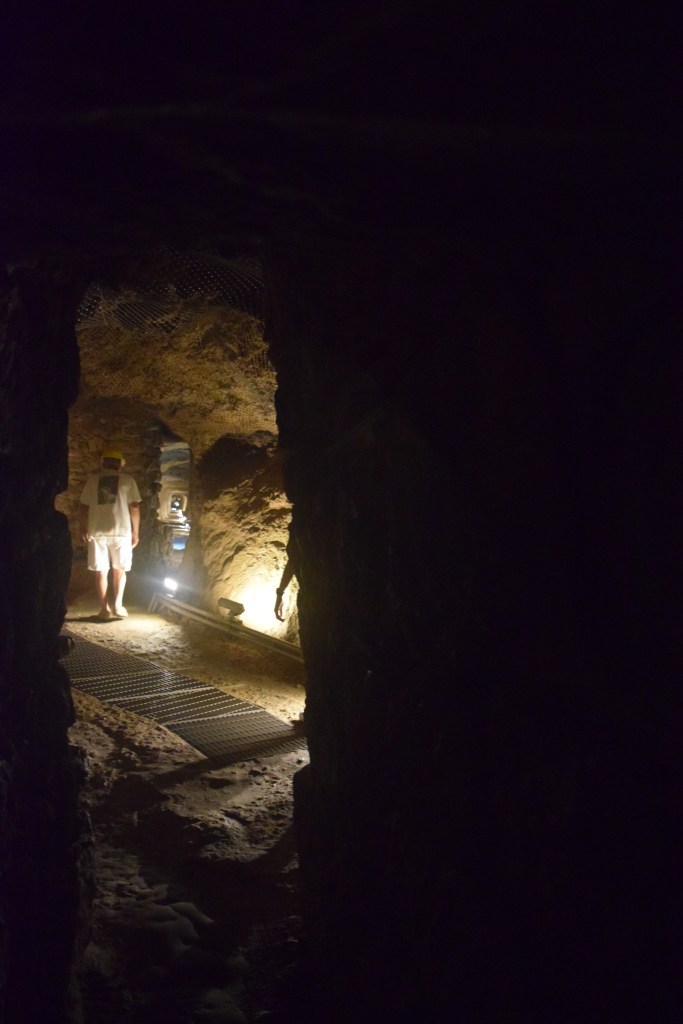

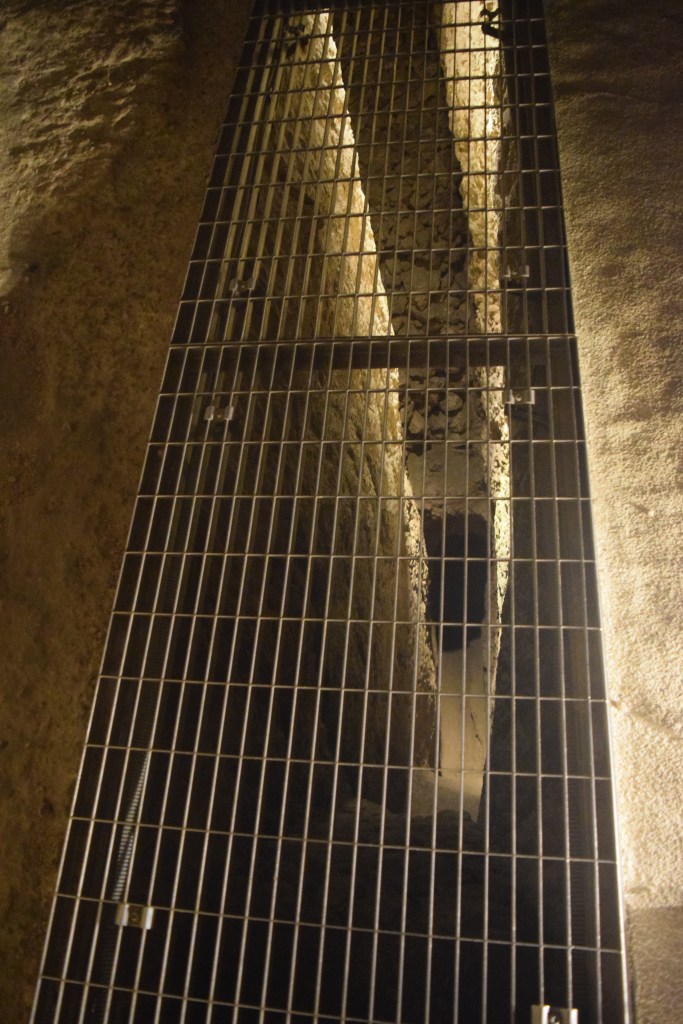
Now we were in the main part of the system. The tunnel here was completed between 550 and 530 BC. A metal grate separated us from the separate channel for the aqueduct below the area we walked.


The Greek Historian Herootus described it this way:
I have dwelt longer upon the history of the Samians than I should otherwise have done, because they are responsible for three of the greatest building and engineering feats in the Greek world: the first is a tunnel nearly a mile long, eight feet wide and eight feet high, driven clean through the base of a hill nine hundred feet in height. The whole length of it carries a second cutting thirty feet deep and three broad, along which water from an abundant source is led through pipes into the town. This was the work of a Megarian named Eupalinus, son of Naustrophus.
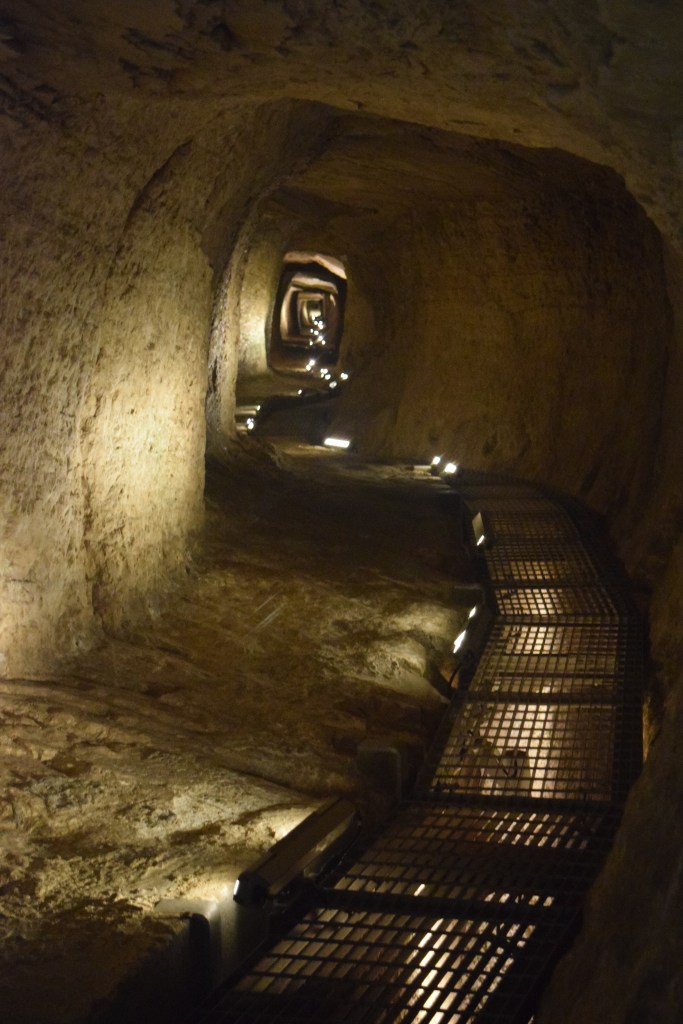
It has been calculated that workers would have been able to dig out 12–15 centimetres (4.7–5.9 in) of stone per day, meaning that the entire tunnel took at least eight years to dig.

The Eupalinian aqueduct was used as an aqueduct for 1100 years, before it began to silt up. In the seventh century AD, the south end was used as a defensive refuge.
After less than twenty minutes we reached the end of our exploration, and turned back towards the entrance. Although it was a short experience I was impressed by the technological achievement done by these ancient builders.
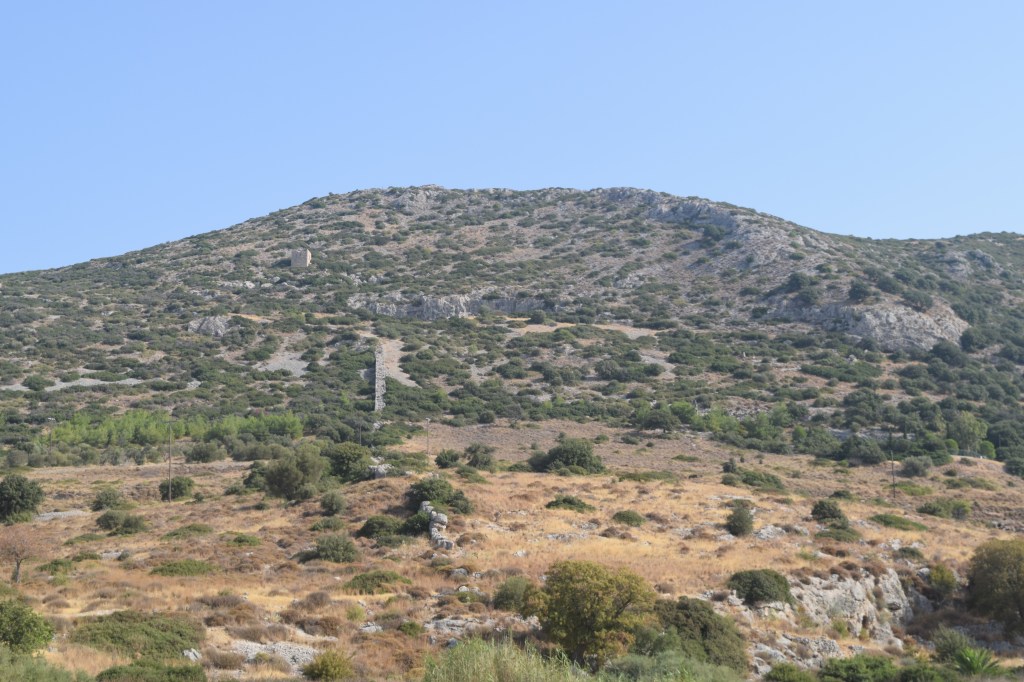
Back outside again, I decided to walk around the area before walking back into town. Rather than taking the winding road back down from the entrance, I took a direct route back to the main road by scrambling down the hillside, finding ancient ruins here and there among the rocky fields.


The next day we checked out of our hotel, rented a taxi and headed to the port of Karlovasi. From there we would take a ferry over to nearby Ikaria, our last stop on the trip. After little more than an hour we arrived in Karlovasi. We stopped off in a local cafe and then a restaurant for lunch as we waited a few hours for the ferry to arrive in the mid-afternoon.
Once people started to assemble we made our way to the terminal. Waiting in the sun for the ferry to arrive was less than ideal (we’d noticed that covered waiting areas were an afterthought in many of the Greek ports) but the trip itself was short and only cost 6.50 euros each. It was onward to Ikaria.

 Humphreys Travel