
Our 12 day trip around of Iceland starting July 8th was a whirlwind of sights from day one.
It was an overnight flight that took us to Iceland. We were into our rental car at Keflavik Airport before 10 a.m., tired with limited sleep and a 4 hour time difference, but ready to get started. We had to wait until 4 p.m. before we could check into our accommodations near Reykjavik, so we spent the day circling around the Reykjanes peninsula.

The overall plan was to do the ring road (Route 1) clockwise, saving the famous Golden Circle until the end. It seemed like a less popular option than doing it counter-clockwise. We were glad we did it this way, as everything was quiet for most of our trip, and the crowds really only appeared in the south-west and around the Golden Circle at the end of the trip.

The main highlights for the first day:
- Bridge Between Continents
- Valahnúkamöl (coastal views)
- Seltún geothermal area/Gígvatnsvatn
- Grænavatn (Green Lake)
- Kleifarvatn (lake)
1. Bridge Between Continents
This stop was less than 30 minutes from the airport. It was the point were the North American and Eurasian plates meet deep under the earth. The rift beneath the bridge represented the spot where the plates had split apart, and the dried lava fields all around the area showed how geologically active it had been in the past.
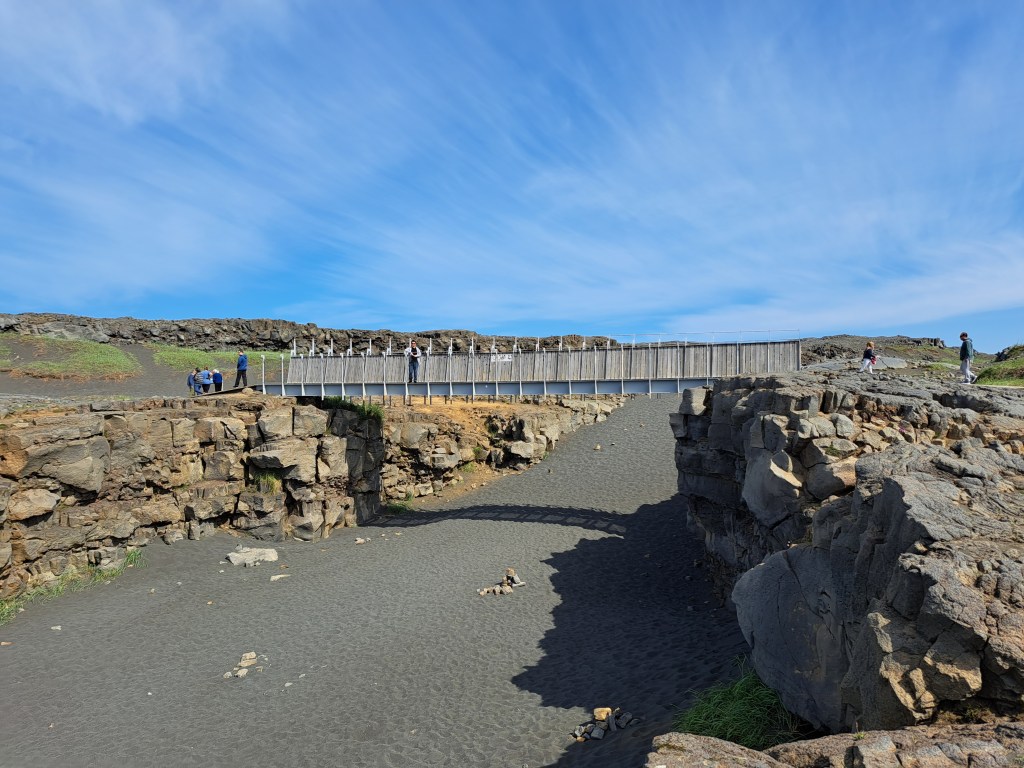

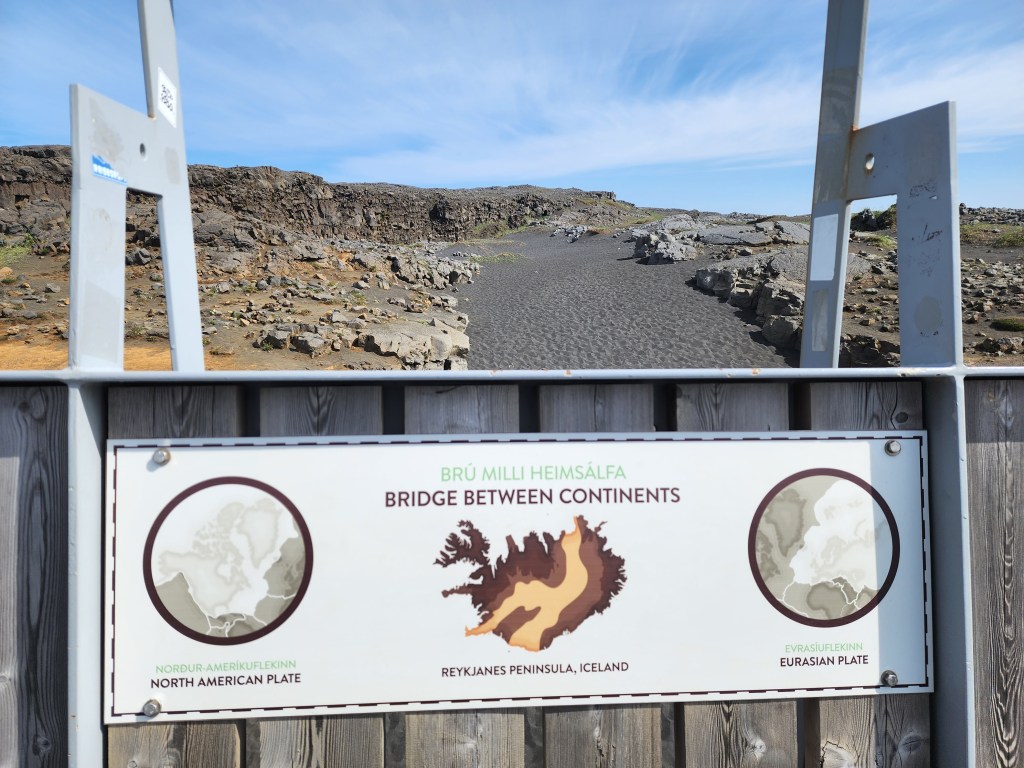

As our first introduction to Iceland, the place looked completely different from what we were used to. Volcanic rock as far as the eye could see, and few signs of any vegetation around.
2. Valahnúkamöl (coastal views)
From the bridge we followed the 425 roadway south and drove a short distance towards at the south-western tip of the peninsula. Valahnúkamöl was a picturesque series of cliffs and viewpoints.
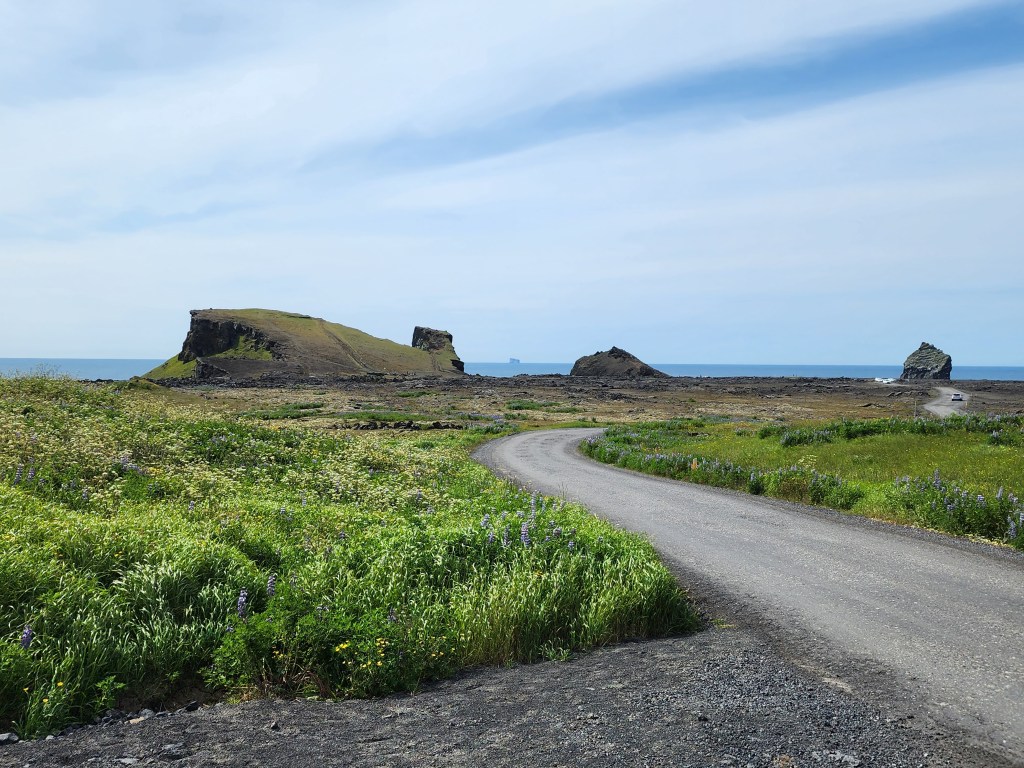

There were a few interesting things to see there. First was the statue of the great auk, a flightless bird similar to a penguin that was hunted to extinction. The last ones were killed in 1844 on a small island nearby.
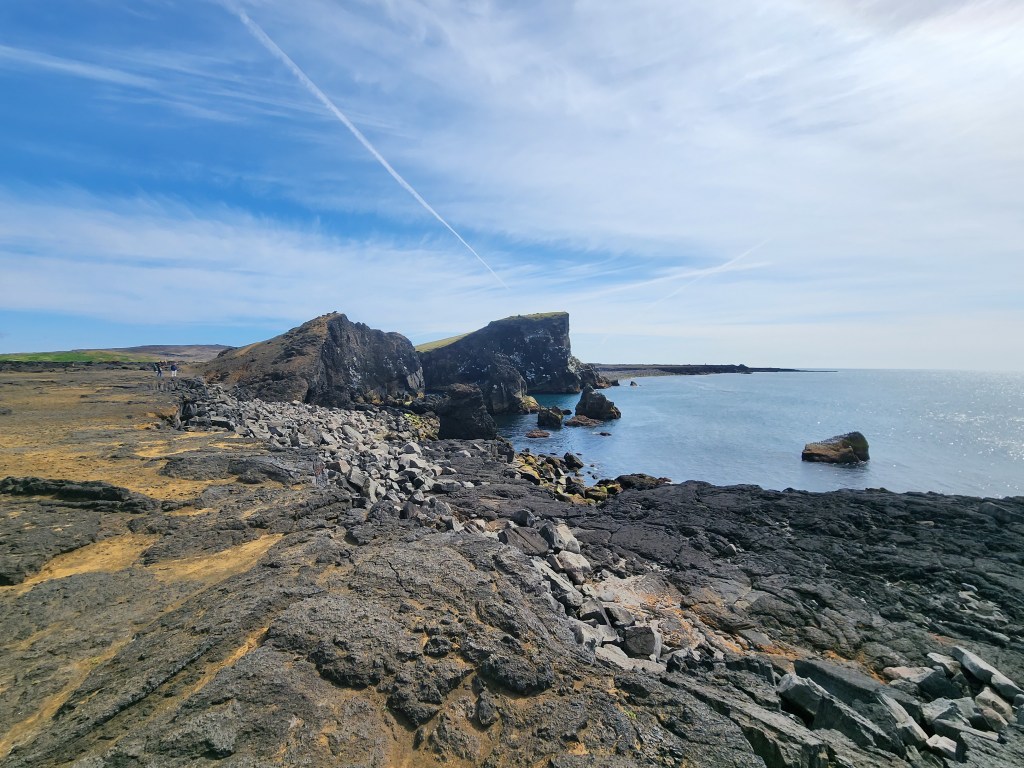
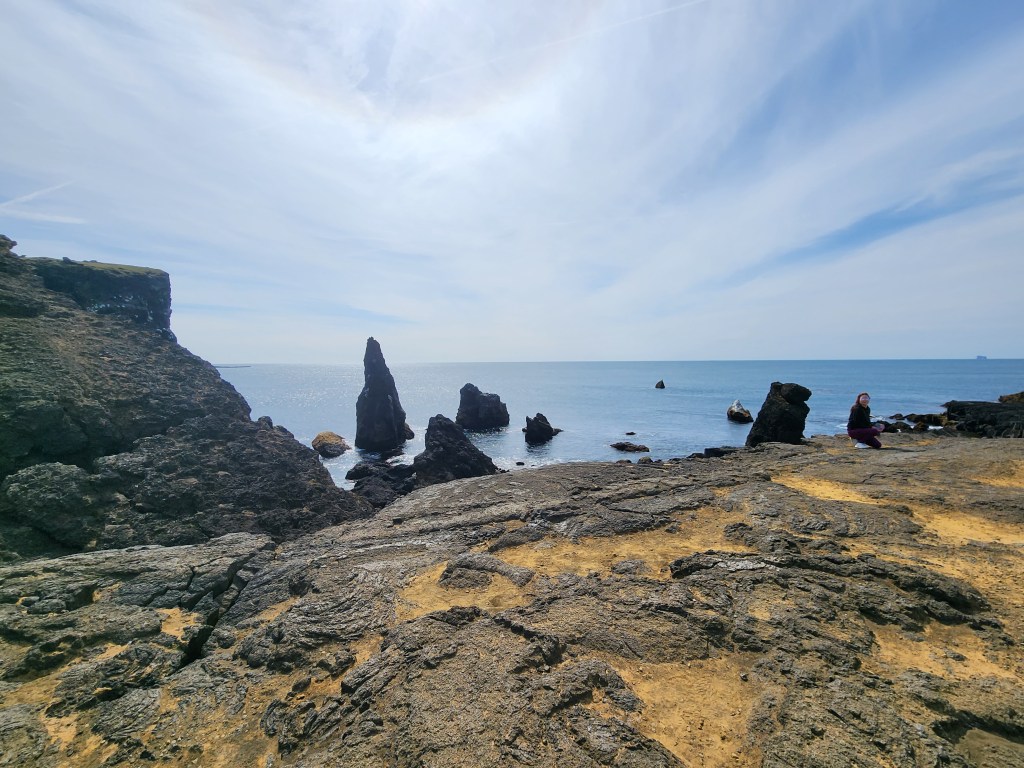
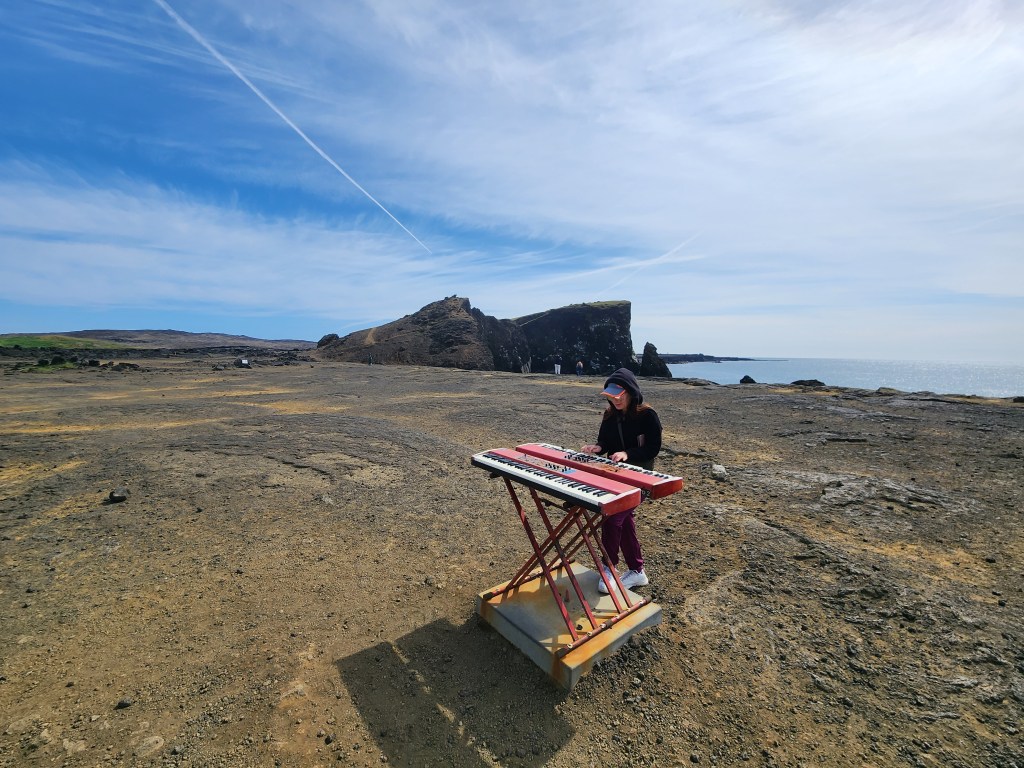
The two keyboards in the above photo were left over from the comedy film Eurovision Song Contest: The Story of Fire Saga. The location was used for the Volcano Man video.
3. Grænavatn (Green Lake) and crater
We drone eastward along the bottom of the peninsula until the road went towards a lake area. There we took in three sights within a very short distance of each other.

The first was Green Lake. The lake gets is name due to the high amount of sulphur in it.
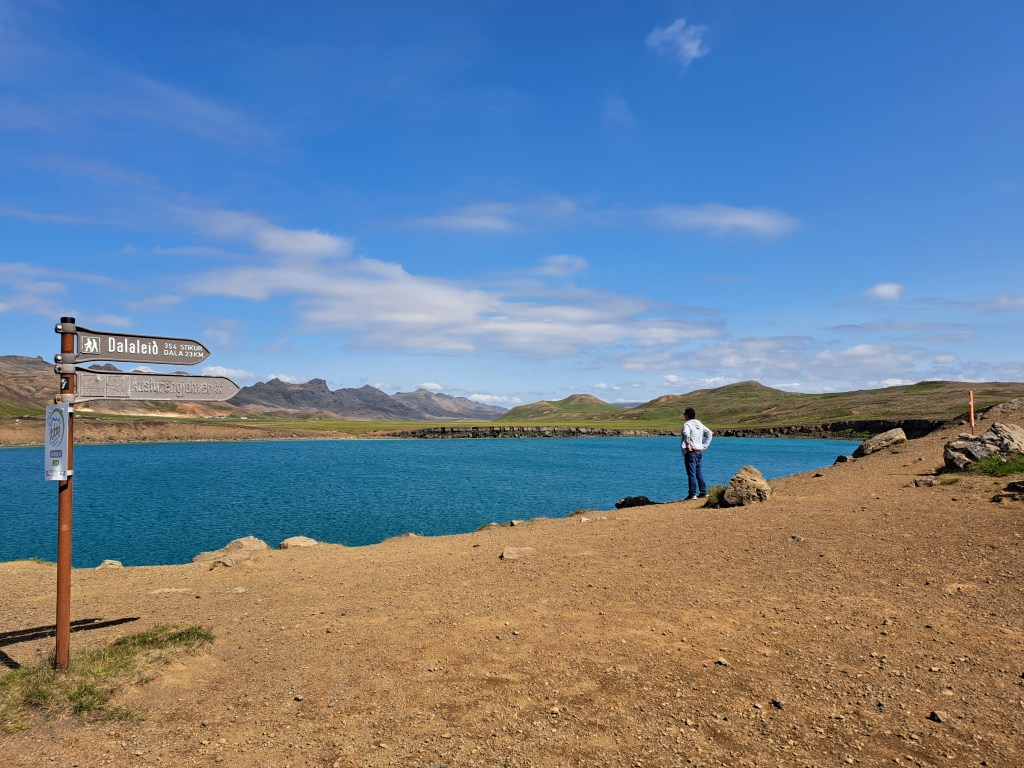

While in the area we had out first crater experience. This one was a short distance from the road and was not deep. We were to see many more over the course of the trip.
4. Seltún geothermal area/Gígvatnsvatn
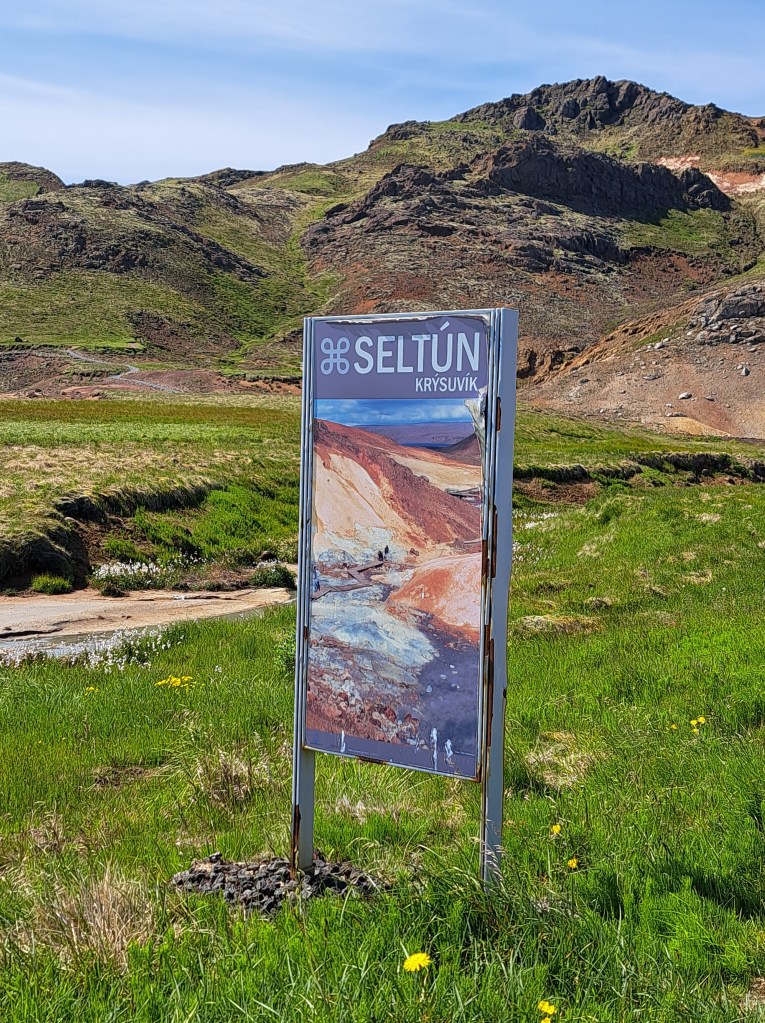
Next we visited nearby Seltún geothermal area, a place that looked more like another planet than anywhere we’d been so far. It was all green until you walked into the hot geothermal area, where the scenery changed drastically. The smell of sulphur was present, something we would get used to over the course of this trip.


While most people kept to the boardwalk, we took the dirt trails a little higher. We climbed the hills around the area before it became too rough and steep to continue further.
5. Kleifarvatn Lake
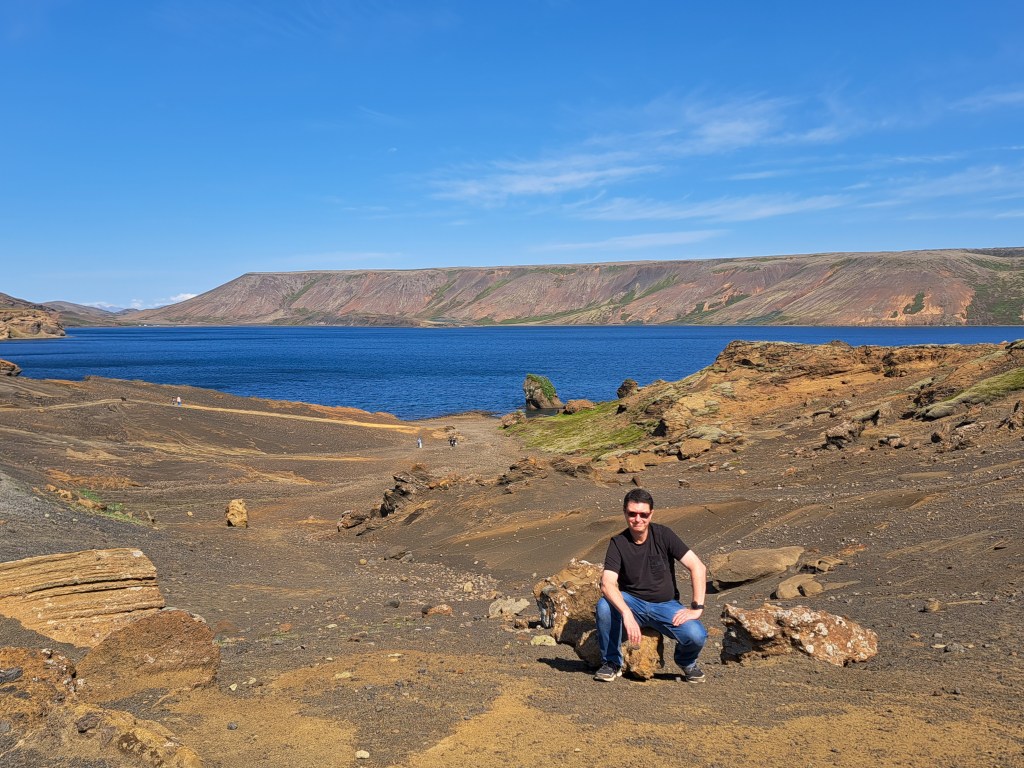
From Seltin it was only a few minutes’ drive to various viewpoints along Kleifarvatn Lake.
An earthquake in 2000 drained the lake of over twenty percent of its surface area. It has since recovered, but not quite the same; the seismic event created hot springs in one corner of the lake. The lake has no visible water coming in or going out as most of its water comes and leaves underground. According to folklore, a whale-like monster lives in Kleifarvatn. It’s a legendary creature similar in nature to the Loch Ness Monster. Unfortunately it was all quiet when we were there.


On the way back to our hotel, we passed a large, traditional farm-like structure with something hanging from it. We drove over and Kim got out to see what it was. She quickly guessed by the smell. Tied around the tops of the frames were thousands of fish heads. We later learned is was a centuries-old process called Harðfiskur,


At the end of the day we arrived in Hafnarfjörður, located near Reykjavik. That evening around 10 p.m., we felt a shaking for a few seconds. It was an earthquake that would open up the ground near the area we drove through earlier that day. We’d learn more about the new volcano in the coming days.
Random thoughts:
-the most famous spot in the Reykjanes peninsula is the Blue Lagoon, a spa that draws huge numbers of visitors. With an early morning arrival there was the temptation to book it. However, in our case we had already decided to skip it in favour of cheaper and quieter spas further into the interior. In the end we had no regrets
-once we were off the main highway, this part of the peninsula was very quiet
-roads in Iceland are slightly narrow but well maintained. We wouldn’t experience our first potholes until a week later and they were usually found on dirt roads
-on the first day I had the famous Icelandic hot dog for lunch at a gas station. It would definitely not be the last! Toppings were usually limited to onions and a few sauces. Ranging from 500-800 Krona around the country, it was cheap and delicious.
-food can be very expensive depending on the products. We didn’t eat in any sit-down restaurants and did a lot of cooking in our accommodations. I heard the Bonus chain of supermarkets was the cheapest, and it was true. We would watch for the distinctive yellow and pink pig sign wherever we went. Although interiors were tighter and selection was limited for certain things, it helped for fresh breads and other simple things like pasta or instant oatmeal Sometimes we used other chains such as Nettó or Krónan when options were limited. They were nicer stores with better selection, but prices were noticeably higher.
 Humphreys Travel