
- Thrihnukagigur
After a long and tiring first day, we rested up on Day 2. We stayed around Reykjavík and prepared for the journey north. One activity we did was a half day into an extinct volcano called Thrihnukagigur (Three Peaks Crater). Done through a tour, the trip started around 10:00 and we returned to our car around 2:30.
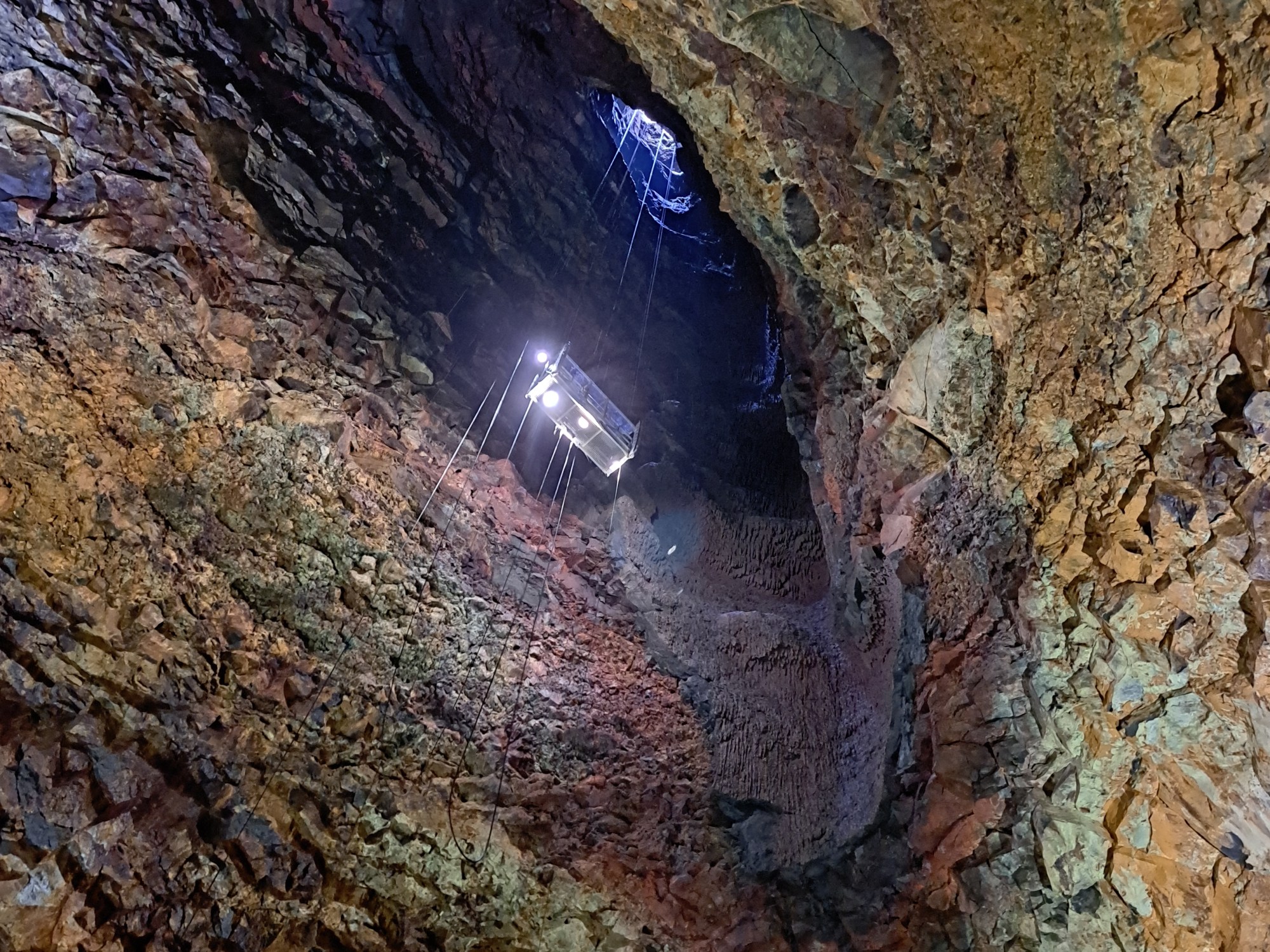
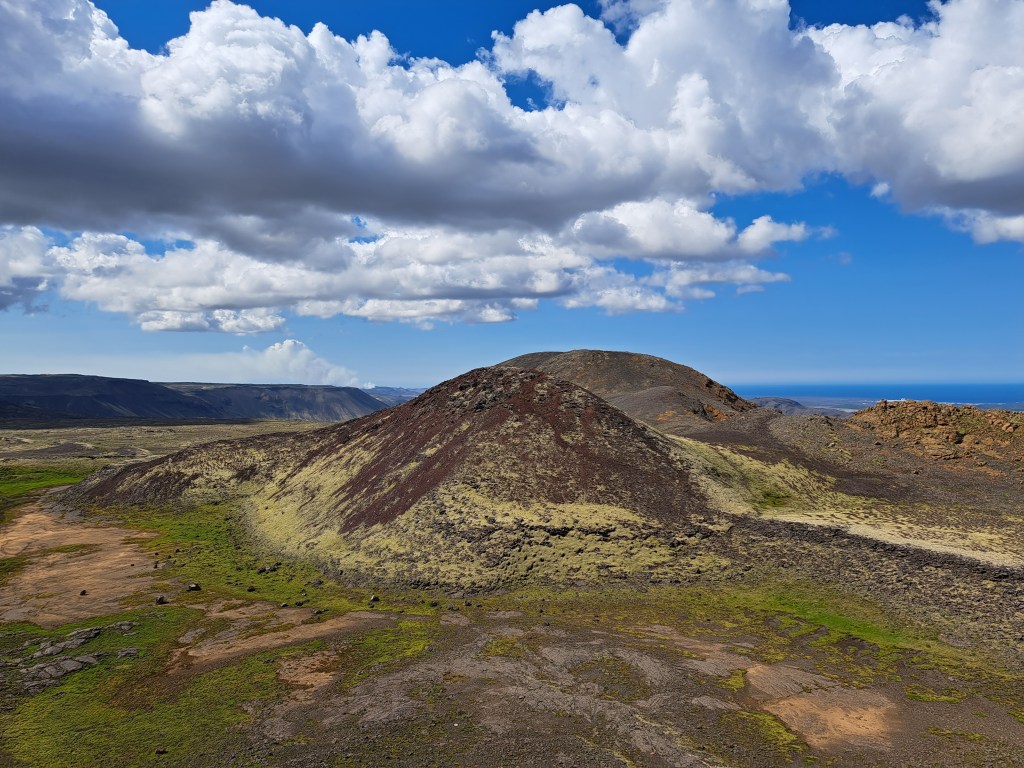
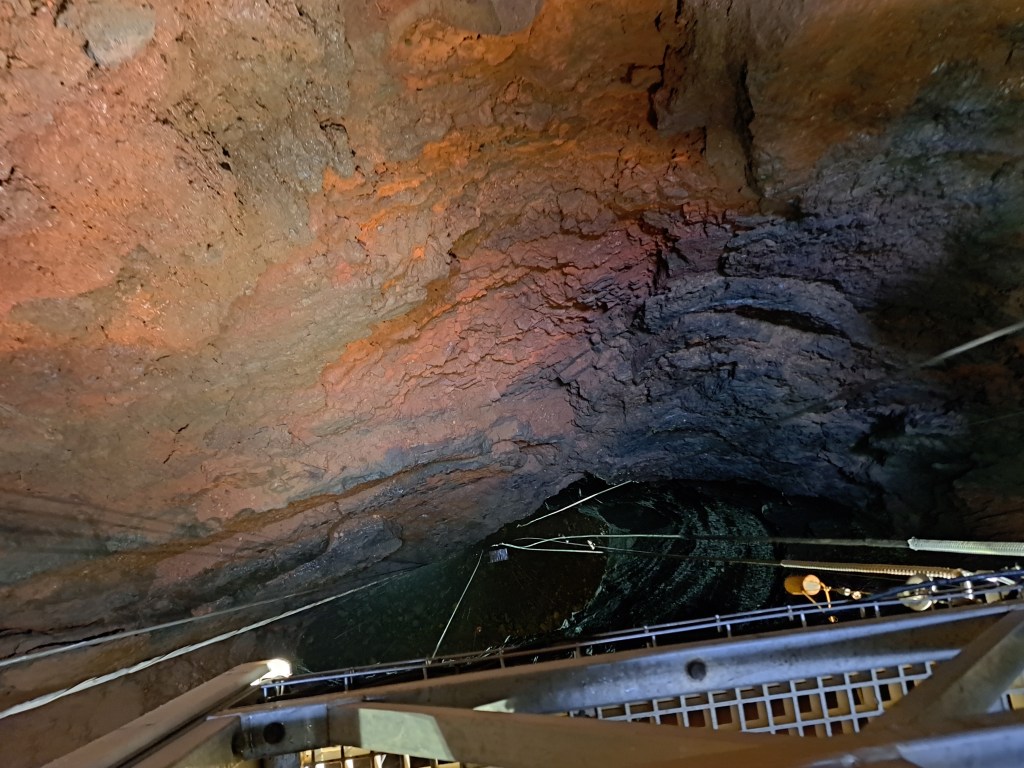
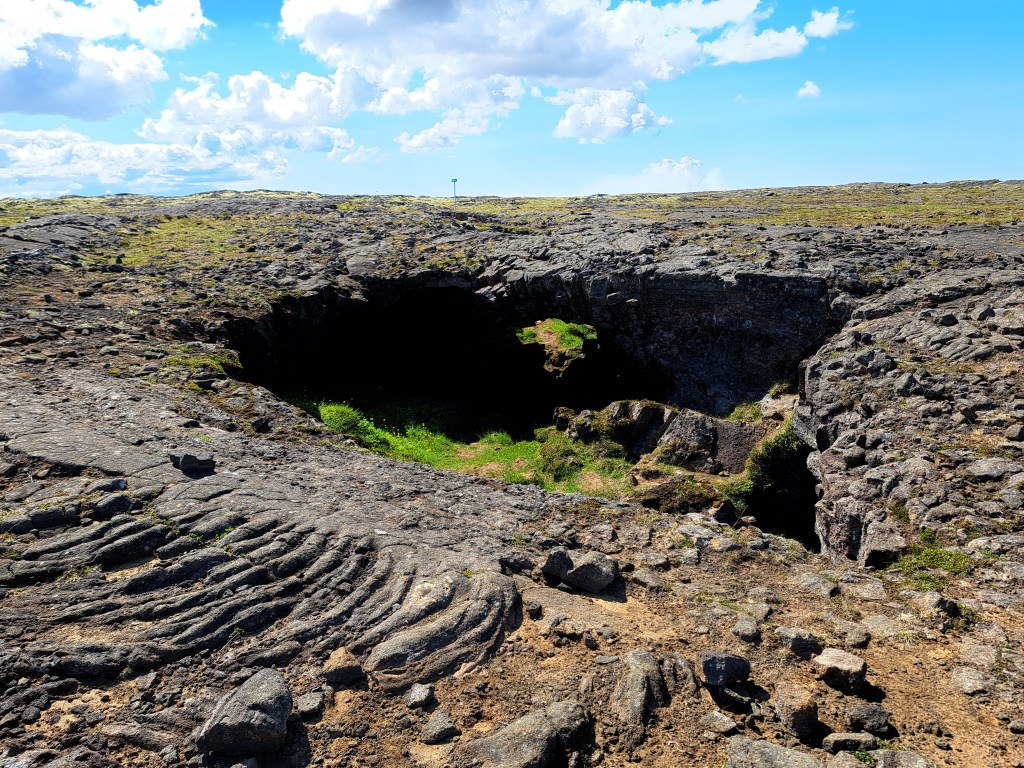
Sitting directly at the meeting point of the earth’s plates, Thrihnukagigur last erupted 4,000 years ago. When it did, something unusual happened. Normally when a volcano erupts, the interior magma chamber fills with magma which pours over top the volcano as lava. The lava and magma both eventually harden around and inside the volcano. But in this case, the magma inside the volcano drained away before it cooled, leaving a perfect cast of the interior of the volcano when it erupted. First discovered in 1974 and open to the public since 2012, it was a place I’d been interested in for awhile.
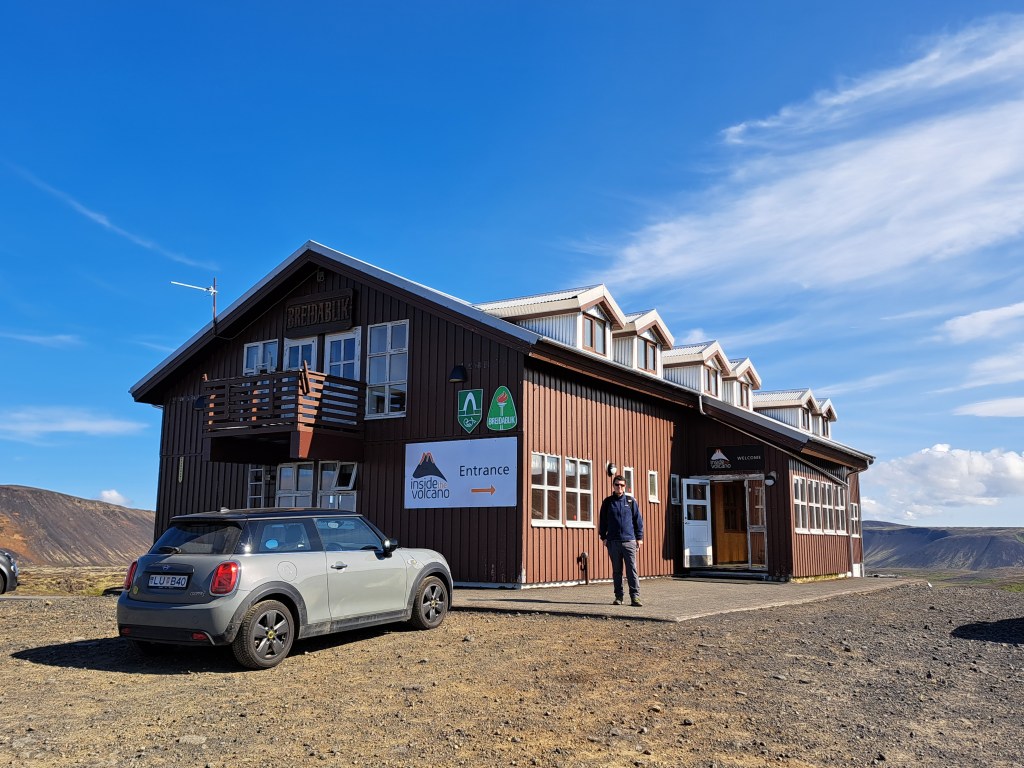
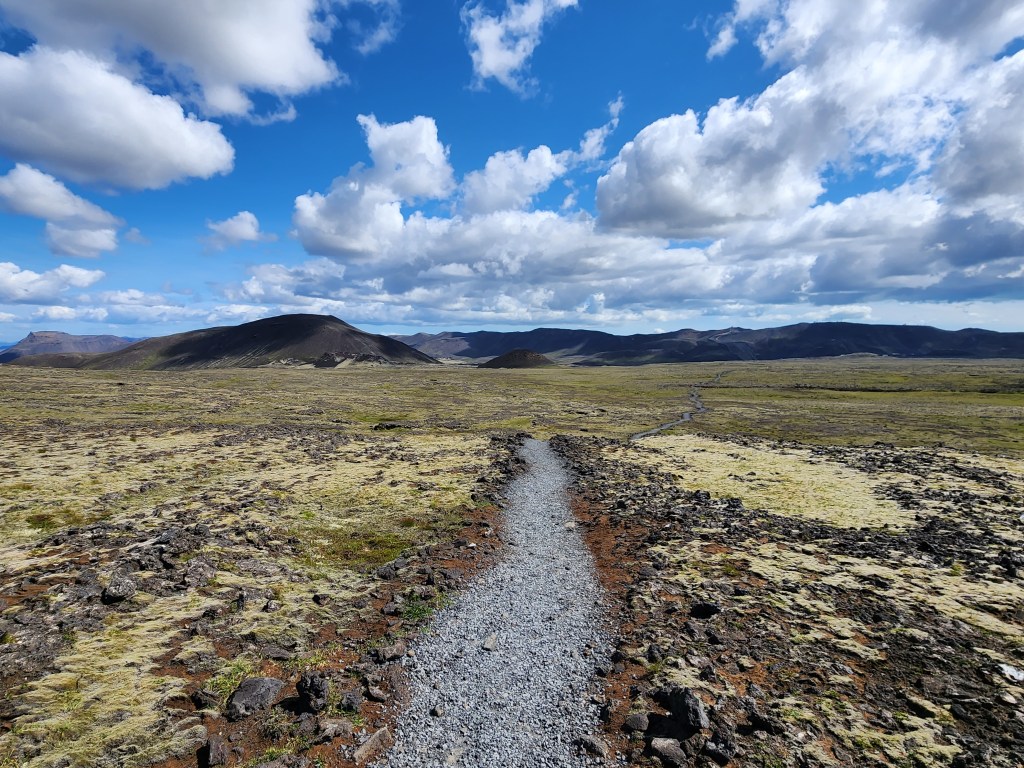
After a 35 minute drive from where we were staying, we arrived at the meeting point. From there we waited for the others to arrive by car or bus and eventually the group of 18 people began trekking towards a set of hills in the far distance.

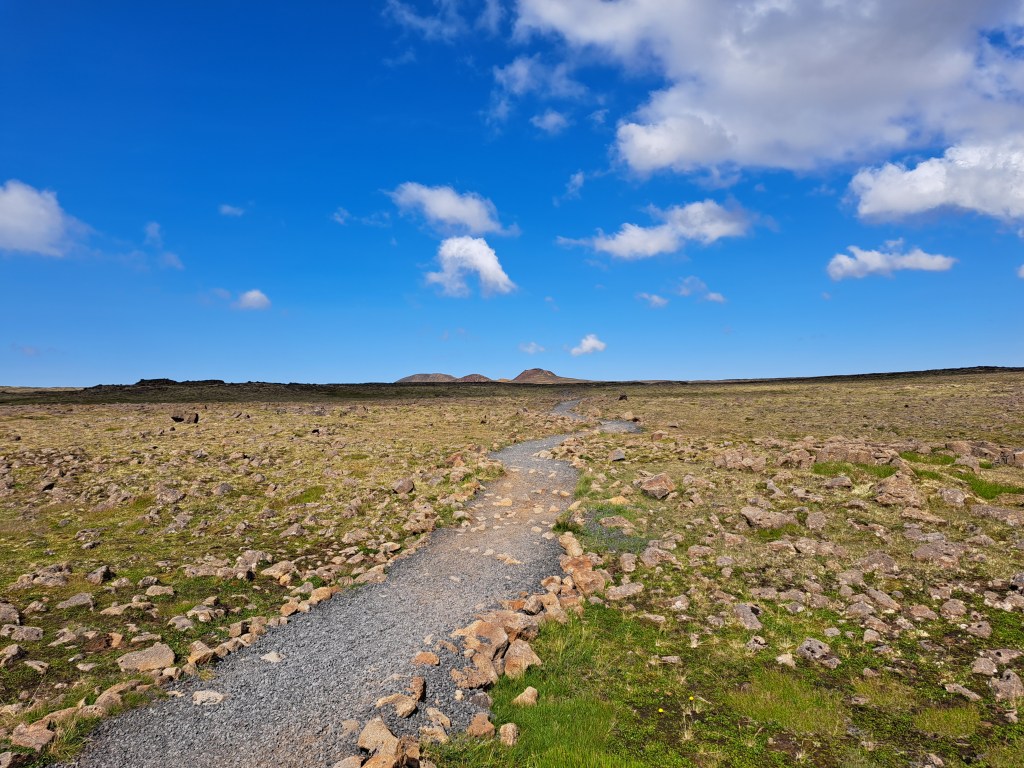
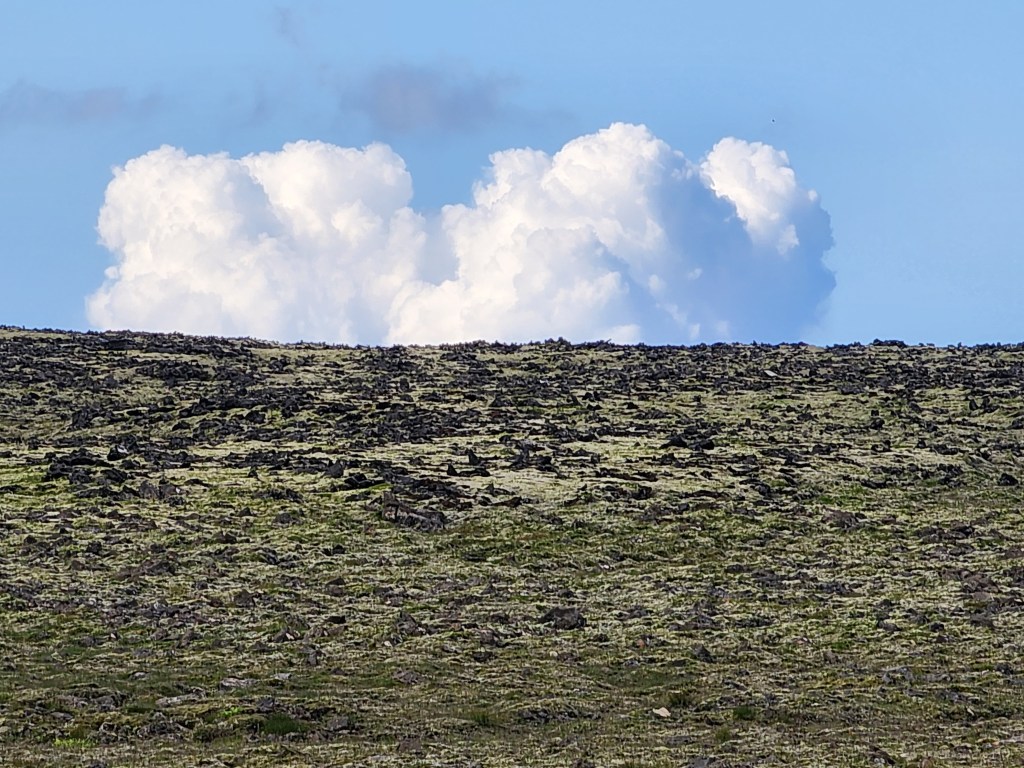
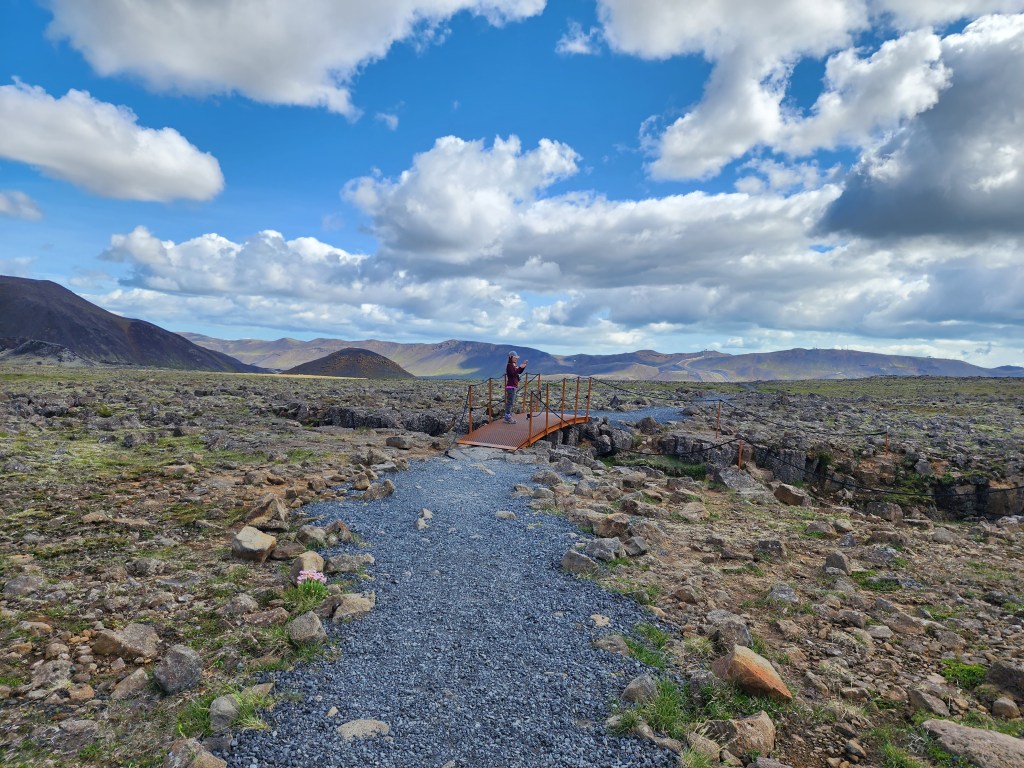
The walk took about 45 minutes, and passed some dramatic changes of scenery. The ground was relatively level, but had different volcanic features that changed as we continued walking. Temperatures were around 15 degrees (59 F) and it was perfect walking weather.

The guide pointed out the smoke from the recent eruptions near Fagradalsfjall volcano about 30 km (19 mi) away.

Eventually we reached a building at the base of the volcano. There we prepared to go up in groups of six, got our helmets and put our harnesses on. After about 15 minutes our group was ready to go up.
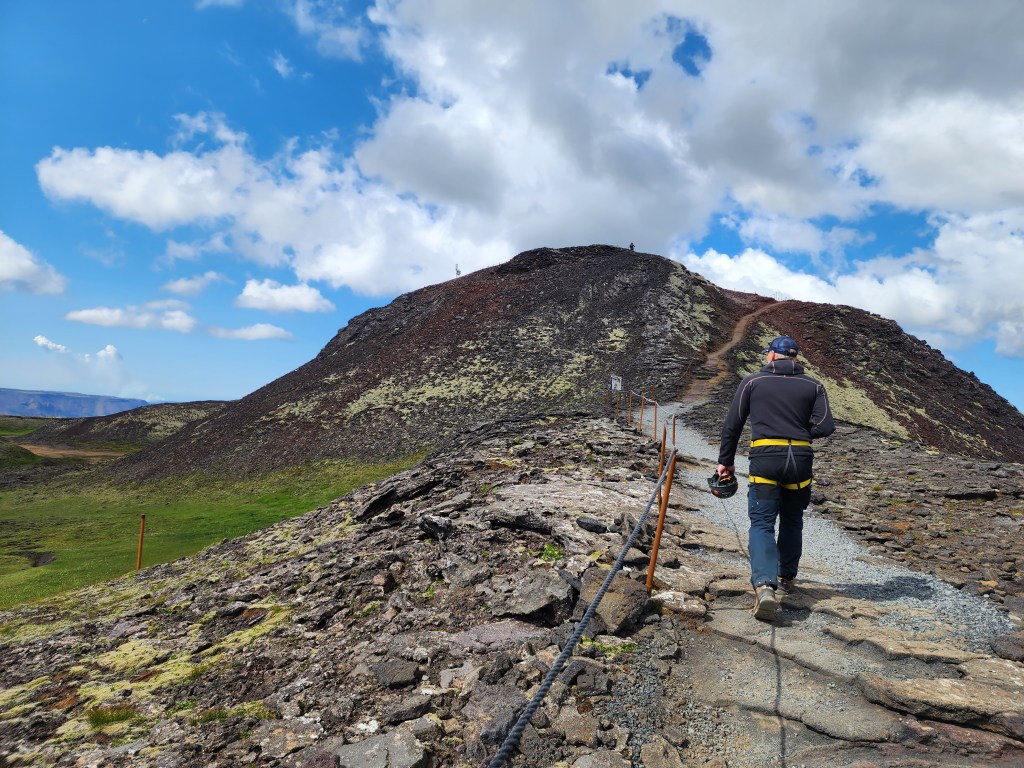


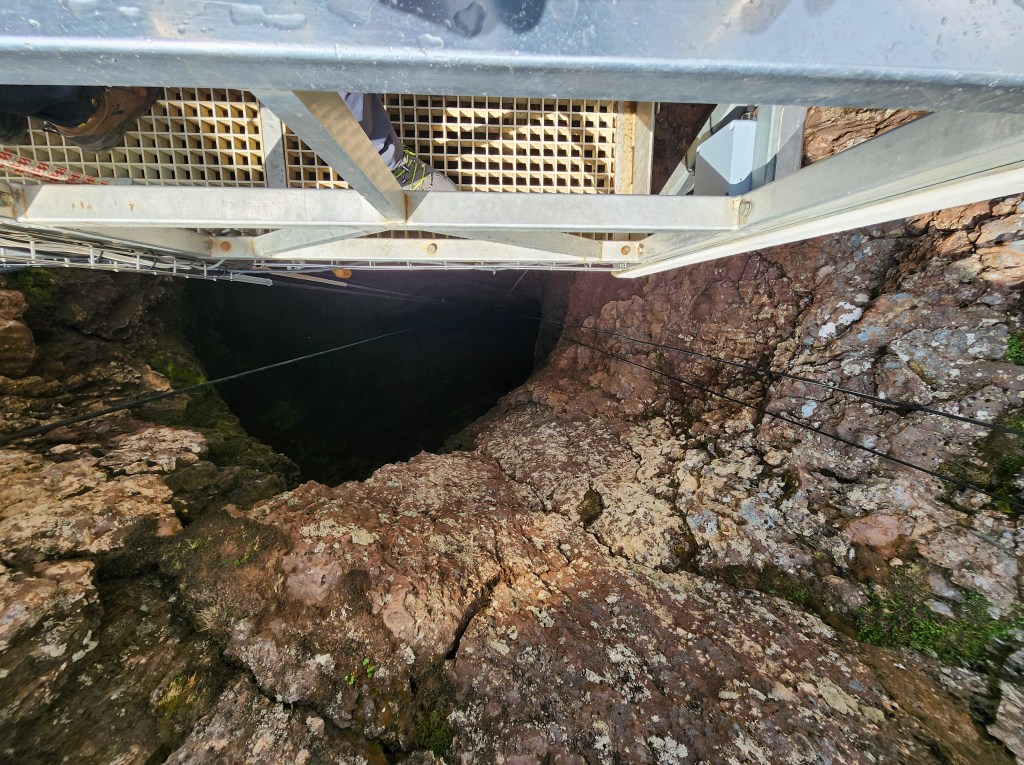
We circled around the volcano before the “elevator” appeared. We were told it was a modified window-washer similar to those used in high rises. We were individually hooked to the walkway and then hooked into the cage once we were across. Then the 120 m (394 ft) descent began.
We were warned that the elevator would briefly scrape against the side of the opening. And it did, Other than some shaking it was a smooth descent. It took about 6 minutes to reach the bottom.


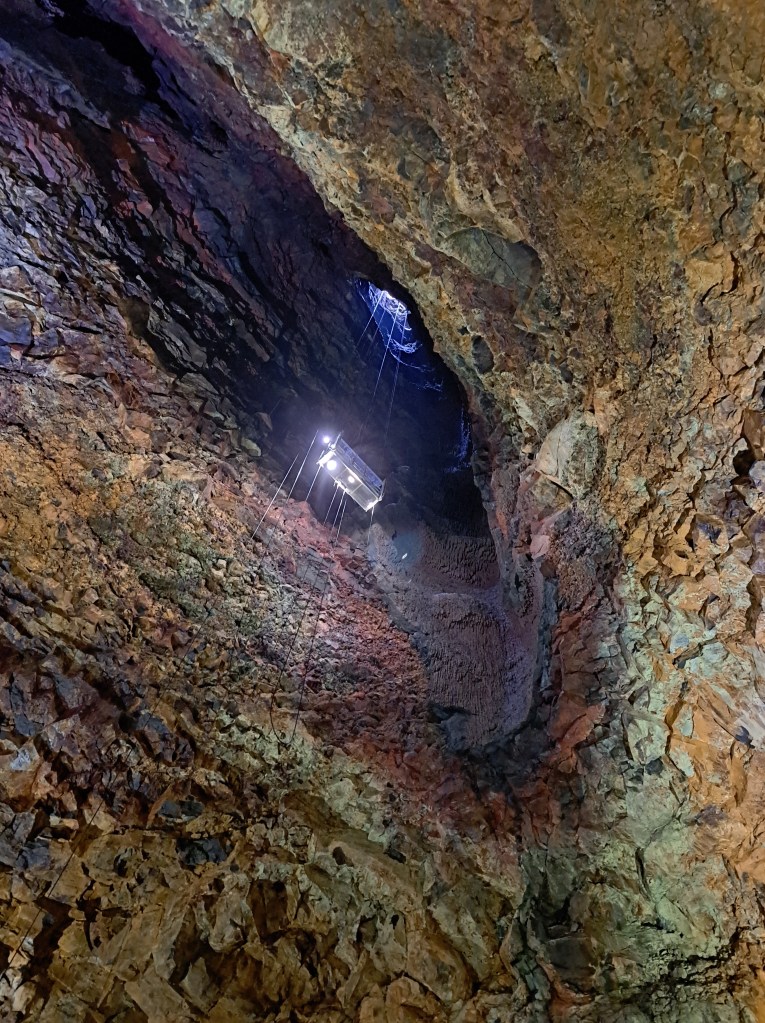
It was cool and quiet at the bottom. There were floodlights placed around the chamber to illuminate the walls of the magma chamber. Looking up at the rocks, the combination of sulpuric gases, rock and microorganisms created some beautiful colors.
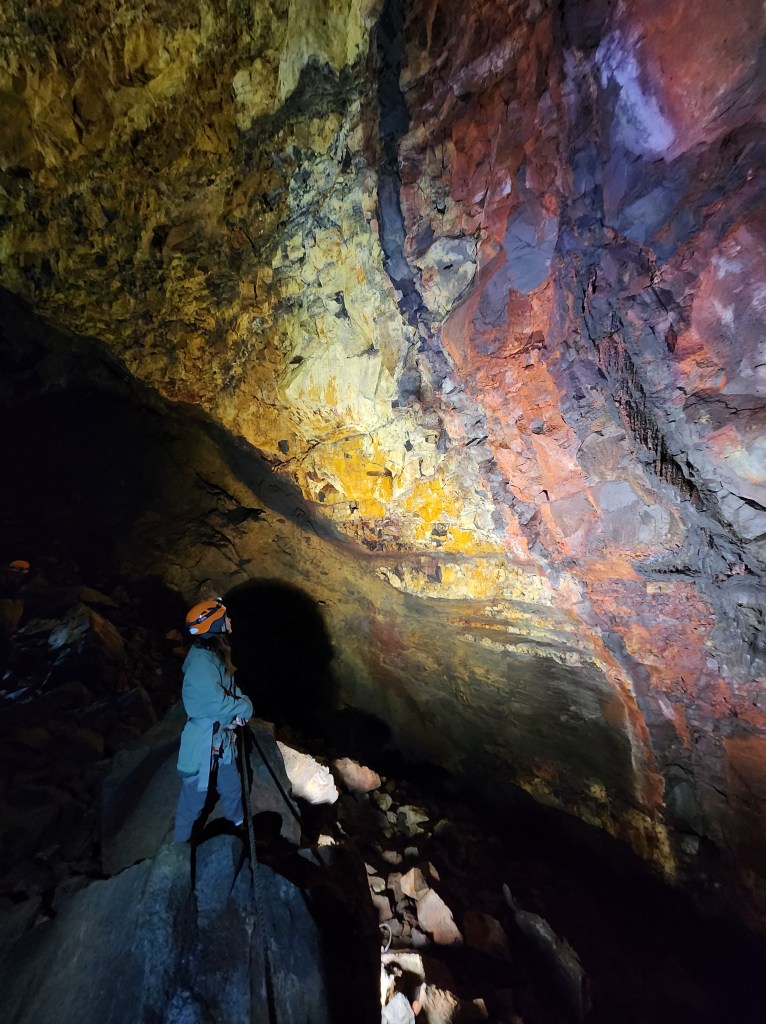


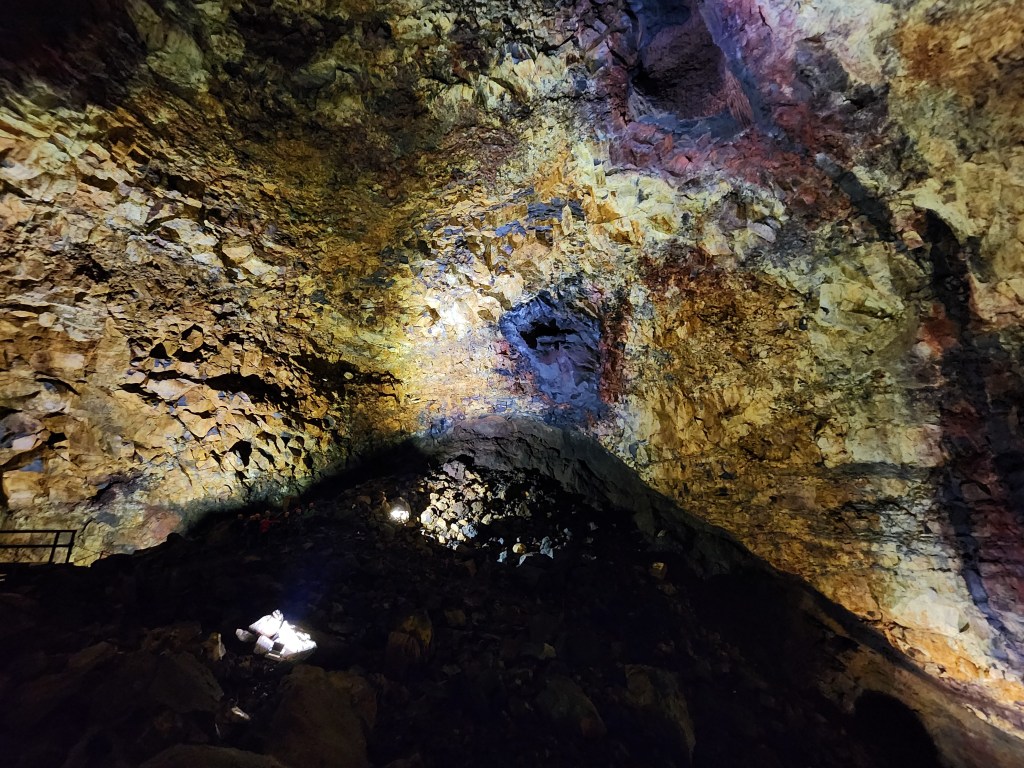
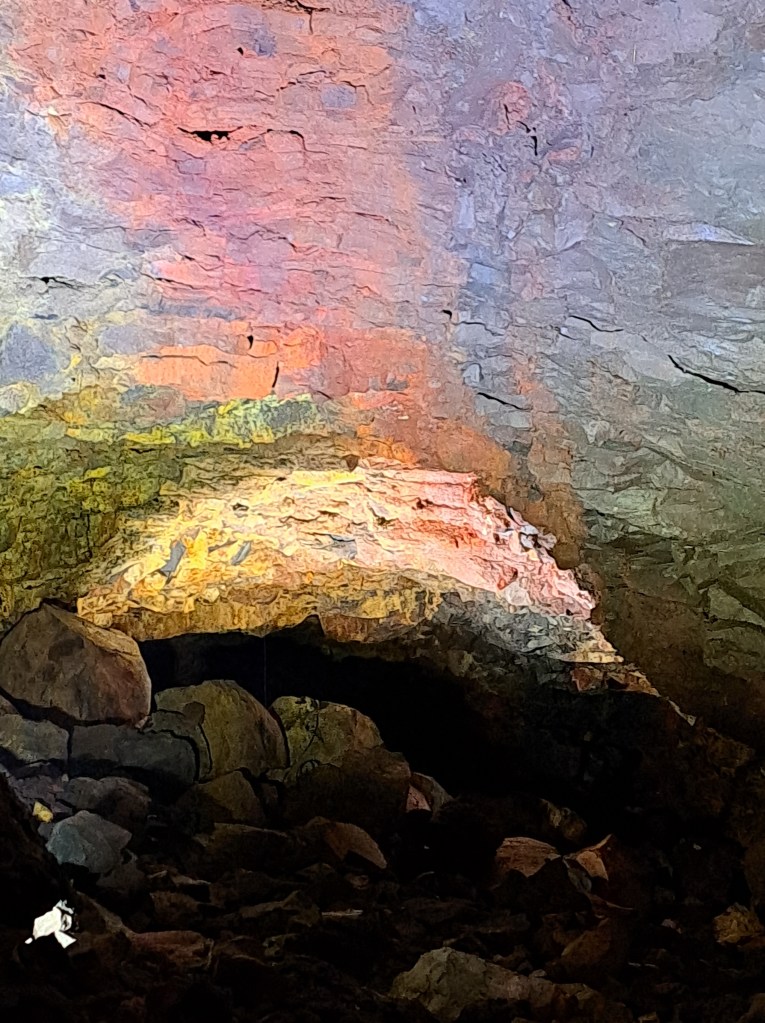

We stayed at the bottom for about 30 minutes before it was time to head back up. Temperatures are consistently around 3 degrees (37 F) in the magma chamber so it was damp and cold. Although the stay was short, it left quite an impression on us. It was quiet and beautiful, but we also had to watch our steps at all times as the ground was very uneven. The base of the magma chamber had been mostly left untouched, so the pathway around was very rough.


Once outside we went down the crater and back into the building to a simple lunch of soup and water, coffee or tea.


Since we had driven to the meeting point on our own, we didn’t have to wait for the others in our group to take the trail back. This made for a very relaxing return at our own pace.


2. Reykjavik
Before we began driving the ring road route, we spent a brief time in Reykjavik, checking out the popular tourist district near the famous church Hallgrimskirkja as well as the waterfront.


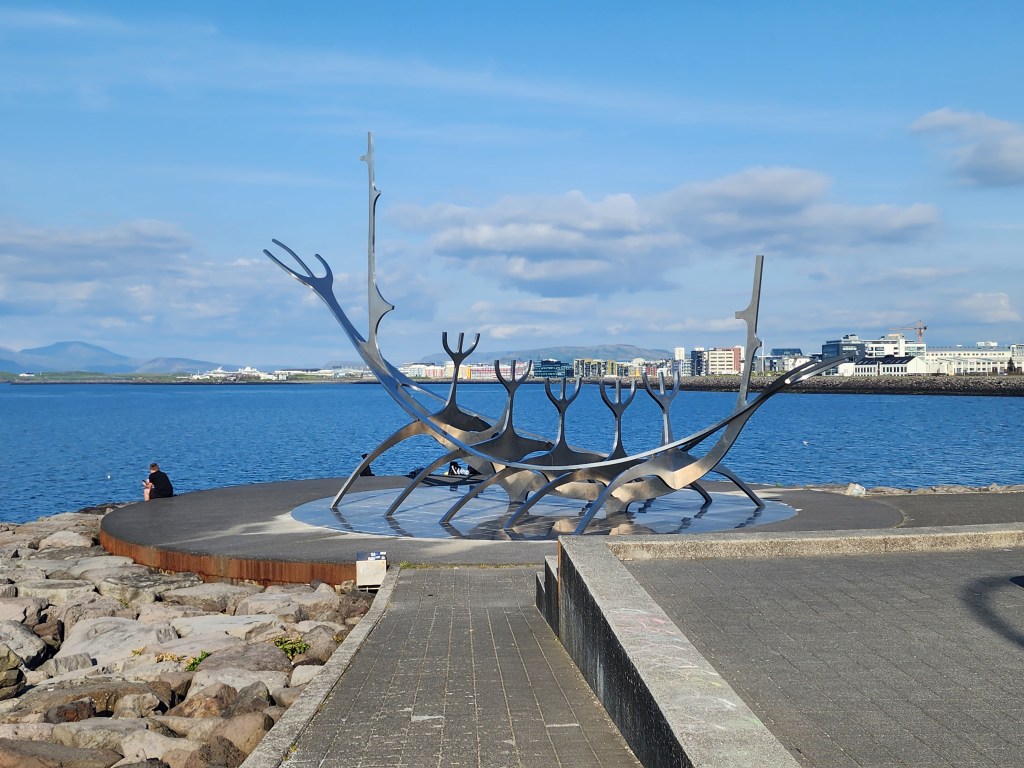
Reykjavik was a compact and pleasant capital. It was both clean and modern but very quiet outside of the small downtown areas where most of the tourists gathered.
After a good night’s sleep, it was time to head to our first destination along the ring road: the Snæfellsnes Peninsula.
 Humphreys Travel