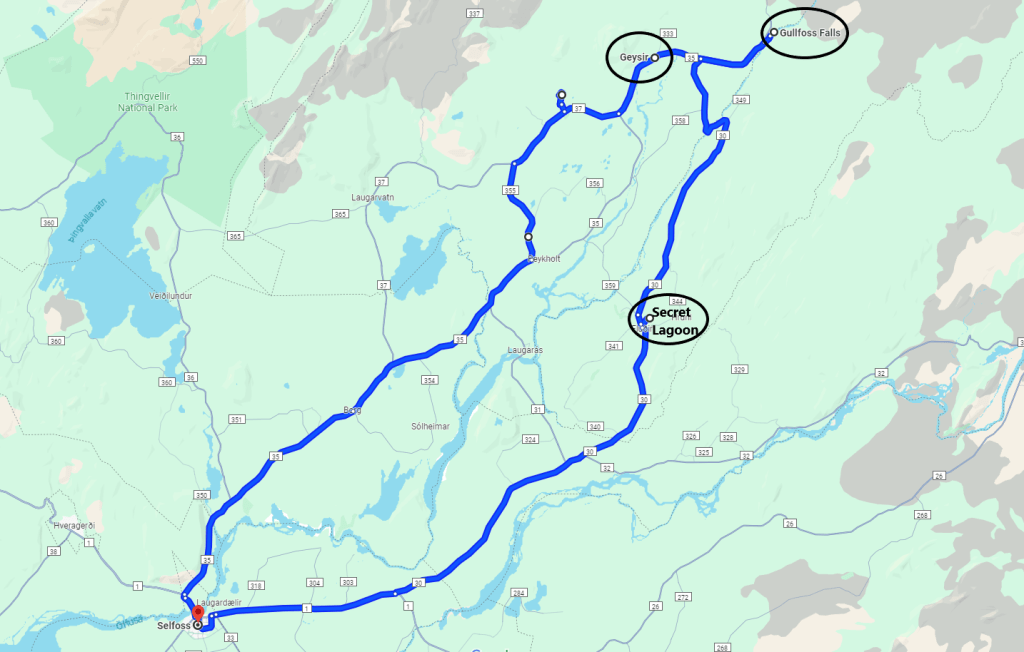
After 10 days travelling around Iceland, we finally began the Golden Circle. Considered one of the best drives on the island, we decided to save it until the end as it was a quick drive to the airport and an easy way to end the trip. We gave this leg of the journey two days from our place in Selfoss at the western edge of the circle. On the first day, we did a few spots along the southern part of the circle going east.
Secret Lagoon

After a long day of driving and hiking the previous day, we decided to start slow and tried out the thermal bathes in the early afternoon called Secret Lagoon.
Created in 1891, this geothermal pool with a spouting geyser has showers and change-rooms, a bar and an eating area. We found the change-rooms were cleaner than Myvatn Baths we visited a few days prior. On the other hand, the actual bathing area had a lot of natural vegetation in it so the water was much murkier than Myvatn and the concrete benches all along the edge of the pool were a bit slimy. However, the warm soothing waters after a lot of driving and walking were worth it.


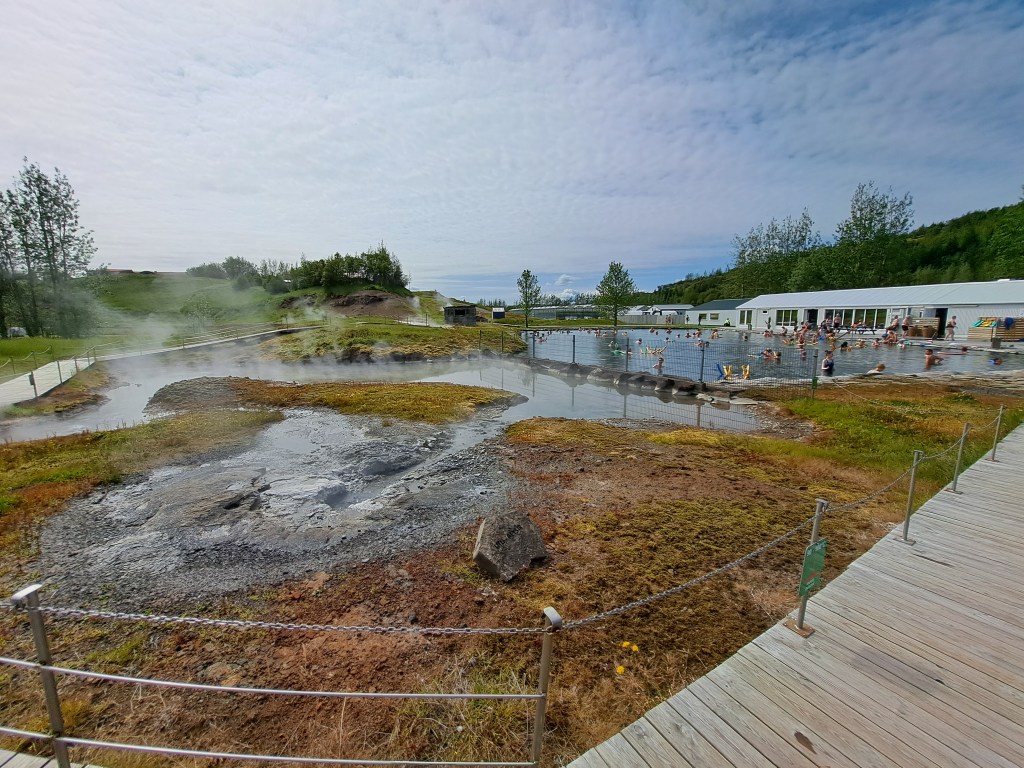
Although they both had pros and cons and we enjoyed doing both, we preferred this place to Myvatn for a few reasons. Along with the change-rooms, it felt more natural and less like a giant swimming pool. Secret Lagoon had more variety in the temperature (with fewer cold areas, though some may prefer that) and you could see more of the actual hot springs directly behind. It was much cheaper as well. But Secret Lagoon was much smaller than Myvatn so there were few quiet areas. It really depends on your preferences.
Gulfoss
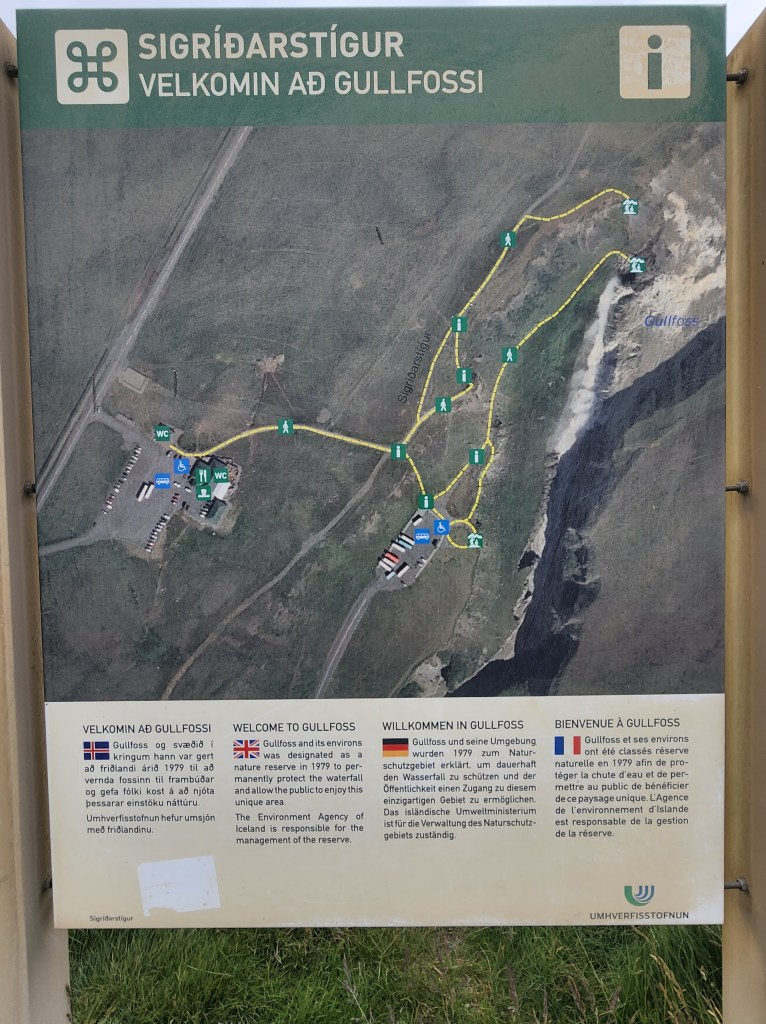
Our next stop was Gulfoss, a powerful waterfall found on the Golden Circle. After arriving in the parking lot, we walked above the Gulfoss first to get a better sense of the size of it.

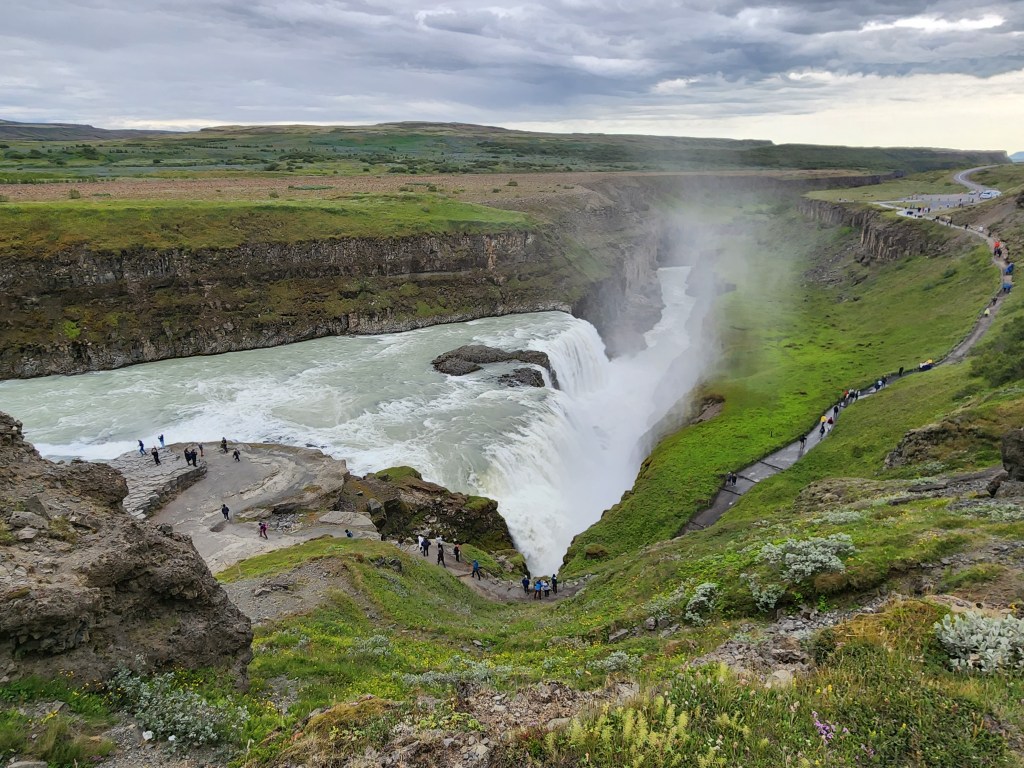

On average 100.000 liters (about 26,000 gallons) of glacial water from the river Hvítá plunge 31 meters into the Gullfossgljúfur canyon every second. Since the sheets of cold spray come down continually, we recommend raincoats!

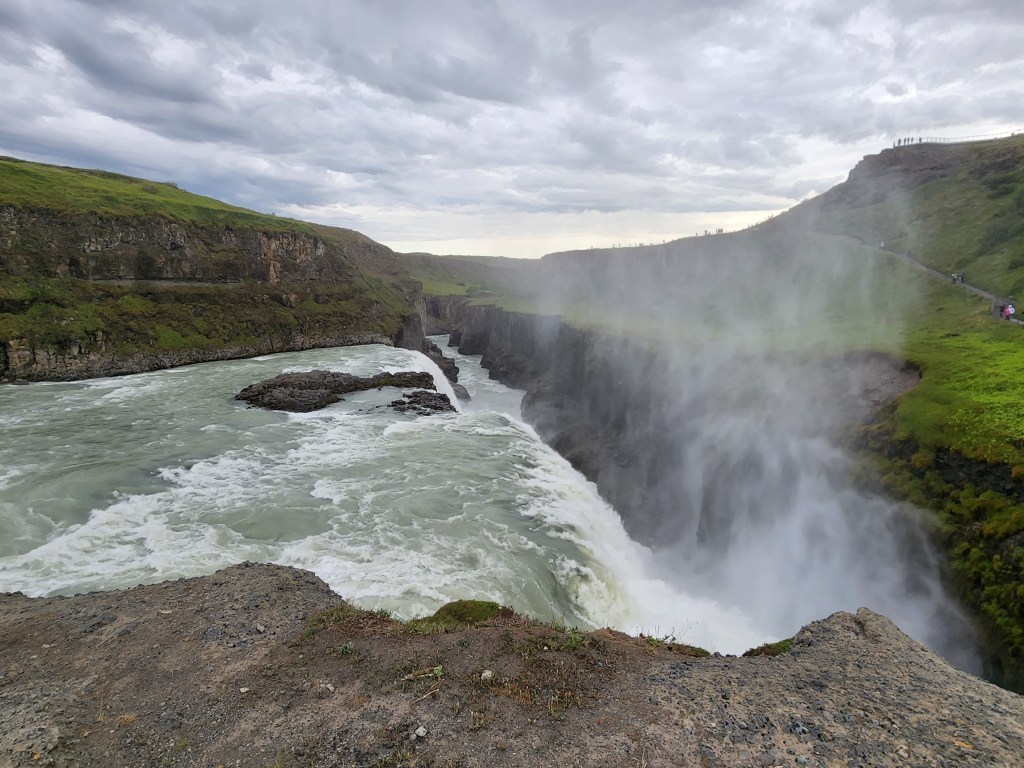
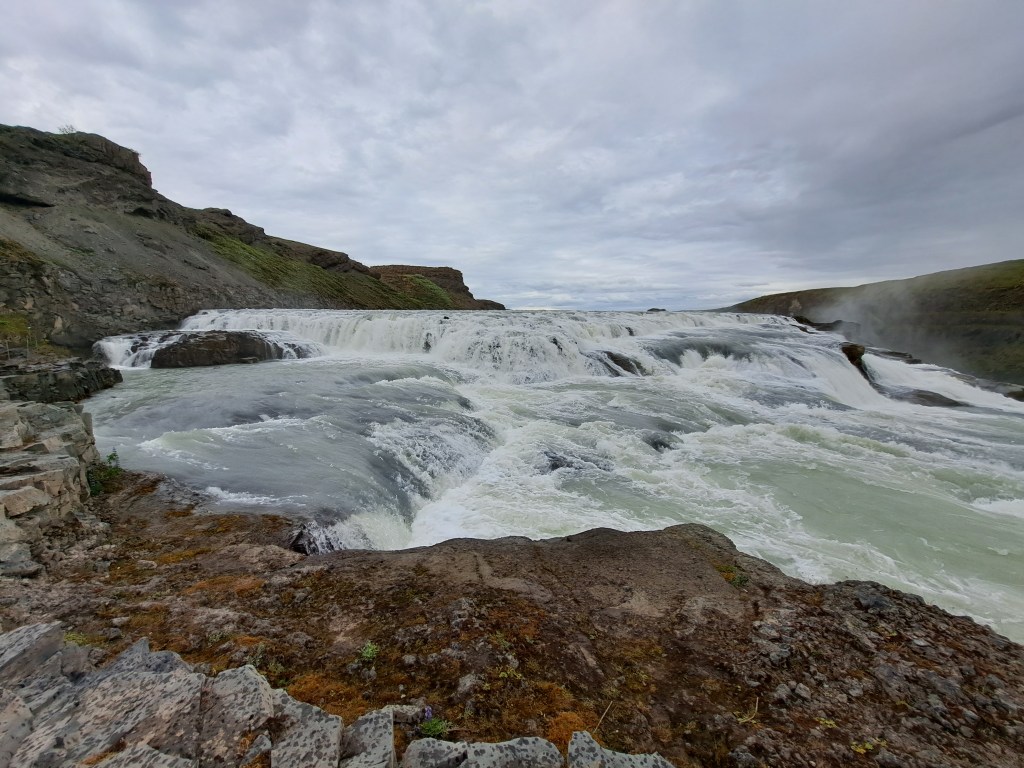
The view from the area directly in front of the falls was impressive with the powerful sound of the rushing water and the endless curtain of spray in our faces.
Although we had no issues with mosquitos and few issues with any other insects on the trip, Gulfoss was one of the few spots where there were swarms of flies around. They didn’t bite, but were a bit of a nuisance at times.
Geysir
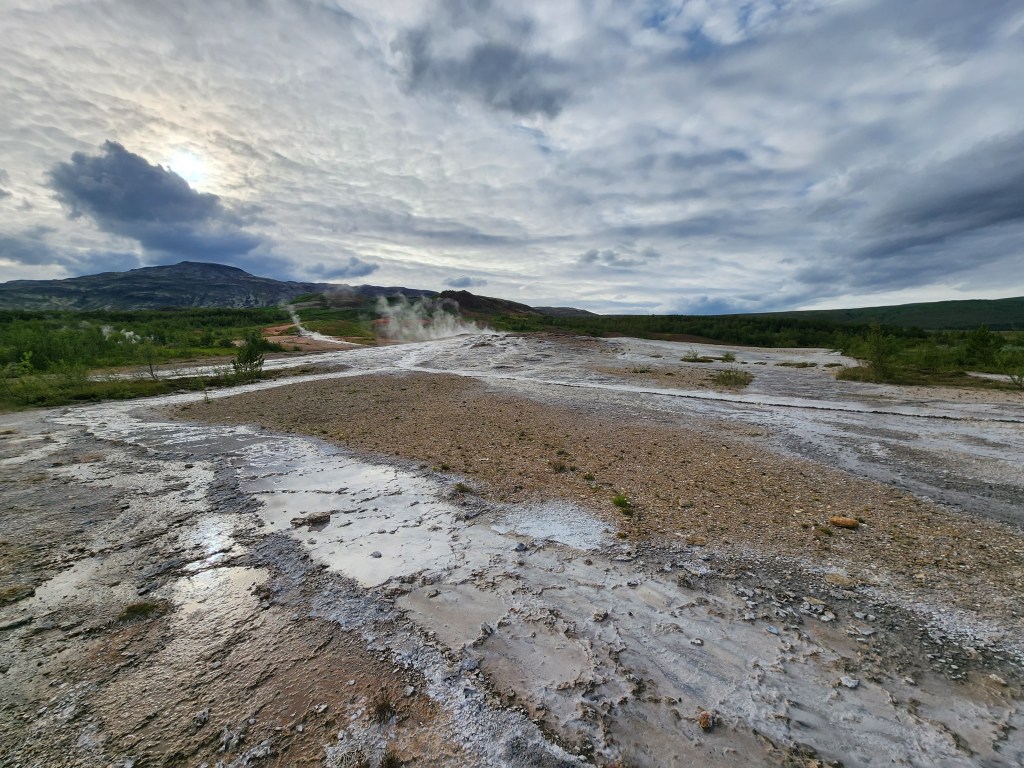
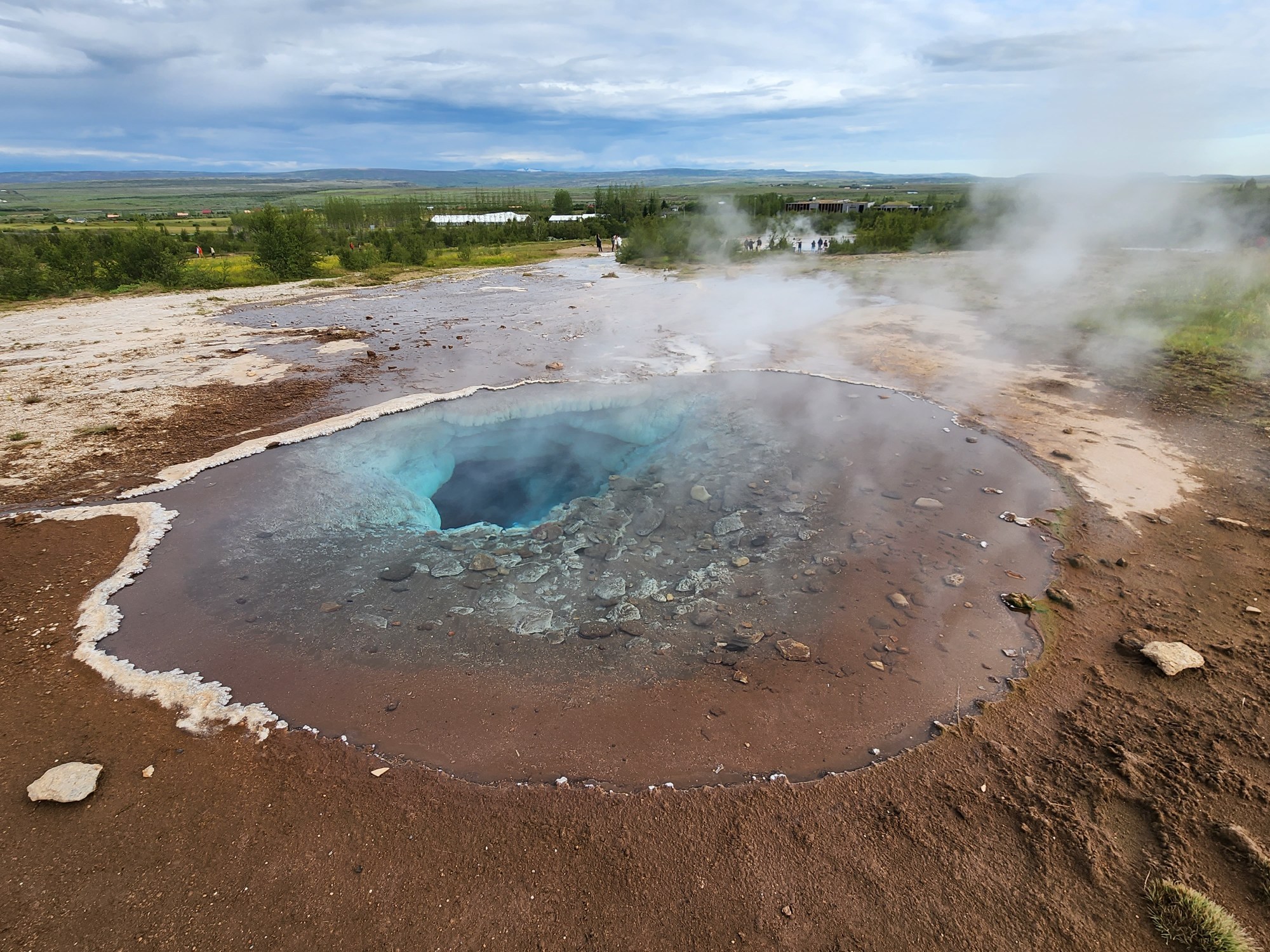
Located at the eastern end of the Golden Circle was our last stop on the day. This was a visit to Geysir, the hot spring that is so well known it has lent its name to the English word we know today.
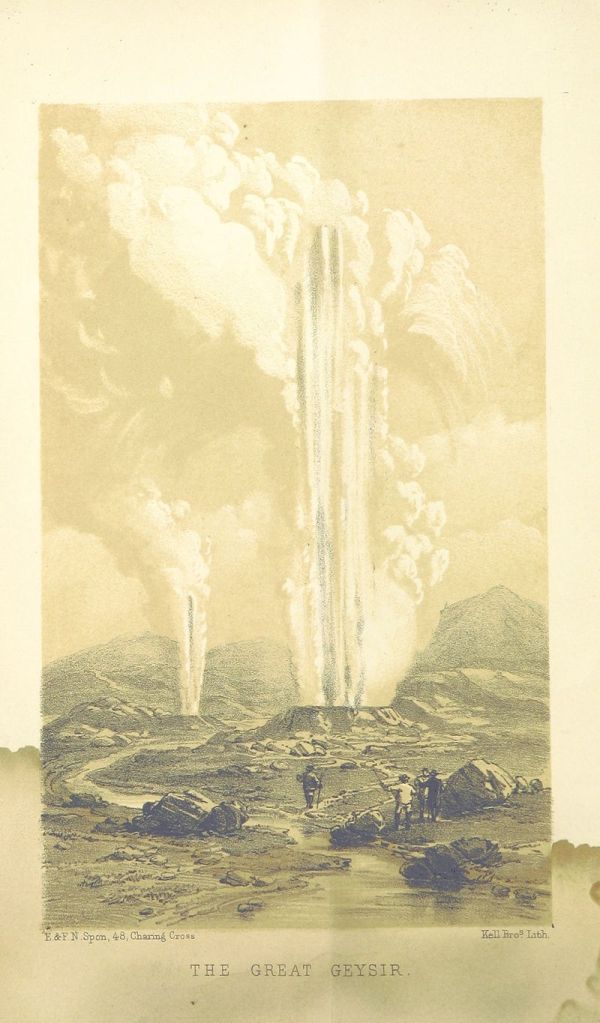
When it erupts, great Geysir shoots boiling water up to 70 metres (230 ft) in the air. Unfortunately the eruptions of Geysir are very random and infrequent. Although it has been active for 10,000 years, these days you have to wait months or years for the next eruption to happen. After a long period of eruptions, silica tends to build up and blocks the vents, slowing down the frequency of the eruptions. Research shows that earthquakes tend to push Geysir into becoming active again by dislodging the silica, so eruptions could become more common again in the future.
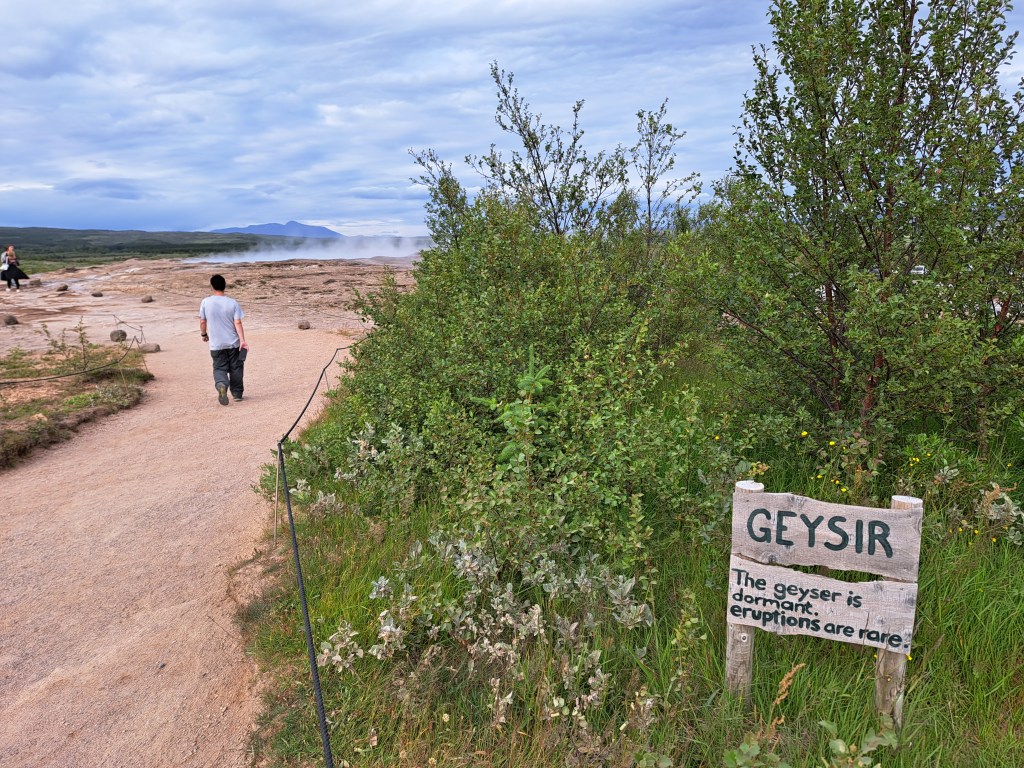
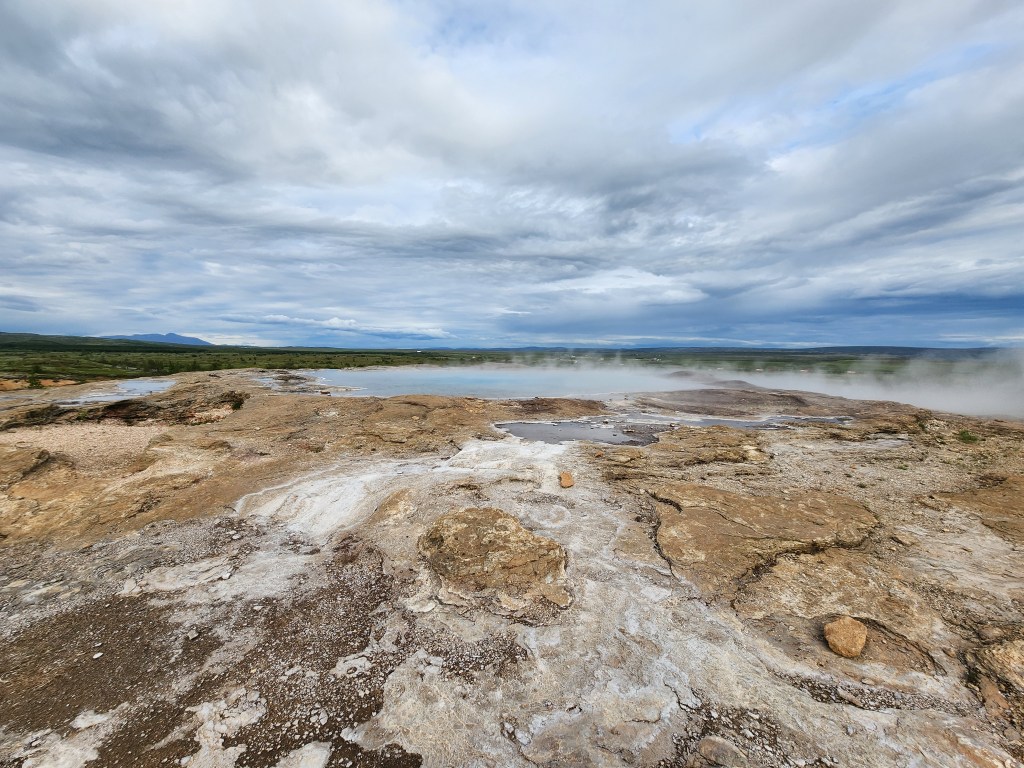
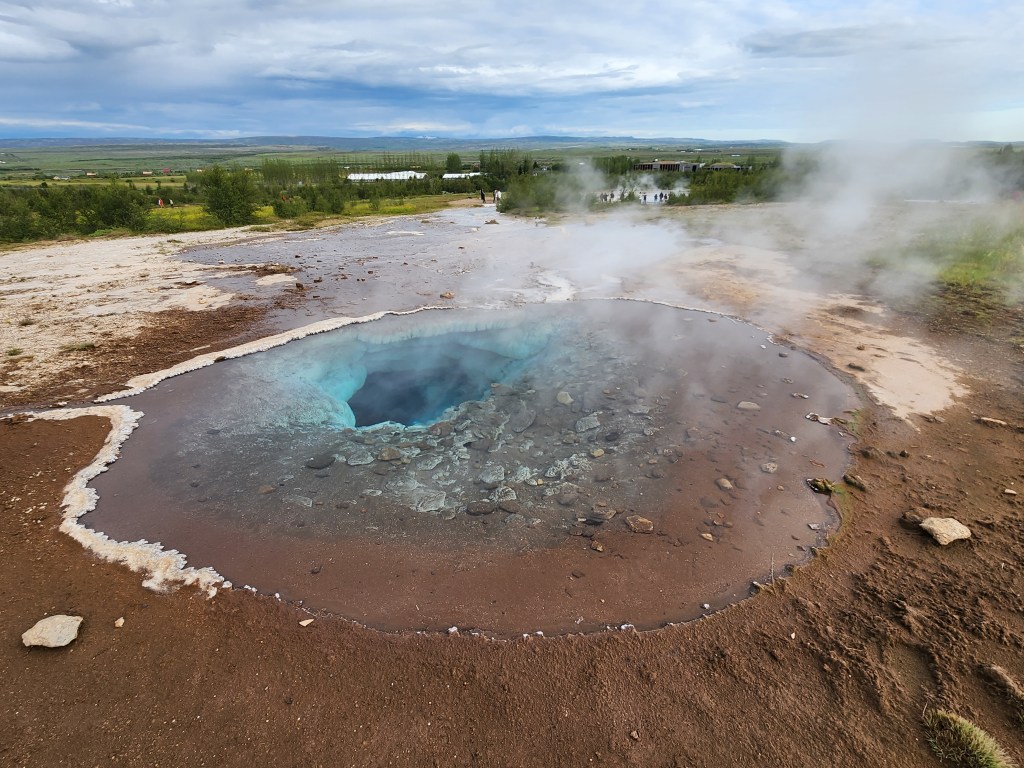
This area contains various kinds of hot springs, steam vents, and sulfurous mud pots. While the Great Geysir rarely goes off, the smaller geyser Strokkur is very active, sending up jets of boiling hot water every 8-10 minutes. They can go up to 30 meters in the air. We stayed long enough to see it go off 6 times, but only twice did it gain a lot of height. Most times it was a small eruption.


From Geysir we drove back to our accommodations in Selfoss. We had one more day to go and a few more interesting sights in the Golden Circle left to see including a UNESCO World Heritage Site.
 Humphreys Travel