
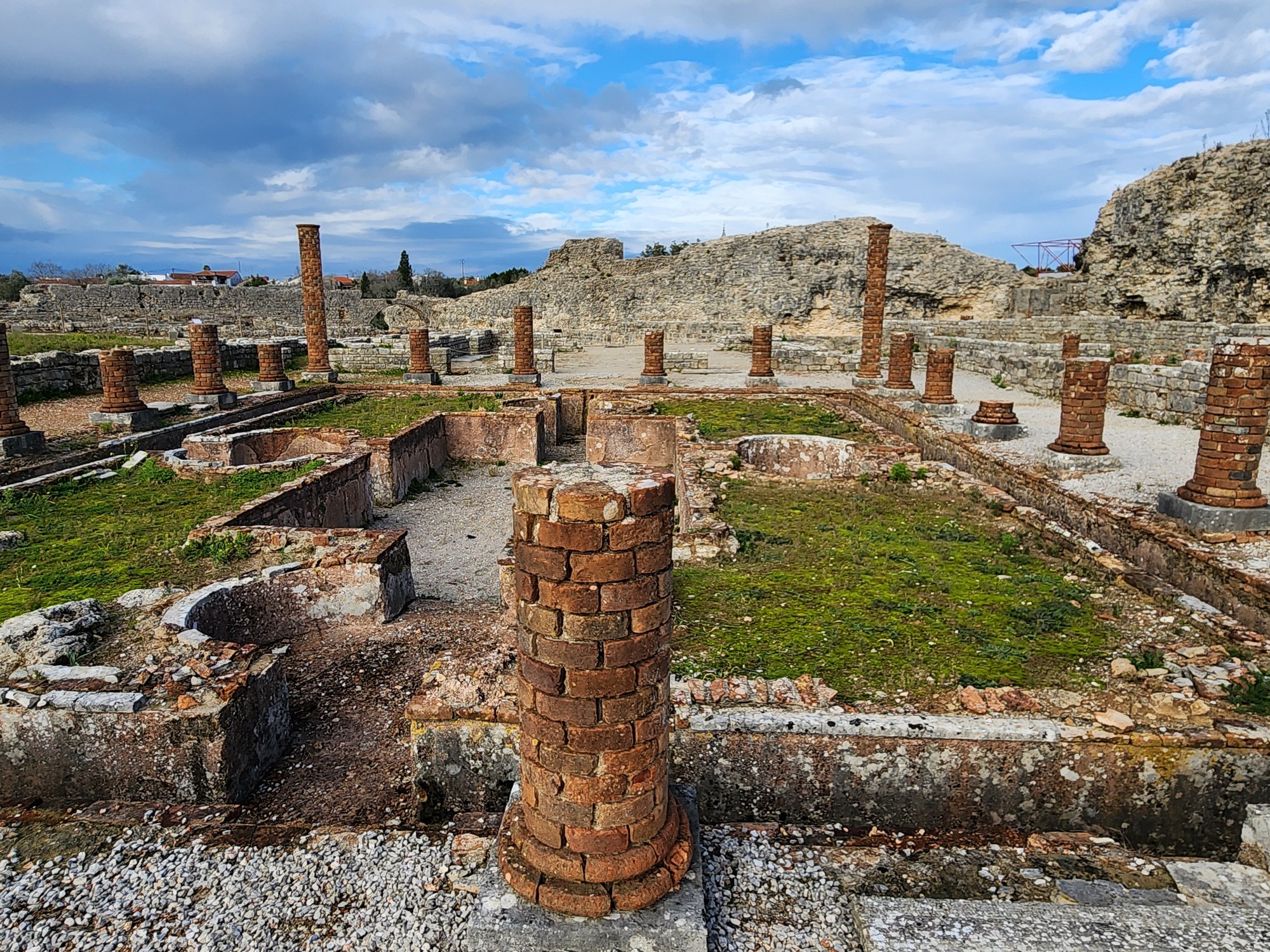
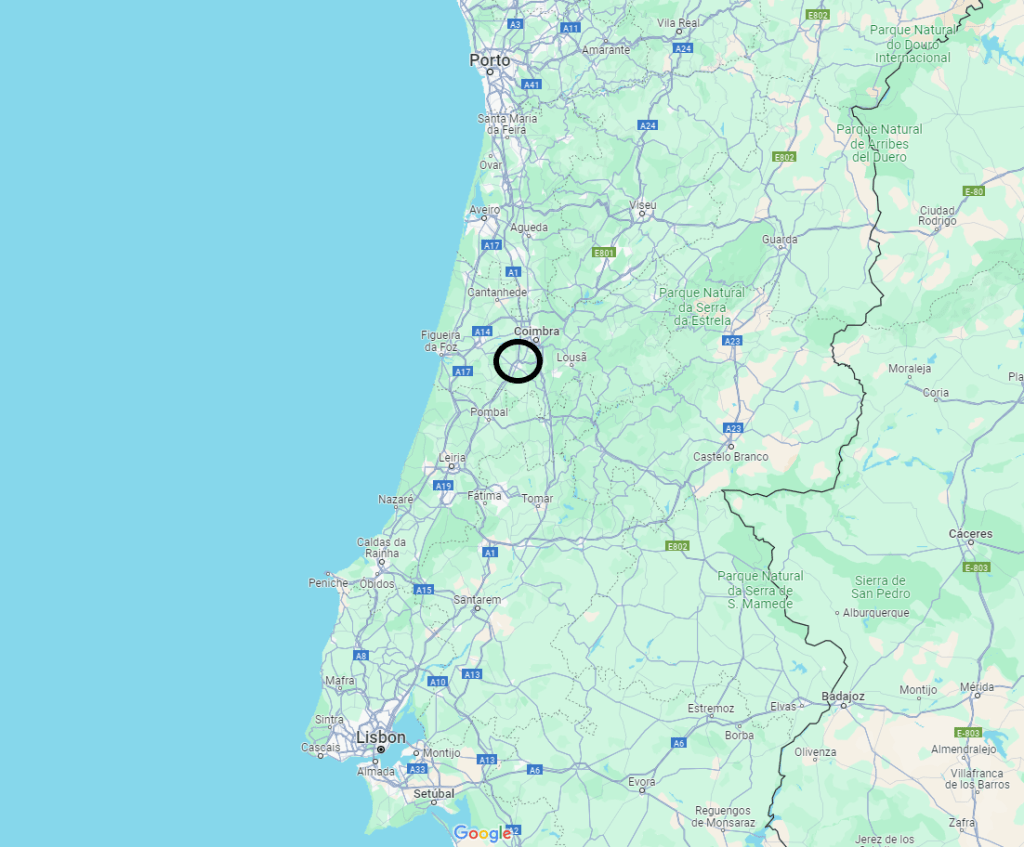
It was a five hour drive south from Porto to the Algarve, so we decided to stop somewhere along the way. Making our way off the toll highway, we eventually arrived in Conimbriga, a small village located a short distance from the city of Coimbra. This was the location of some of the most significant Roman settlement ruins found in Portugal.

The entry fee for the ruins and museum was 8 Euros. There were few people around on the day we visited.
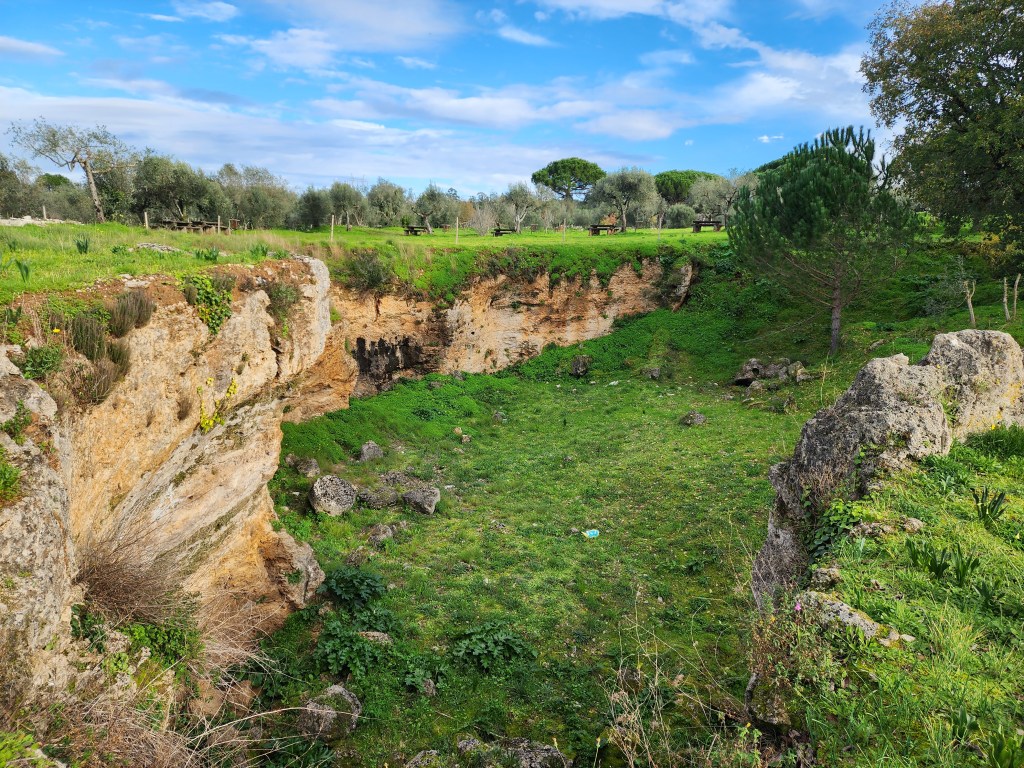
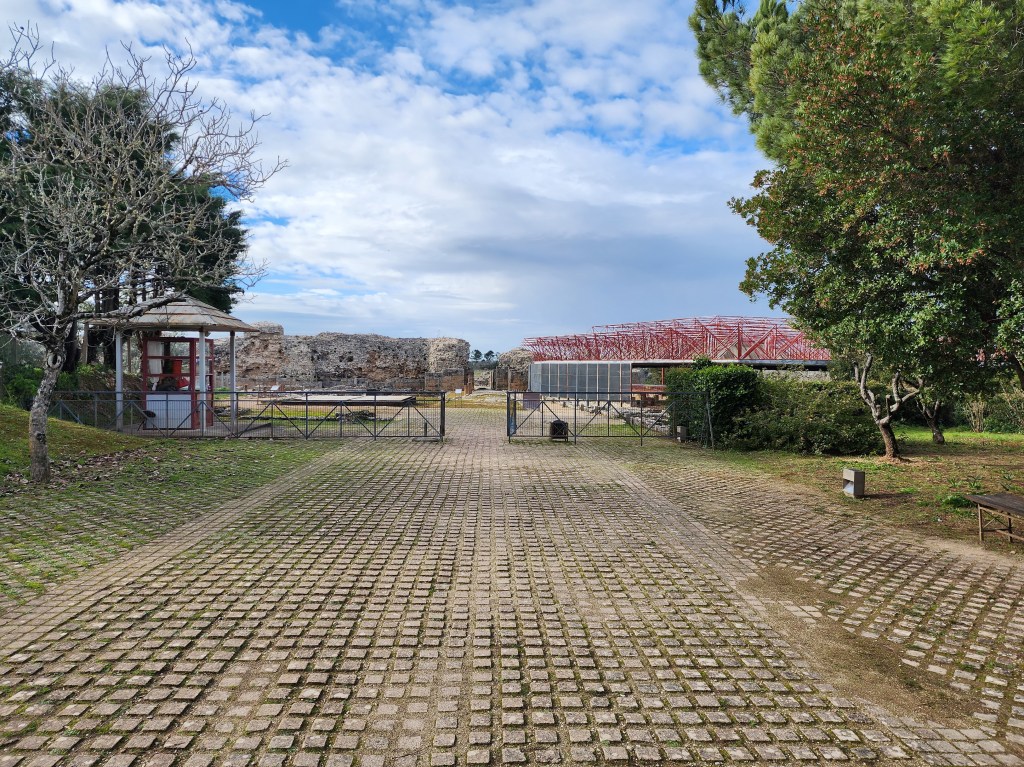
Conimbriga is part of the Roman Circuit, a series of archaeological sites spread over a number of nearby towns and fields. If we had time we could have done a few more in nearby towns, but one this day we only had enough time for Conimbriga. The cost to enter was 8 euros each.

Originally walled, with a 1,500 metres (4,900 ft) long stone wall around the settlement, it dated back to the 9th century BCE. Before that there was evidence of settlement by local groups such as the Castro culture and Conii peoples.

The Romans arrived in Conimbriga around 139 BC, finding a fully developed settlement already there. With Roman involvement it quickly become prosperous, and became a municipal centre between 69-70 AD under Vespasian.
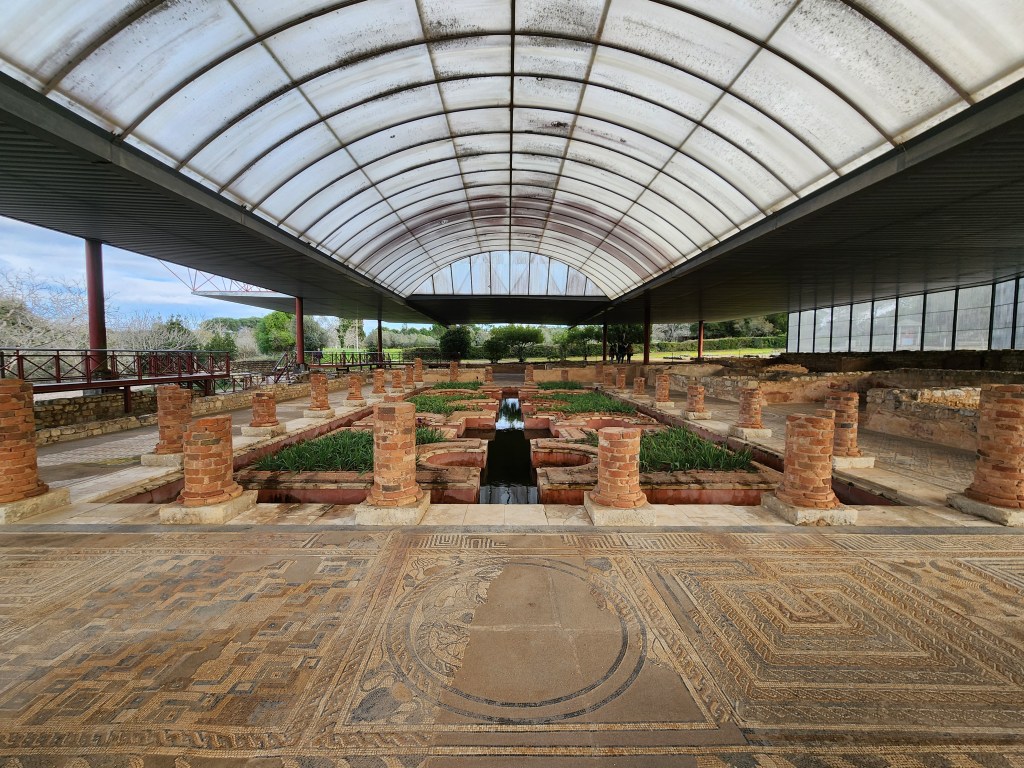
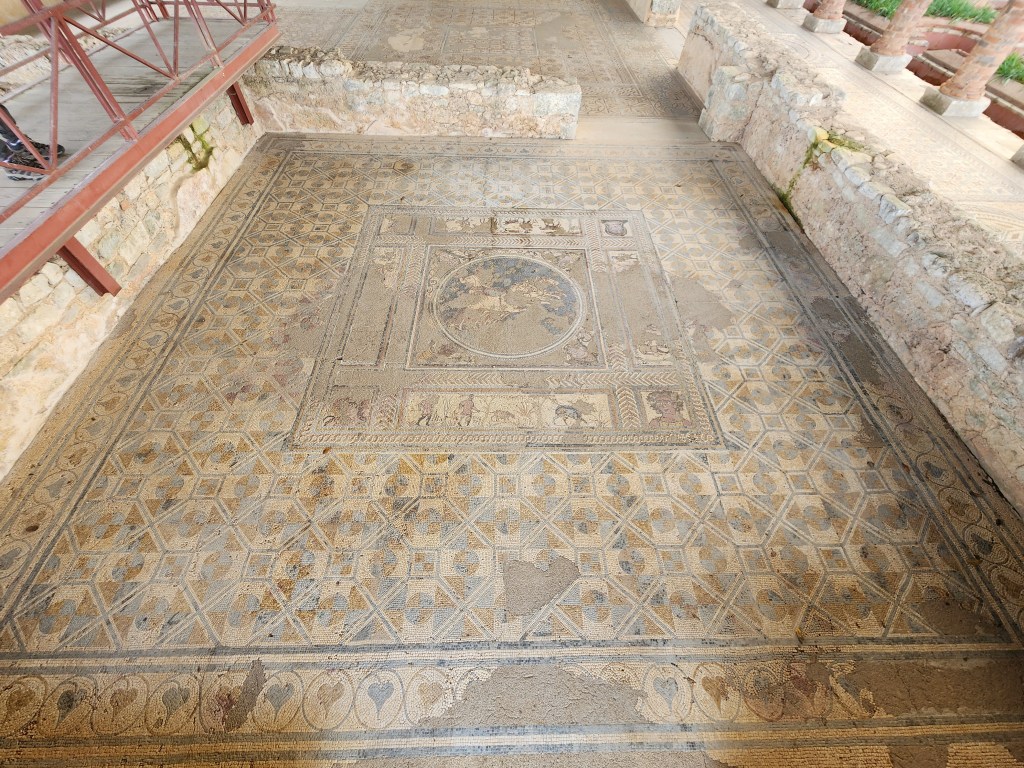
The most impressive structure at the site is The House of Fountains (Casa dos Repuxos), which is believed to date from 193-235 AD. The mosaics depict hunting scenes with dogs, Bacchus (Dionysus) along with the heroic stories of Perseus and the Gorgon. As invading armies came trough the area during later times, the house was demolished to make way for a protective wall.
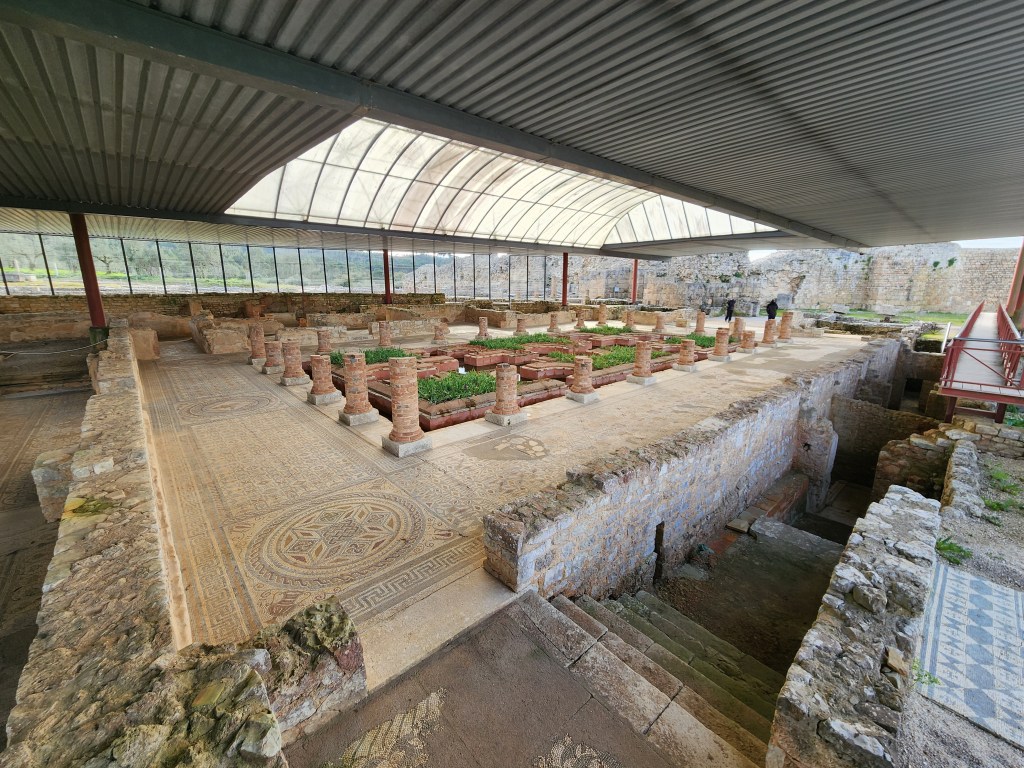
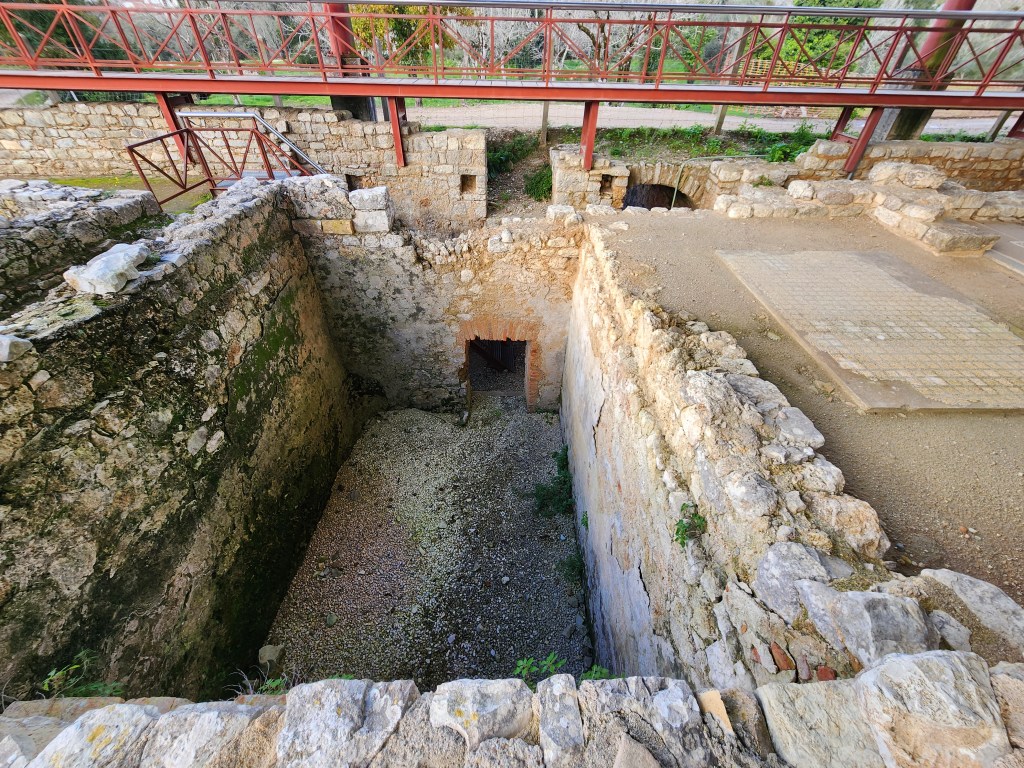
The House of the Fountains was first built in the 1st century AD, with new construction in the 2nd century. By the 4th century the fountains were abandoned and demolished in favour of a late imperial wall, and indication that attacks from migrating Germanic tribes were increasing.
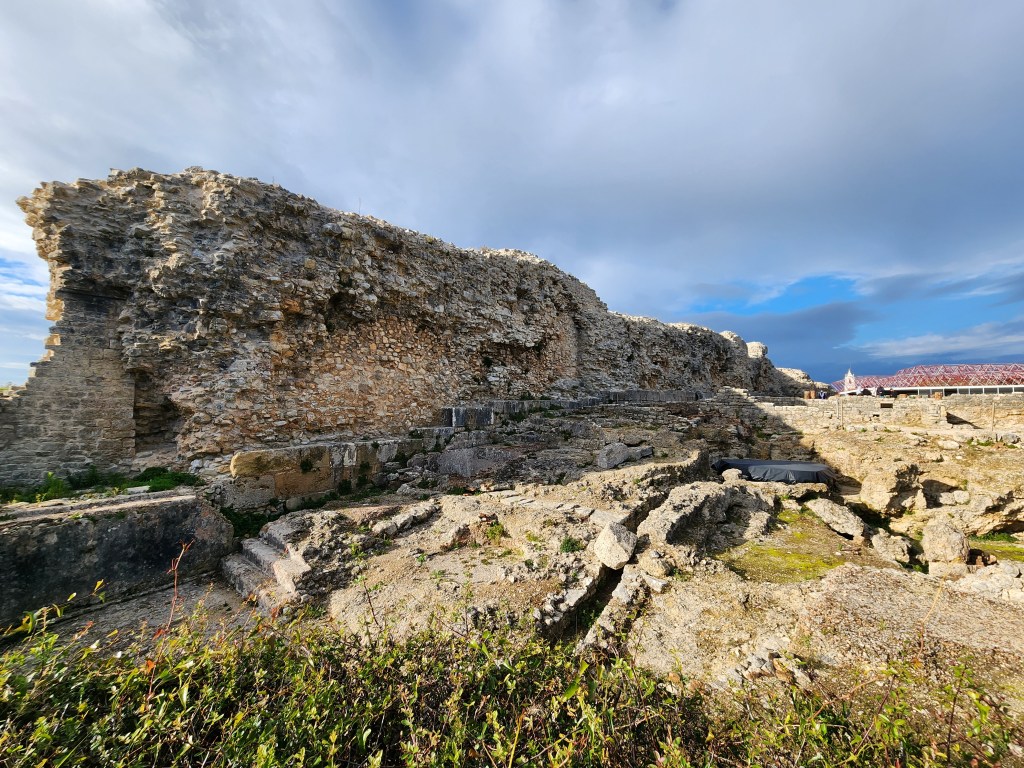
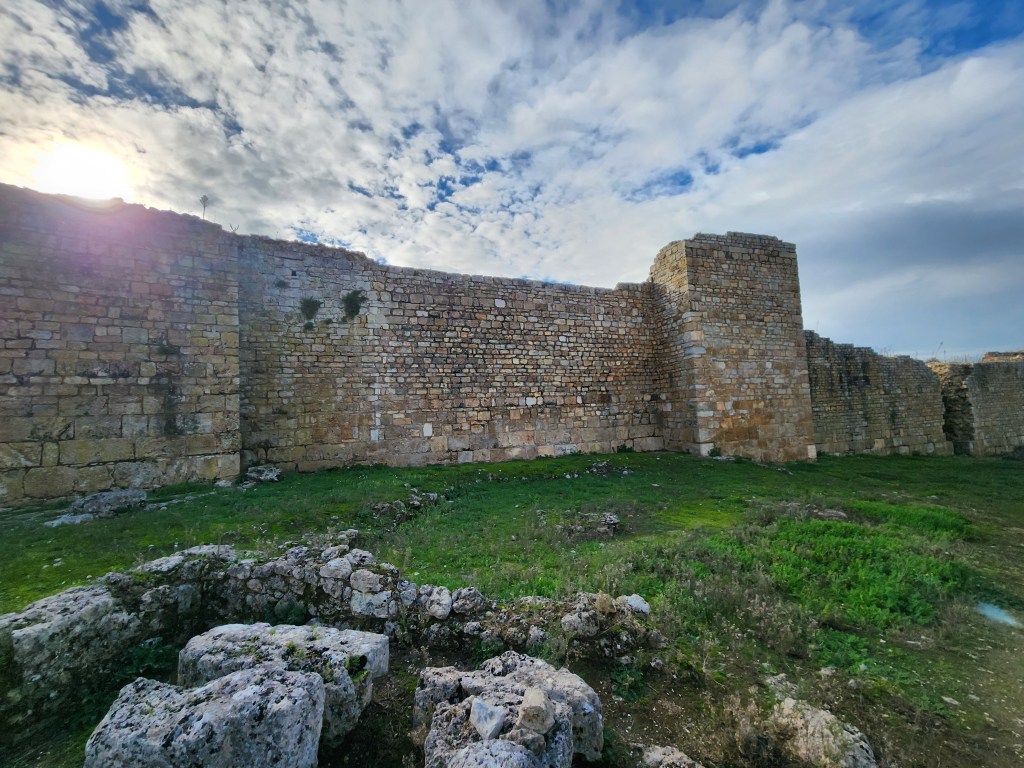
As the attacks by outside forces increased during the later part of the Roman era, it became necessary to construct a huge defensive wall within the city. It measured 6m (20ft) in height and 3m (10ft) in width and ended up cutting the city in two. One section of the city was basically abandoned while the other was built up as the inhabitants withdrew to a smaller, more defensible area.
The Suevians eventually destroyed the city between 465 and 468 with the inhabitants dispersed or sold into slavery.

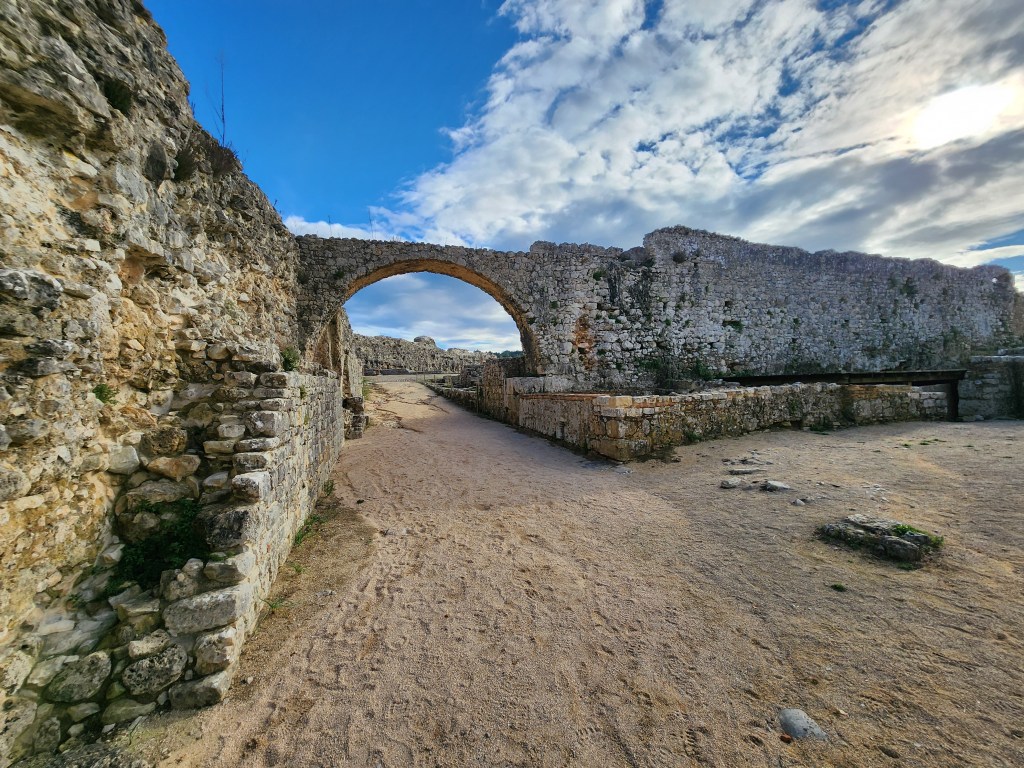
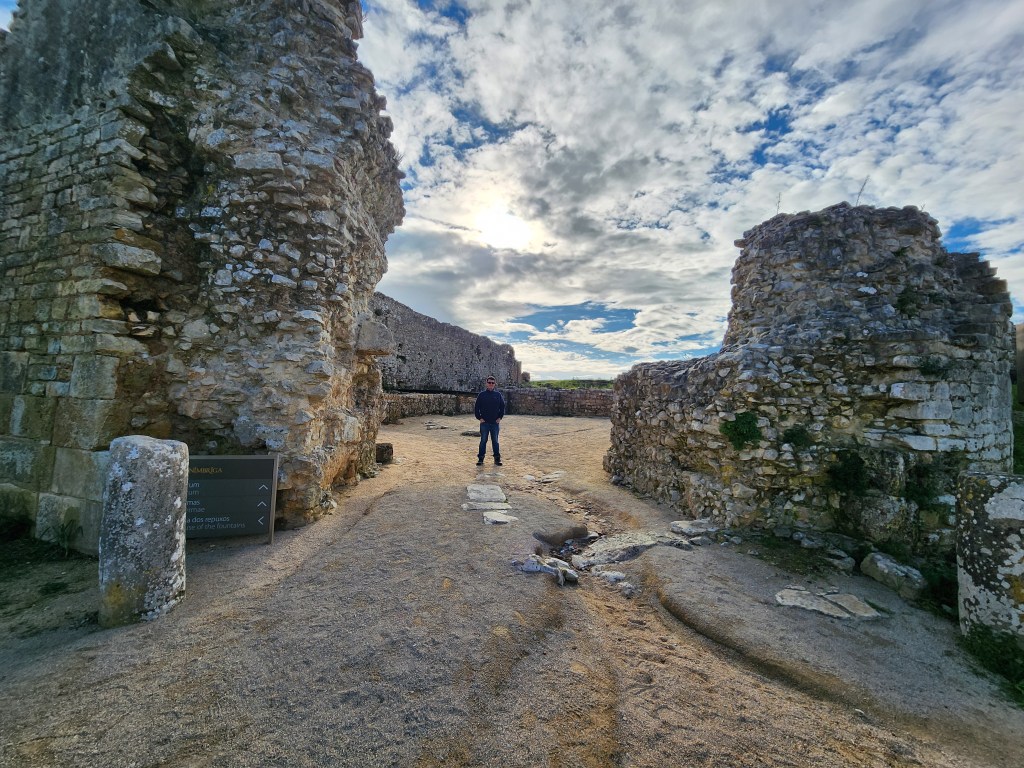

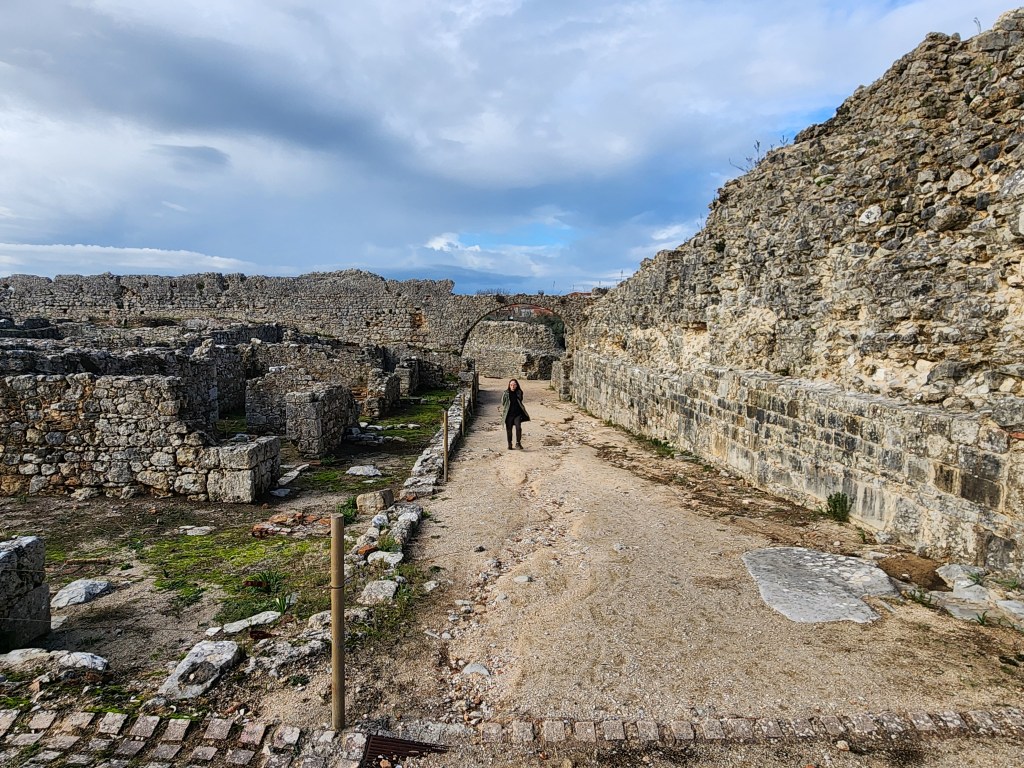

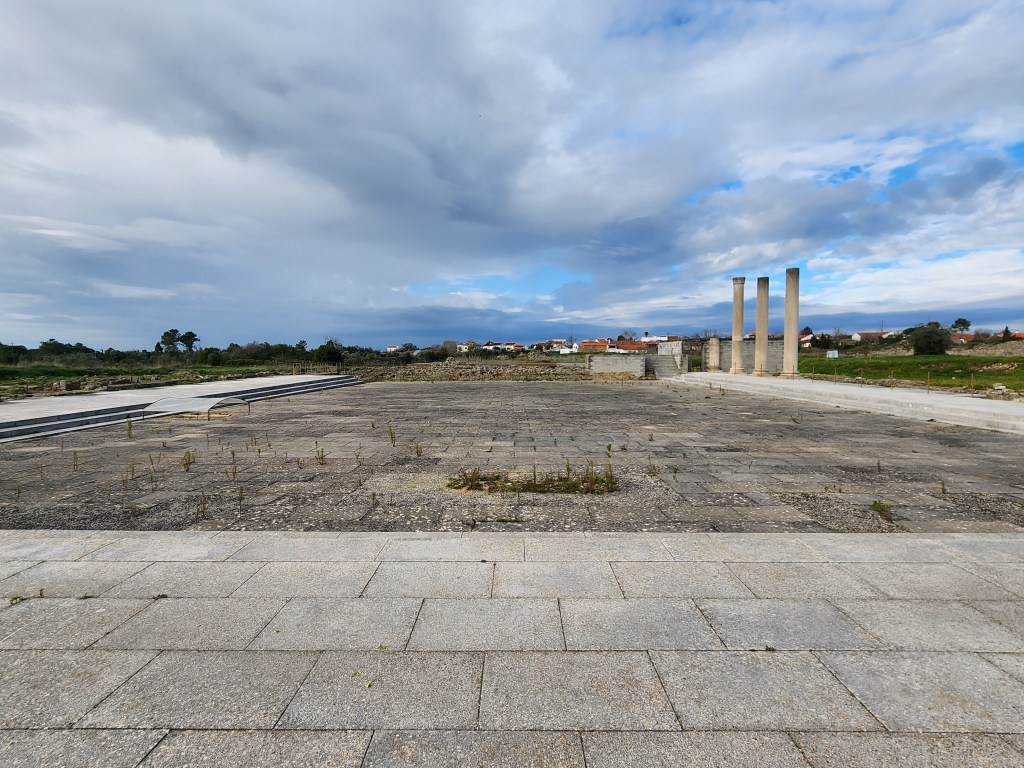
The forum was the centre of the city. The square at the back of the space held monuments as well as a temple. Unfortunately, there wasn’t much left of the forum with just the three reconstructed pillars in an open space.


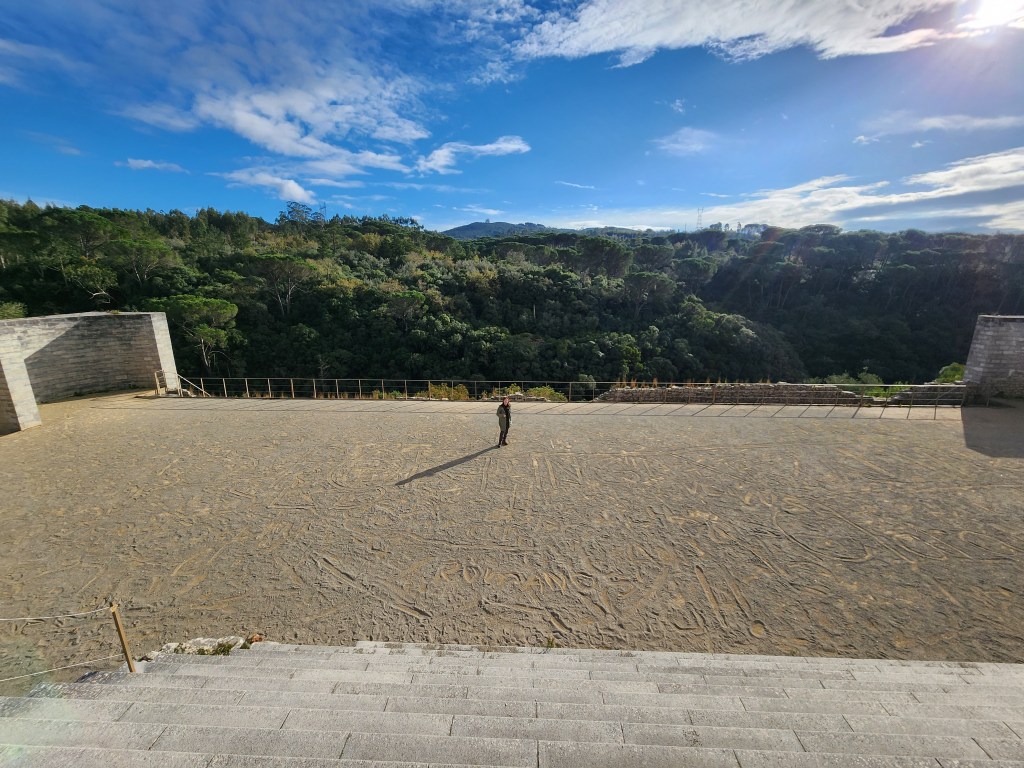
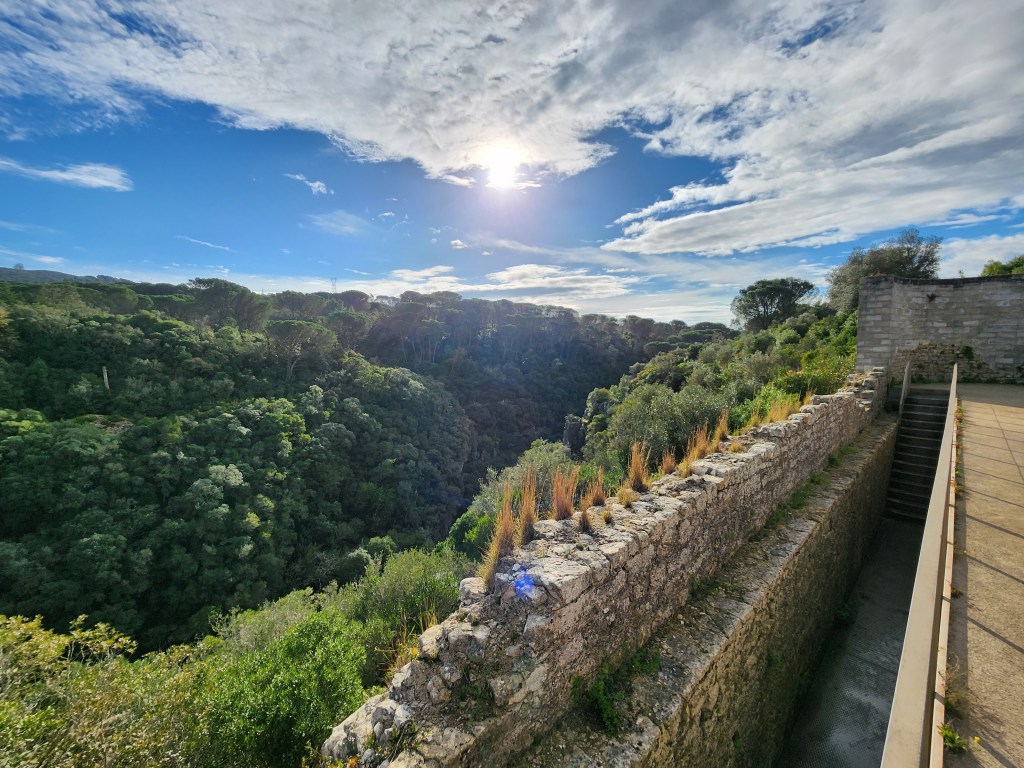

Conimbriga isn’t the largest Roman town in Portugal, but it is one of the best preserved. Archaeologists estimate that only 10 percent of the city has been excavated.

There was also a museum next to the ruins. While it was small, it had a nice collection of artifacts including jewellery, tools and more mosaics. All in all, the trip was a nice way to break up a long day.
We headed back onto the highway and made our way to our destination in the southern town of Carvoeiro, where we would stay for the next four nights. Below is a short video of our time there:
 Humphreys Travel