
This is a post from of our early 2020 trip to Southeast Asia as we’ve just returned home. Something new is coming next week
Warning: This travelogue describes events and shows disturbing images connected to the massacres by the Khmer Rouge in Cambodia in the 1970s
Cambodia is a beautiful country with very friendly people and we spent an amazing visit to Angkor Wat and Siem Reap in early February 2020. After visiting those sites we continued east towards Vietnam, briefly staying for a few days in Phnom Penh. During that time we visited a couple significant memorial sites there.
When I was a teenager I saw the The Killing Fields, an academy-award winning film based on the experiences of two journalists during the murderous takeover of Cambodia by Pol Pot and the Khmer Rouge. The regime went after everyone, with enemies of the state including ethnic Vietnamese, Thai, Chinese, Cham, Cambodian Christians, and Buddhist monks. Even wearing glasses could get people murdered by the Khmer Rouge as they were considered too intellectual for the regime.
The Khmer Rouge ruled the country for four long years. By the time the they were removed from power in 1979, up to 25% of the population of Cambodia had been murdered.
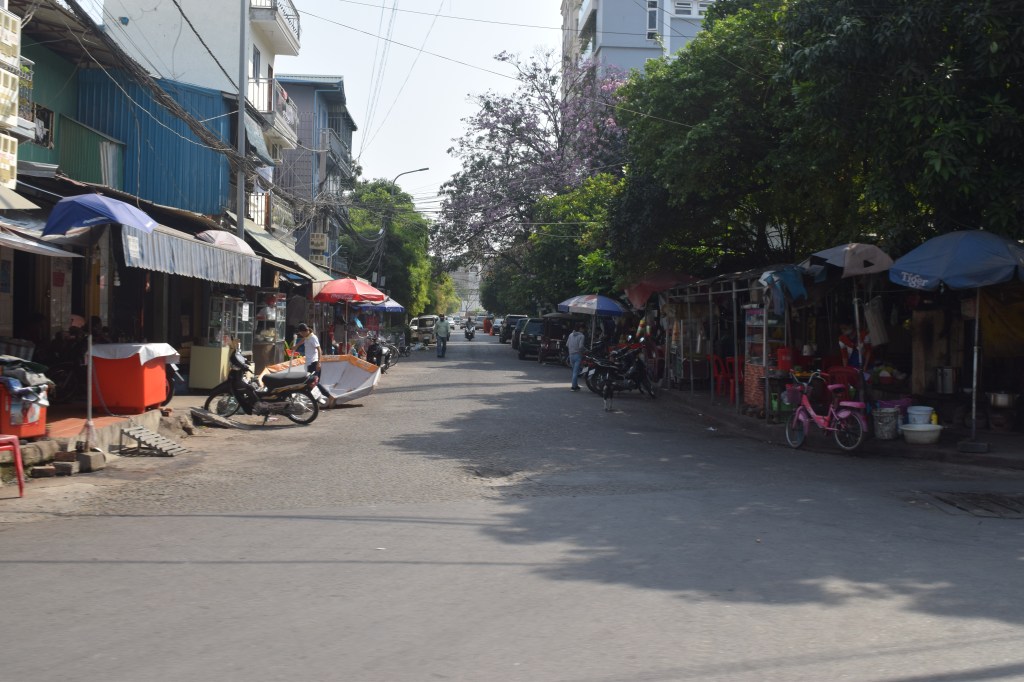
We began with a trip to the infamous S-21 prison. Originally known as the Tuol Svay Prey High School, it is now called the Tuol Sleng Genocide Museum. Located within the city, it was formerly a high school that was converted into a prison under the Khmer Rouge. We took a long walk from our hotel to the prison, taking in the local sights along the way.
The school was was used as a prison from 1975 until the regime fell in 1979. During that time thousands of people went through the prison and were murdered there.


From 1976 to 1979, an estimated 20,000 people were imprisoned at Tuol Sleng and it was one of between 150 and 196 torture and execution centers established by the Khmer Rouge and the secret police known as the Santebal (literally “keeper of peace”).

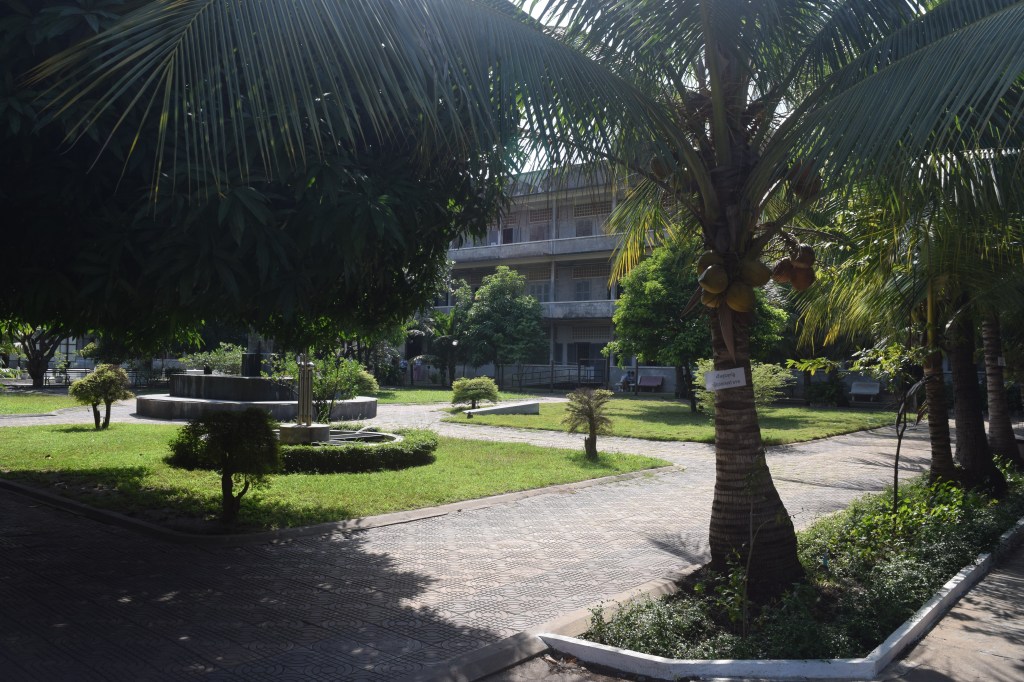
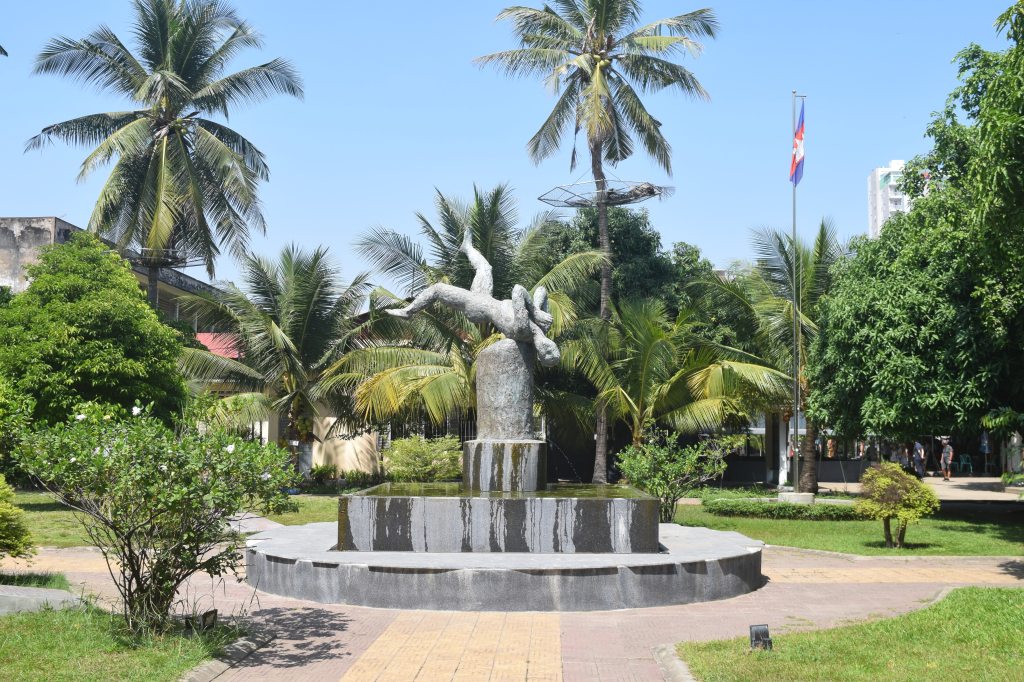
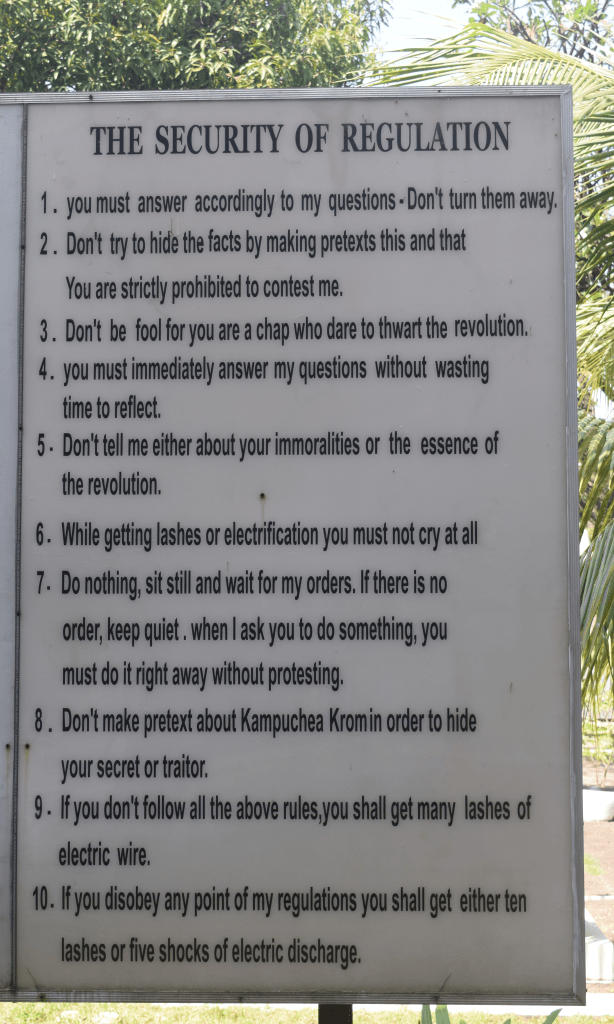
The Khmer Rouge renamed the complex “Security Prison 21” (S-21) and construction began to adapt the prison for the inmates: the buildings were enclosed in electrified barbed wire, the classrooms converted into tiny prison and torture chambers, and all windows were covered with iron bars and barbed wire to prevent escapes and suicides.
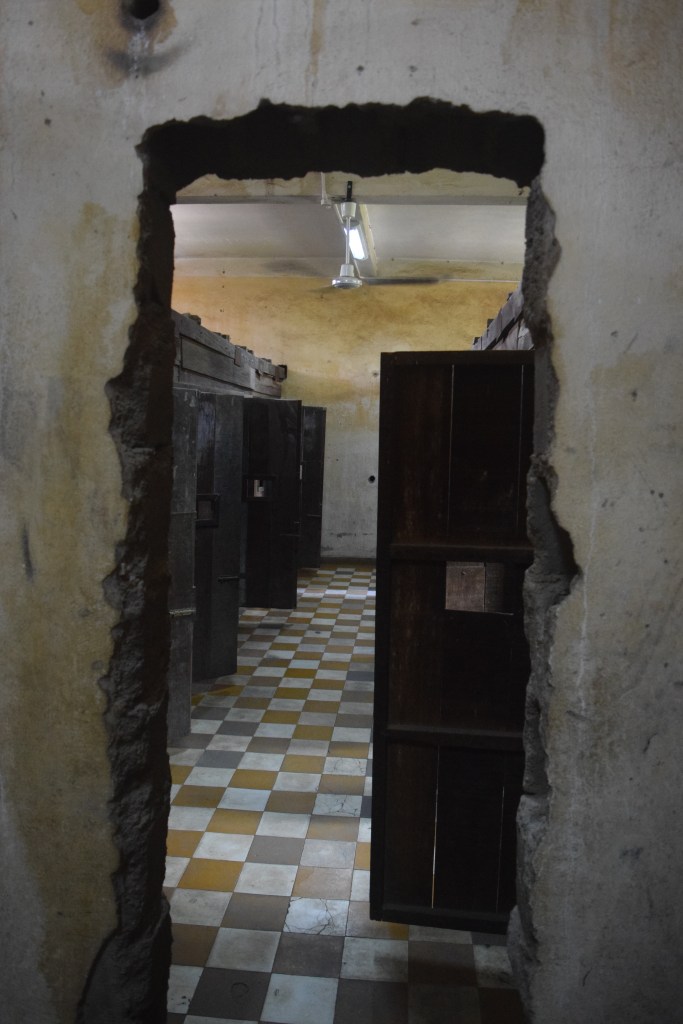
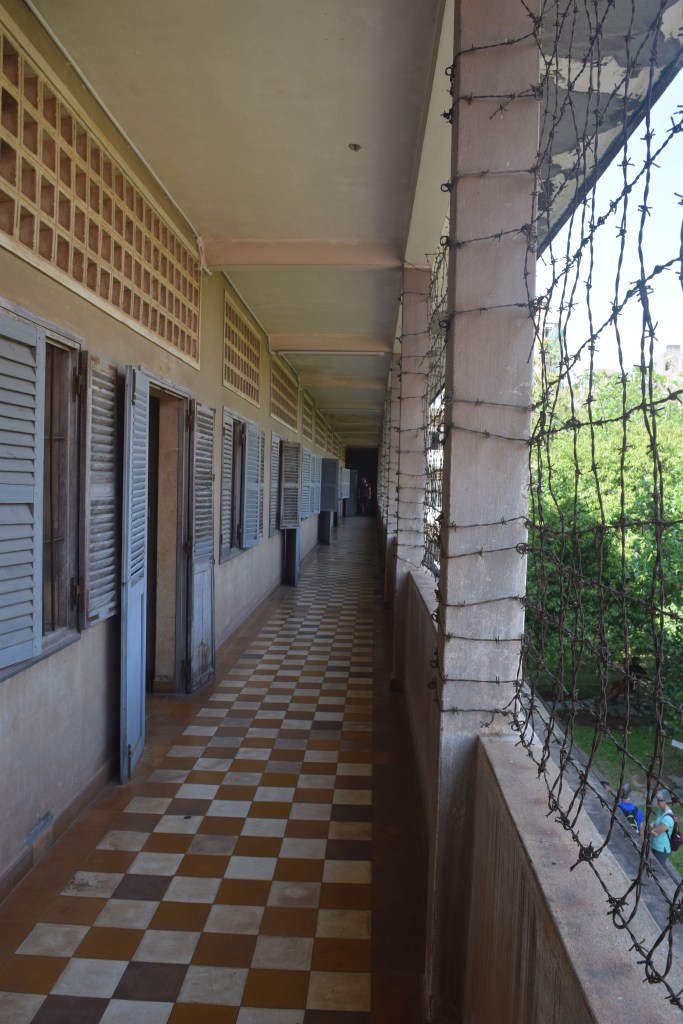
There were a number of rooms that only contained a bare bed along with a photograph of the last prisoner found there when the Vietnamese liberated Pnomh Penh from the Khmer Rouge in 1979. Most were murdered just hours before the Vietnamese arrived.

In the main area in front of the school was a gallows. It was not used to kill prisoners; rather it was used to interrogate them by hanging them from the wrists until they lost consciousness. Their heads were then dropped into the pots below which were filled with dirty water used as fertilizer for crops. This was done until they regained consciousness.


Life wasn’t so good for the guards either, as they were mostly teenagers. Many guards found the unit’s strict rules hard to obey. They were not allowed to talk to prisoners or learn their names. They were also expected to obey 30 regulations which barred them from such things as taking naps, sitting down or leaning against a wall while on duty. They had to walk, guard, and examine everything carefully. DUring the paranoid rule of the Khmer Rouge, guards who made serious mistakes were arrested, interrogated, jailed and put to death. Most of the people employed at S-21 were terrified of making mistakes and feared being tortured and killed

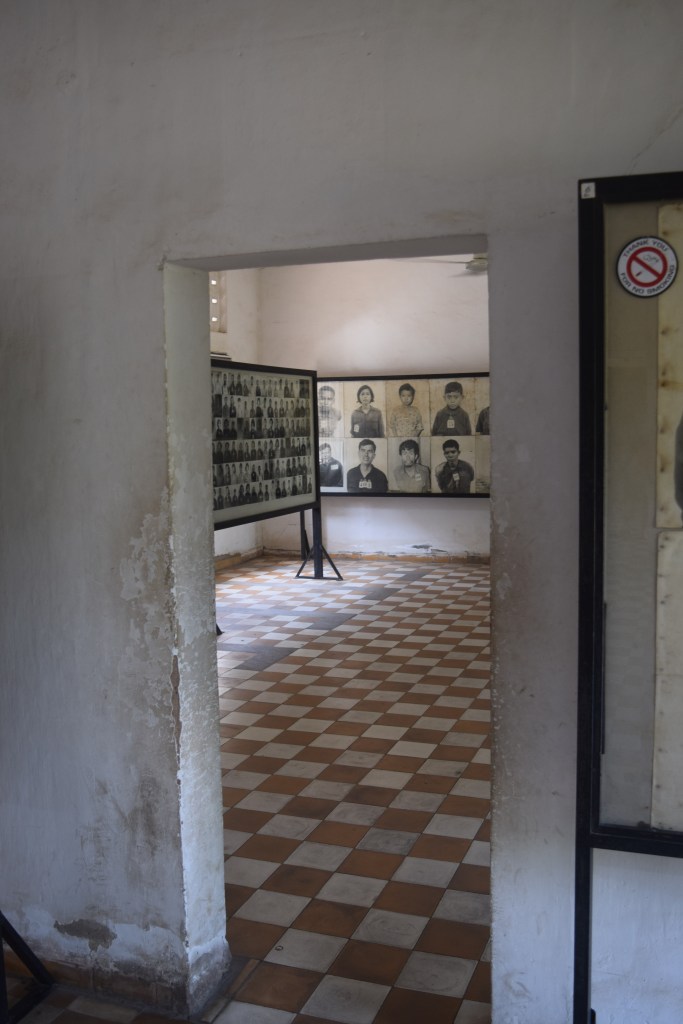
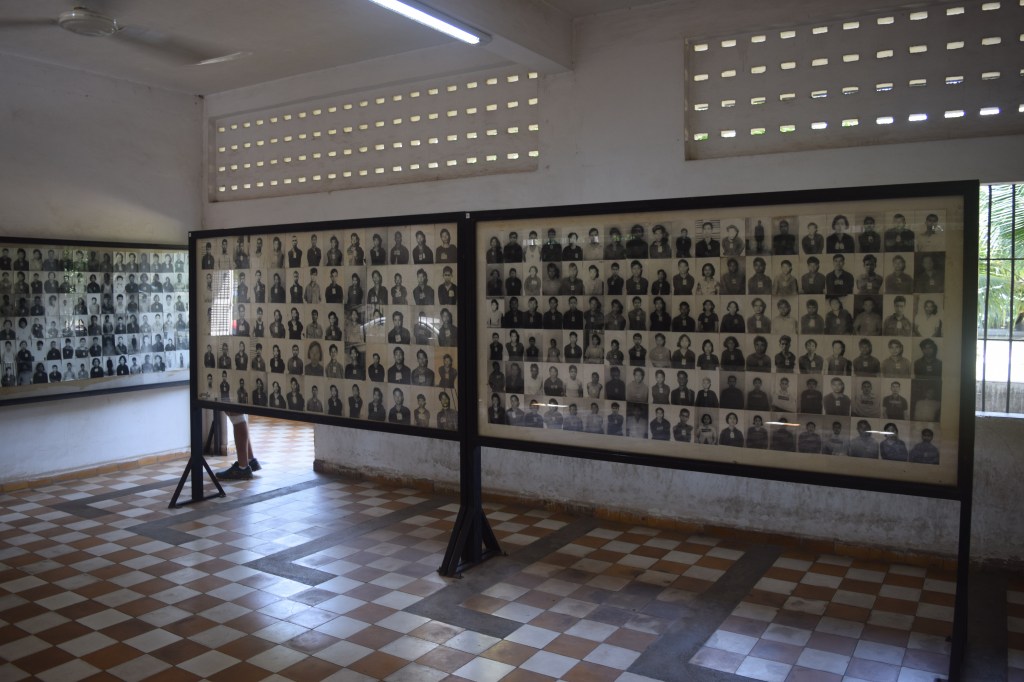
One of the most horrifying aspects of it all was knowing that the majority of people sent there had committed no crimes. They were people merely targeted for their religious, ethnic, cultural or political background. And they were murdered there as a result.
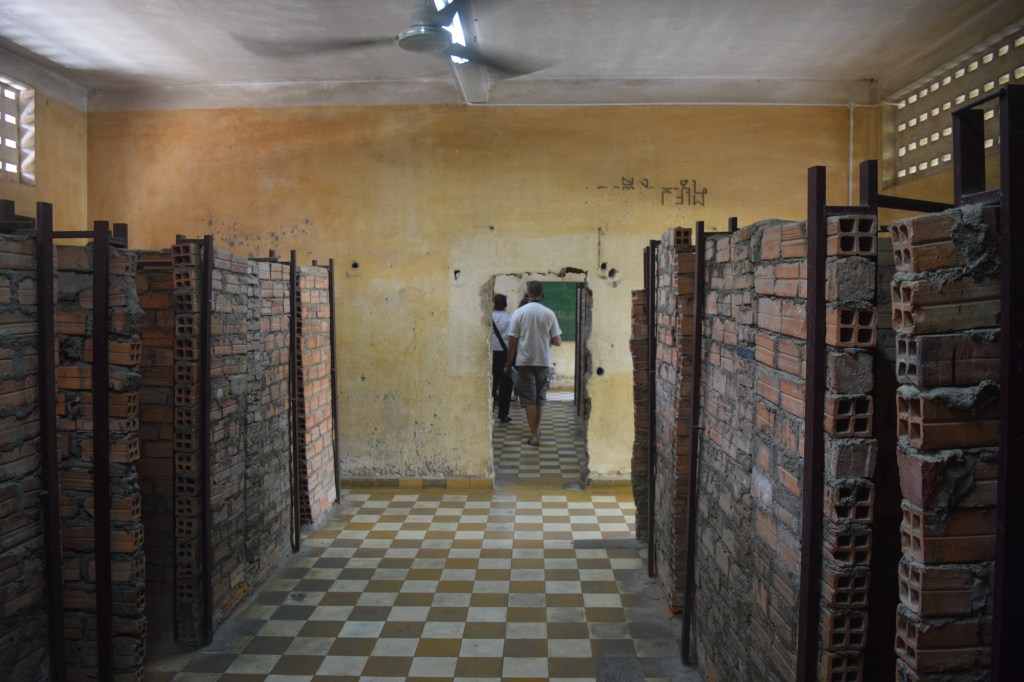


Even though the vast majority of the victims were Cambodian, some were foreigners, including 488 Vietnamese, 31 Thai, four French, two Americans, two Australians, one Laotian, one Arab, one Briton, one Canadian, one New Zealander, and one Indonesian. Most did not escape the country quickly enough or were caught when travelling by boat in Cambodian waters.
From 1976 to 1979, an estimated 20,000 people were imprisoned at Tuol Sleng (the precise number is unknown). At any one time, the prison held between 1,000 and 1,500 prisoners. They were repeatedly tortured and coerced into naming family members and close associates, who were in turn arrested, tortured and killed. In the early months of S-21’s existence, most of the victims were from the previous Lon Nol regime and included soldiers, government officials, academics, doctors, teachers, students, factory workers, monks, etc. Later, the party leadership’s paranoia turned on its own ranks and purges throughout the country saw thousands of party activists and their families brought to Tuol Sleng and murdered.

The buildings at Tuol Sleng are preserved, with many rooms appearing just as they were when the Khmer Rouge were driven out in 1979. The regime kept extensive records, including thousands of photographs. Several rooms of the museum are now lined, floor to ceiling, with black and white photographs of some of the estimated 20,000 prisoners who passed through the prison.
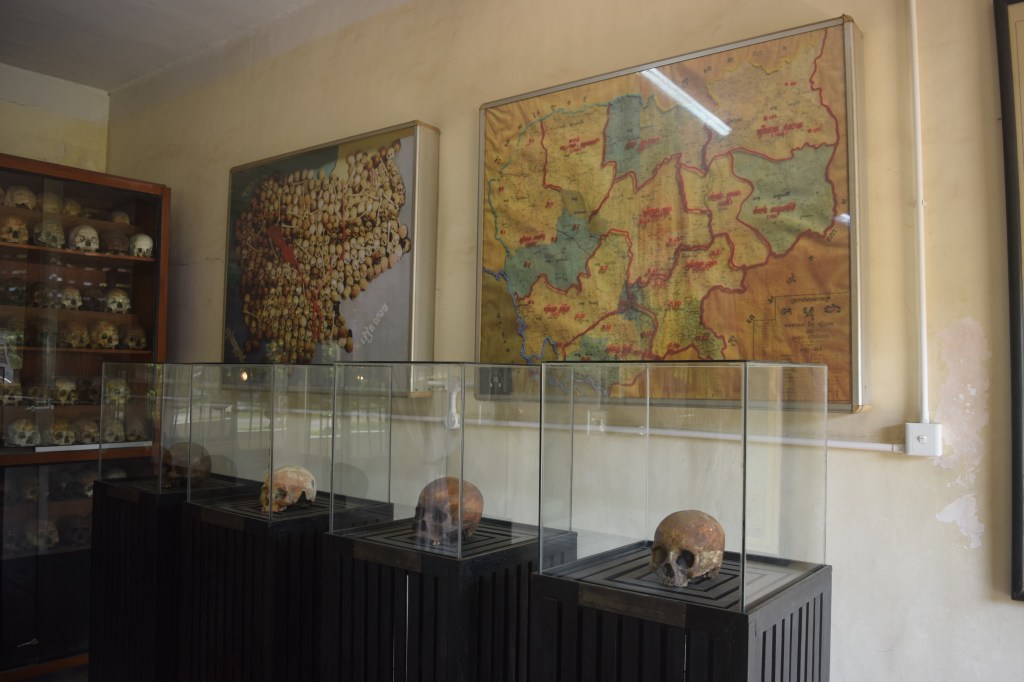
The chief of the prison was Khang Khek Ieu (also known as Comrade Duch), a former mathematics teacher who worked closely with Khmer Rouge leader Pol Pot. On 31 July 2007, Duch was formally charged with war crimes and crimes against humanity.He was found guilty of crimes against humanity, torture, and murder and sentenced to 35 years imprisonment with some years of credit applied. He died in prison while serving a life sentence in 2020.
Out of an estimated 20,000 people imprisoned at Tuol Sleng, there were only twelve known survivors: seven adults and five children. Only three adults were still alive as of 2011 but one was at the prison on the day we visited, signing books about the experience.

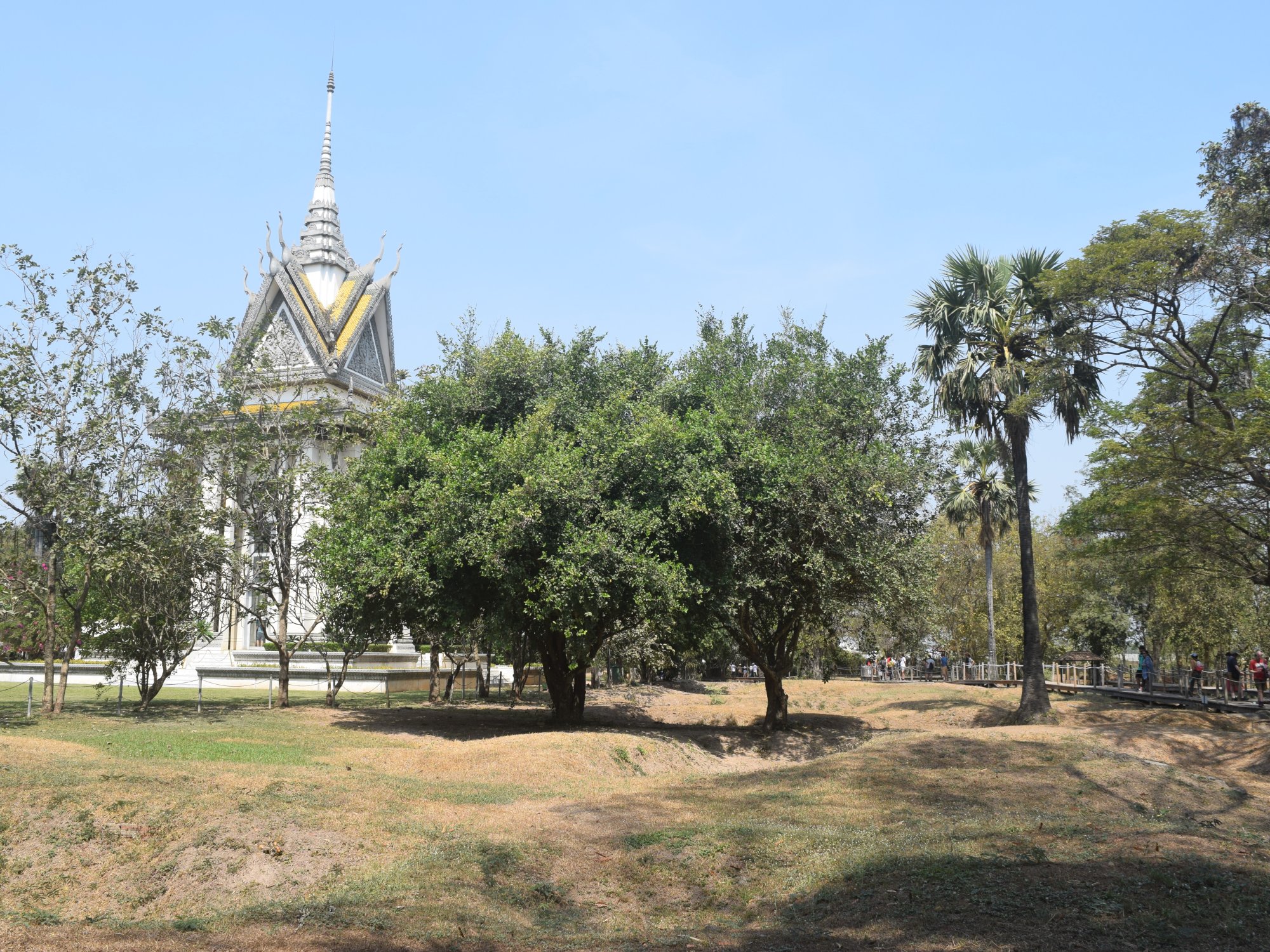
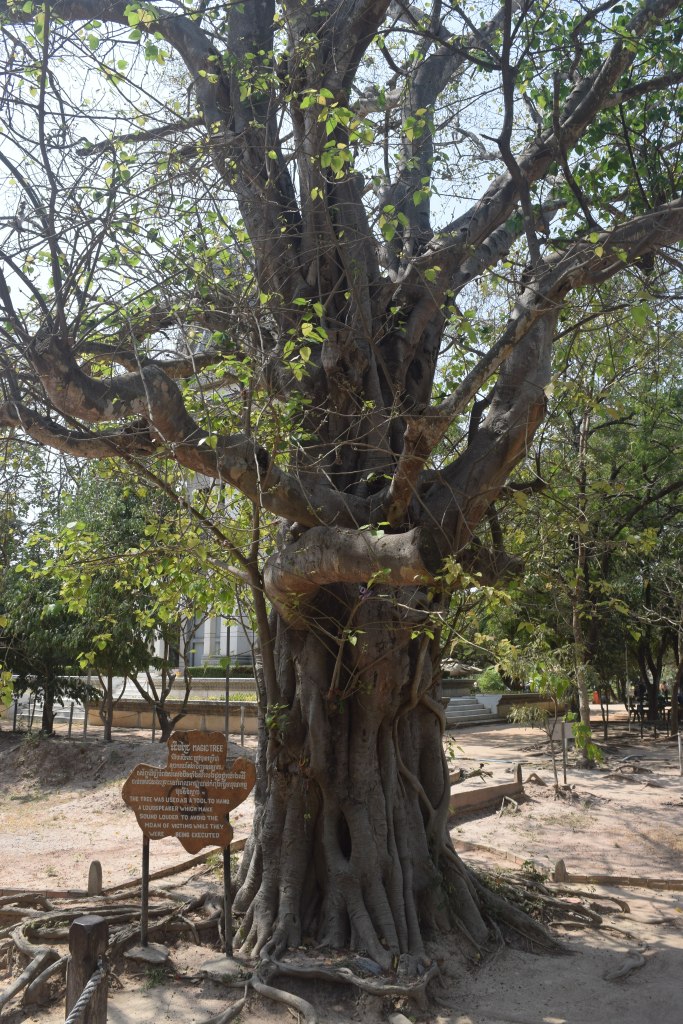
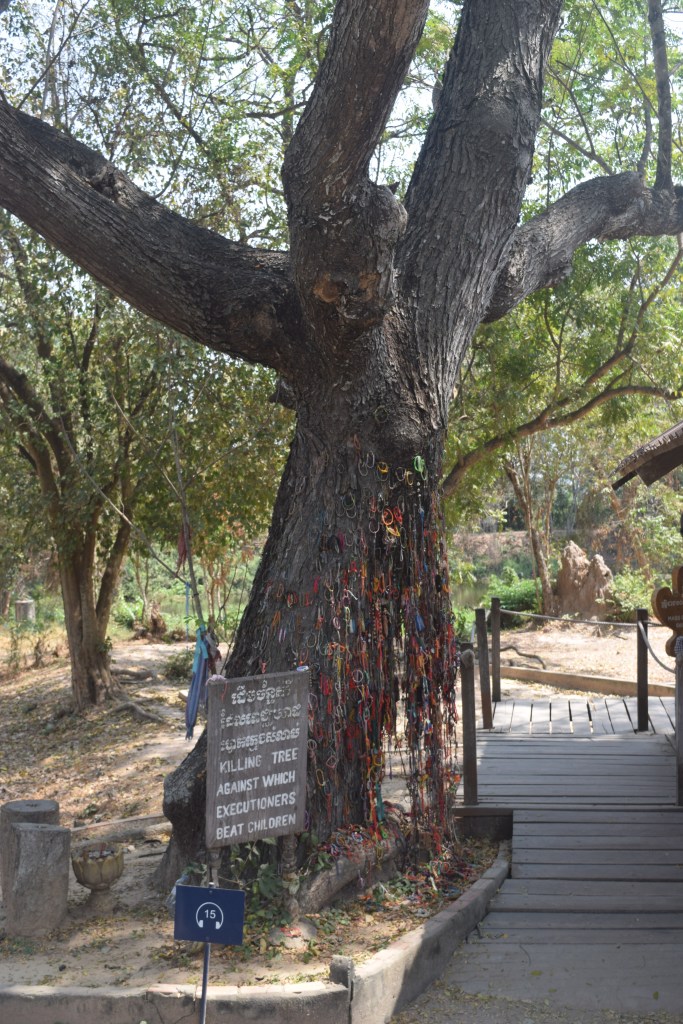
The next day we hired a tuk-tuk to take us out of the city to visit one of the “killing fields,” a term first used by a journalist and survivor of the events named Dith Pran. There are a number of these killing fields around Cambodia. Located about 17 km (11 mi) outside the city centre, Choeung Ek is one of the best known of the approximately 300 killing fields in Cambodia. It is not accessible by public transportation but it is easy to hire a tuk-tuk to get there.
The entrance to Choeung Ek is marked by a Buddhist stupa. The stupa has glass sides and is filled with over 5,000 human skulls of the victims. They are generally sorted by age with the youngest at the bottom. The lower levels are opened during the day so that the skulls can be seen directly.

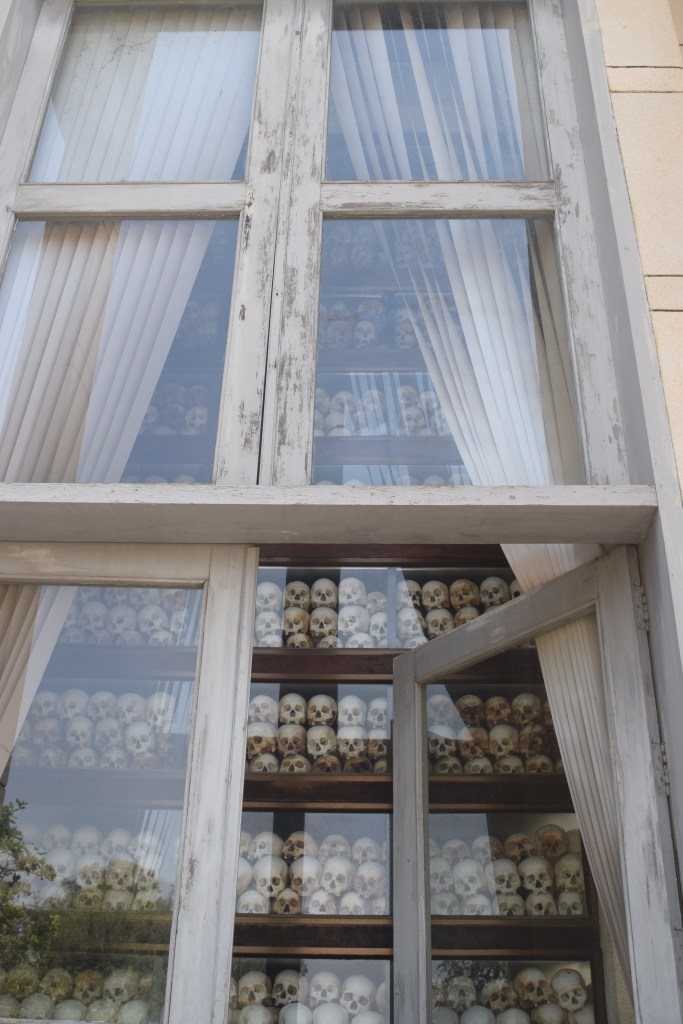
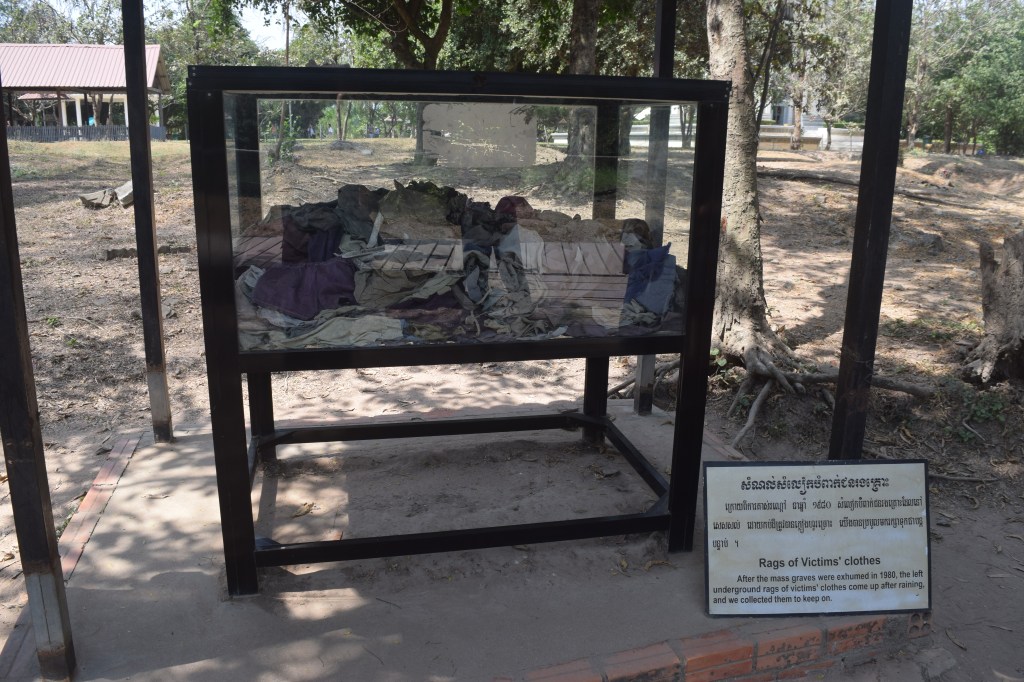
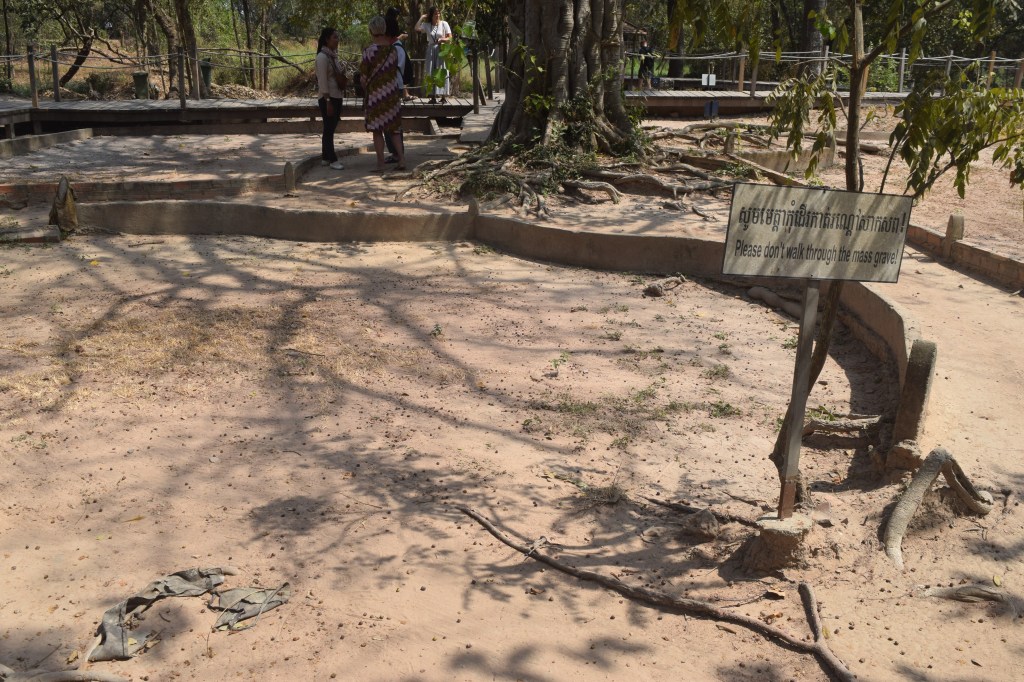
The bodies of 8,895 victims were exhumed from the site after the fall of the Rouge, who would have been executed there before being buried in mass graves. Many of the people who survived S-21 came to this place.
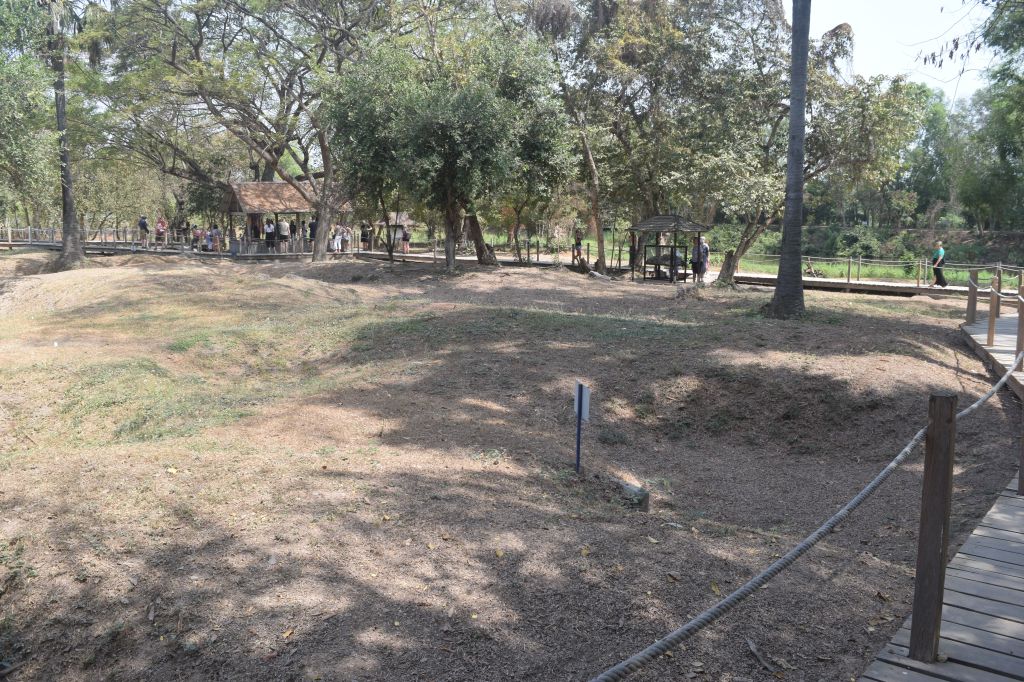
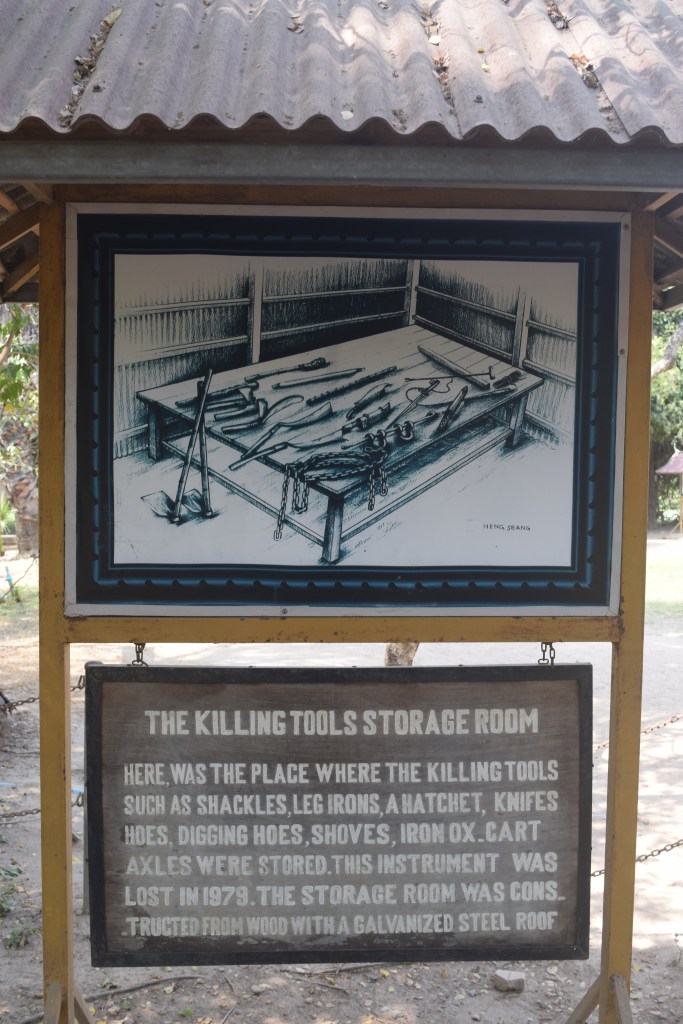
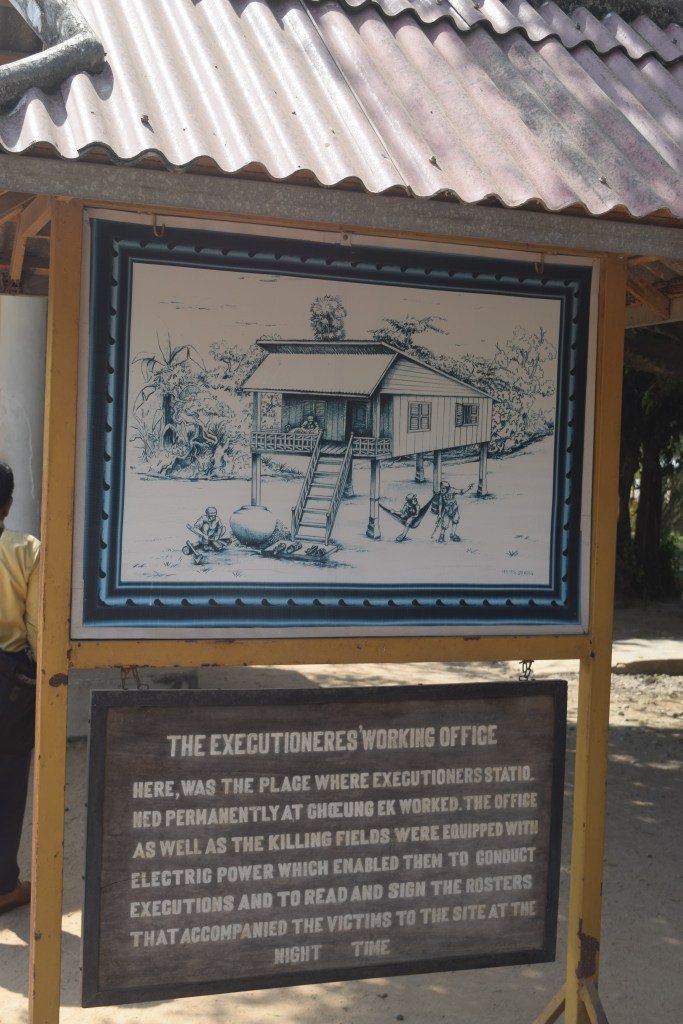
The executed were buried in mass graves. In order to save ammunition, the executions were often carried out using poison or improvised weapons such as sharpened bamboo sticks, hammers, machetes and axes.

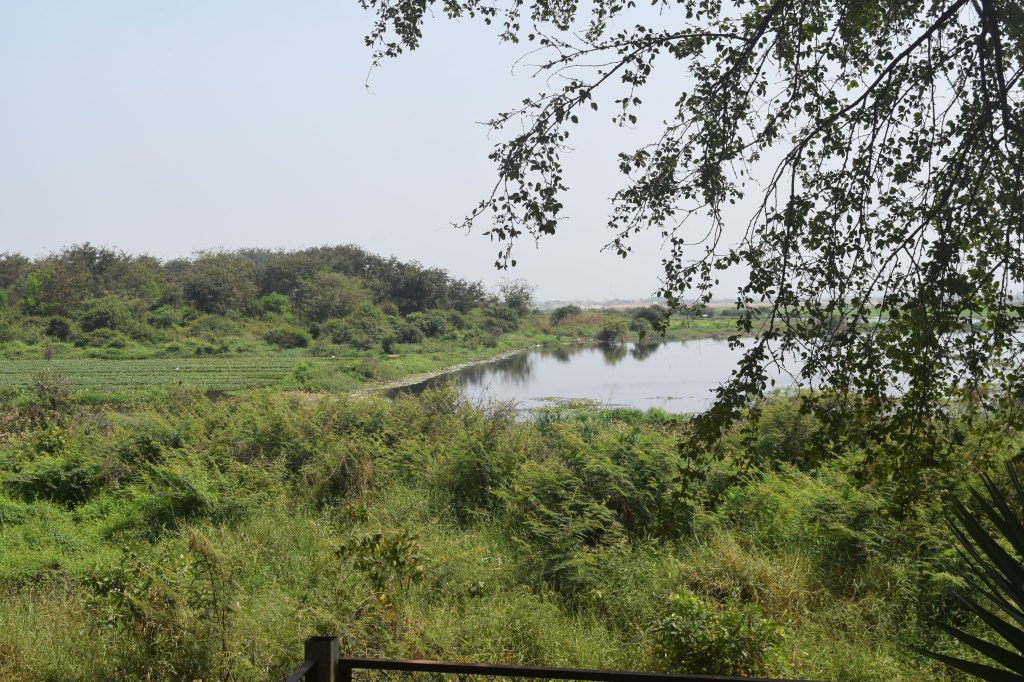


It was an eerie feeling visiting this place with its terrible history. They are still recovering bodies from the ground and we saw evidence of it while walking around the site.

After five years of researching 20,000 grave sites, analysis indicates at least 1,386,734 victims of execution. Estimates of total deaths resulting from Khmer Rouge policies, including from disease and starvation, range from 1.7 to 2.2 million, out of a 1975 population of roughly 8 million.
It was not a pleasant trip but an important one. While it was example of some of the worst excesses of human nature, the people of Cambodia today are a reminder that things can get better. Although Cambodia is still in rough shape economically, we hope things work out for them as the people were so friendly, kind and genuine during our travels there.
 Humphreys Travel