
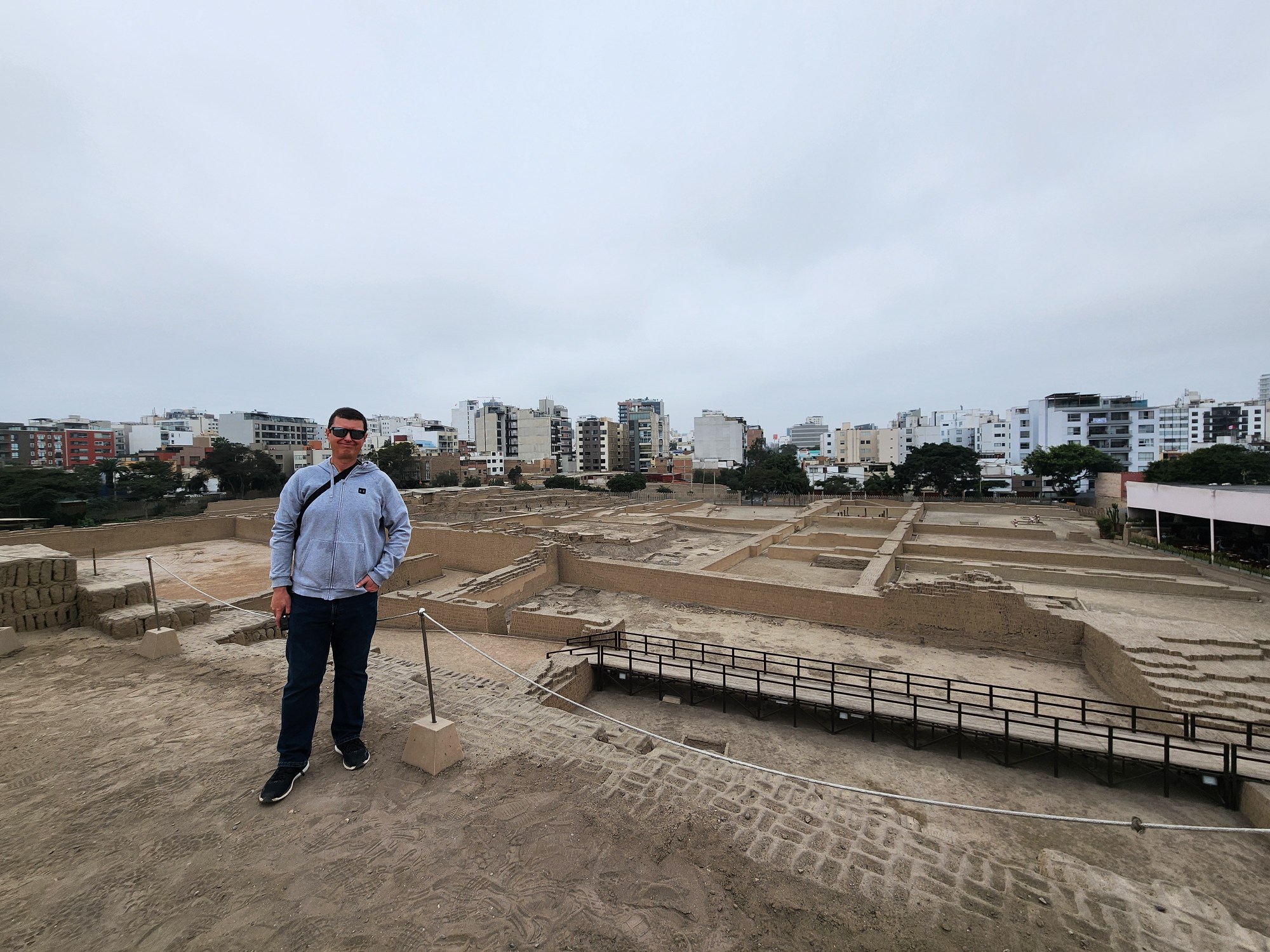

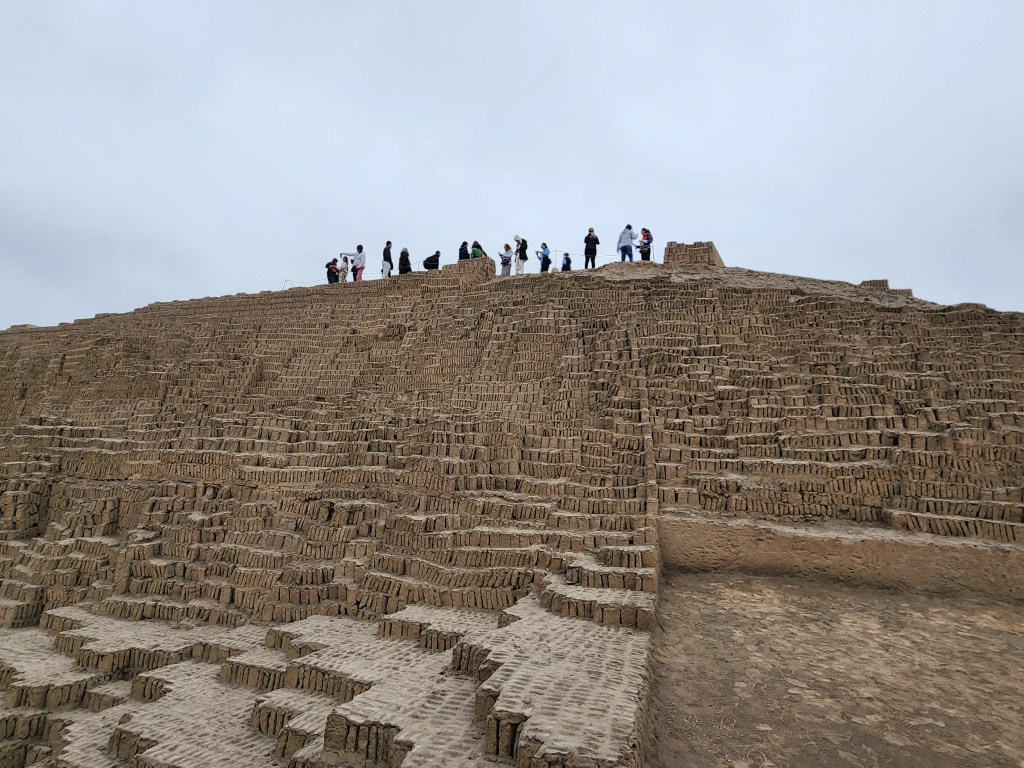
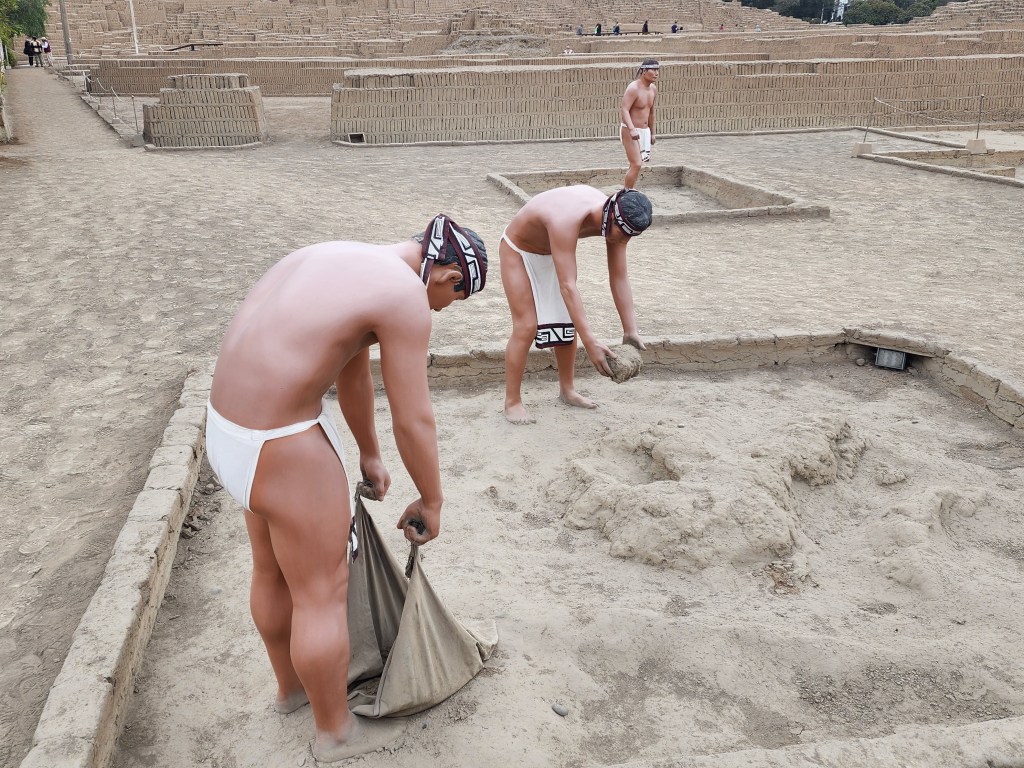
Just a short walk from our hotel and near the centre of Lima is a pre-Incan site called Huaca Pucllana. Built from seven staggered platforms made of adobe, the structure was intended to be the ceremonial and administrative center for Lima culture, a society which developed in the Peruvian Central Coast between the years of 200 AD and 700 AD.
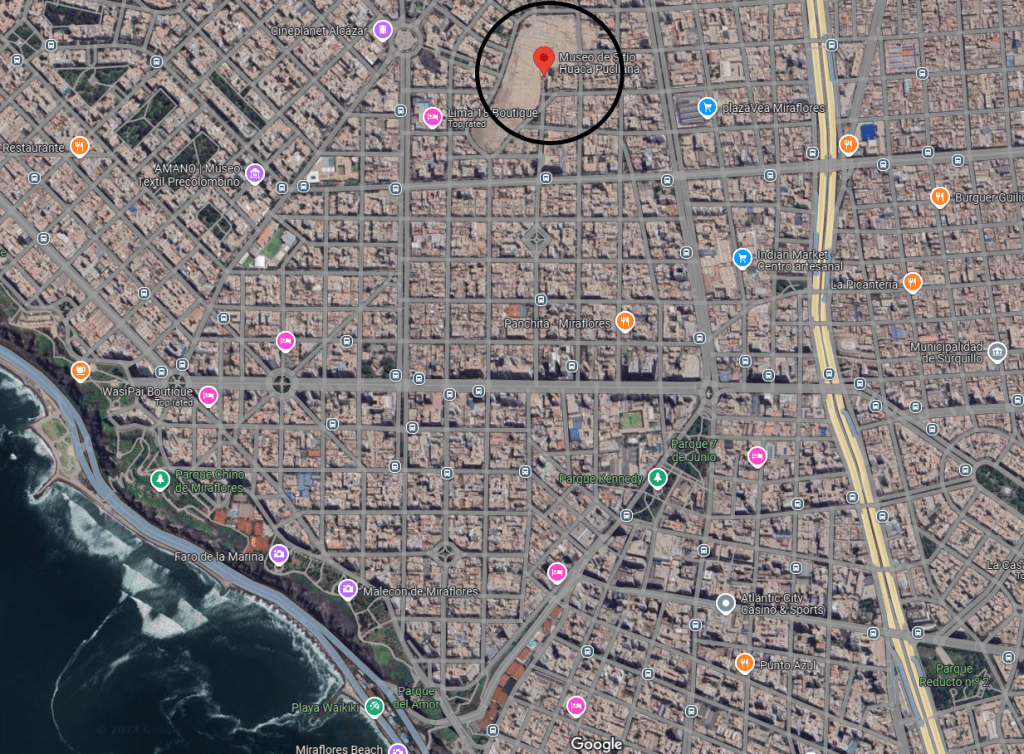

While we waited outside the line hardly seemed to move. Eventually we paid and made our way inside and found out why. The tour groups alternated between Spanish and English-speaking groups, and we had to wait for enough people to assemble before our group would begin the tour. It only ended up being an extra 10 minute wait once we were inside.

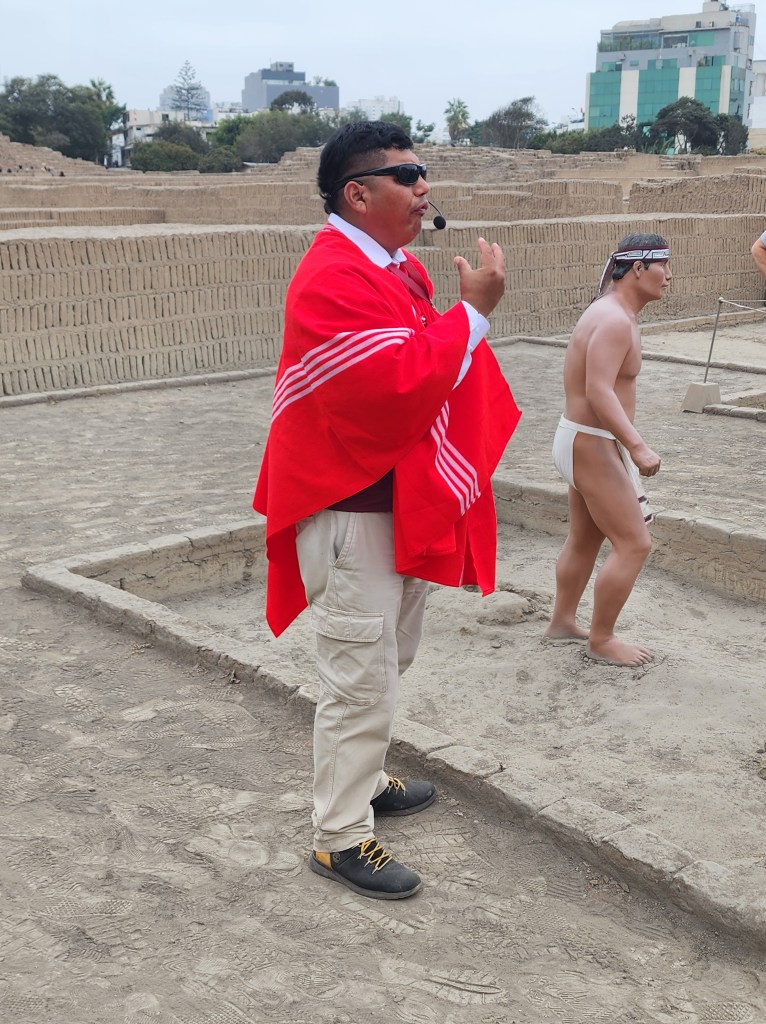
Our guide was very energetic as he explained the different aspect of Lima culture and the nature of the ruins. He answered everyone’s questions and was quite knowledgeable.


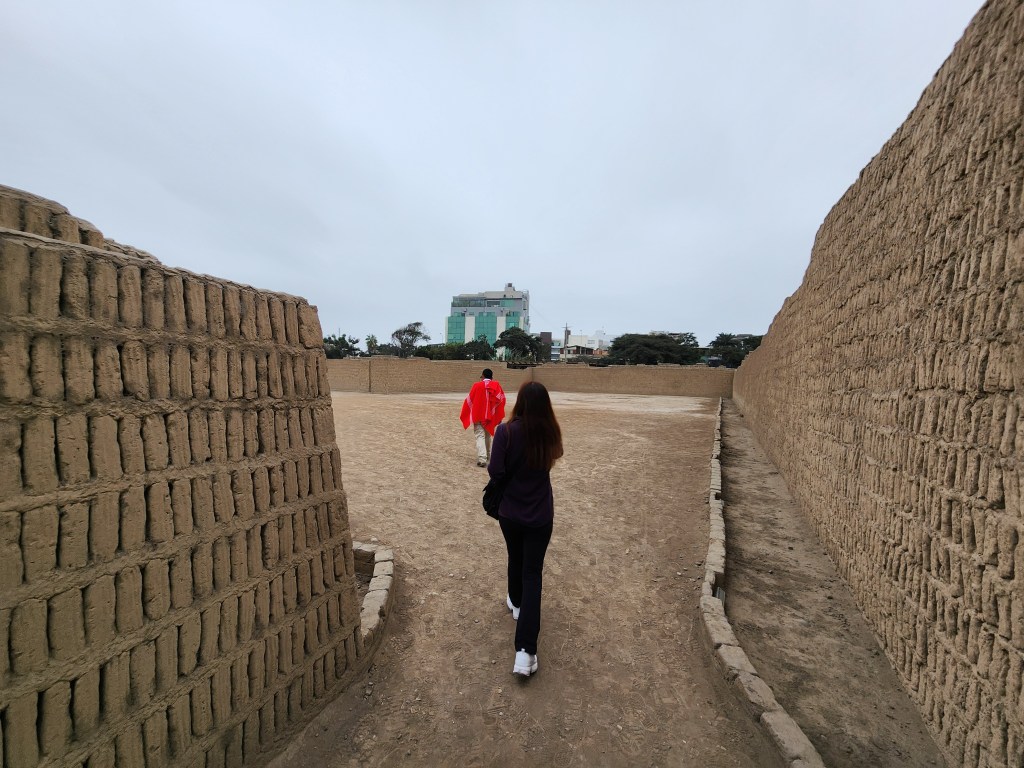
The guided tour was done in a linear fashion, as we followed our guide up walkways and then down the other side. It moved along at a good pace and the entire tour took just over an hour to do.
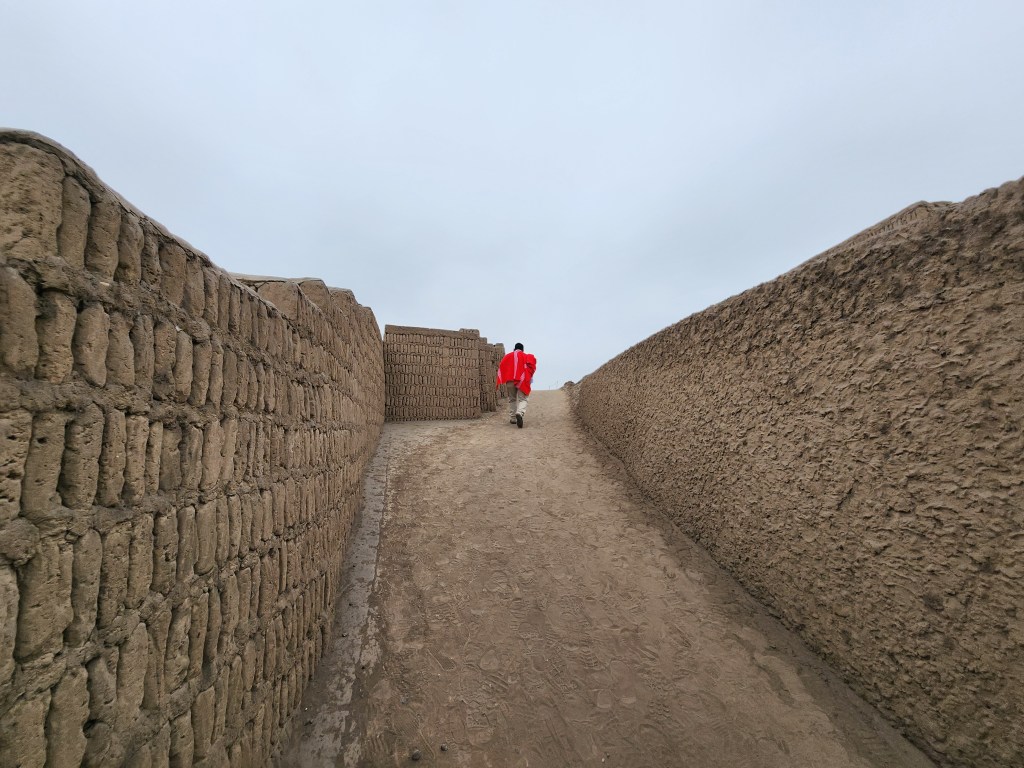

The adobe structure is surrounded by a plaza, or central square, that borders the outer limits, and by a large structured wall dividing it into two separate sections.

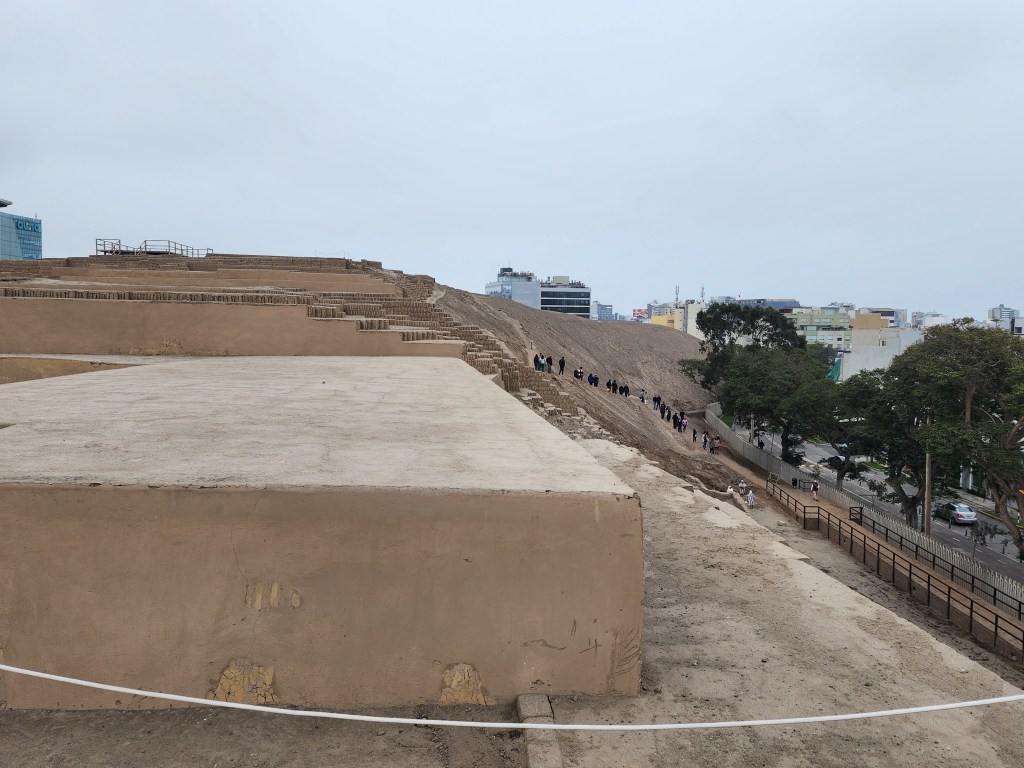
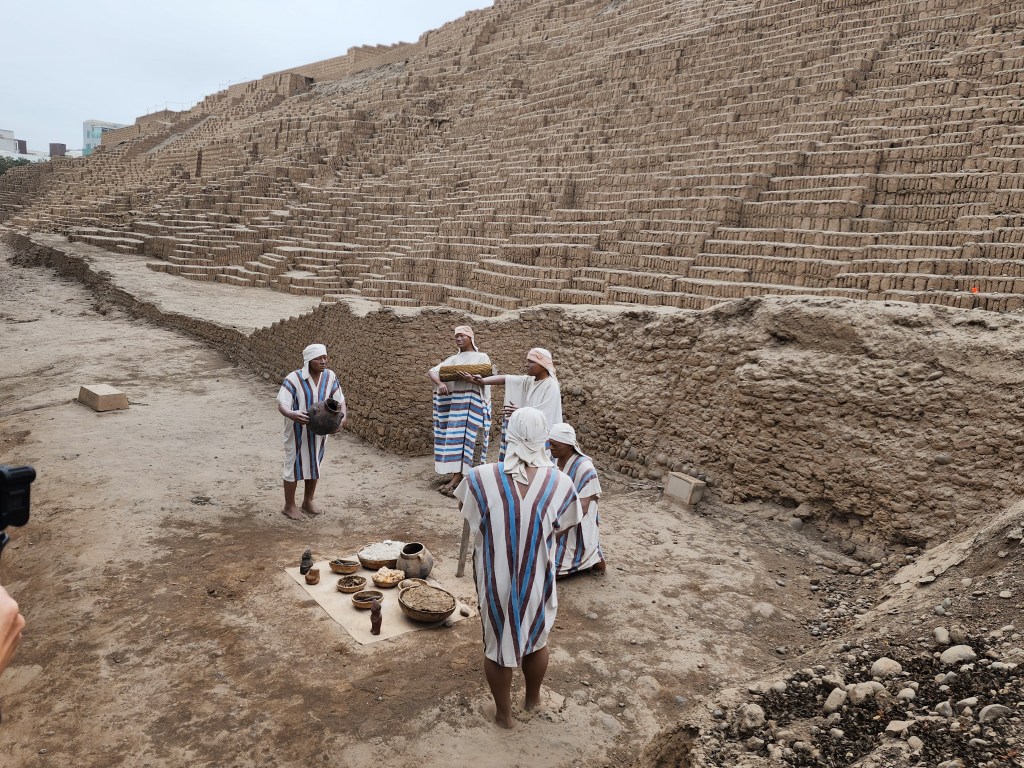
At the top of the ruins there were some examples of the burial containers used in those times. Most Inca mummies were arranged in a fetal position and were wrapped in leather or cloth, or else were placed in baskets or under huge ceramic jars.

According to the people of the time, the world was divided into three planes of existence:
- Hanan Pacha = The world above (world of the gods)
- Kay Pacha = The earthly, or living world
- Uku Pacha = The world below (of the dead)

We then followed the path around the other side of the site and went down again. The tour was well paced, and because the tour groups were staggered every 10 minutes or so, we never worried about other crowds or groups other than our own. It made the place much less congested and made it worth the wait to begin the tour.


After finishing the main site, there was one more thing to see. Tucked away in a corner of the site was a small section devoted to local plants and animals. It included coca and cotton plants as well as llamas, alpacas and guinea pigs.
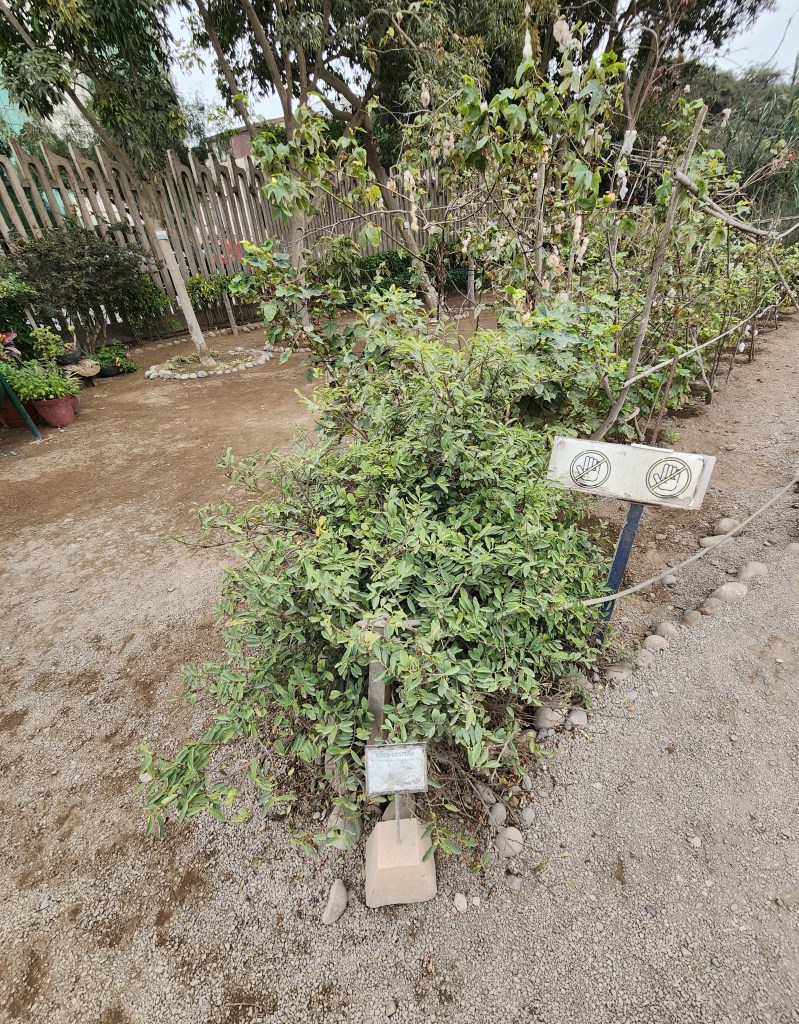

It was a very simple zoo, but a nice introduction to some of the flora and fauna of Peru. From there we walked back to the main entrance where our guide talked a little more about the way of life for people back then before wrapping things up. The entire tour felt very well done and gave good insight into the people who lived around Lima over 1,500 years ago.
Huaca Pucllana was an inexpensive trip that was well worth the hour or so we spent at it. Our guide was excellent, and we learned a lot about ancient techniques and lifestyles that predated the Inca period.
After spending three nights in Lima, we took a bus to begin the trip southward. We would really get back to nature with our next stop: Paracas.
 Humphreys Travel