
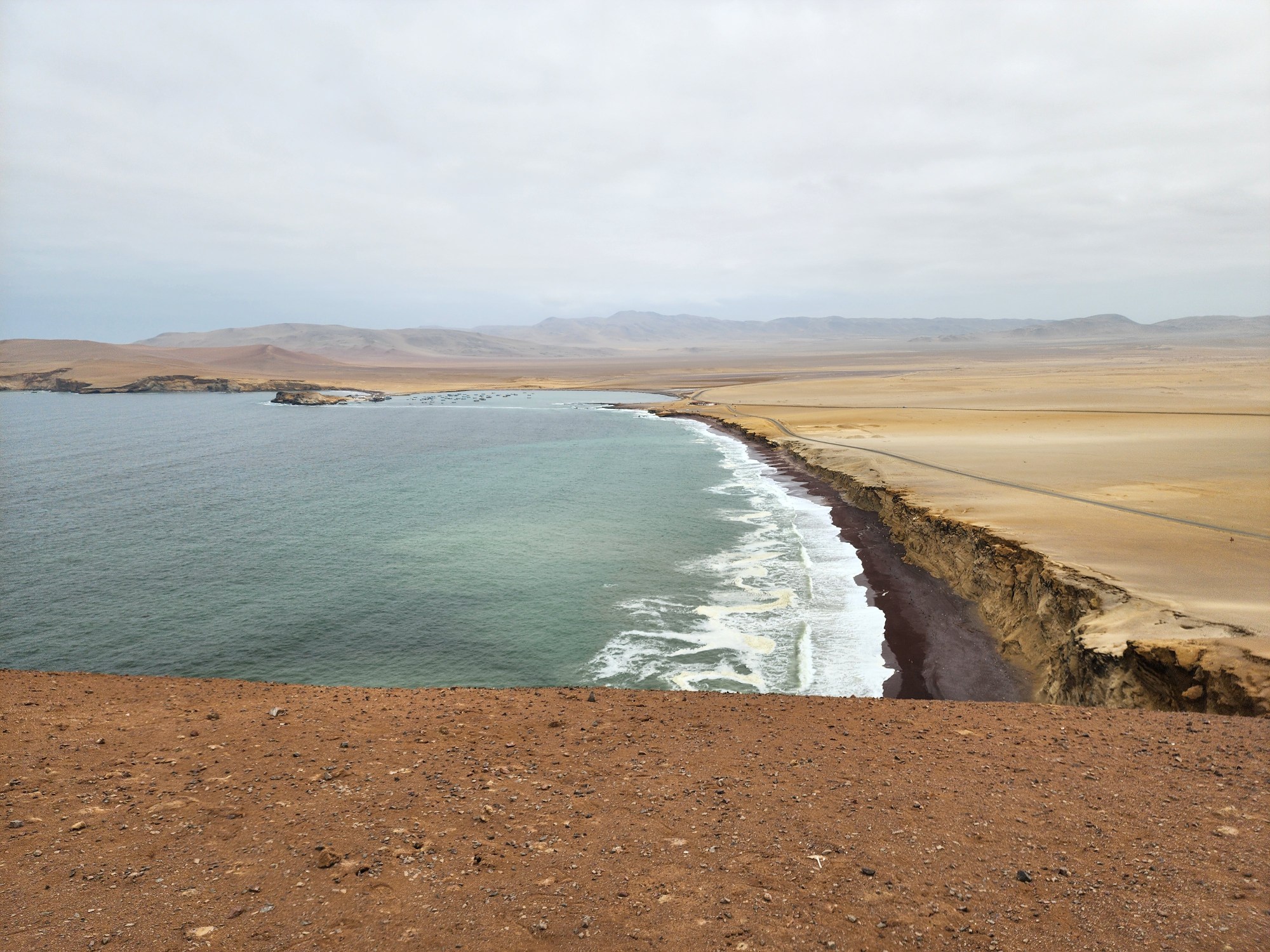
The morning after our trip to the Ballestas Islands, we took the Peru Hop bus to Paracas National Reserve before continuing onward towards our next destination.

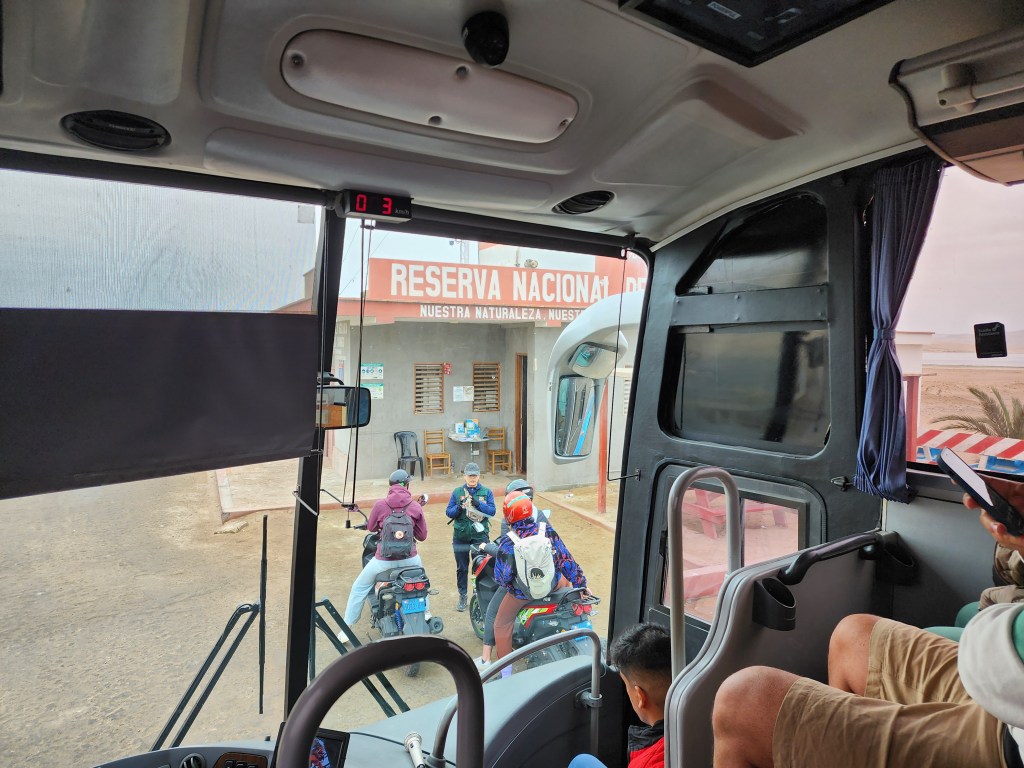
The Peru Hop tour combined the visit to the reserve with a departure towards our next destination in Huacachina, so we brought our bags to the meeting point a short distance from our hotel. There was a large gathering when we arrived. The bus arrived and was already mostly full, so it quickly filled and we had to wait for a second bus to arrive.
I don’t think Peru Hop puts a limit on the number of reservations it gets and they seem to borrow buses from other companies as some had other branding. Also, people can hop on and off at any point in the trip, so there’s some uncertainty in the day to day numbers. The result is when they overbook they end up making some quick phone calls and another arrives. Not exactly seamless and there’s some waiting, but our bus ended up being less full so we put up with it

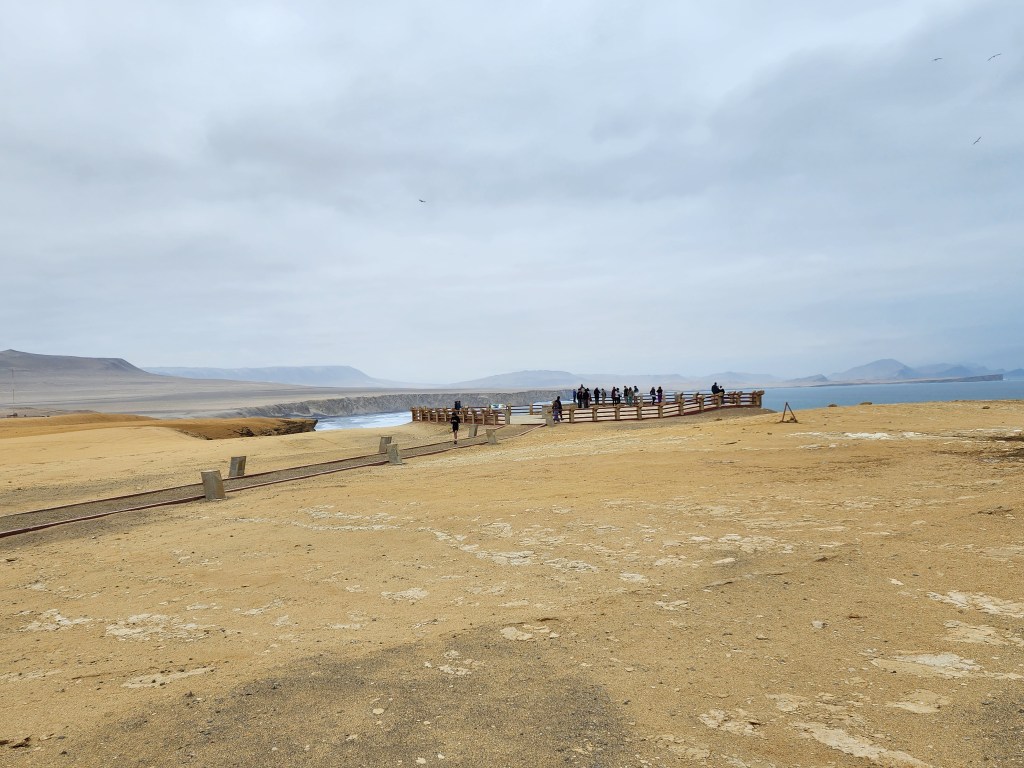

The Paracas National Reserve was established in 1975. It includes 335,000 hectares (827,800 acres) of coastal desert, a few islands, and surrounding marine habitats. Unlike the nearby Ballestas Islands, the Paracas National Reserve emphasizes the landscapes over the wildlife. The name of the reserve as well as the name of the town come from the intense paracas winds that can blow across this dry region.

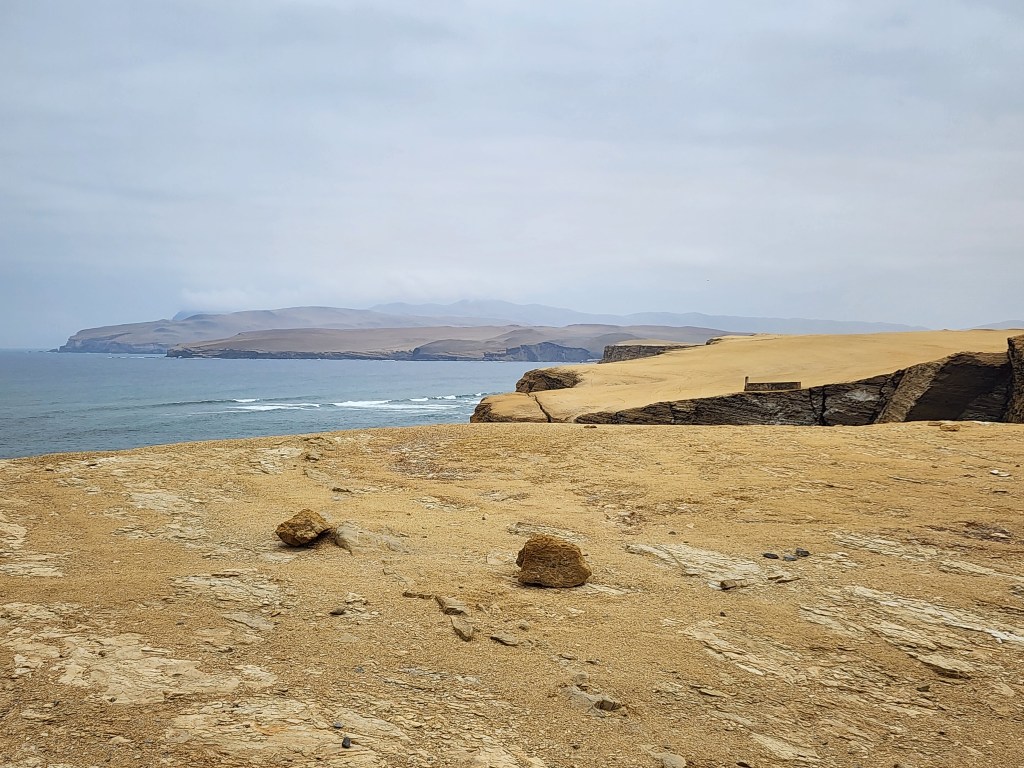


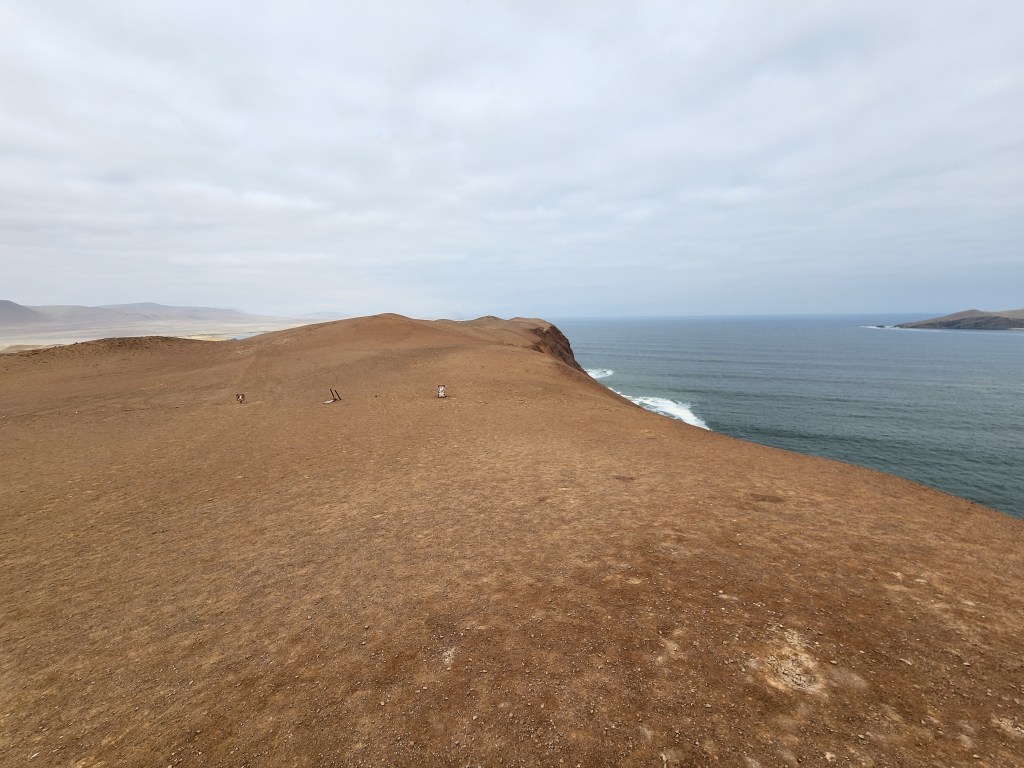
After checking out the first viewpoints looking south and west, we headed back to the bus and drove a short distance away. At the next stop we could see north towards Paracas.

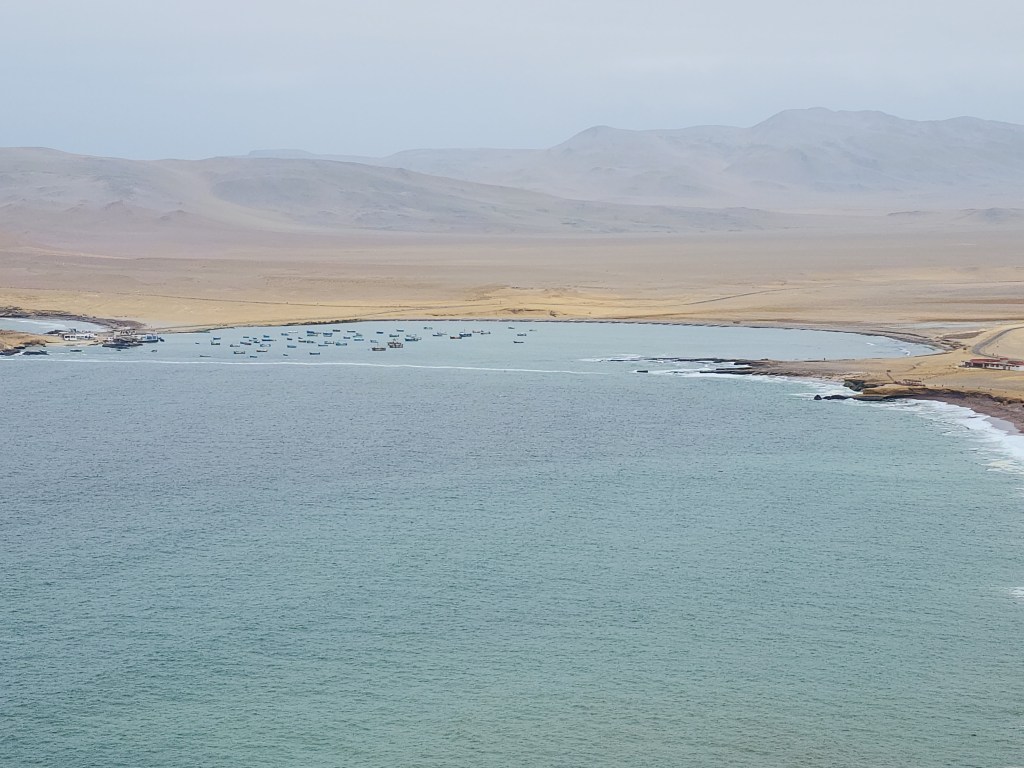
The land here is completely dry with little vegetation. There is some wildlife present, including 74 species of plants, 216 species of birds, 16 types of mammals, and ten species of reptiles. But except for some birds they all seemed to be hiding on the day we visited.

Finally, we went a little further north and down towards sea level. This was the last stop on our brief tour of Paracas National Reserve.


After the short visit to the nature reserve, our bus continued on its way towards Huacachina. Along the way we stopped at a pisco-making facility near the town of Pisco. This was one of the “bonus” stops included in the Peru Hop tour. It’s your standard tourist side trip with the tour company and the facility helping each other out, but with long bus rides throughout our southern tour we were more than happy to make a stop.

The Pisco region is on the tentative list of the UNESCO World Heritage sites as an area of significant cultural importance. It is made by distilling fermented grape juice into a high-proof spirit. The process was developed by 16th-century Spanish settlers as an alternative to the brandy coming to Peru from Spain.
Peruvian pisco must be made in the country’s five official D.O. (Denomination of Origin) departments—Lima, Ica, Arequipa, Moquegua and Tacna. They were established in 1991 by the Peruvian government.

Although made from grapes, pisco is produced using copper pot stills, similar to single malt Scotch whiskies. The production of a regular Peruvian Pisco bottle requires between 8 and 12 kilograms (17-26 lbs) of grapes.
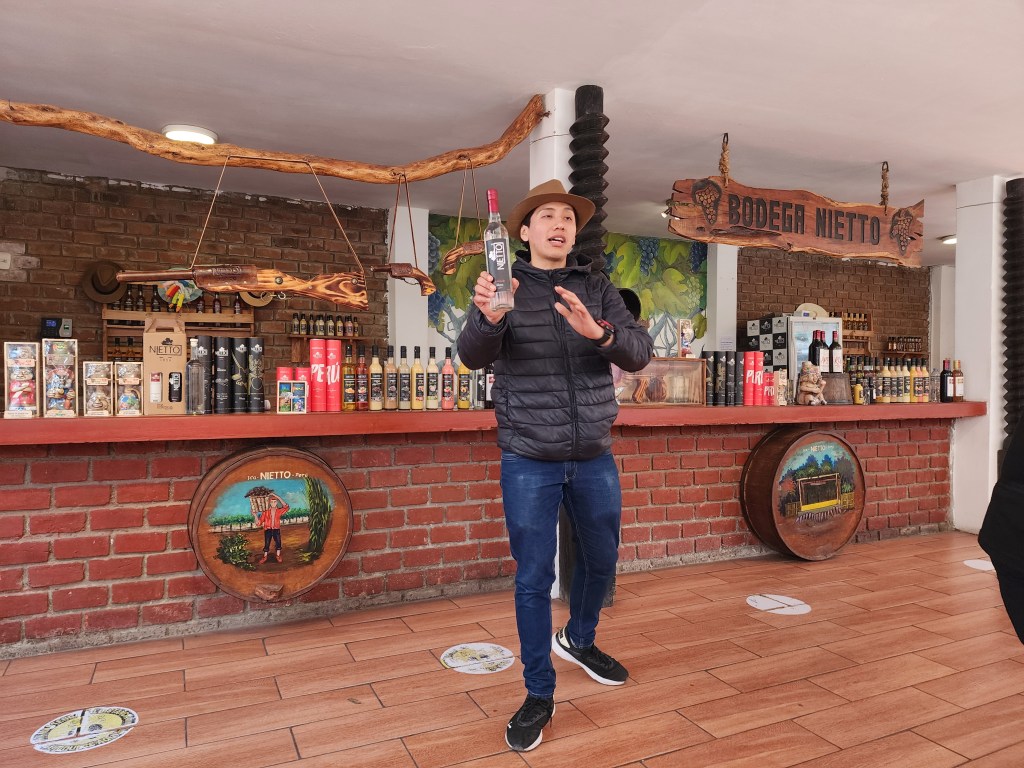
At the tasting there was a greater variety of flavours than we expected. Some piscos were bottled directly, while others were done slowly. Some had flavours added while others absorbed the flavours of wooden casks. We didn’t know much about pisco, so we learned a lot. They were very generous with samples, and a few people who volunteered to play a game ended up drinking three more shots!


The golden-coloured one tasted similar to icewine and was very smooth, and the dark one had a nice berry flavour to it. The orange one was a bit too sweet and the clear one just tasted strong. Kim only liked the mildest ones.
We didn’t buy any pisco even though some of them were quite good because it wasn’t practical carrying the bottle around on the trip. But the 40 minute stop at the pisco distillery was worthwhile for a diversion.

From Pisco we were on our way to our next destination. We headed inland and would not see the ocean again until the end of our trip. Our next stop was Huacachina in the desert.
Notes
-our trip to the national reserve was a shorter one that only took in some of the viewpoints, probably because we were in a bus instead of a car. We read that the largest deluxe buses aren’t allowed in the park either, but the Peru Hop one was a bit smaller. There were options for other tours within the reserve for people who wanted to explore deeper
 Humphreys Travel
One thought on “The Ocean Vistas of Paracas National Reserve (and a Pisco Distillery Tour)”