

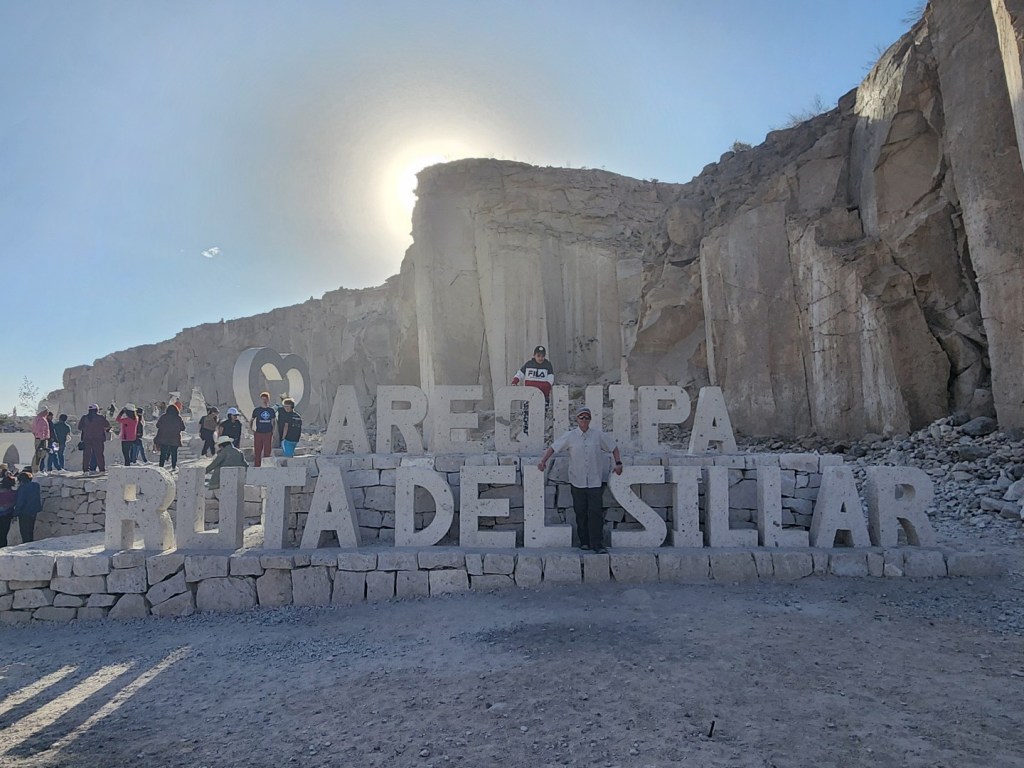
During out three night stay in Arequipa, we spent one day doing a day tour to the Ruta del Sillar (Sillar Route).
We booked the tour through Peruhop, the same agency that we had used for most of the bus travel so far. They hired a local agency to actually run the tour, and that had a few issues. First off, the minibus arrived about 45 minutes late to our hotel, before we joined a number of people on the tour. We’re not sure whether the previous travellers were late, or the minibus left late to begin with.
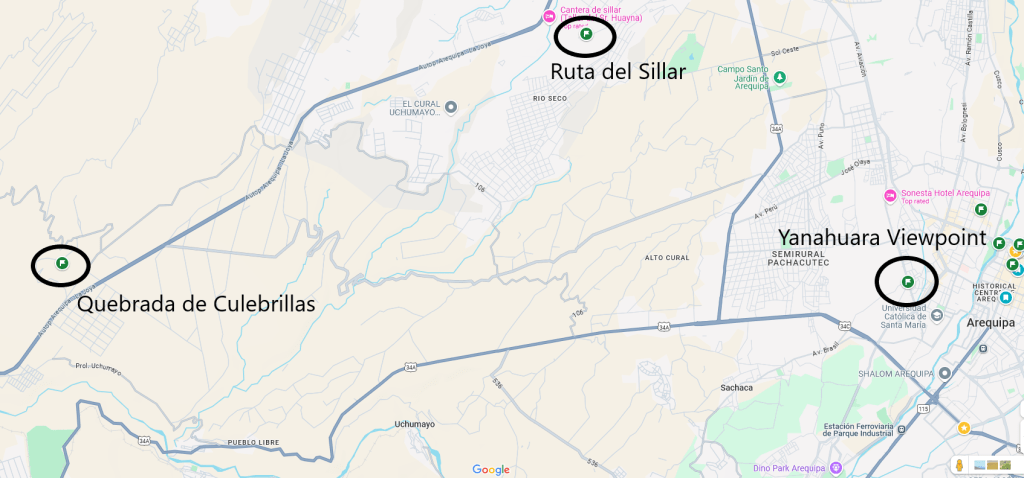
Then, on the way out of the city we hit construction and heavy traffic and were delayed another 45 minutes or so. The original plan was to visit the Yanahuara Viewpoint first, but we skipped it until the end due to delays. Eventually we were out of the city
Located about 30 minutes outside Arequipa, the Sillar Route spans over 2km (1.2mi) in the Cerro Colorado district. On the base of the inactive Chachani Volcano, the district divides into 3 locations – Añashuayco, Cortadores, and Virgen de Culebrillas. Each quarry formed thousands of years ago due to the volcanic activity nearby.

We didn’t know that there was a list of Geological Heritage sites put out by the ISGS (International Commission on Geoheritage) and it includes the Sillar Route, but we know now:
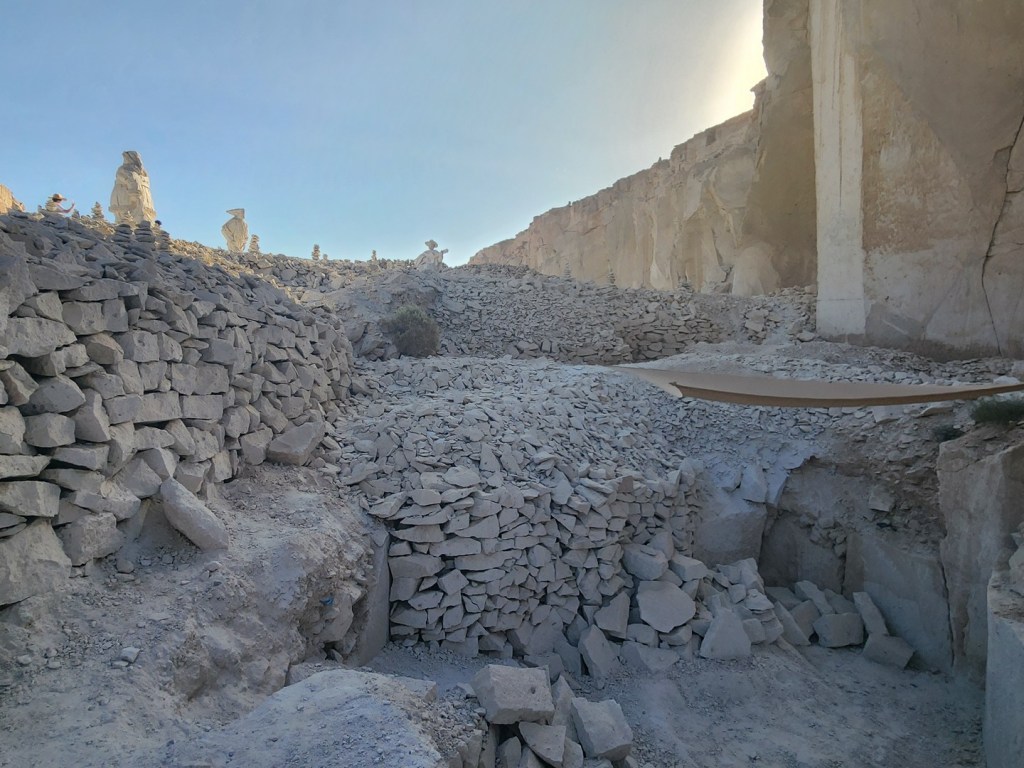
Sillar is a type of rock that is erupted from volcanoes. Along with other minerals, the eruptions contain small fragments of white or pink sillar. Most examples are found in the south of Peru, such as the large quantities of sillar found near Chachani volcano close by. The sillar has ended up in much of the colonial architecture in nearby Arequipa.


Some reasons why this element was so important to Arequipa’s construction was because of its lightness, softness, and porosity. Besides the white sillar, you can find pink and yellowish ashlar in the surroundings of the city. These different colors are caused by the different minerals within these elements, giving them a particular and unique pigmentation.
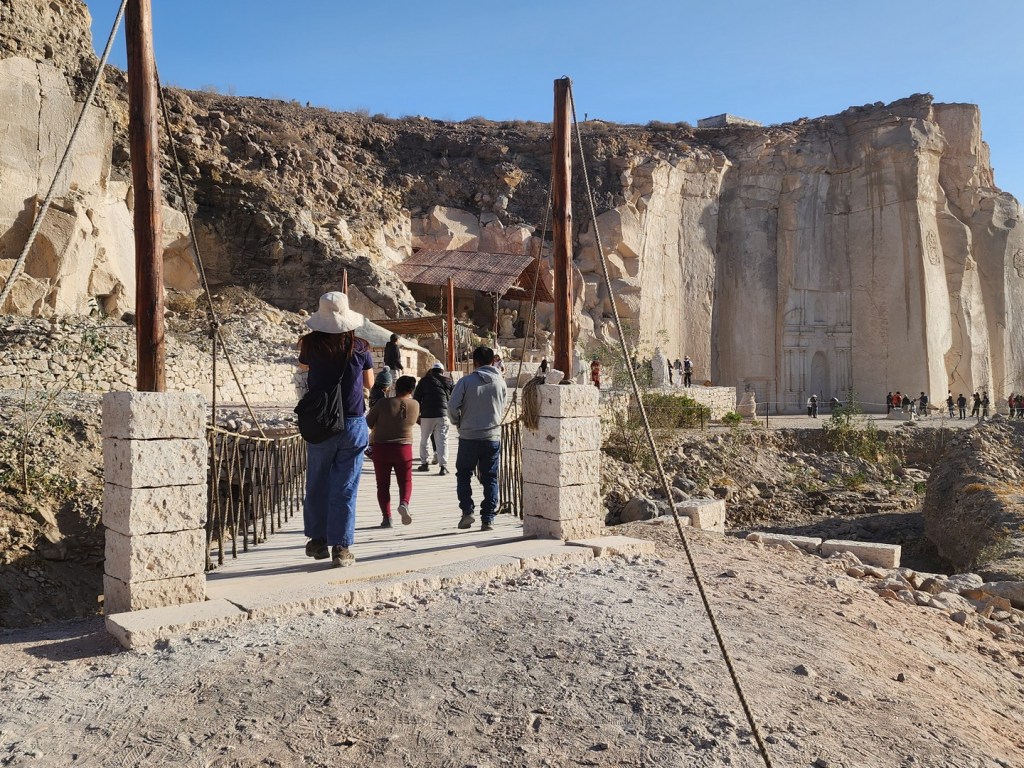
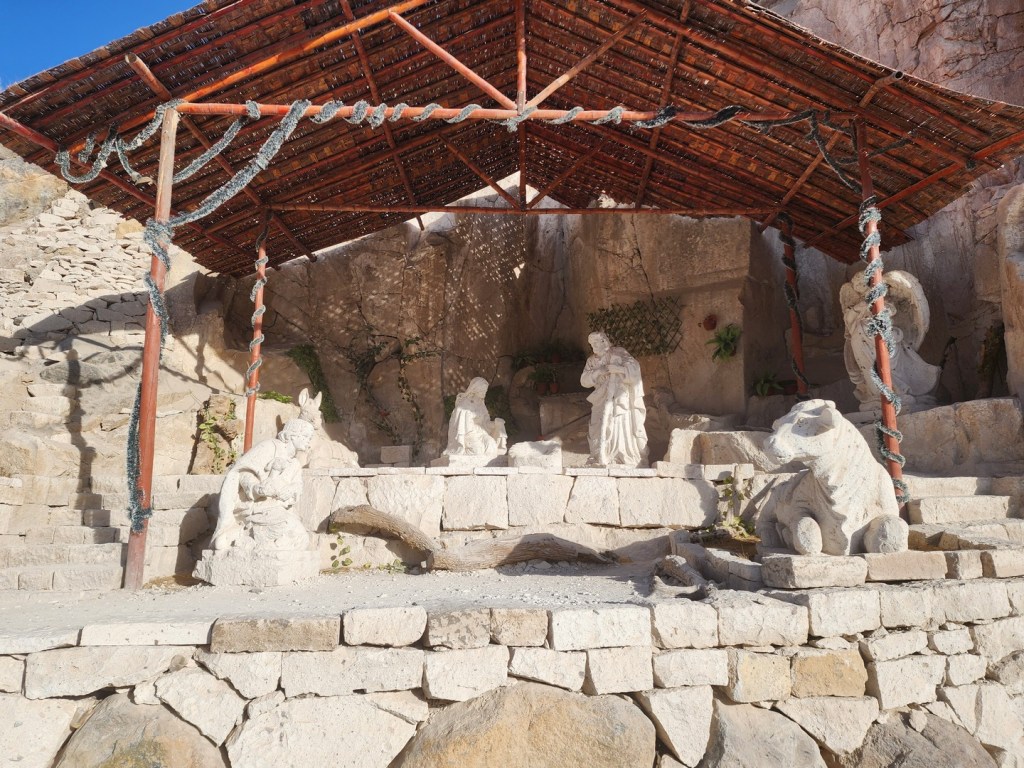
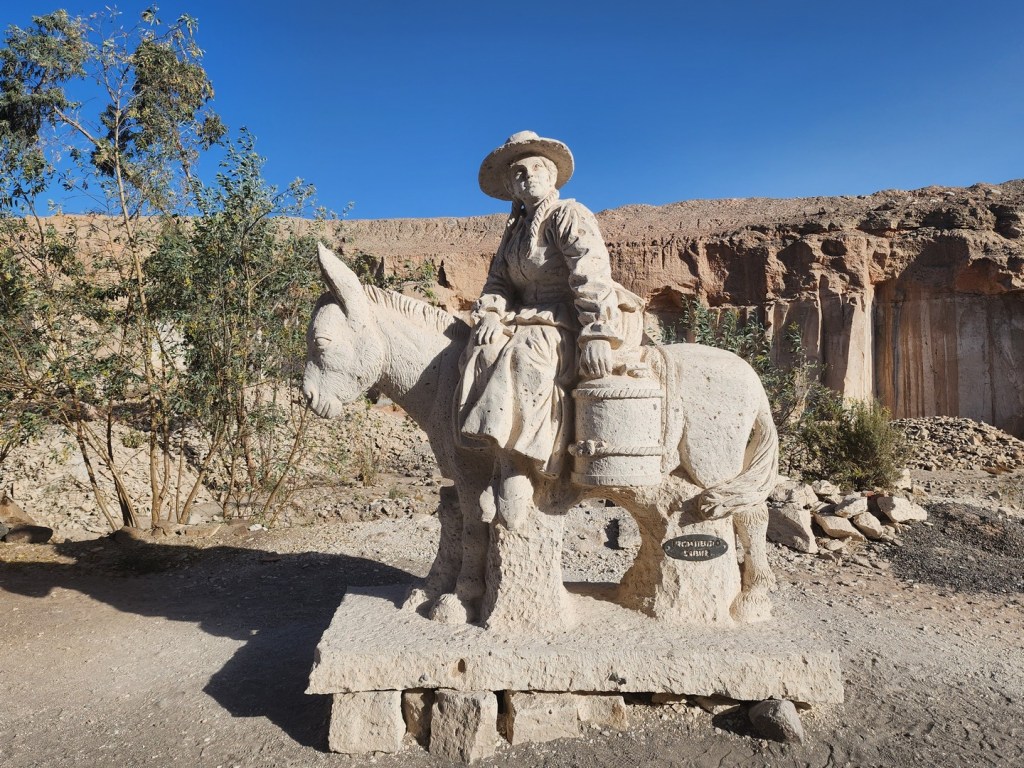
The themes ranged from historical figures to modern designs to religious ones.
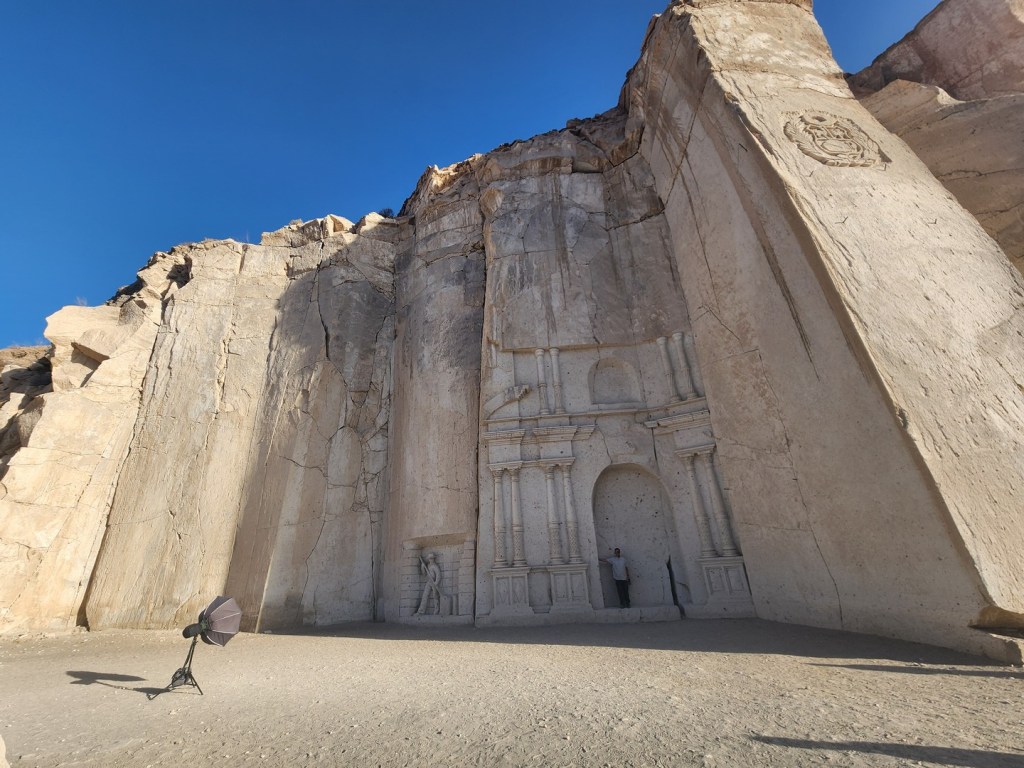
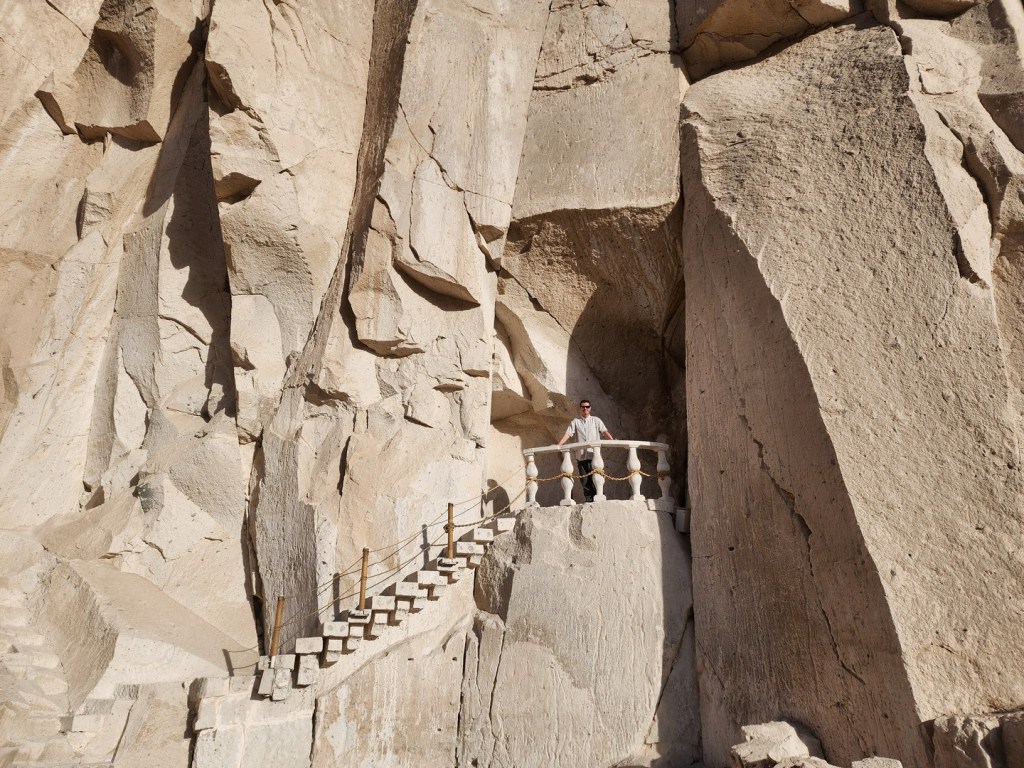

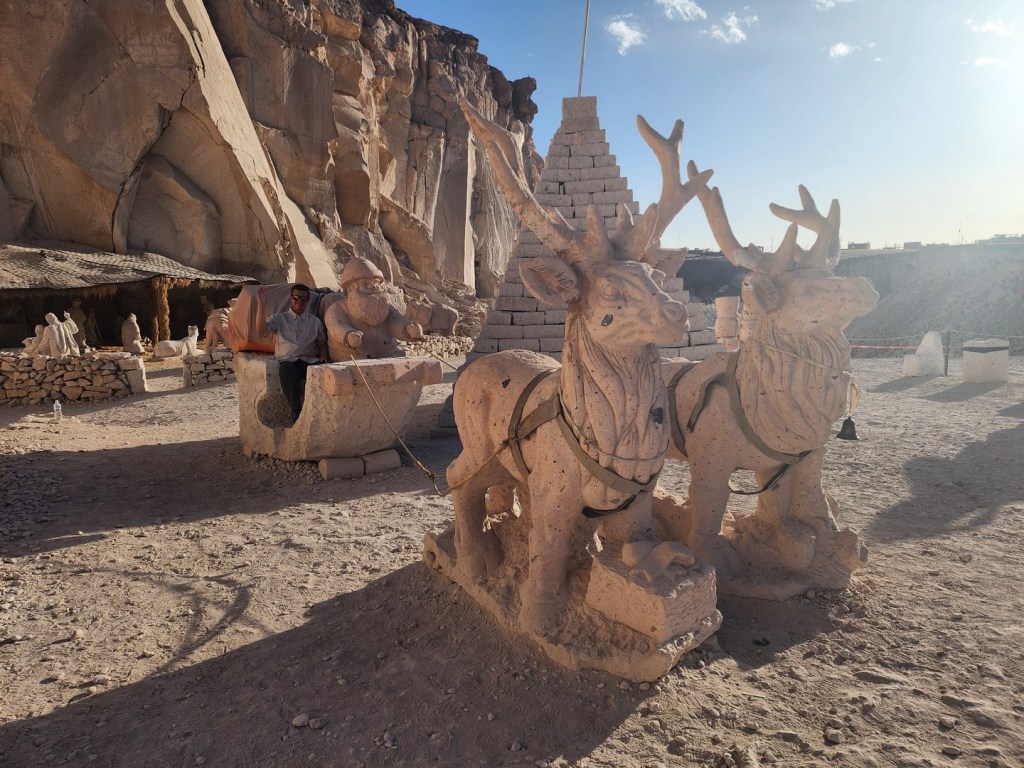


It was all a bit touristy and haphazard with the various themes, but we enjoyed the tour. We spent about 45 minutes at the quarry before moving on.
We got back into the bus and travelled another 30 minutes further west to the Quebrada de Culebrillas, a ravine and archaeological site made of the same sillar material and located in a desolate location. We actually started to wonder where we were going until we got to the edge of the ravine.
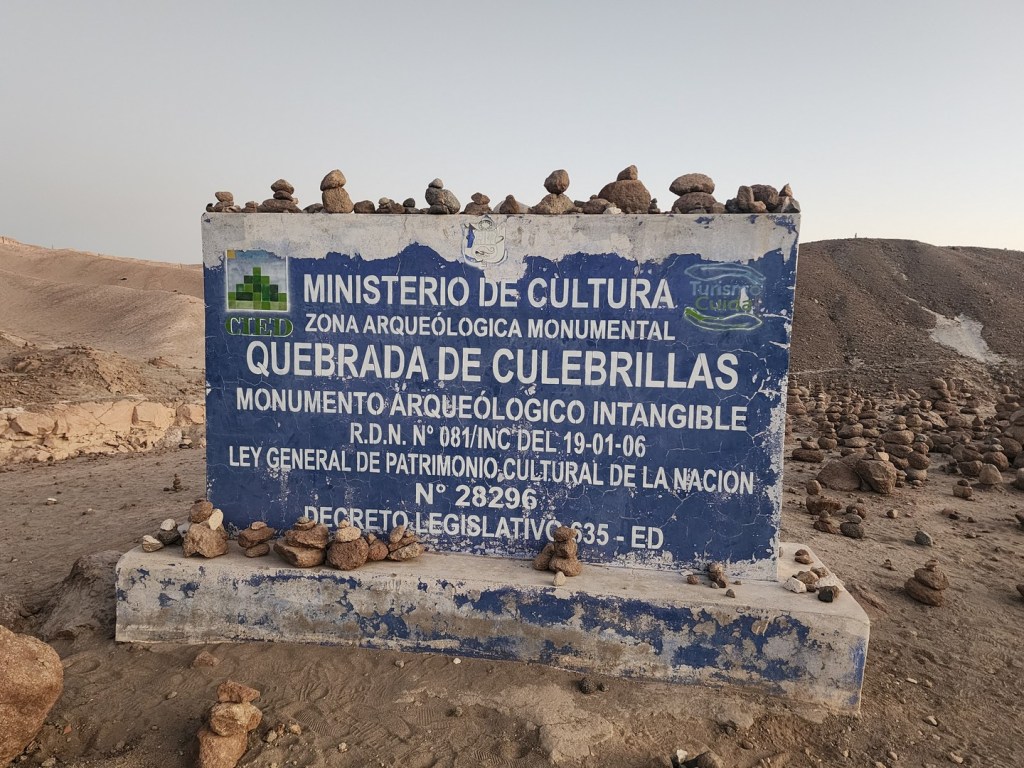


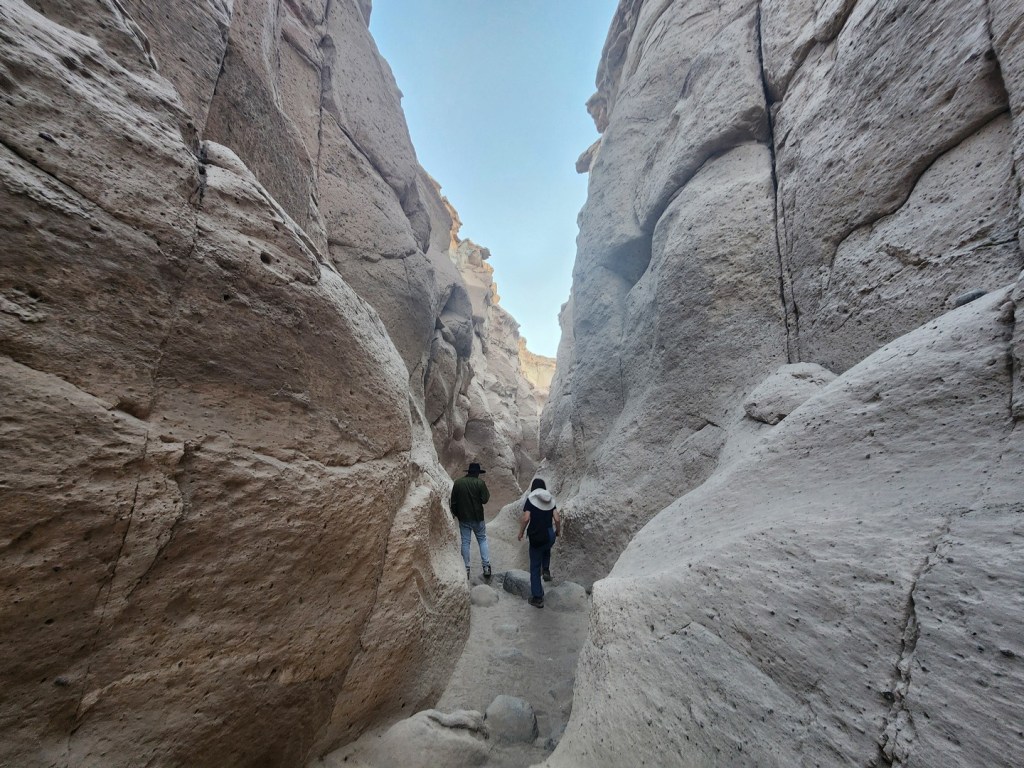
Considered an open-air museum and archaeological site, the Quebrada de Culebrillas is also a beautiful ravine walk. This part of the tour took about an hour.


The ravine was formed by water and wind erosion. The walls became steeper as went went further into it, and the outside sounds became hushed within the ravine. Because we were the last group to enter for the day, we had the canyon to ourselves most of the time. Being late did have some advantages!
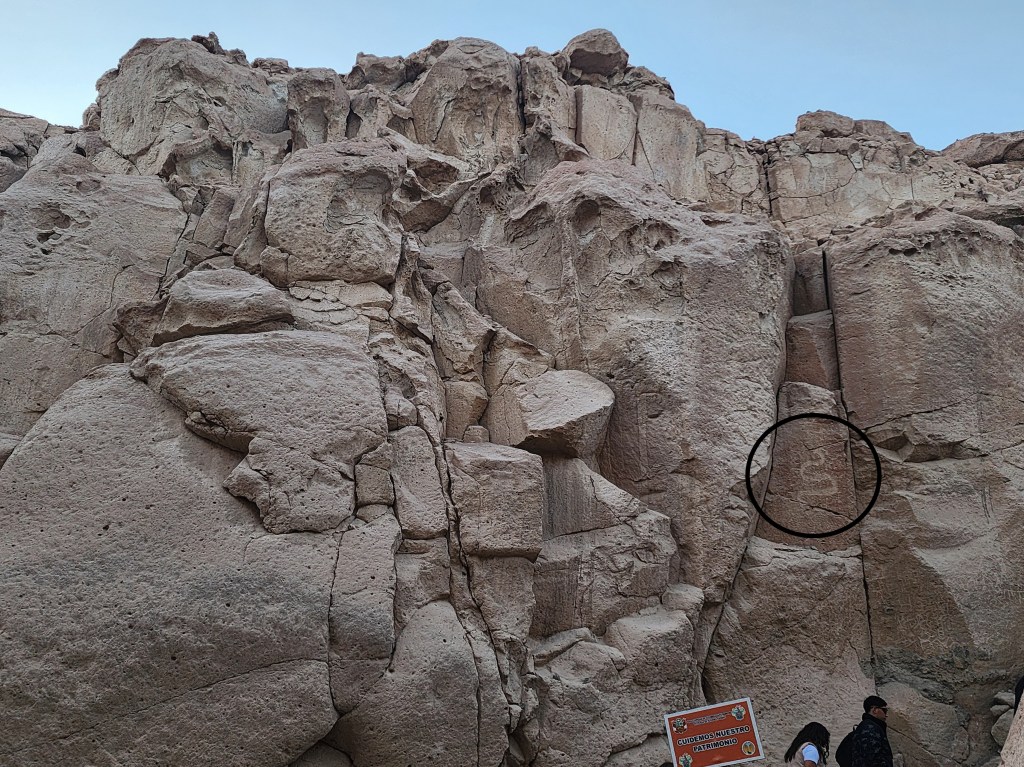
Near the end of the ravine walk, we saw petroglyphs left by the Wari culture thousands of years ago.

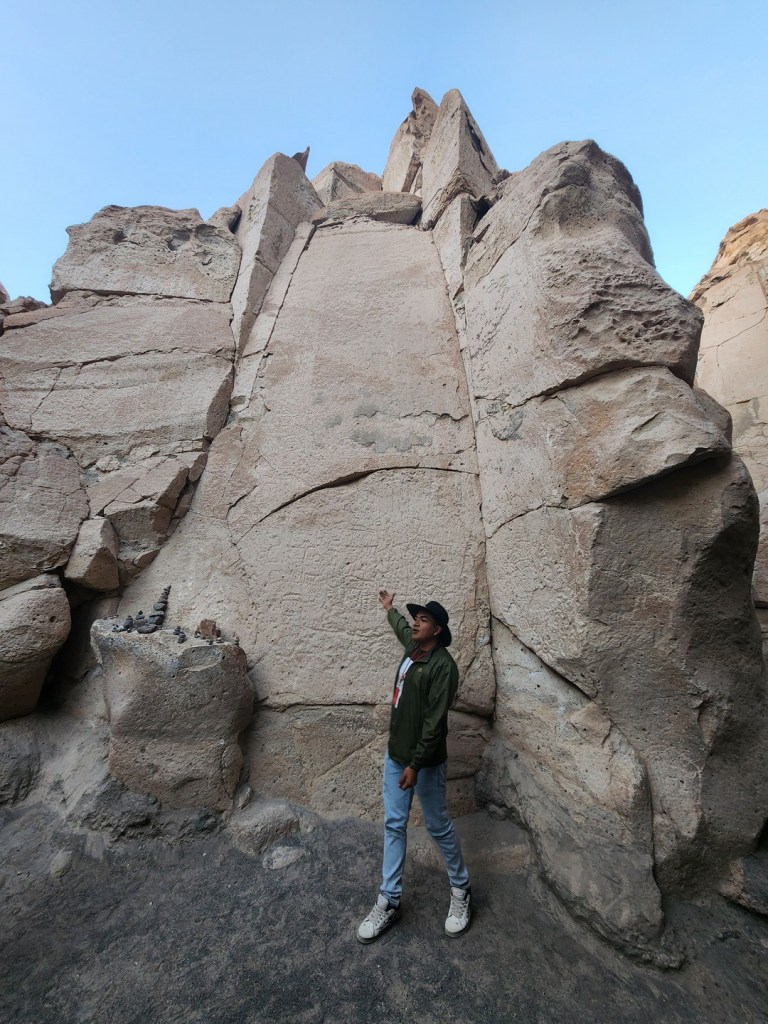
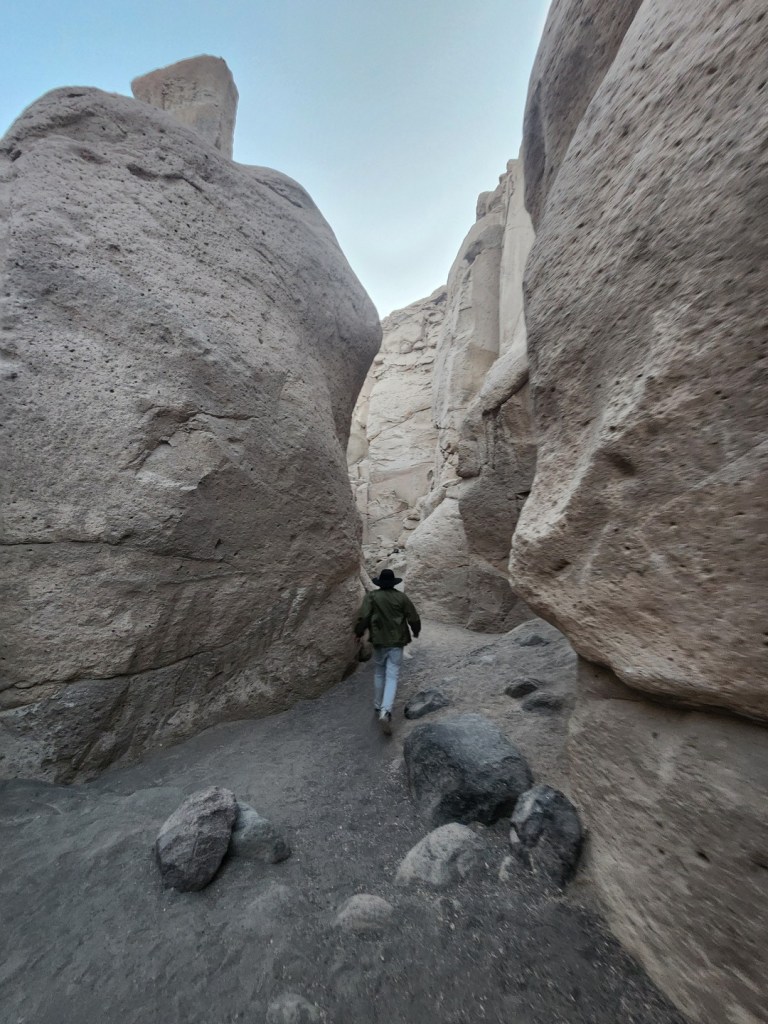
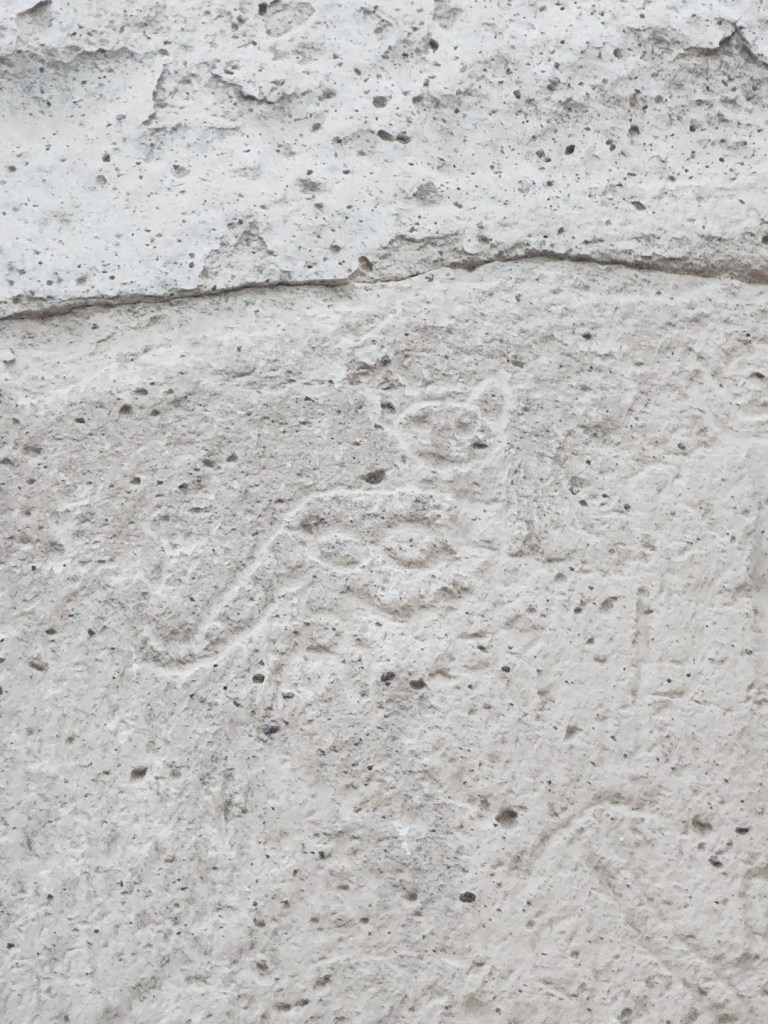
Apparently mosquitos are common in the ravine but we were fortunate on the day we visited. There were no mosquitos or other insects at all.

The sun was fast disappearing behind the walls of the ravine, and we eventually made our way up and out.
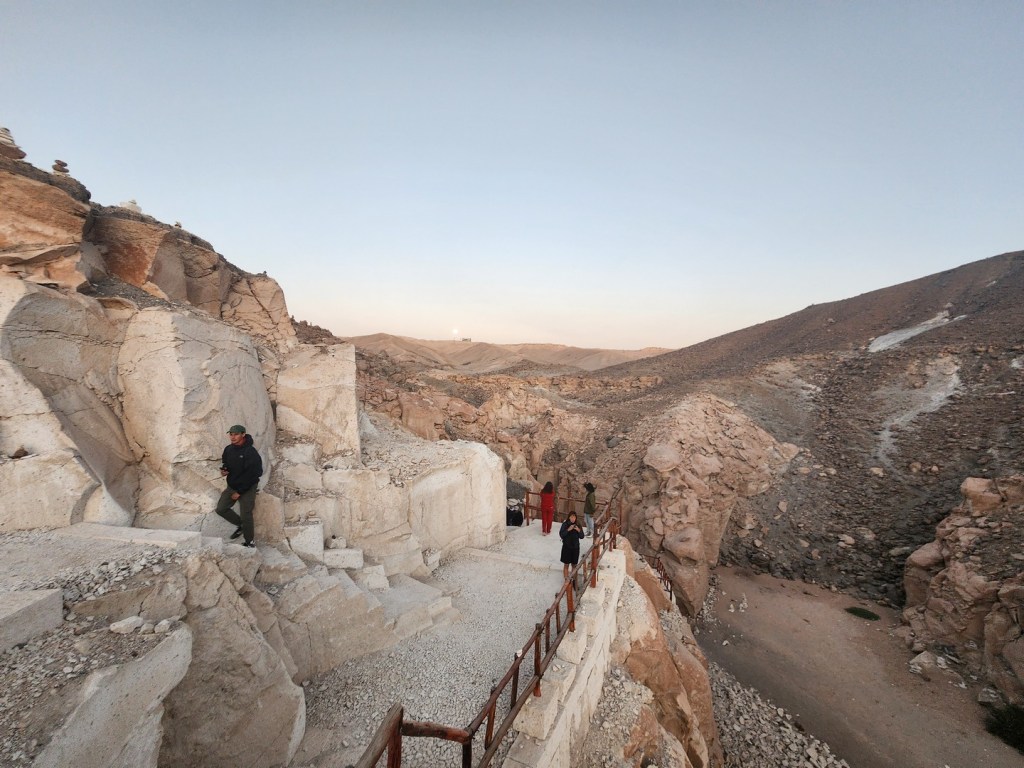

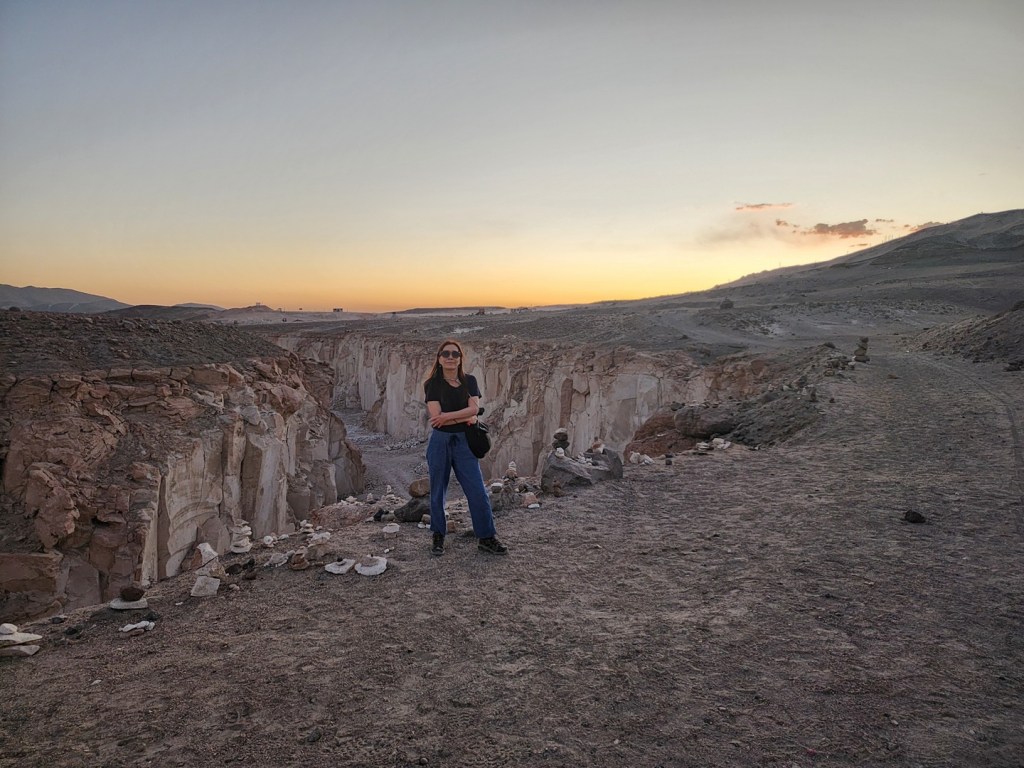
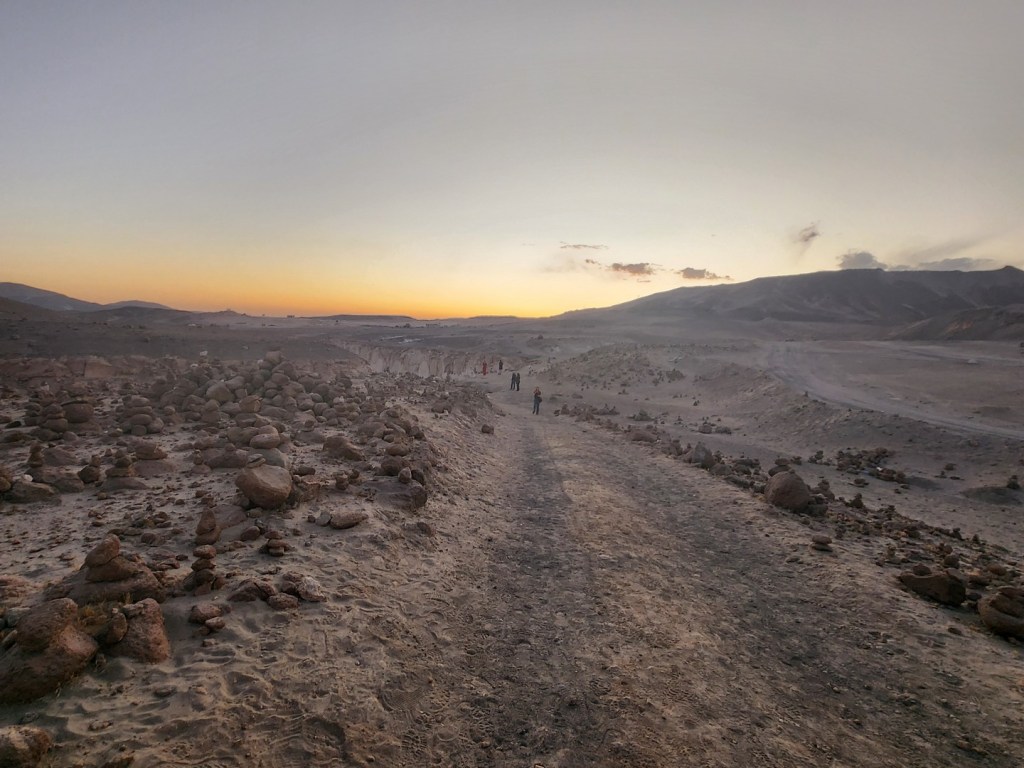
At first we thought the stacked stone mounds were a tourist thing, but it turns out it is a long-standing tradition in Peru. Called Apachetas, they are are stone mounds that are formed by stacking one stone on top of another, typically in high and challenging locations along Andean trails.
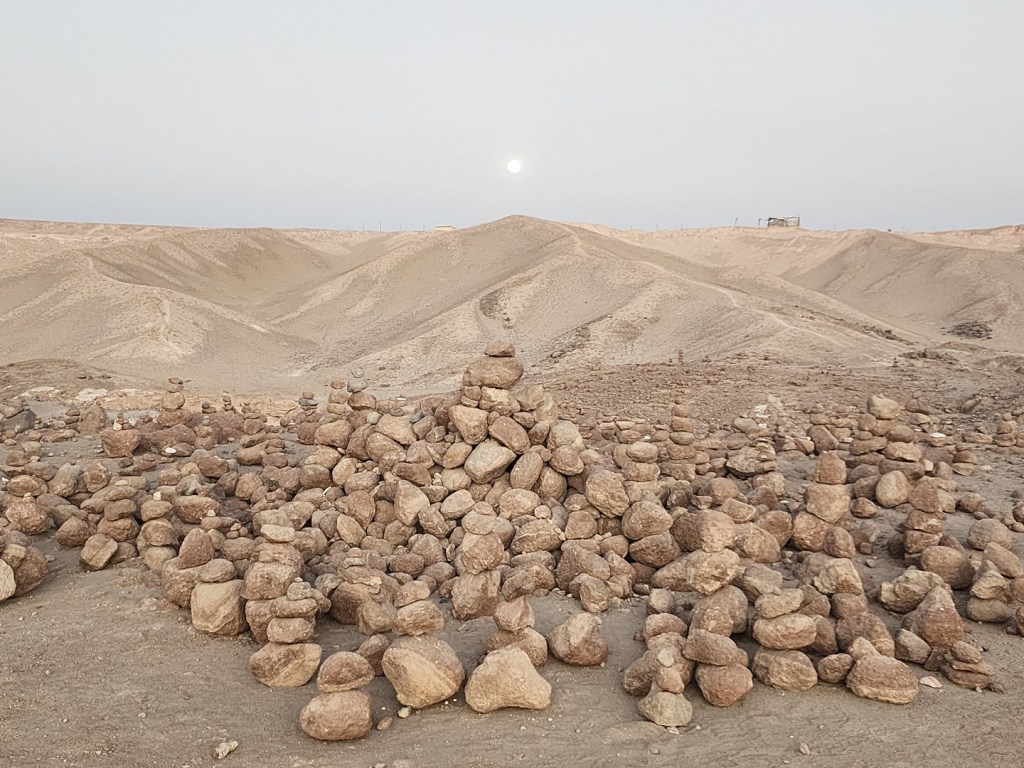
They are offerings made by indigenous communities to Pachamama (Mother Earth) and the Apus (mountain spirits) to seek protection, express gratitude, or fulfill promises. Apachetas also serve as markers for territory, distance, and the order of Inca roads. Their origin dates back to the time of Tahuantinsuyu, the Inca Empire, and the practice continues to this day. Apachetas are considered sacred, and removing the stones is considered disrespectful to Andean culture.

Apachetas are also considered sacred places where people can connect with the spiritual world and Andean deities, such as Pachamama (Mother Earth), and other local gods. It is believed that apachetas are meeting points between the earthly and spiritual worlds and are used to make offerings and perform rituals to attract good luck, protection, and prosperity.

On the way back to Arequipa we stopped at Yanahuara Viewpoint. It was dark so we couldn’t see the volcano. Our guide rushed through a quick explanation of a fountain there before we waited for the bus to return. I have a feeling there were contractual obligations to hit every site on the tour even though there wasn’t much to see at night. We ended up going there anyway the next day so it wasn’t a big loss.
But at this point some of the tourists were starting to complain that they were late to meet people, or to get rest before doing an early morning Colca Canyon trip. Although the tour had some hiccups we weren’t too bothered as there was no urgent schedule for us the next day.
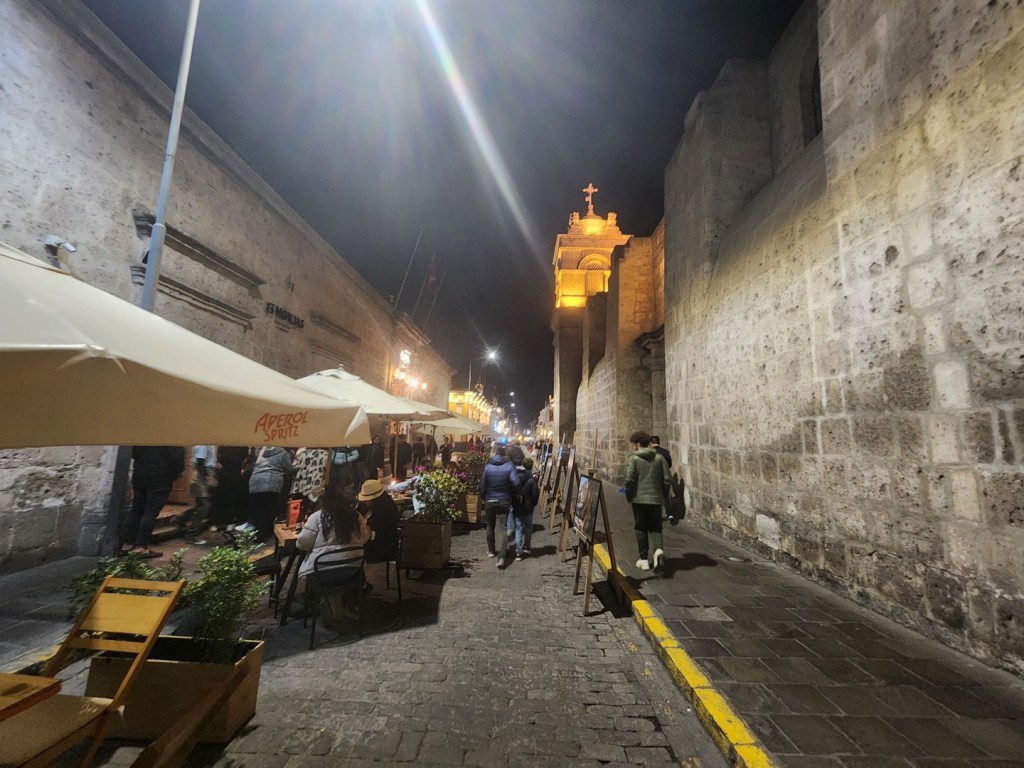
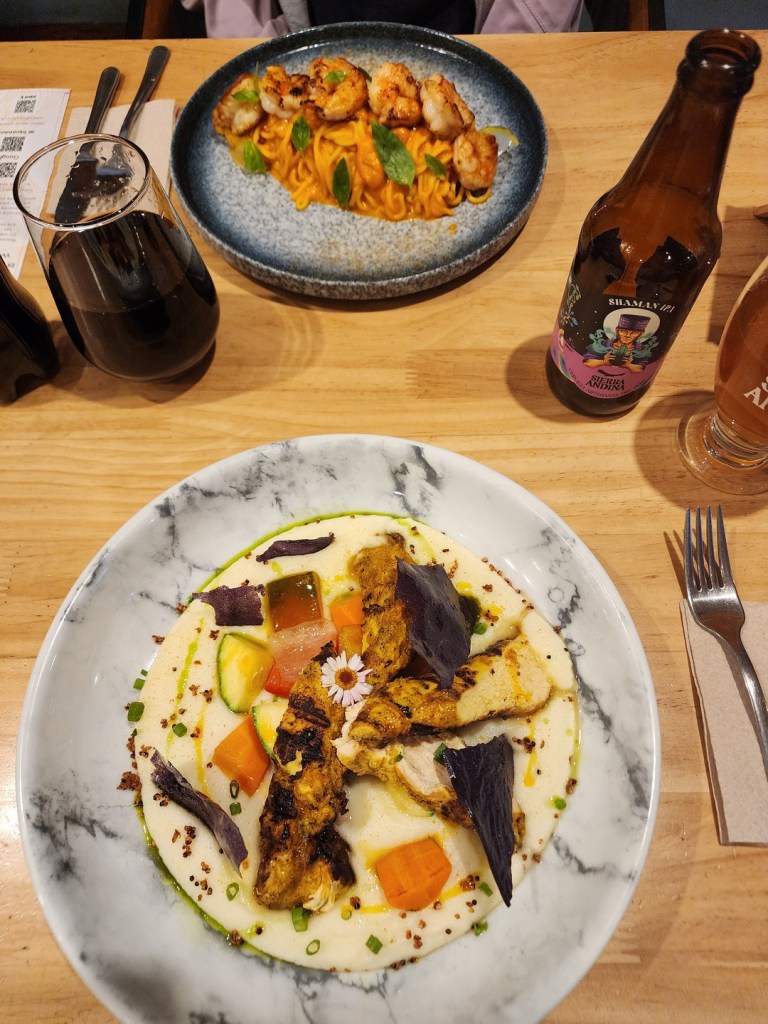
We were dropped off near the main square and walked over to Kao, a local Thai-Peruvian fusion restaurant.
After one more day in Arequipa, we would prepare for the next part of the trip, a long bus ride up to Puno, near the border with Bolivia. Our experience on Lake Titicaca, 3,810 metres (12,500 feet) above sea level, will be the topic in the next post.
Notes:
This is a common tour, and can be booked from many hotels or through tour agencies in Arequipa. We booked ours right on the Peruhop bus as it made its way from Huacachina to Arequipa. The price was only 50 soles (US$13) each, which was very reasonable for the experience. We were also staying in Arequipa that night and had no rush to get back in the evening. So we were a little more accepting of the delays that happened along the way.
 Humphreys Travel