
We needed to get from Cusco to Ollantaytambo, and found that the Taxidatum service we had been using for the past couple of days filled that need. Instead of travelling by bus, we booked a day trip that went from Cusco to Ollantaytambo with stops along the way including:
- Traditional Market near Chinchero
- Town of Chinchero (with Incan ruins)
- Maras Salt Mines
- Moray Terraces
Having a private car and driver to get us around to the sites was worth the cost, and we felt the 220 soles (US$60) + tip we paid was more than reasonable for the stop offs and easy transfer to our next destination. Along with our bags we were picked up in the morning from our hotel and headed east out of Cusco. Traffic was bad once again until we cleared Cusco, but it was quiet once outside of the city limits.
1. The Traditional Textile Market
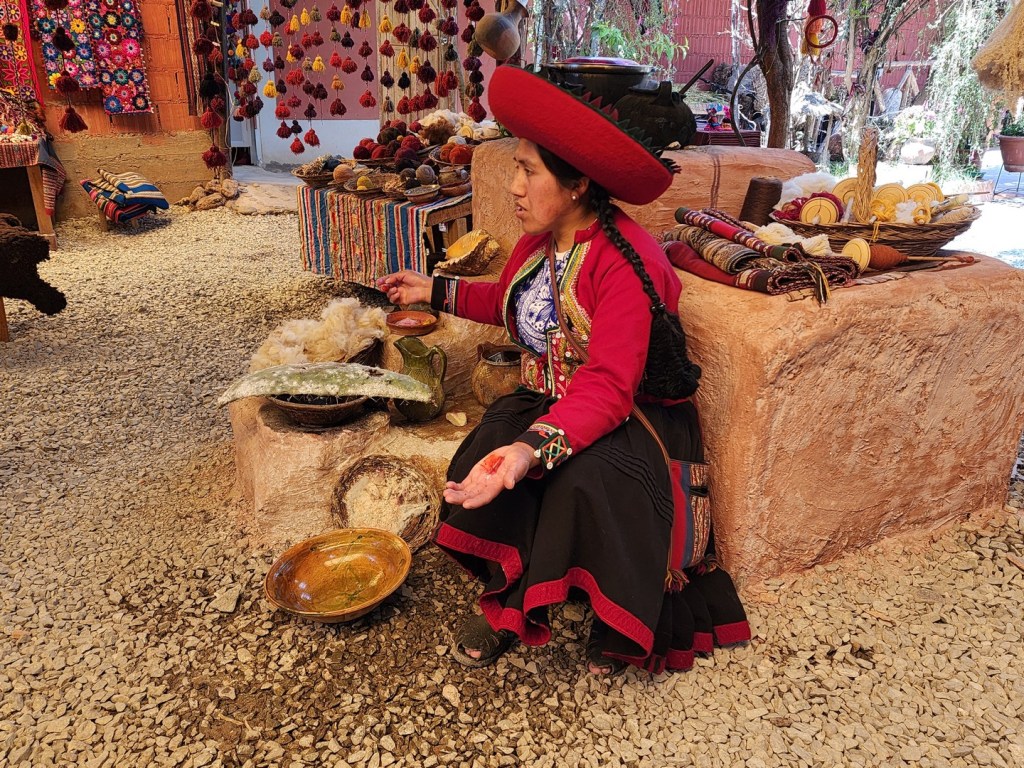

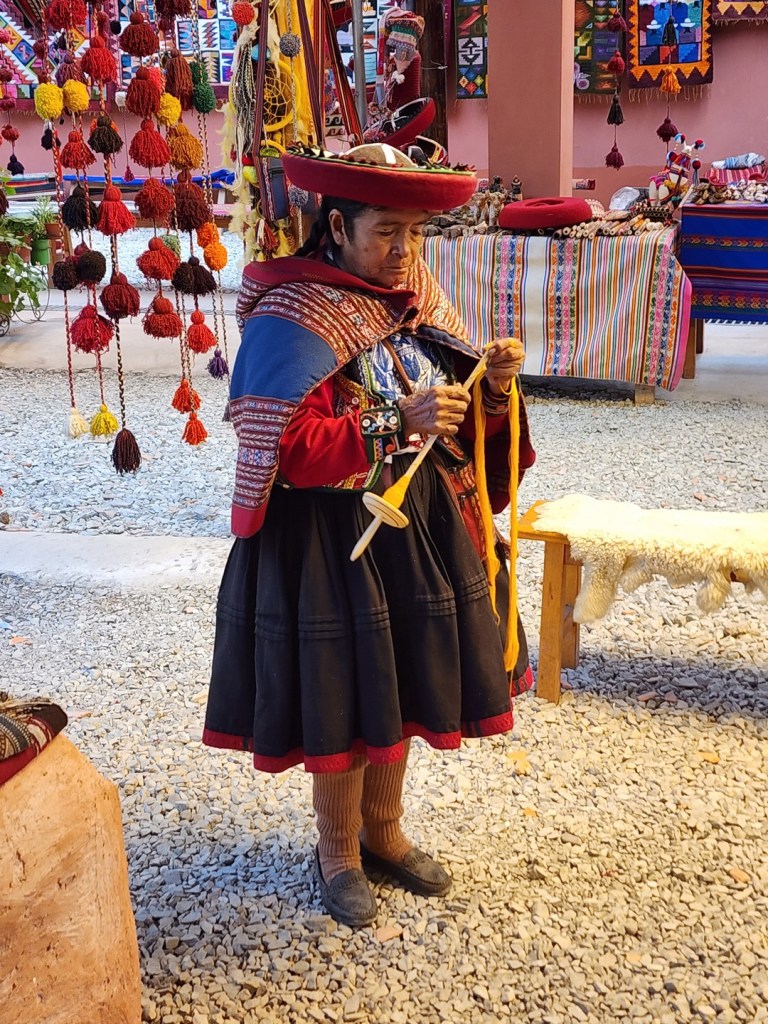
Nearby Chinchero is considered the textile capital of Peru, so it’s no surprise the taxi stopped at a local textile maker. Although there was an implied pressure for a sale, we enjoyed the demonstration of handwoven fabrics using traditional Inca techniques. We learned some facts about textiles in the region and they showed how the dyes were made from natural sources.
Traditional Andean Weaving and Textiles
Chinchero is considered the textile capital of Peru and is famous for its handwoven fabrics which use traditional Incan techniques.
- Weaving Centers: Many local cooperatives and workshops offer demonstrations of the dyeing and weaving process.
- Natural Dyes: Artisans use natural dyes from plants, minerals, and insects (such as cochineal, which produces a deep red color).
- Patterns and Symbolism: Designs in the textiles often represent Andean cosmology, animals, and agricultural cycles.
Kim ended up purchasing a handbag and we headed out. From there we continued a short distance further to our next destination, Chinchero.
2. Chinchero
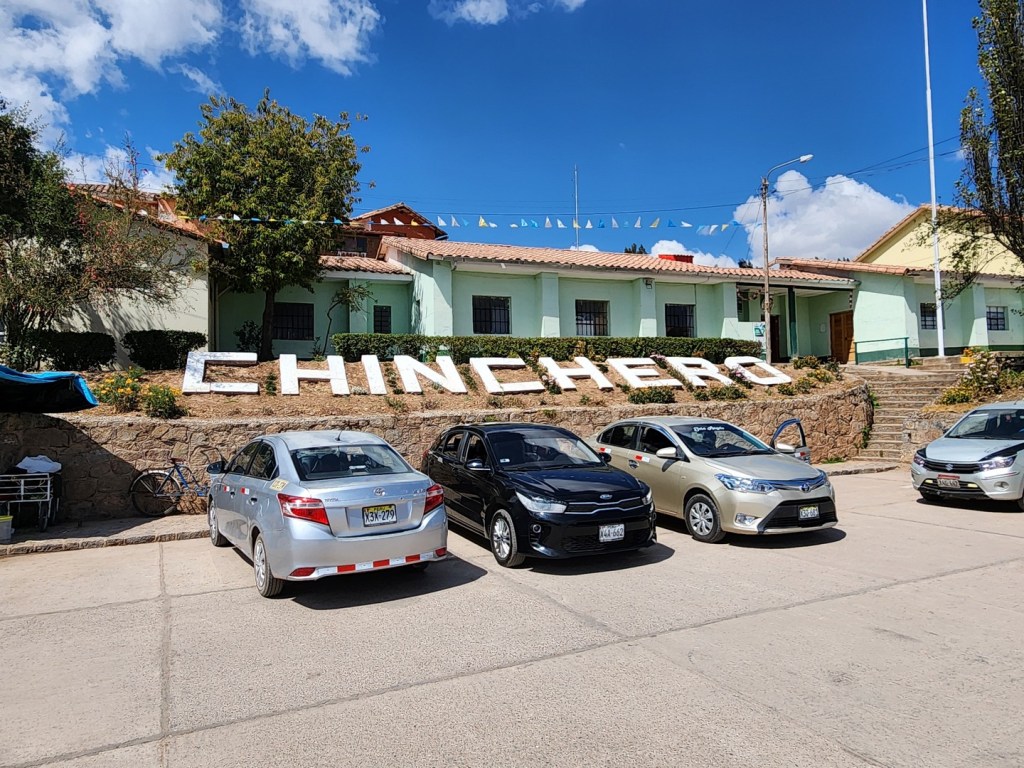
Chinchero is a picturesque Andean town located in the Sacred Valley of the Incas, approximately 30 km (19 mi) northwest of Cusco, Peru. Situated at an altitude of 3,762 meters (12,343 feet) above sea level, it offers views of the surrounding mountains and valleys. Chinchero is known for its archaeological ruins, colonial-era church, vibrant textile traditions (which we had already experienced), and local market.
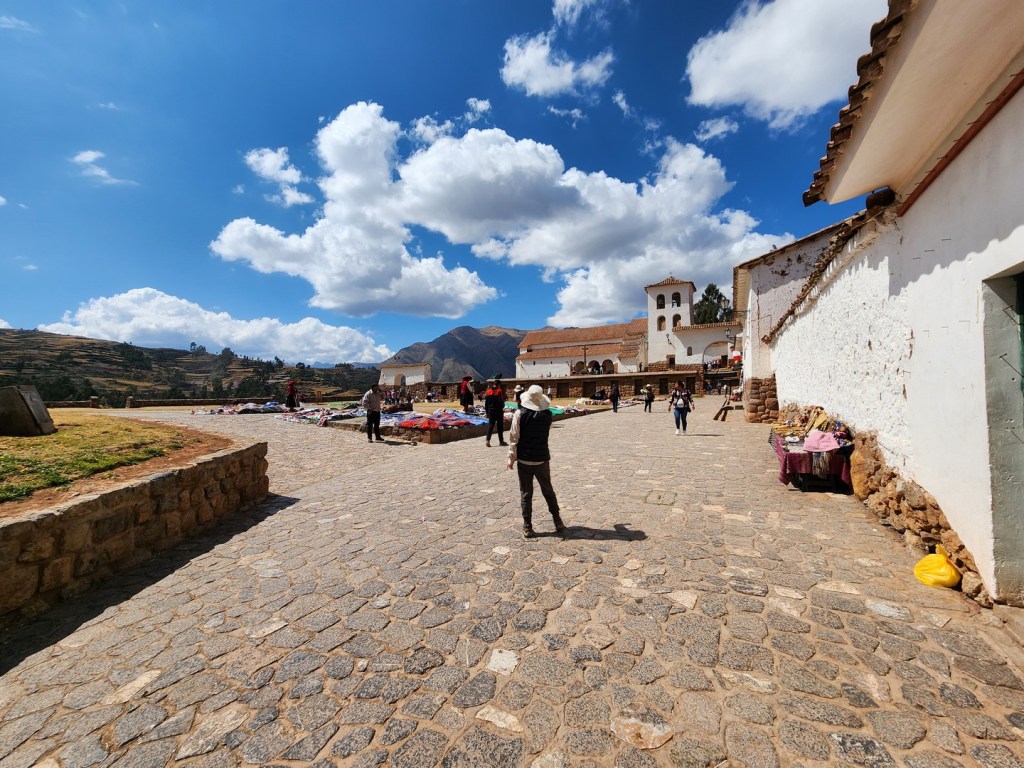
Our driver led us up the way to the main centre of the town. After walking up narrow streets we came out to a sight of a wide courtyard, a very old church, mountains in the distance and Inca ruins all around. It was quite impressive.
Historical and Cultural Significance
The Iglesia Colonial de Chinchero (Colonial Church of Chinchero), built in 1607, is one of the town’s most significant landmarks. It was constructed atop the remains of an Inca palace.
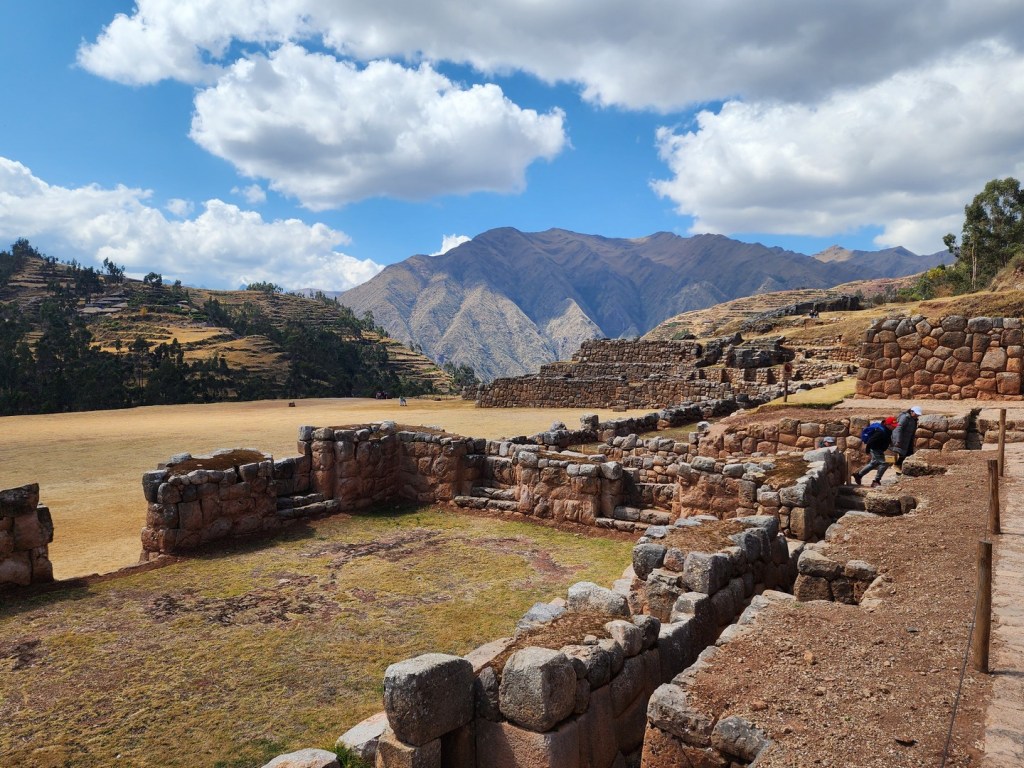
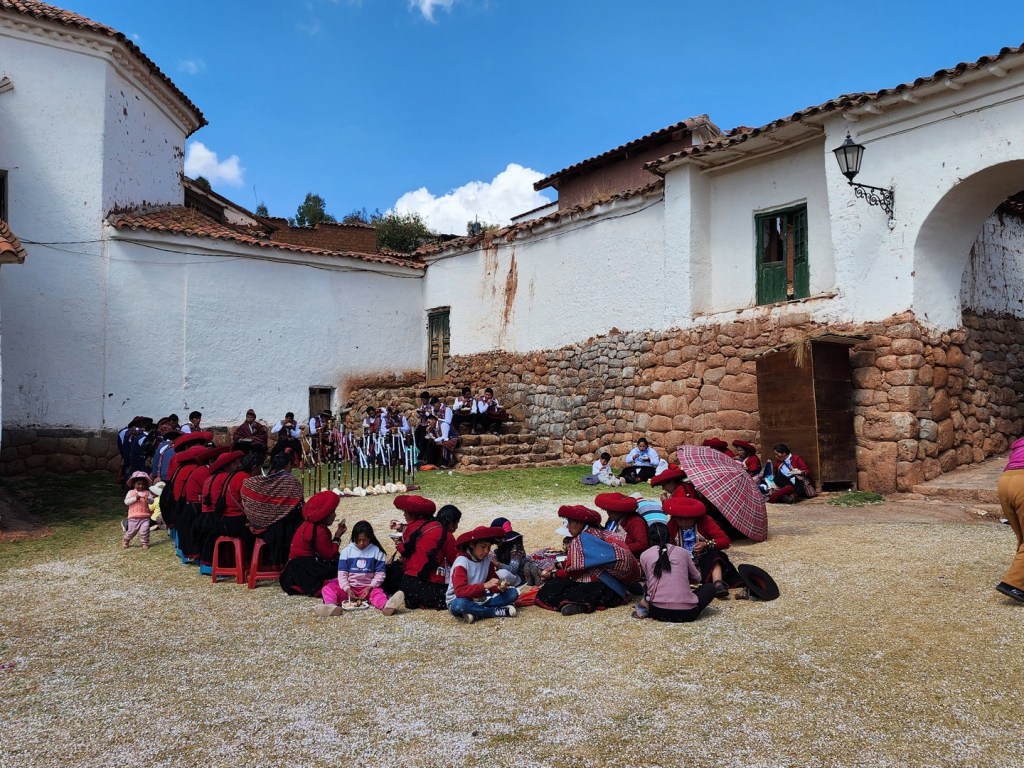
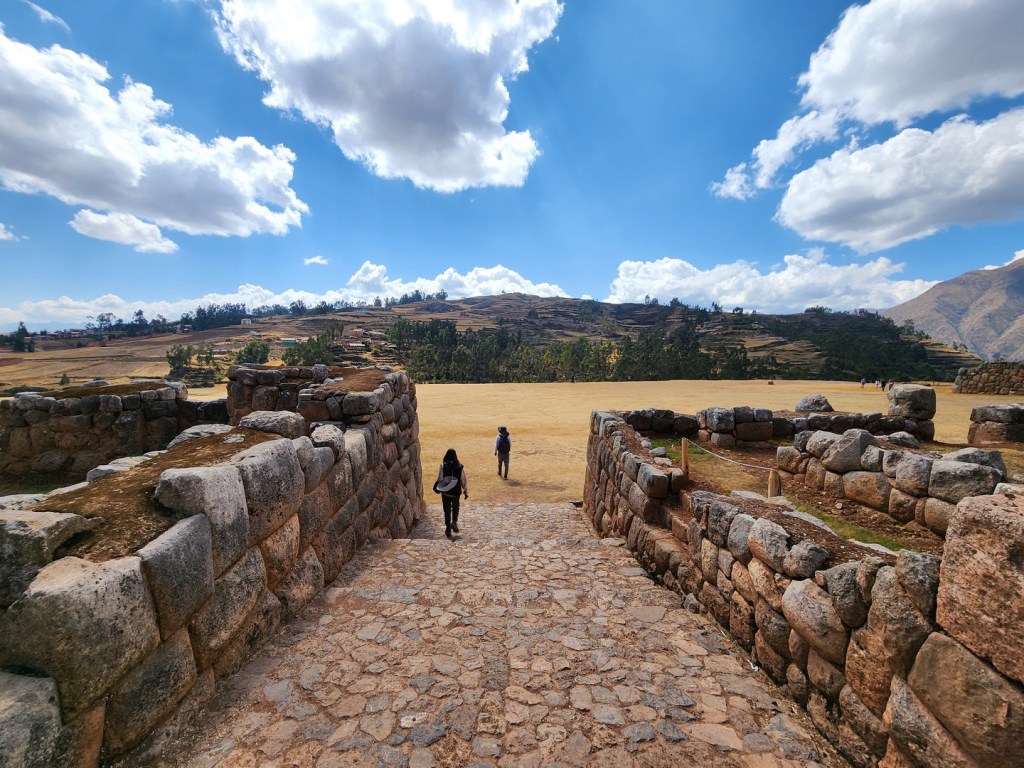

Chinchero was an important Inca settlement and agricultural center during the 15th century. It is believed to have been a royal estate of Inca Tupac Yupanqui, similar to other estates in the Sacred Valley like Ollantaytambo and Pisac.

After a half hour or so we went back to our driver, who was waiting on the edge of town. We continued on towards our next destination, the Maras Salt Mines.
3. Maras Salt Mines

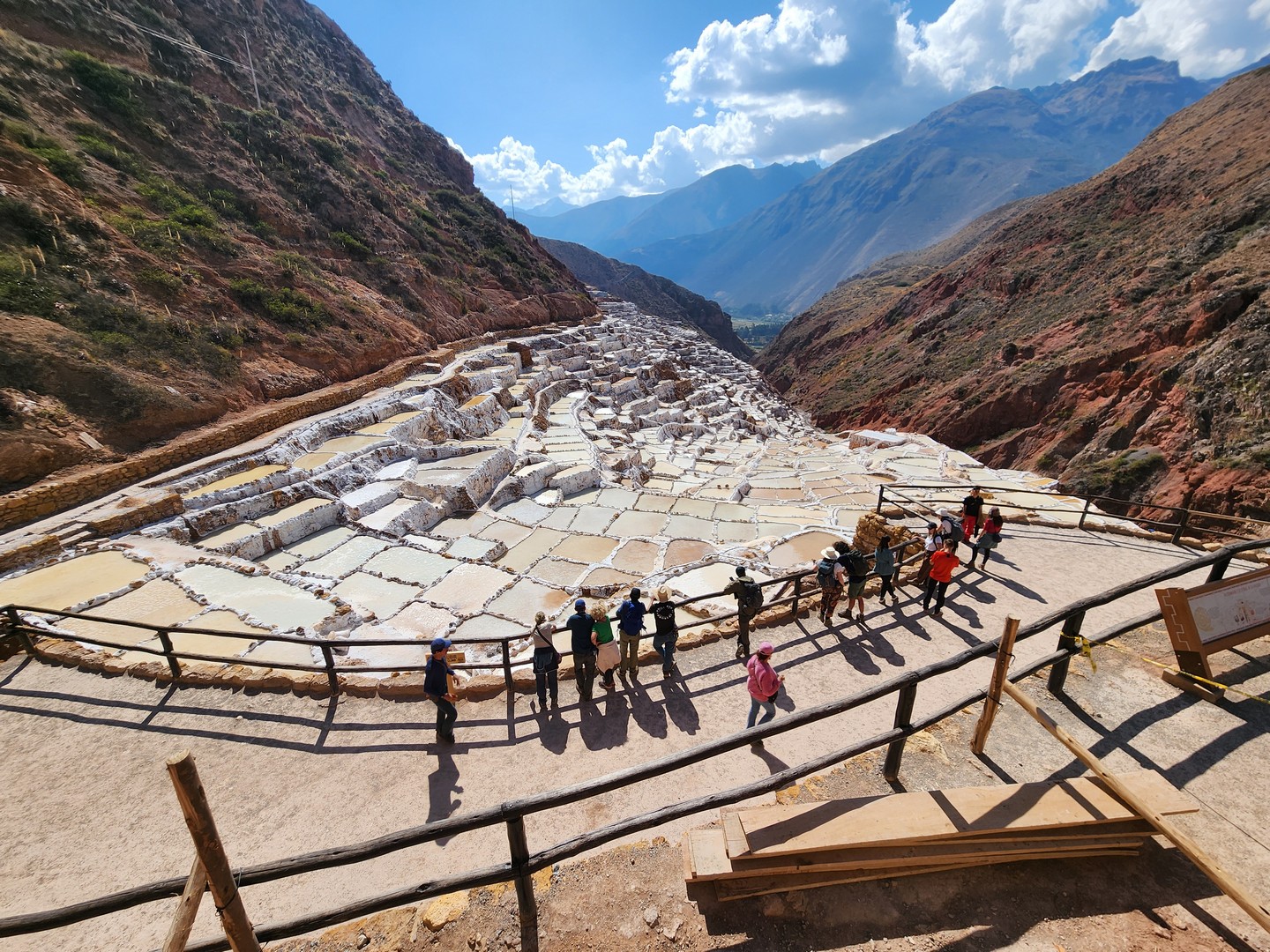
The sight of the huge swath of white that suddenly appeared on our right as we passed over the valley was a surprise. It dominated the valley, and after we stopped we looked down at the many irregularly-shaped geometric pools containing salt. More impressive was the fact that this salt had been continuously mined from Inca times.
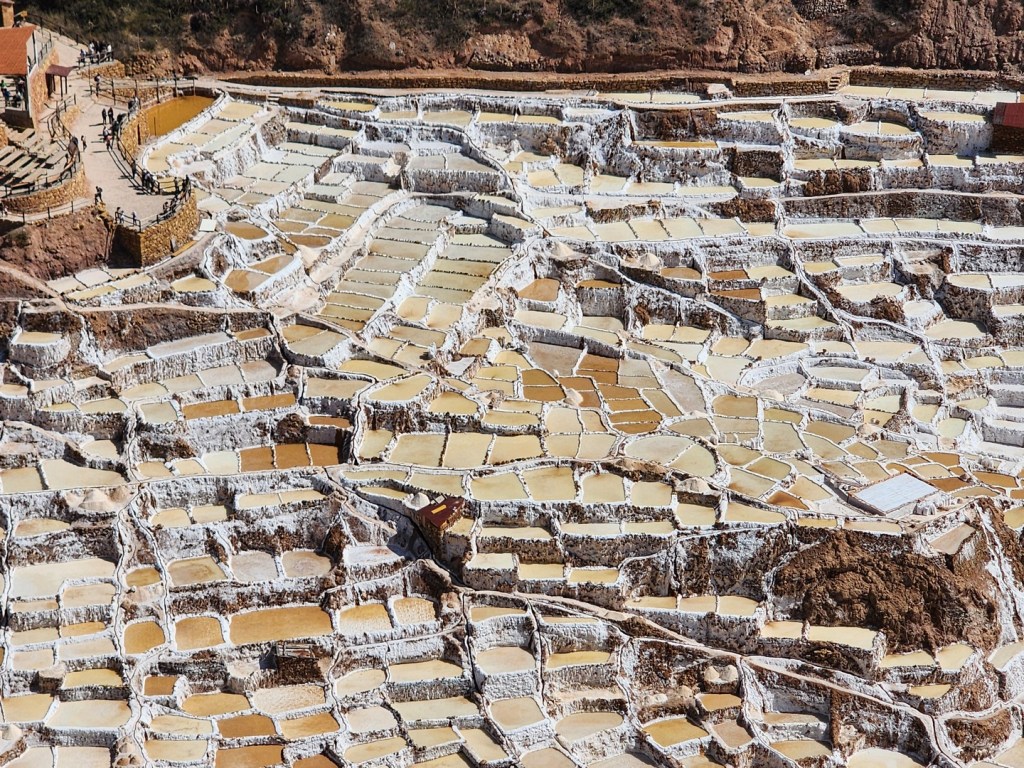
The Salineras de Maras (Maras Salt Mines) are considered to be one of the most iconic and historically significant sites in Peru. Active for centuries, it has played a vital role in the the survival of the region. Along with the salt mines, Maras has been an important agricultural center for centuries. The high-altitude farmlands surrounding the town produce Quinoa, potatoes, corn, and Andean tubers. Later, Maras became an important town during the Spanish colonial period, serving as a settlement for people migrating from Cusco.
The salt mines are community-owned, with families in Maras managing the pools and passing them down through generations. When we were there we saw a number of families working on them, including young children.
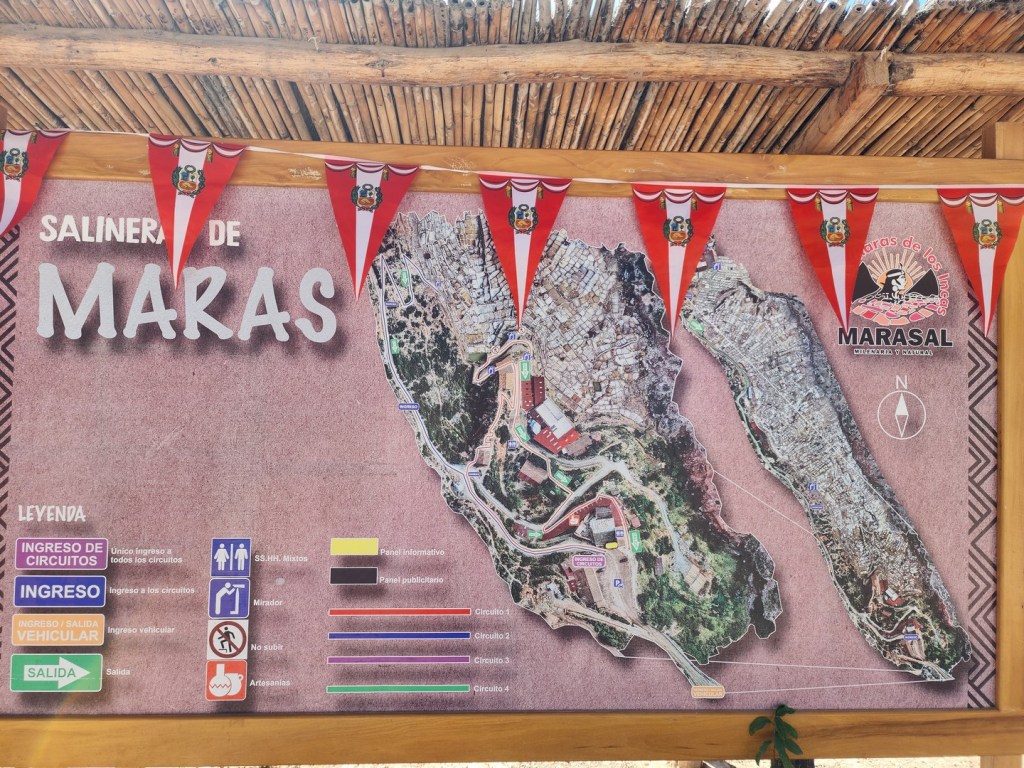

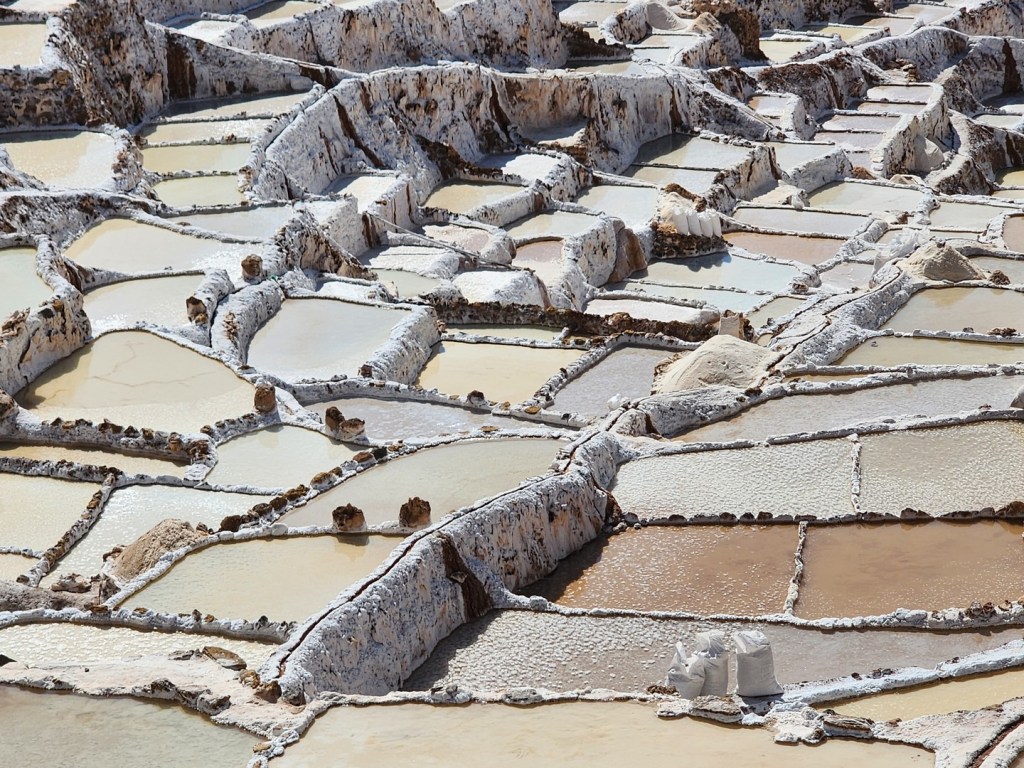
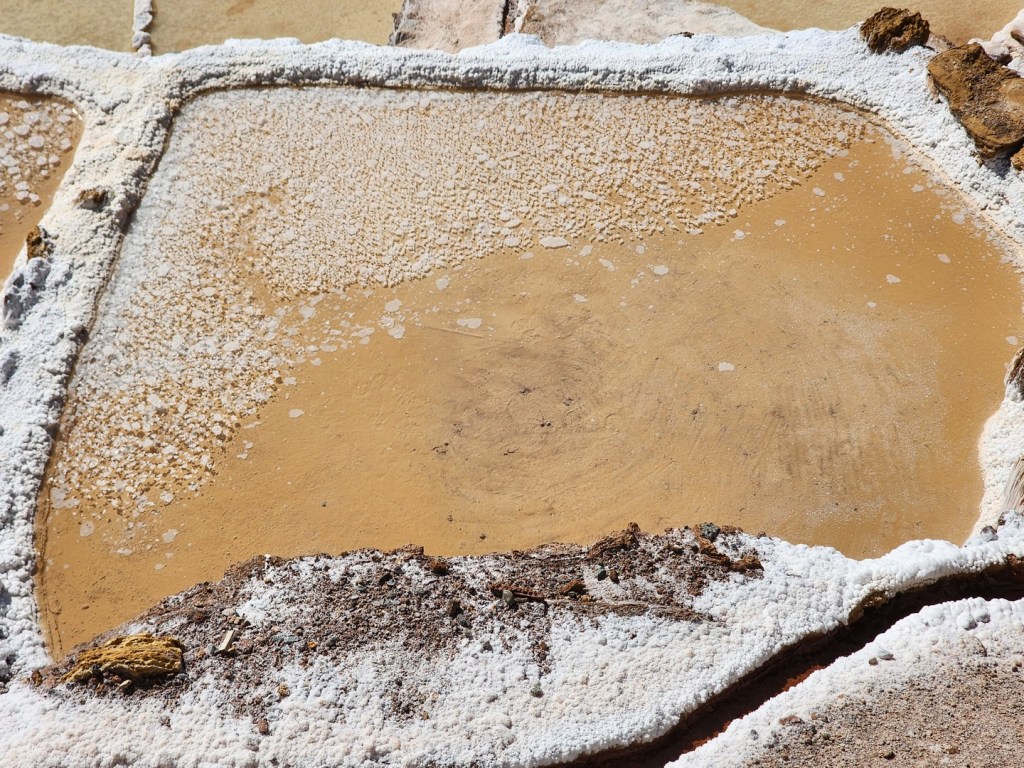
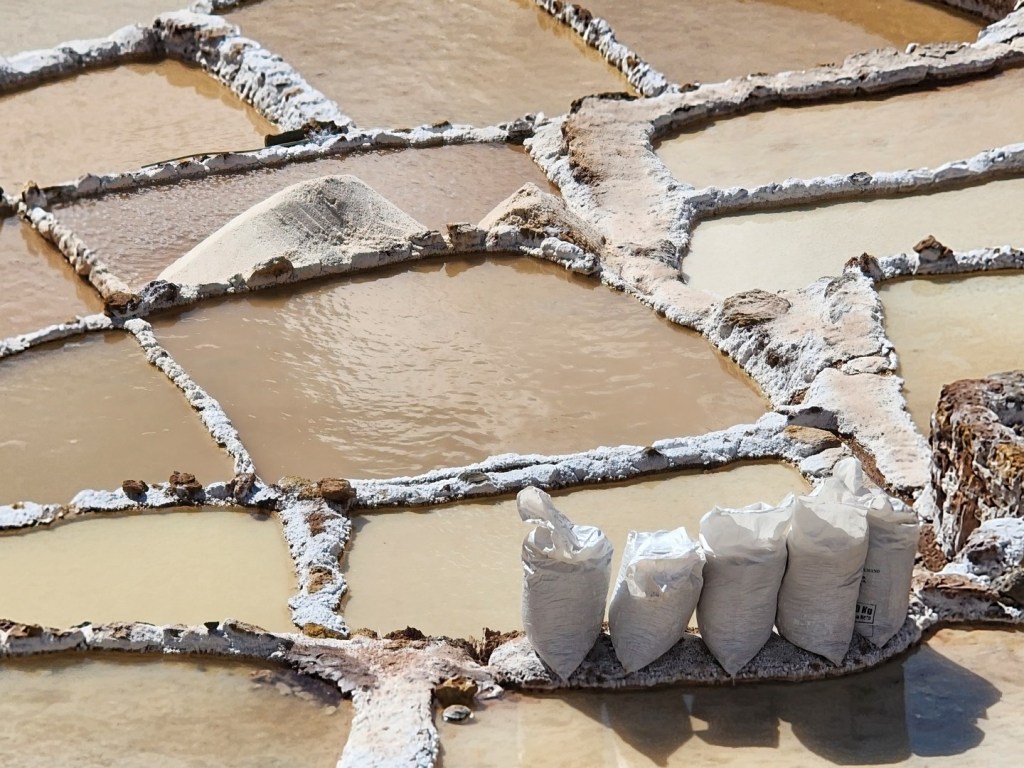

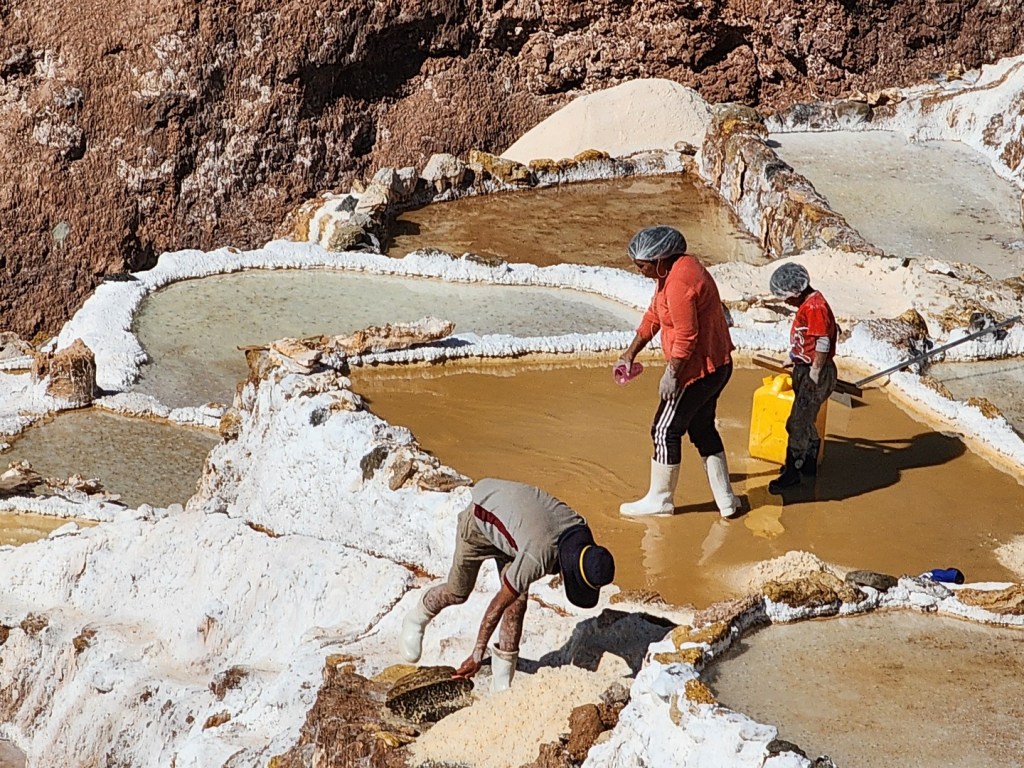
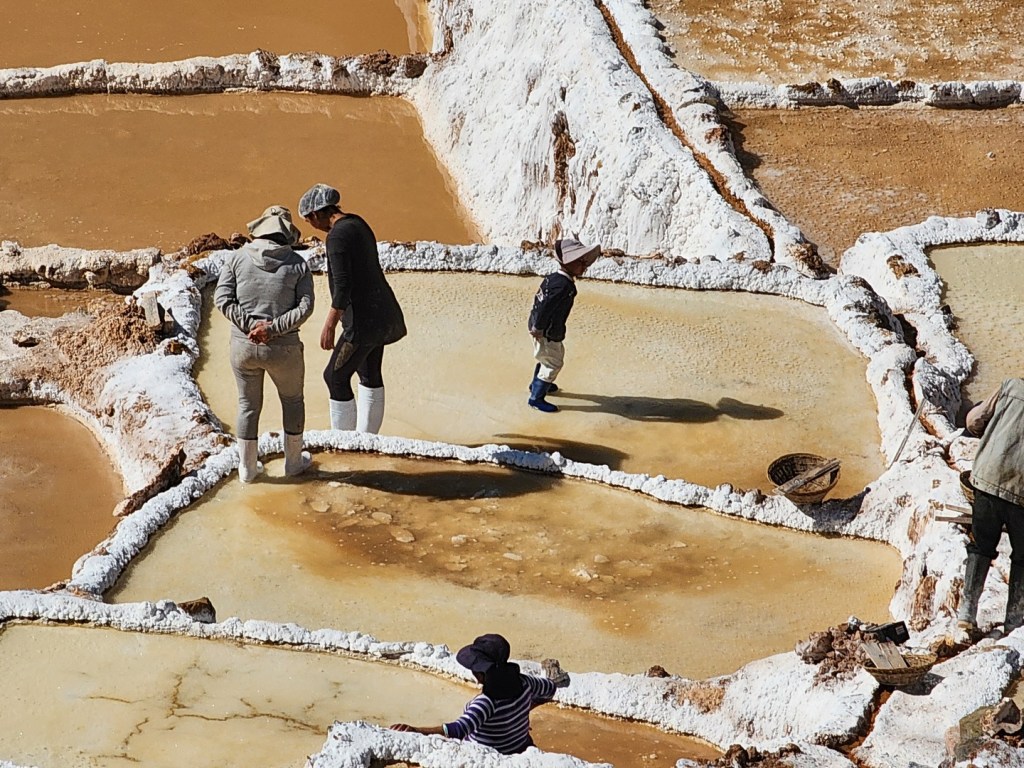

We hadn’t seen such an extreme contrast in color and bright white since our trip to Pamukkale, Turkey a few years back! Because the walking route was limited, we were through Maras in about 30 minutes before heading back to the car. From there our driver took us to the last destination, the Terraces of Moray.
4. Moray
After a short walk from the parking lot (including a model of the main terrace that reminded me of a mini-putt golfing challenge) we came to the main terrace of the site. Moray consists of five main circular terraces along with more common terraced rows close by.
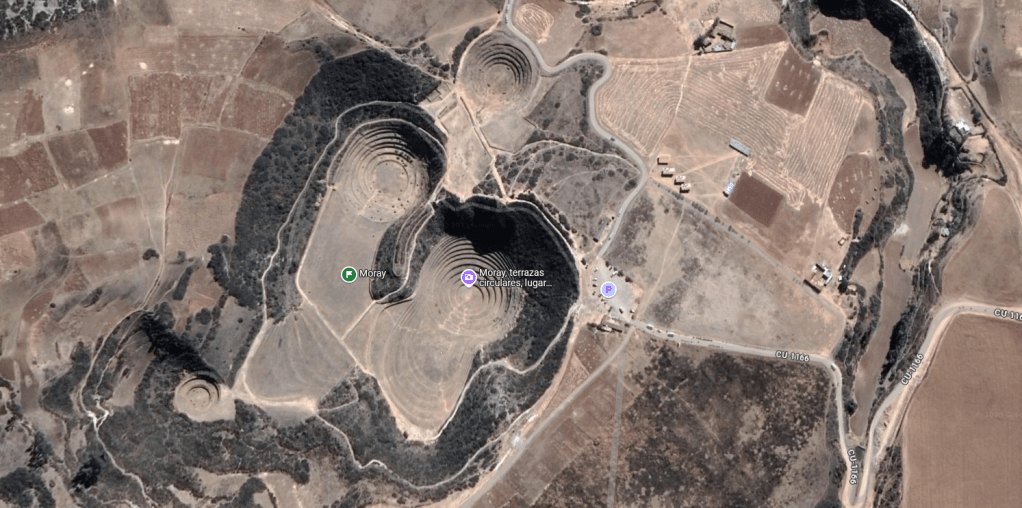


Moray is an archaeological site in the Sacred Valley of Peru, approximately 50 km (31 mi) northwest of Cusco. It is renowned for its unique system of circular agricultural terraces, which the Inca civilization likely used for experimental farming. The site consists of large concentric terraces resembling an amphitheater, with the largest depression reaching a depth of approximately 30 meters (98 feet).

The terraces were built During the Inca Empire: Likely constructed during the reign of the Pachacuti Inca Yupanqui (15th century) or his successors. The site was relatively unknown to the modern world until the 20th century when they were rediscovered. In modern times Moray has been protected as part of Peru’s cultural heritage, with ongoing restoration efforts to prevent erosion and maintain its structures.
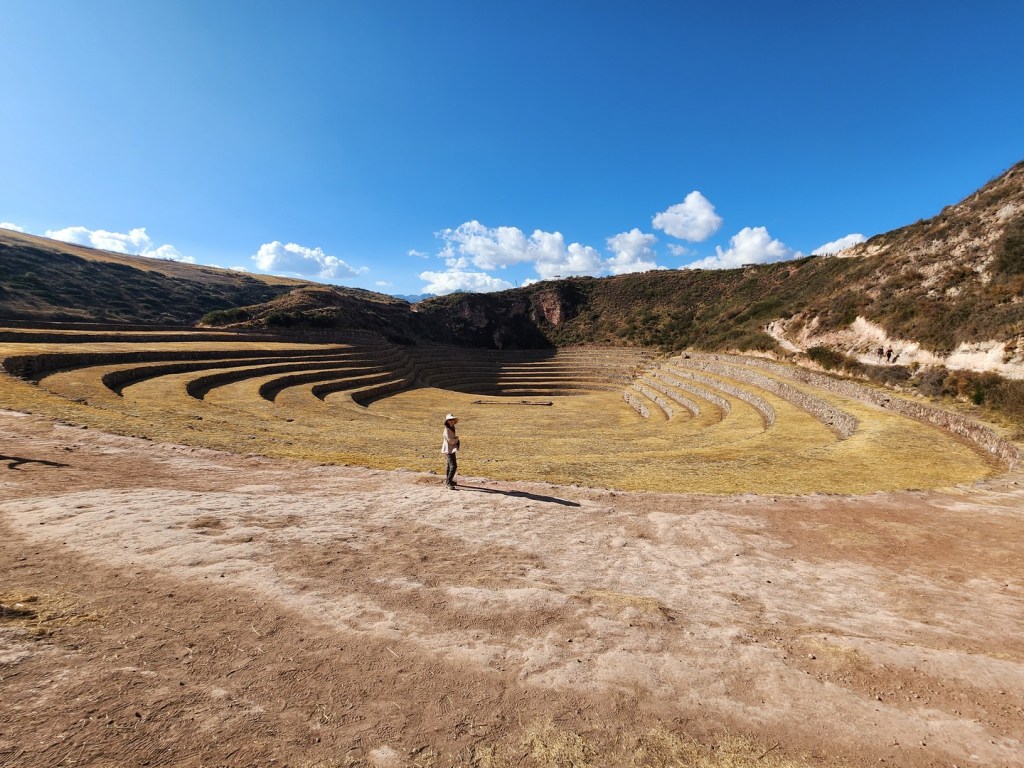
The terraces have an advanced drainage system that prevents water from accumulating, which would otherwise erode the structures. Channels distribute water throughout the terraces, ensuring sustainable agriculture. The soil composition on each terrace varies, suggesting the Incas transported different types of soil to optimize crop growth.

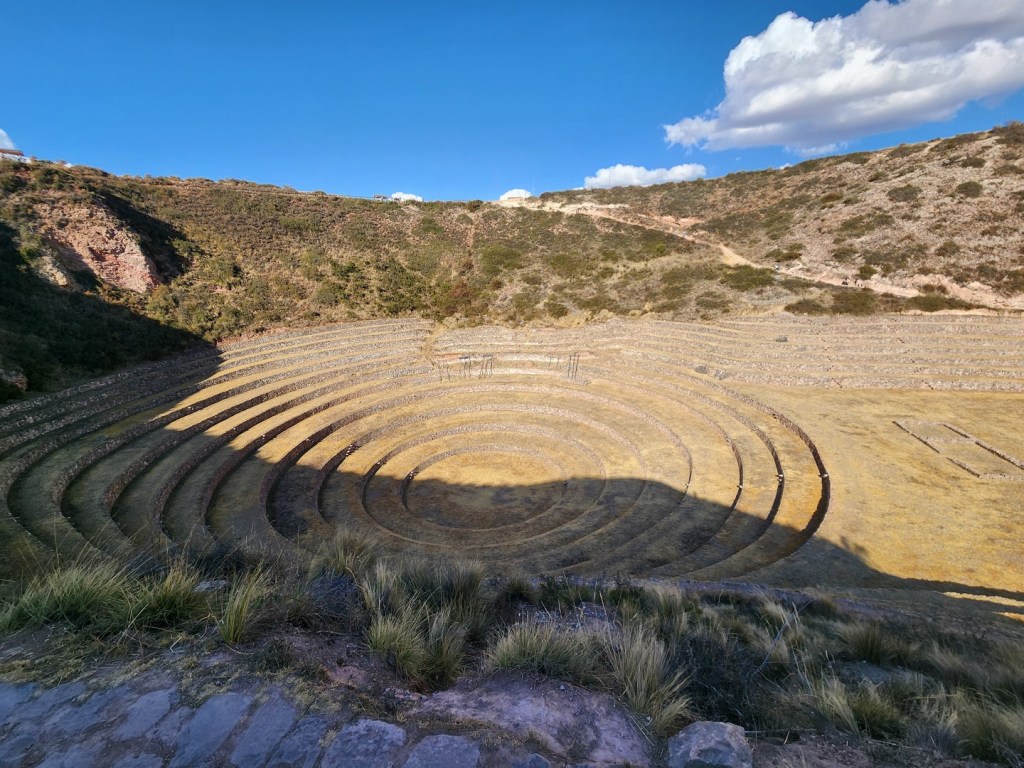
Some researchers propose that Moray had ritualistic or astronomical purposes. The terraces align with certain solstices and equinoxes, which may have helped the Incas develop their agricultural calendar. The site may have been used to experiment with crops meant for different regions within the empire.
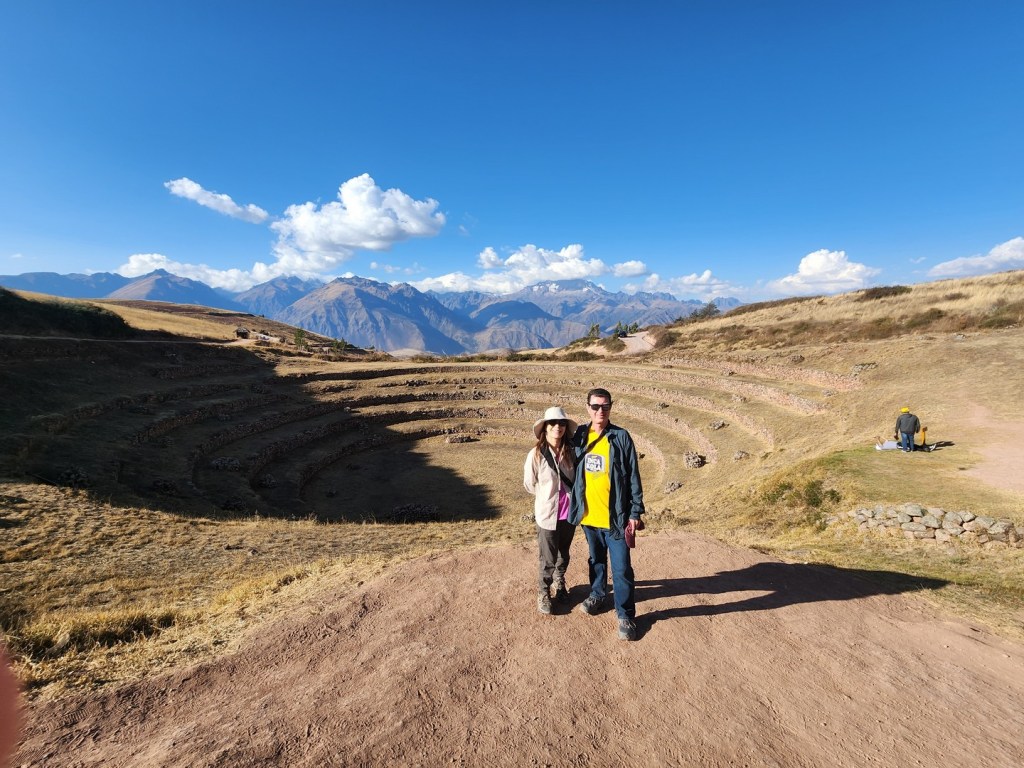
Moray is a fairly compact site, so you can do the walk to all of the terraces in around an hour. After we were done we made our way back to the car one more time.
4. Onward to Ollantaytambo
A nice bonus of the tour was the onward trip from Cusco to Ollantaytambo, so we didn’t need to take a bus between the two places and we would arrive directly at our hotel. The driver took a different way out of Moray that allowed us to experience quiet country roads and beautiful mountain vistas during the trip.

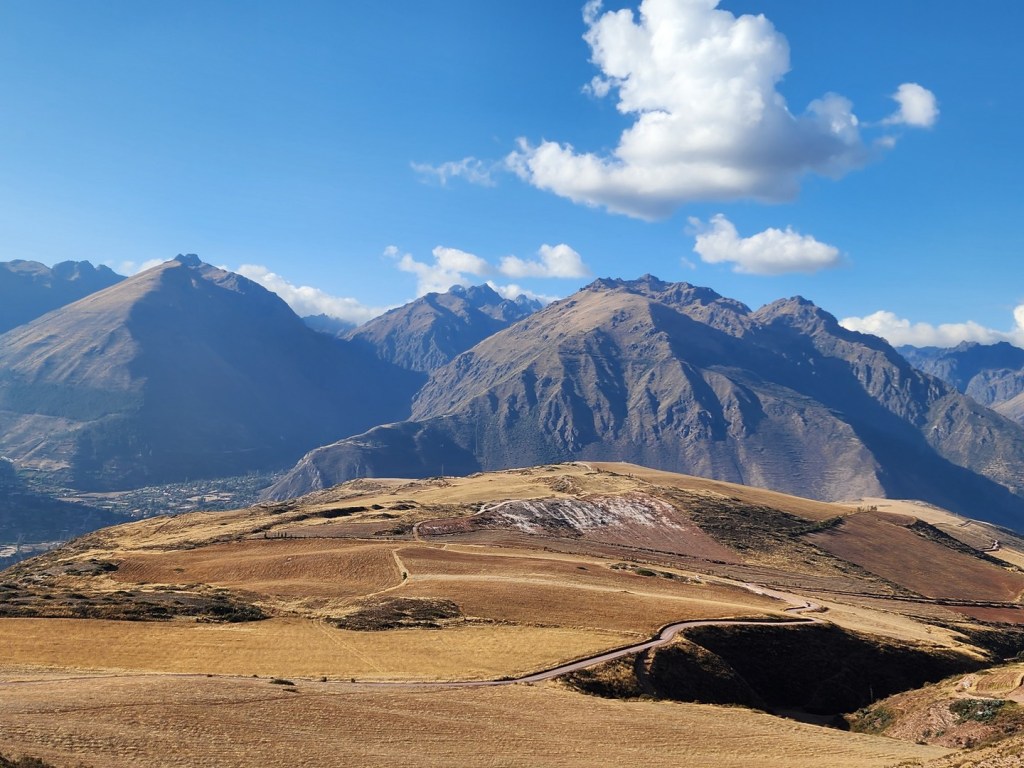

It took a little more than an hour to reach Ollantaytambo. We arrived just as the sun was setting and checked into our hotel before exploring the town for the first time. So far the trip had been amazing with a wide variety of sites we’d experienced in Peru. And our stay in Ollantaytambo would only add to the list.
 Humphreys Travel