


After finishing our time in the south of Peru, we headed up to the northwestern region of Peru. We landed in Trujillo and spent our last week there and in the surrounding area.
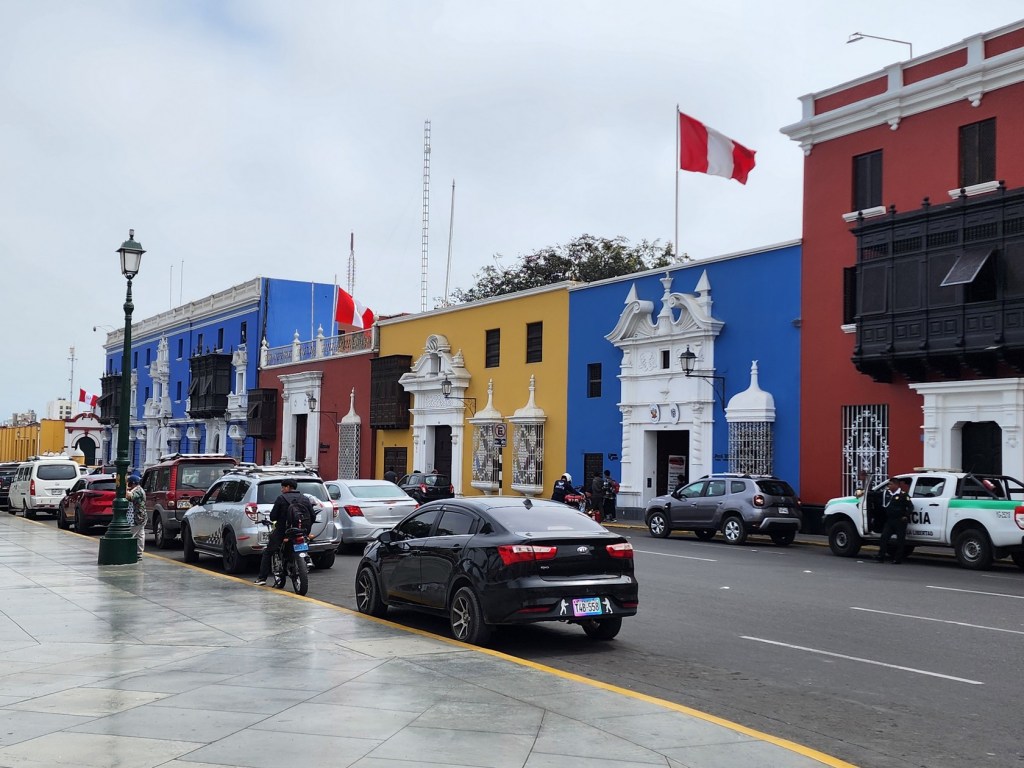
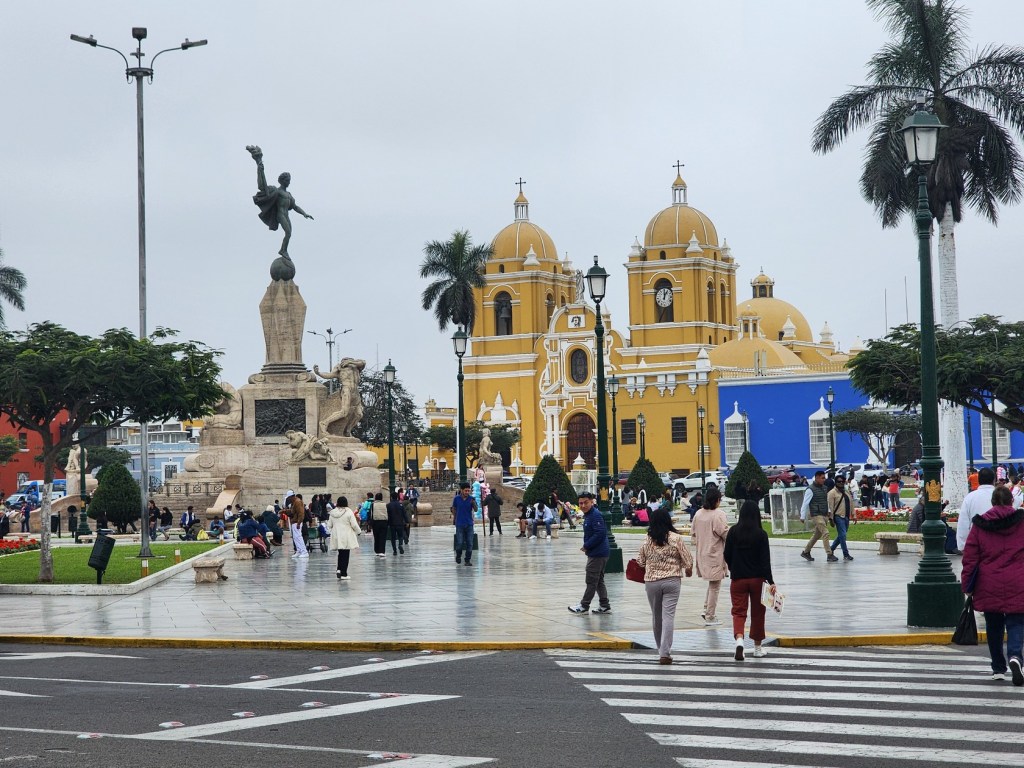
With a population of just under one million, Trujillo is Peru’s third largest metropolitan area. We spent our time in and around the downtown area, except when we did the side trips to the Temple of the Sun and Moon.
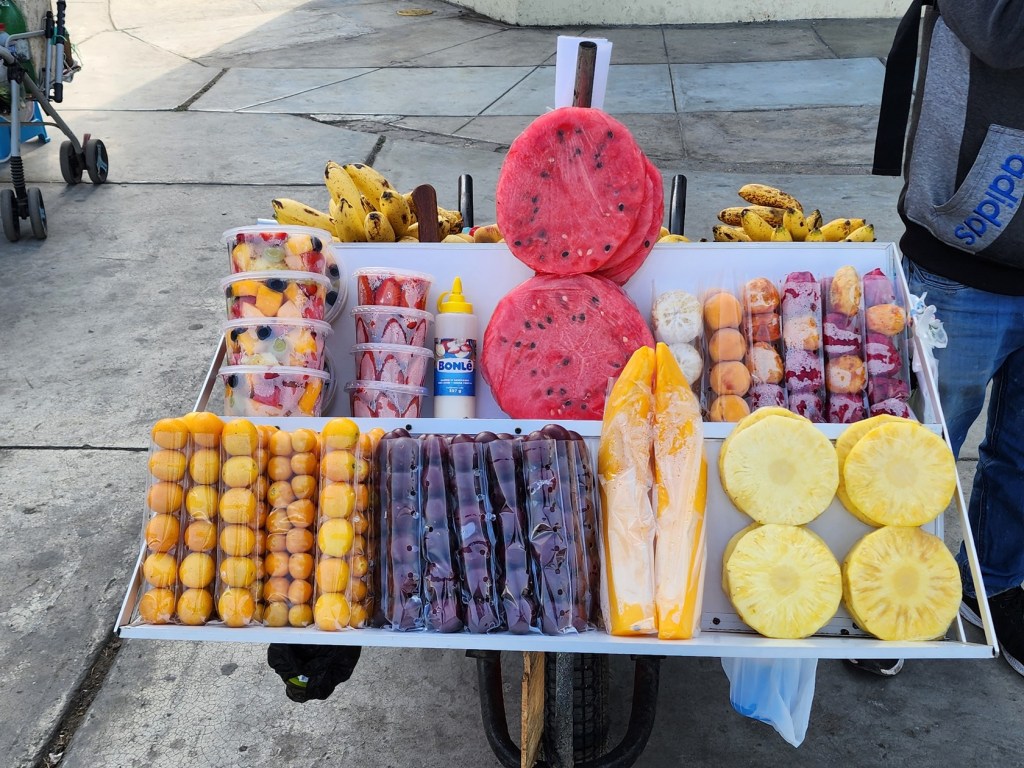
The downtown area was nice in and around the town square, though things were busier (and sidewalks were narrower) the more you walked away from there. The city had a very different feel to that of Lima or Cusco.

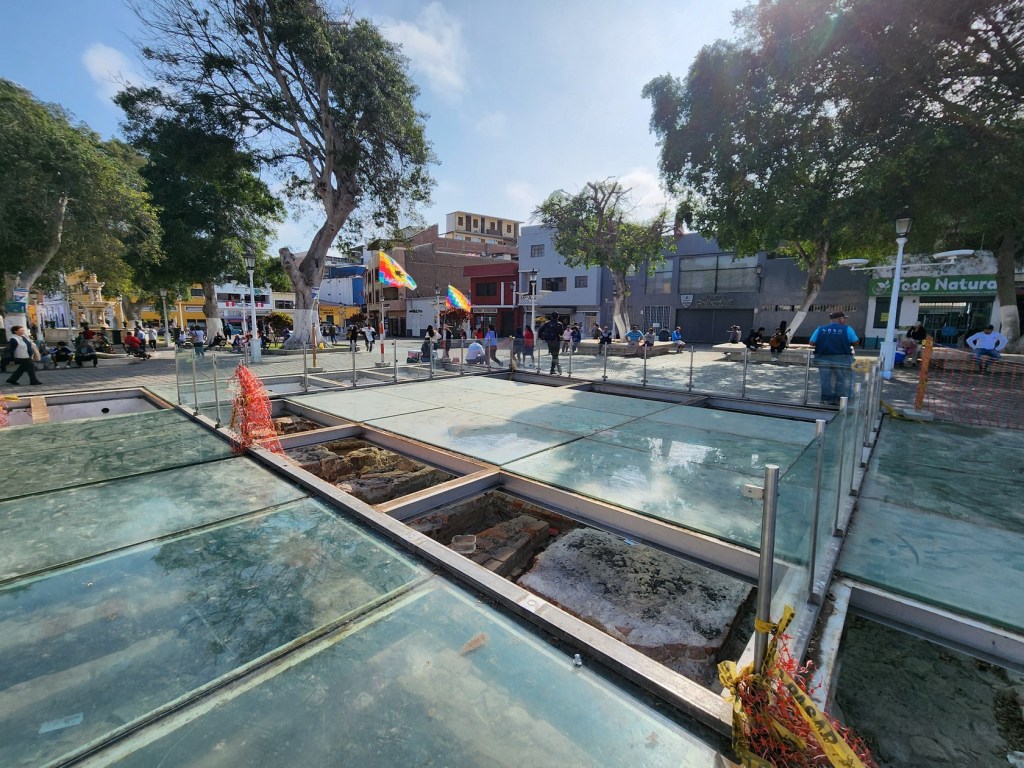
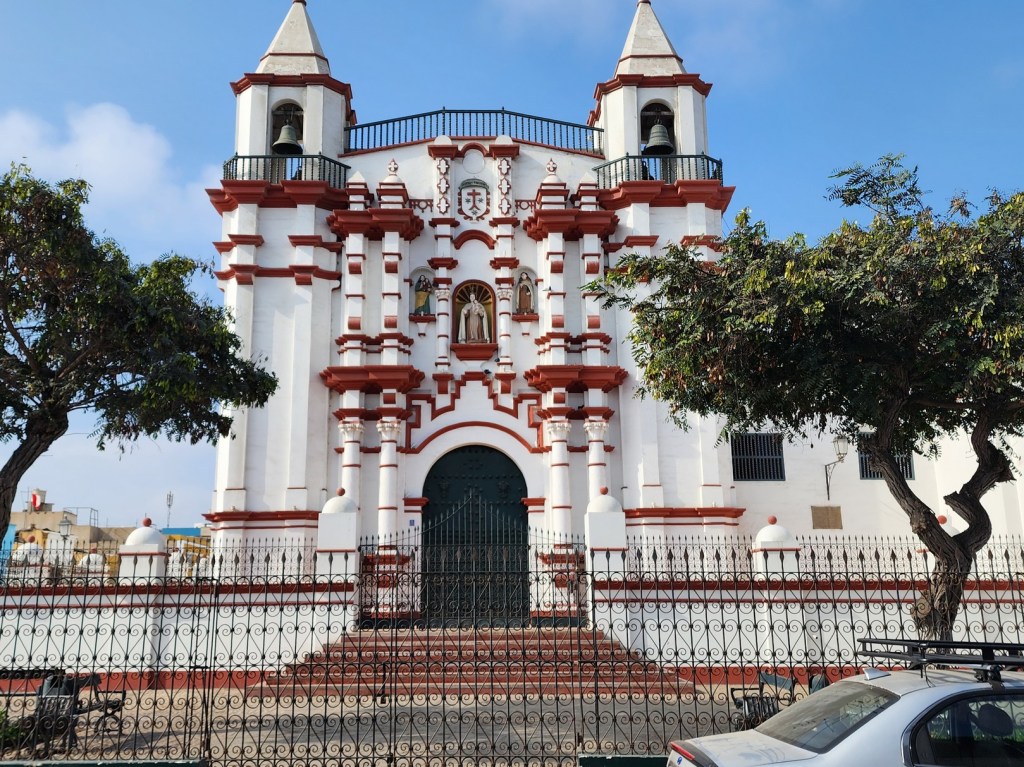
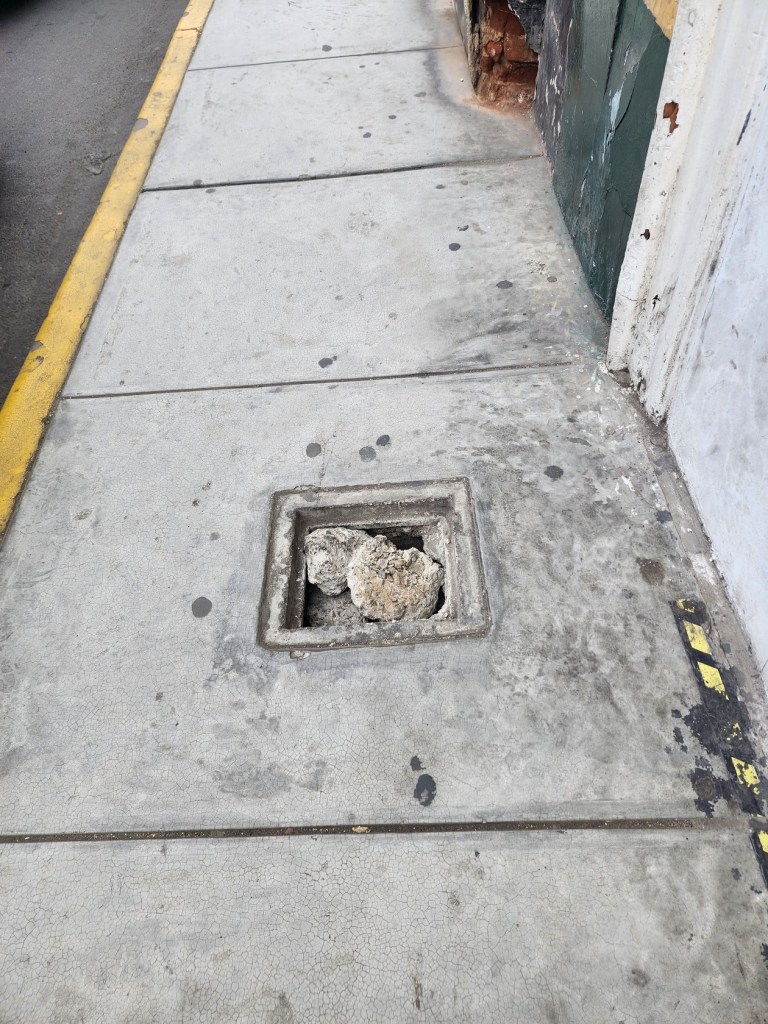
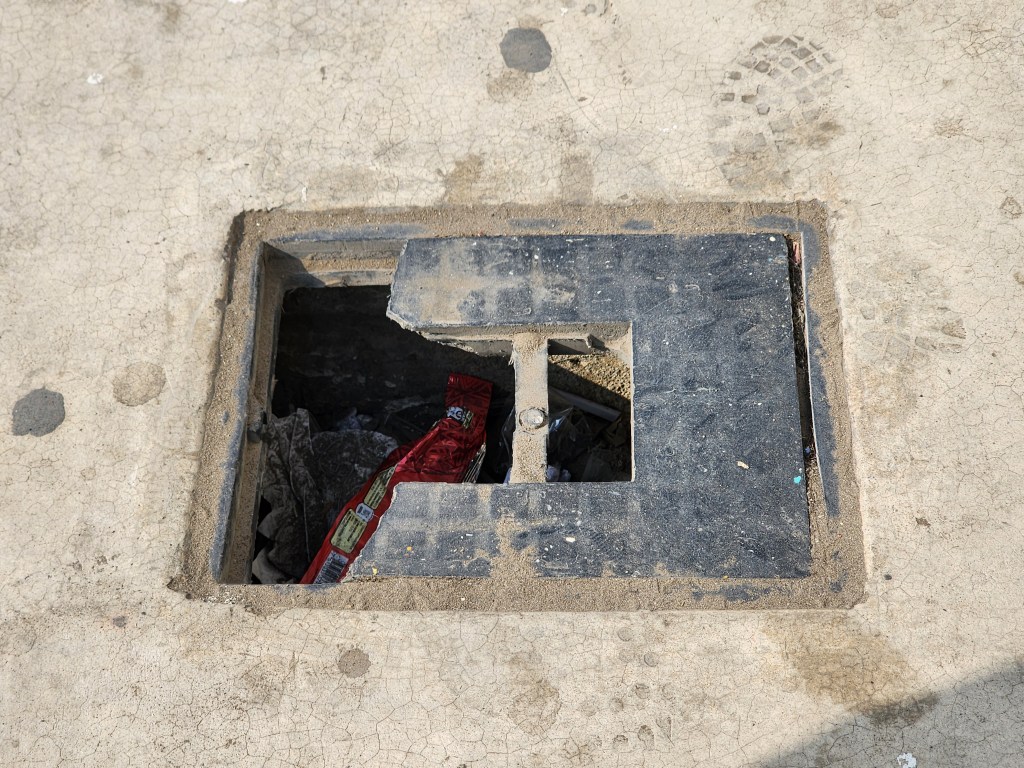
One of the issues we found was the number of sidewalk openings that had missing or damaged covers, and were a walking hazard if you weren’t paying attention. At night it would be worse.
For our day trip to the Temple of the Sun and Moon, we used the same taxi company that took us from the airport to our hotel. It was the one which we had booked through our hotel in Trujillo. We would have significant issues with them in a few days, but for this trip everything went well.
We were picked up at the hotel and driven across town to the ruins site located just a short distance outside Trujillo. Along the way we stopped for photos at the entrance to the road taking us to the ruin sites.


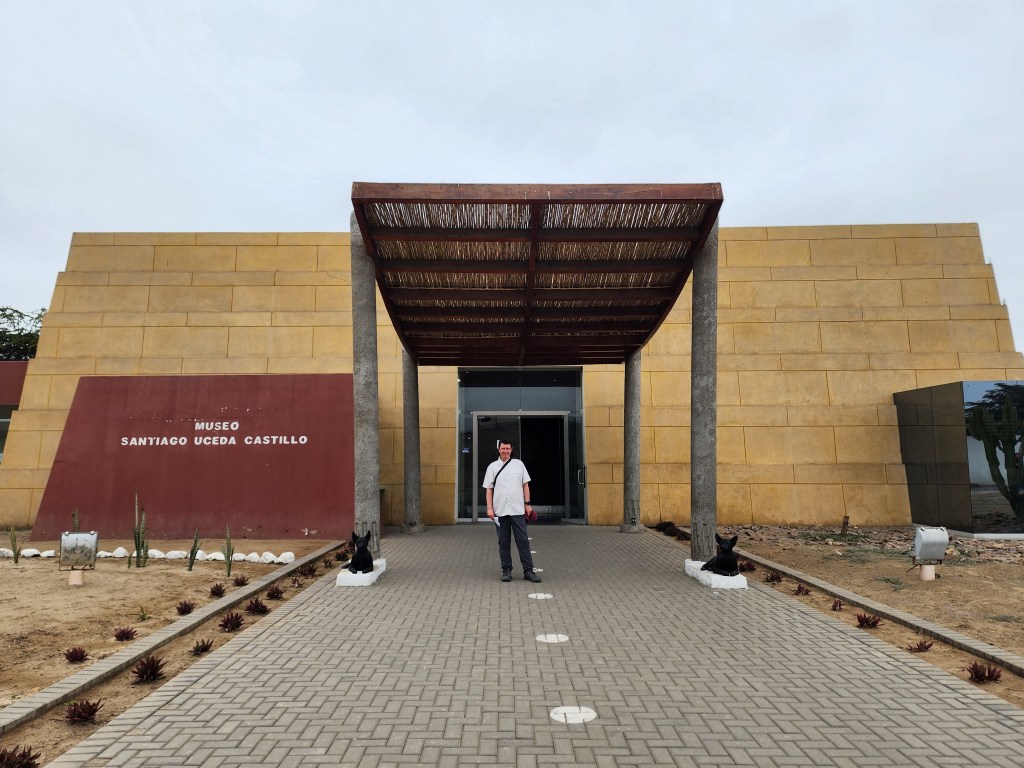
The site itself is located in a flat, dusty area. The entry fee was 15 soles (US$4) each. We also tipped the guide at the end of the tour as guides are provided but mandatory. Next to the entrance was a small museum containing some of the artifacts found at the site. After a short tour we headed to the entrance to meet our guide.
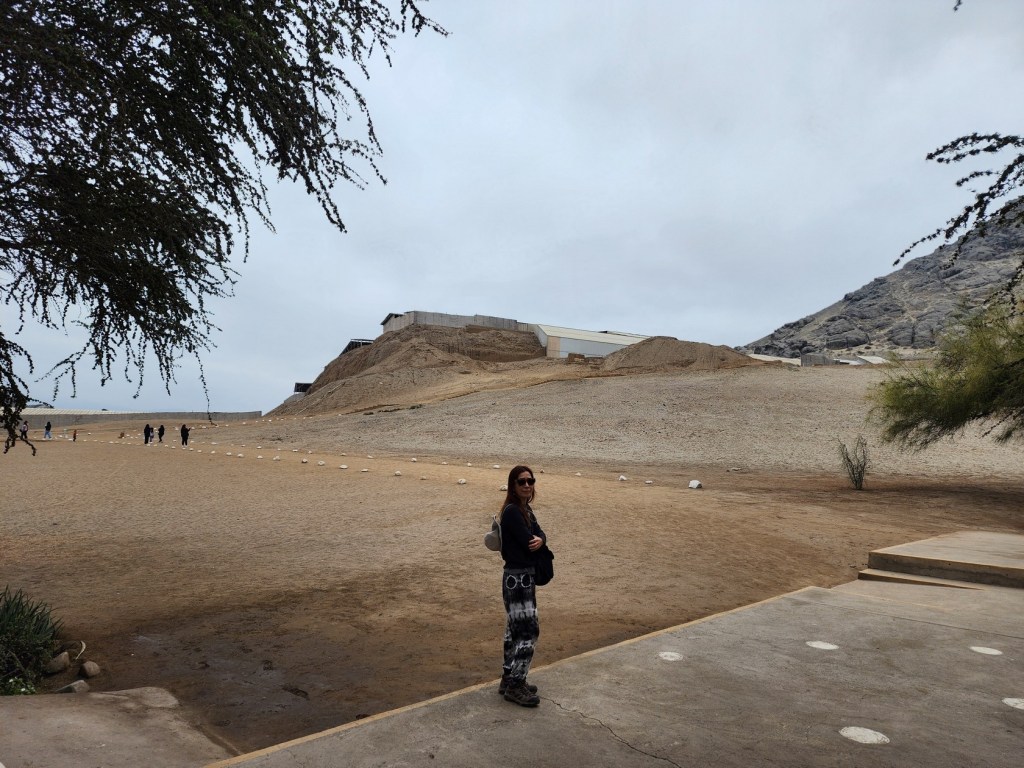
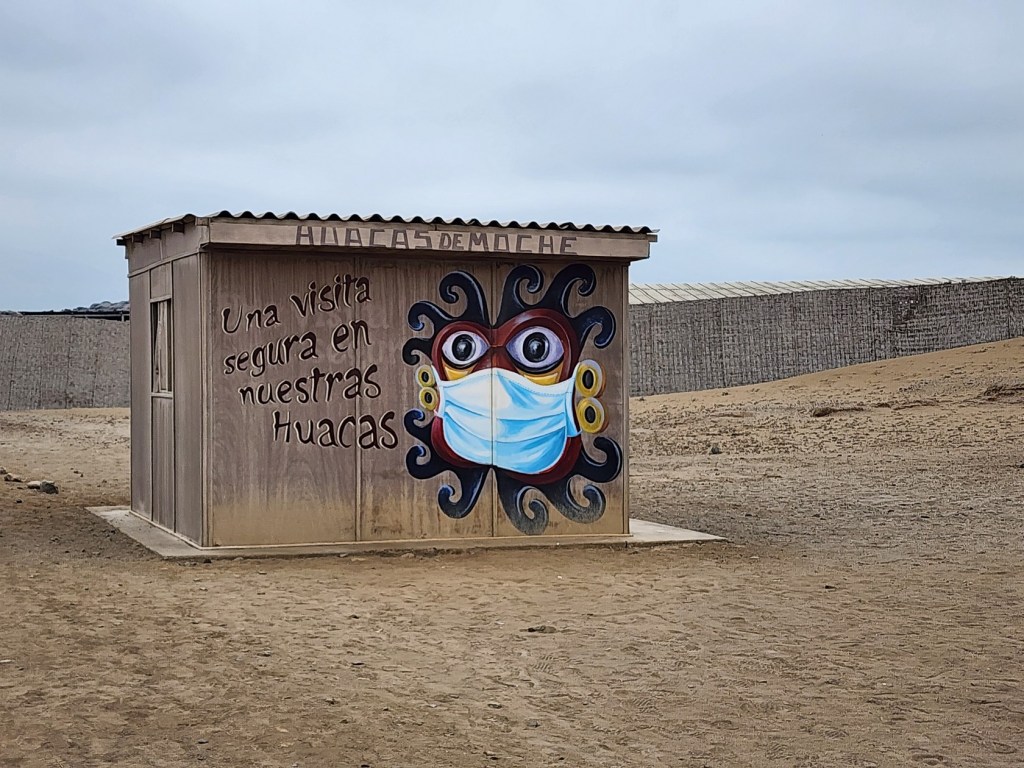
One of the Moche designs with a COVID reminder from a few years ago
The Moche culture lived on the northern coast of Peru from approximately 100 to 800 CE. The Moche are renowned for their sophisticated art, architecture, complex society, and advanced engineering—especially their irrigation systems that transformed arid desert into fertile farmland
The site was first systematically recorded in the 1930s by Julio C. Tello; major excavations were carried out in the 1990s by the Peruvian Ministry of Culture.


The Temple of the Moon (Huaca de la Luna) is the smaller, more elaborately decorated counterpart to the nearby Huaca del Sol. Both are located about 2 km outside modern Trujillo in the Moche Valley.
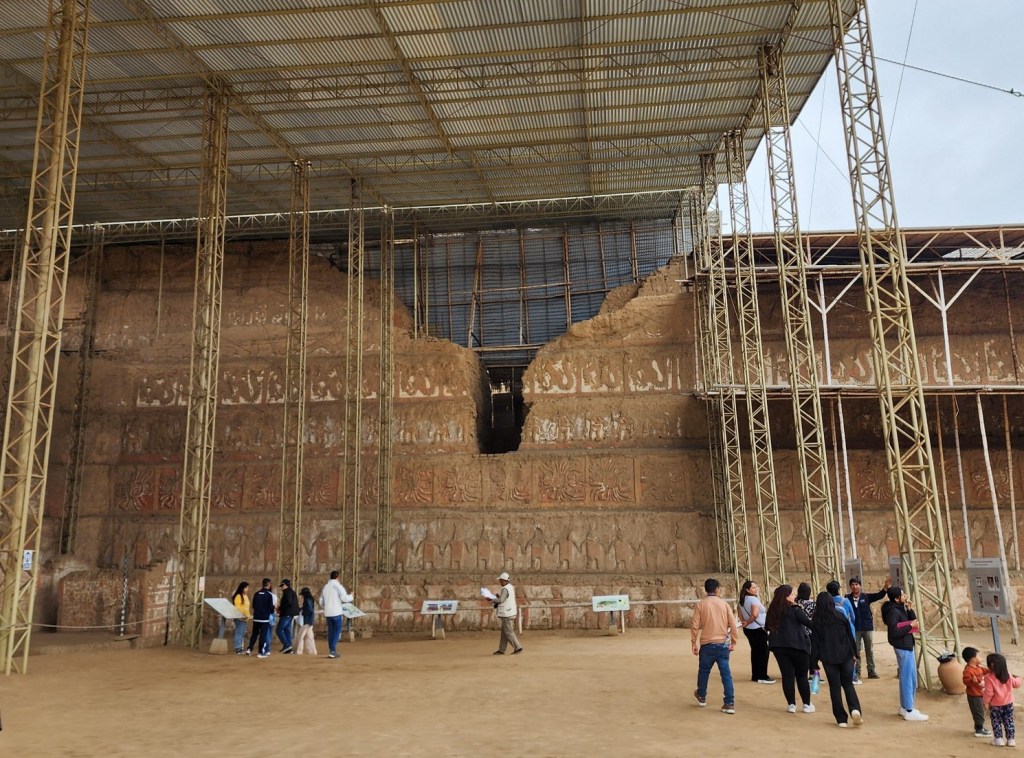
The Temple of the Moon served more religious and ceremonial functions. The close proximity of these two pyramids suggests a socio-religious complex, central to Moche life.
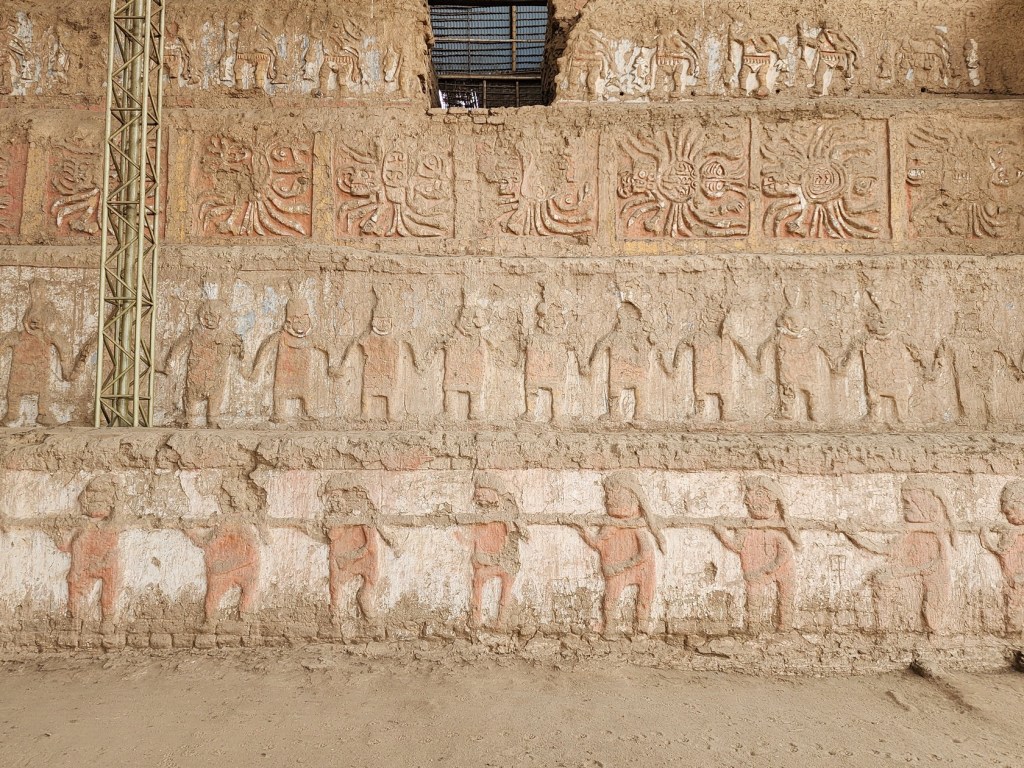
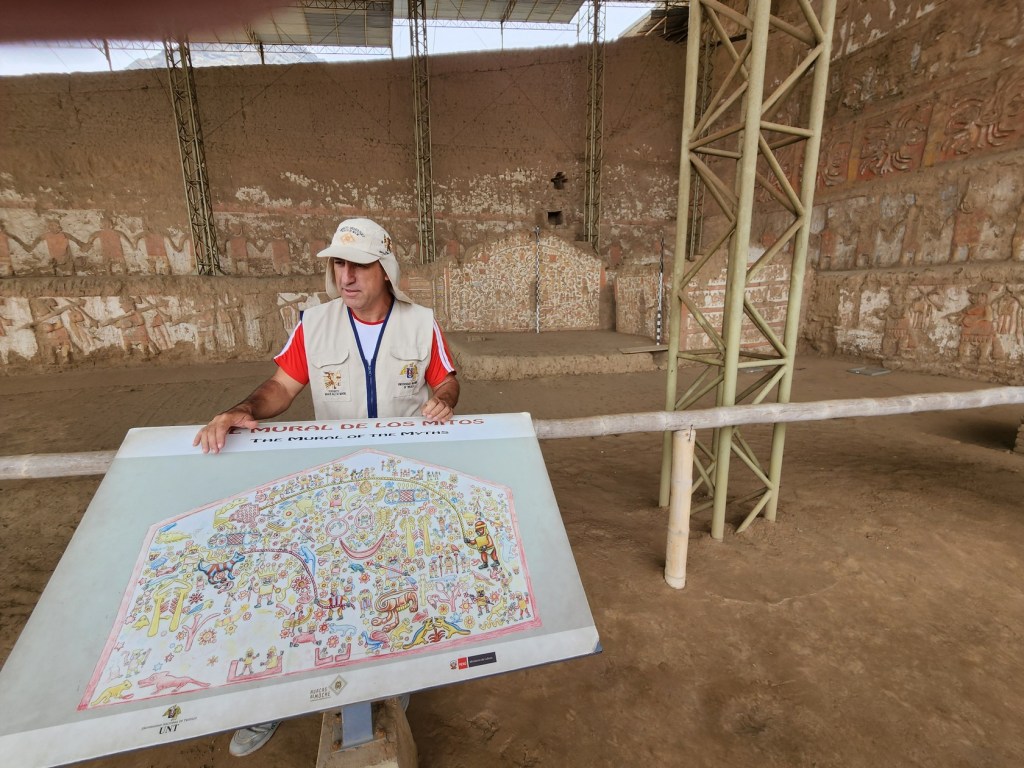
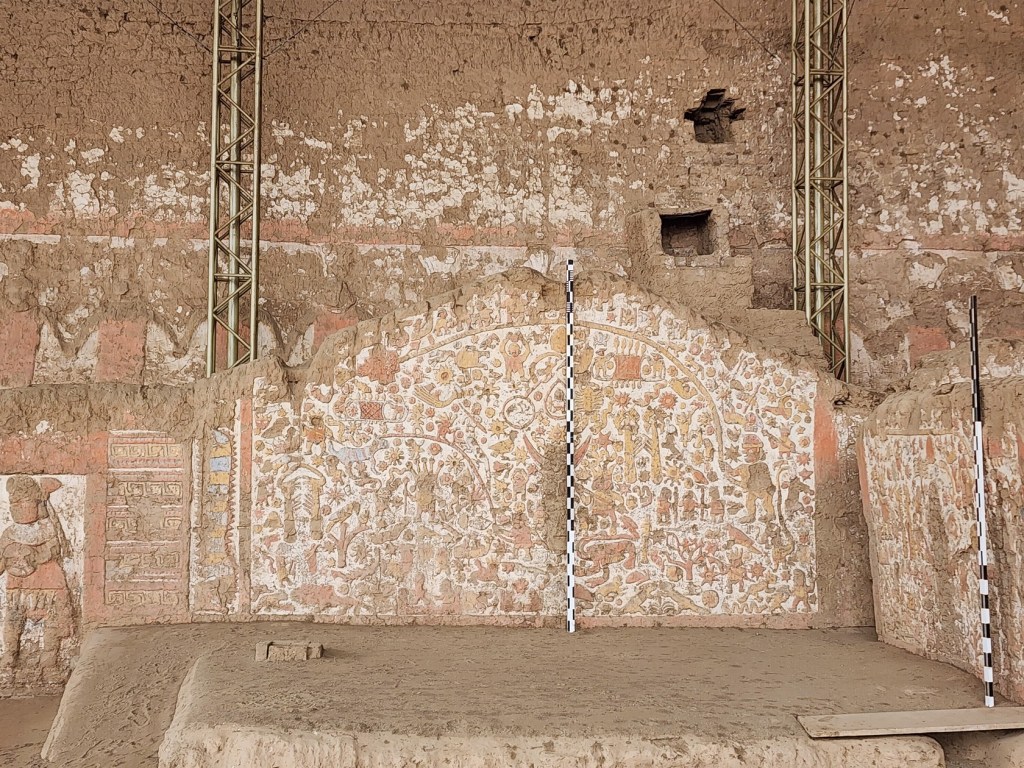
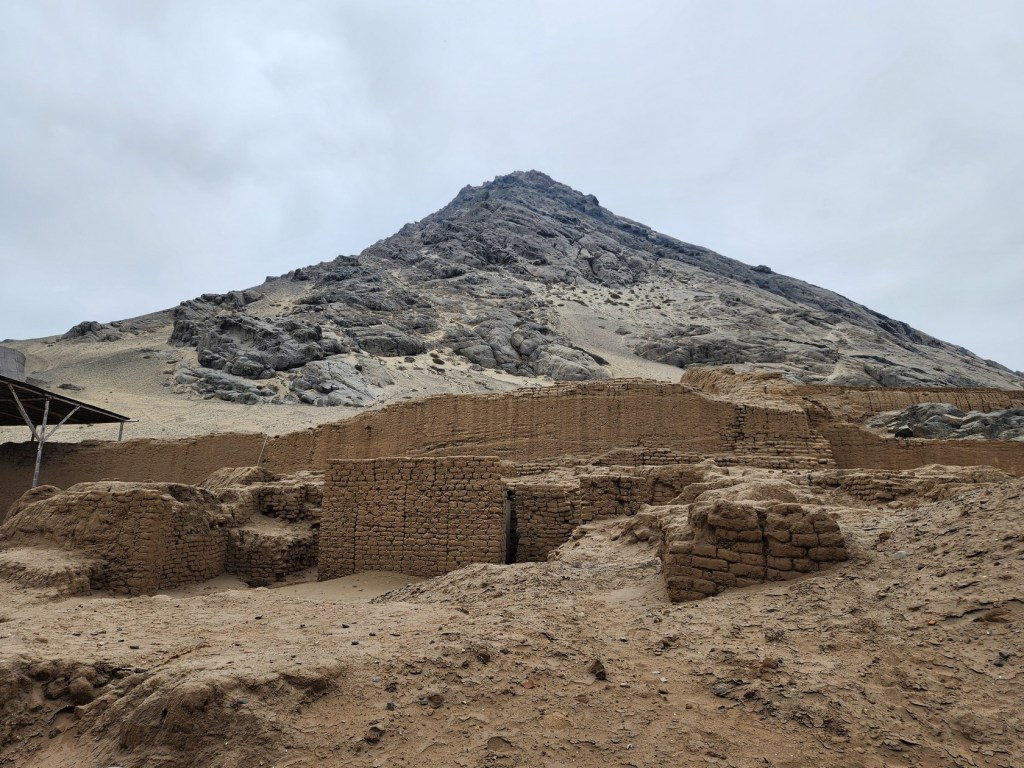

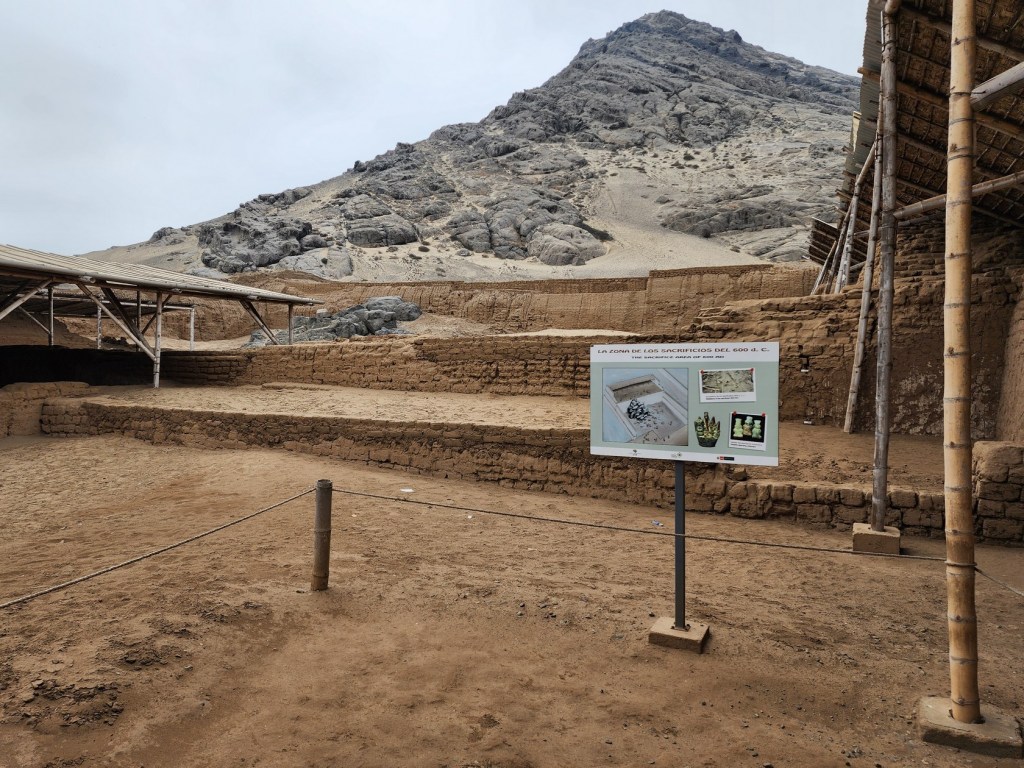
The Temple of the Moon is a stepped adobe pyramid rising roughly 40 m above the desert floor, composed of five superimposed platforms. Each construction phase added a new “step,” creating a tiered profile that originally reached up to 50 m in height.
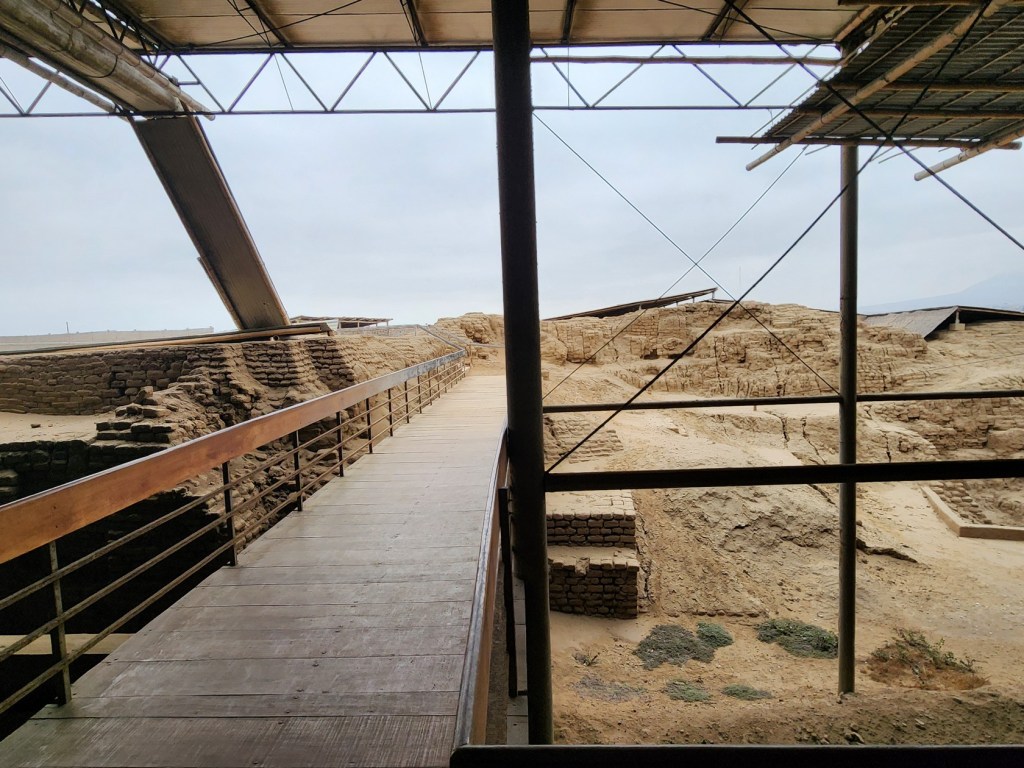

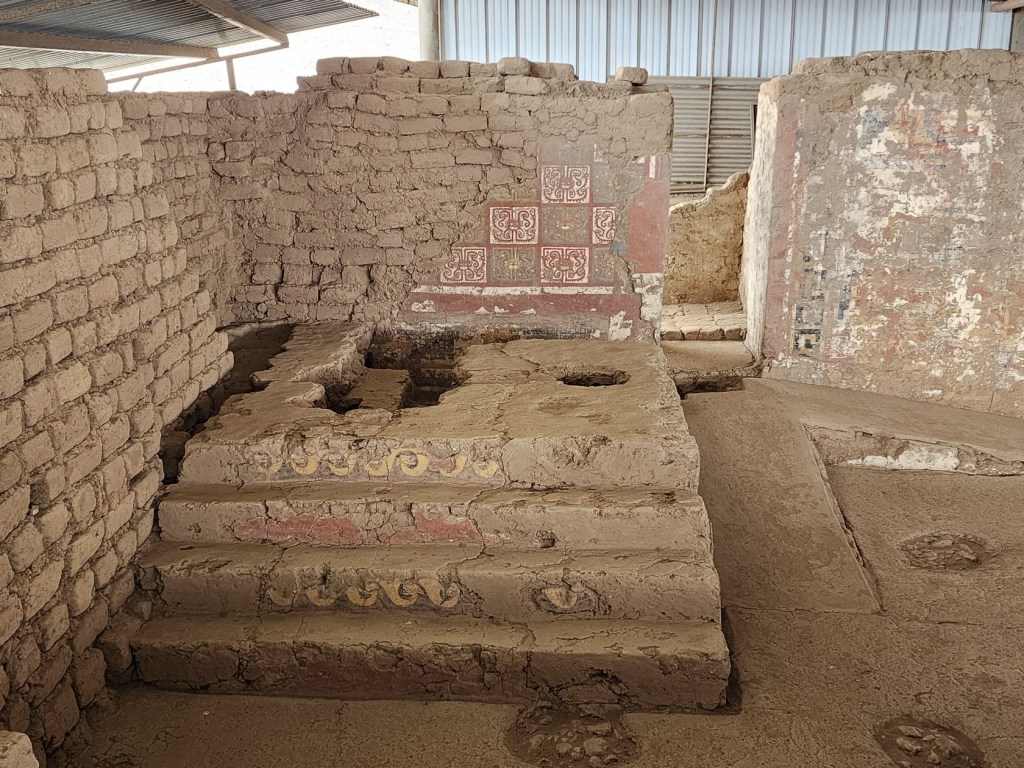
The ruins here are not in the same condition as the ones was saw in the territory of the Inca Empire, as the mud and clay in the north haven’t been as well preserved as the stone down south. The dryness has helped to preserve what remains, and reconstruction efforts are ongoing. Conservation efforts include a protective roof over the principal mural chambers and a visitor walkway that avoids direct contact with fragile surfaces.


As we passed by the elevated walkway, we could view the open plaza and Temple of the Sun (Huaca del Sol) beyond it in the distance. It would have been an impressive sight back in the day, as the plaza was huge. The Temple of the Sun is a massive stepped pyramid, originally consisting of at least eight levels. Though erosion and looting have reduced its height, estimates suggest it originally reached up to 50 meters (164 feet) in height. It covered a base area of about 340 by 160 meters (1,115 x 525 feet), making it one of the largest adobe structures in the Americas.

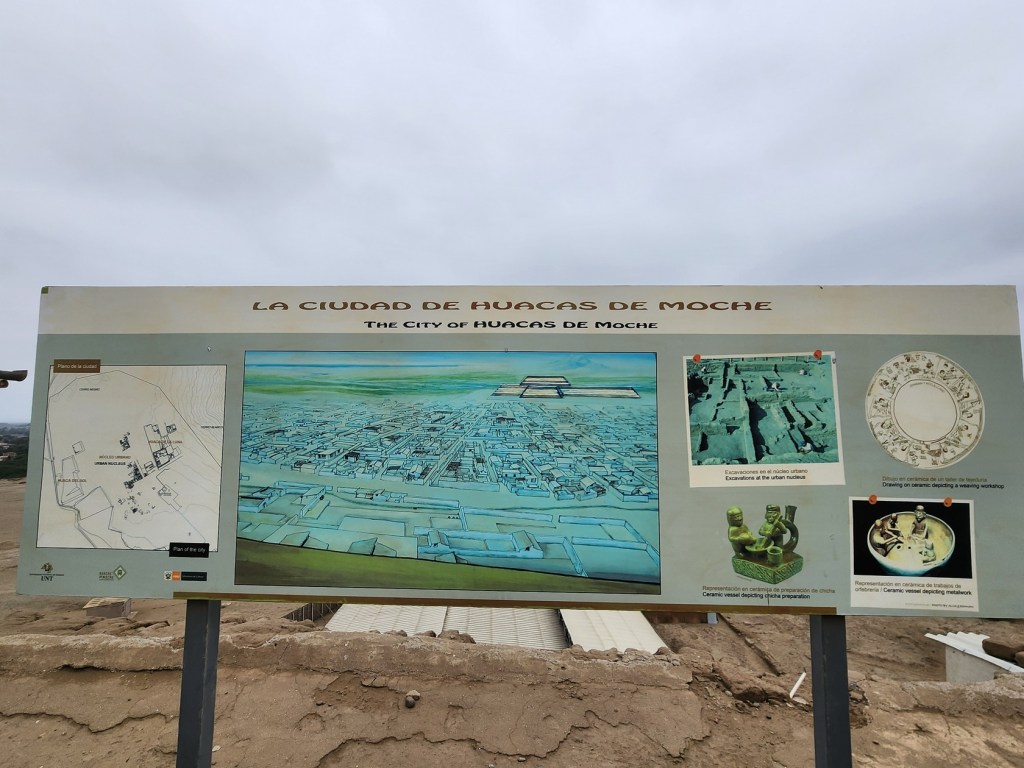
The Temple of the Sun suffered significant damage due to Spanish colonial looting in the 17th century. The Spanish diverted a river to erode the structure in their search for gold and valuables. Over time, natural erosion, especially from El Niño events, and modern urban encroachment have further degraded the site.
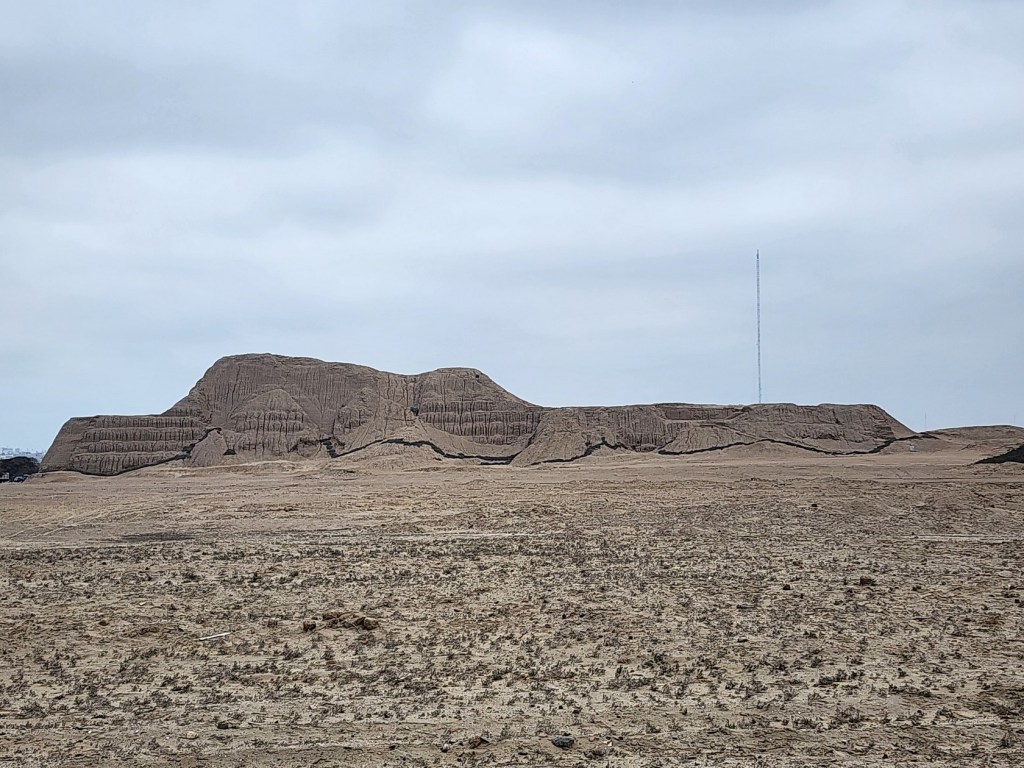
Compared to Huaca de la Luna, Huaca del Sol remains less excavated due to its size and the extent of damage. However, studies and limited excavations have revealed administrative artifacts, residences, and evidence of complex social organization.
Archaeological evidence indicates regular mass human sacrifices, likely tied to large‑scale ceremonies—probably to appease gods during droughts or floods. The victims’ remains, often showing trauma, have been unearthed in deep midden deposits beneath the temple floor.
The decline of the Moche is not fully understood, but likely due to a combination of environmental disasters (like massive El Niño floods and droughts), social unrest or rebellion and warfare between regional centers.
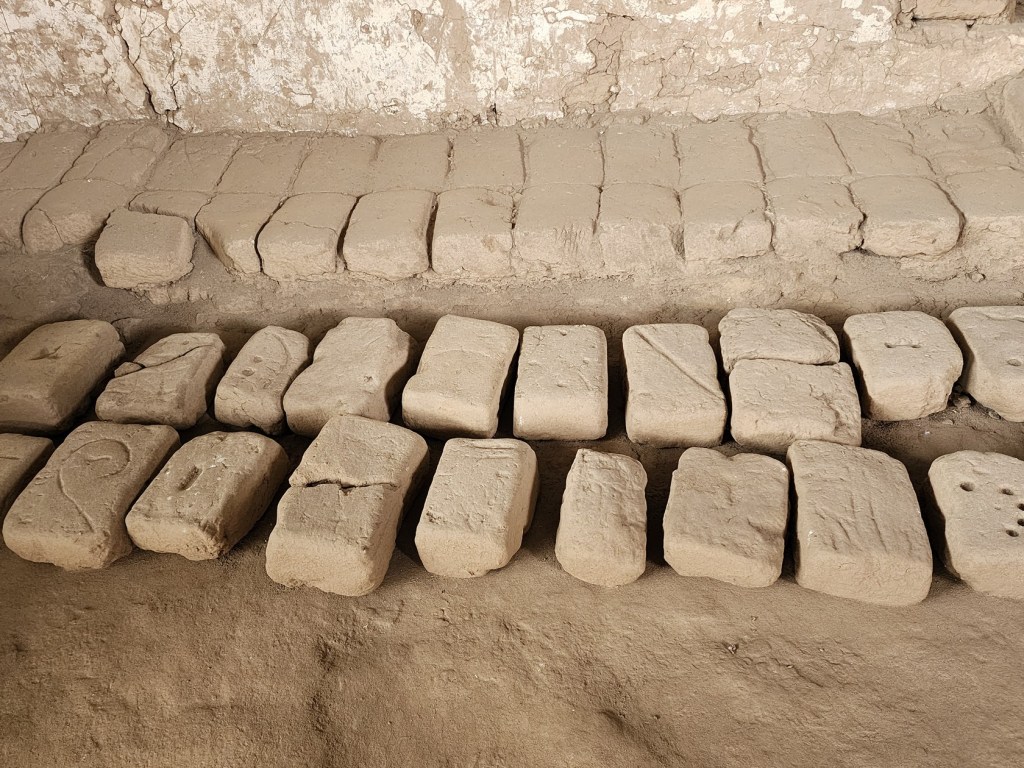
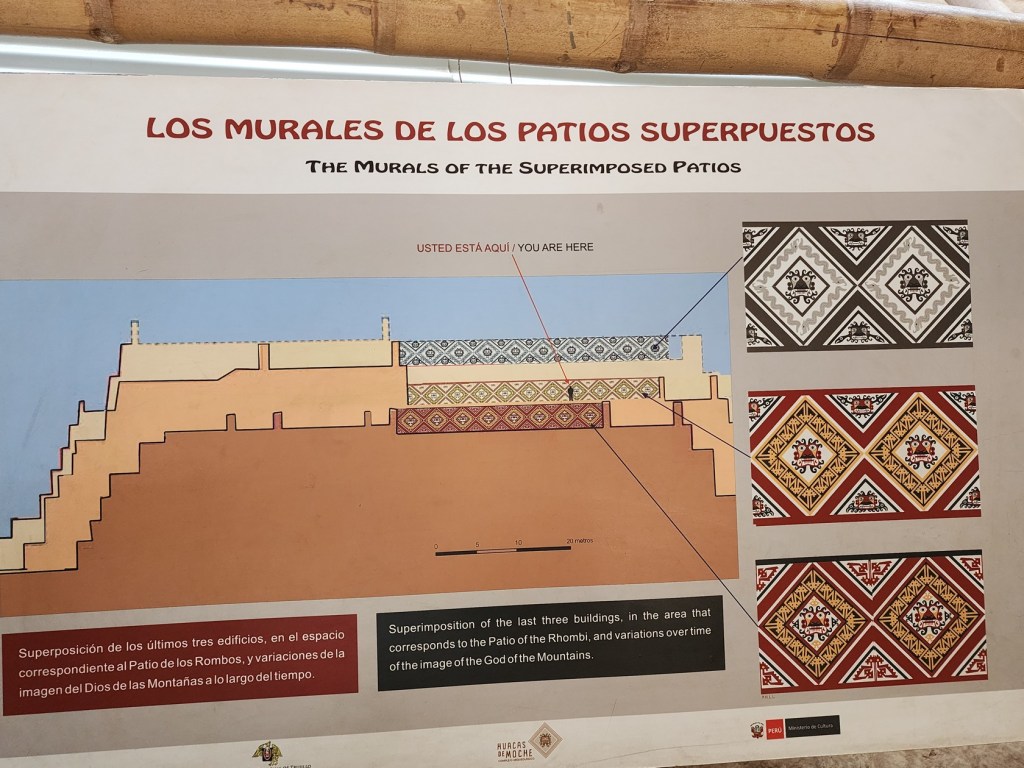
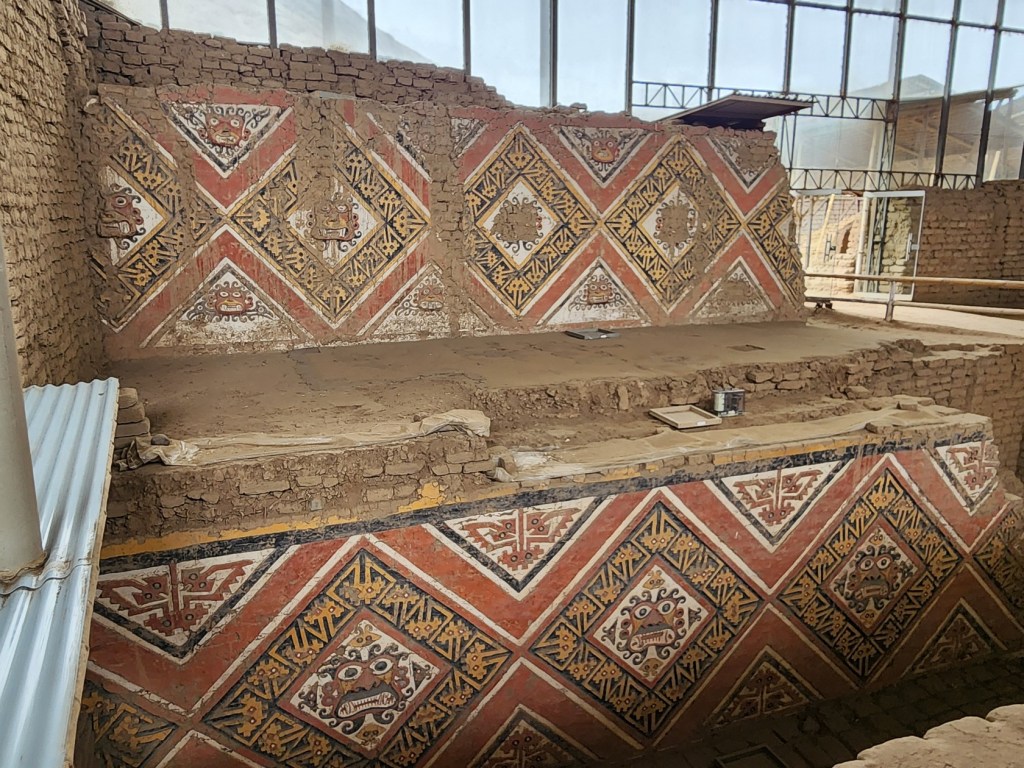
Interior walls preserve vivid polychrome friezes, painted in red, white, black and yellow ochres on a stucco ground. Over twenty distinct mural panels survive, offering insight into Moche mythology and ritual drama.
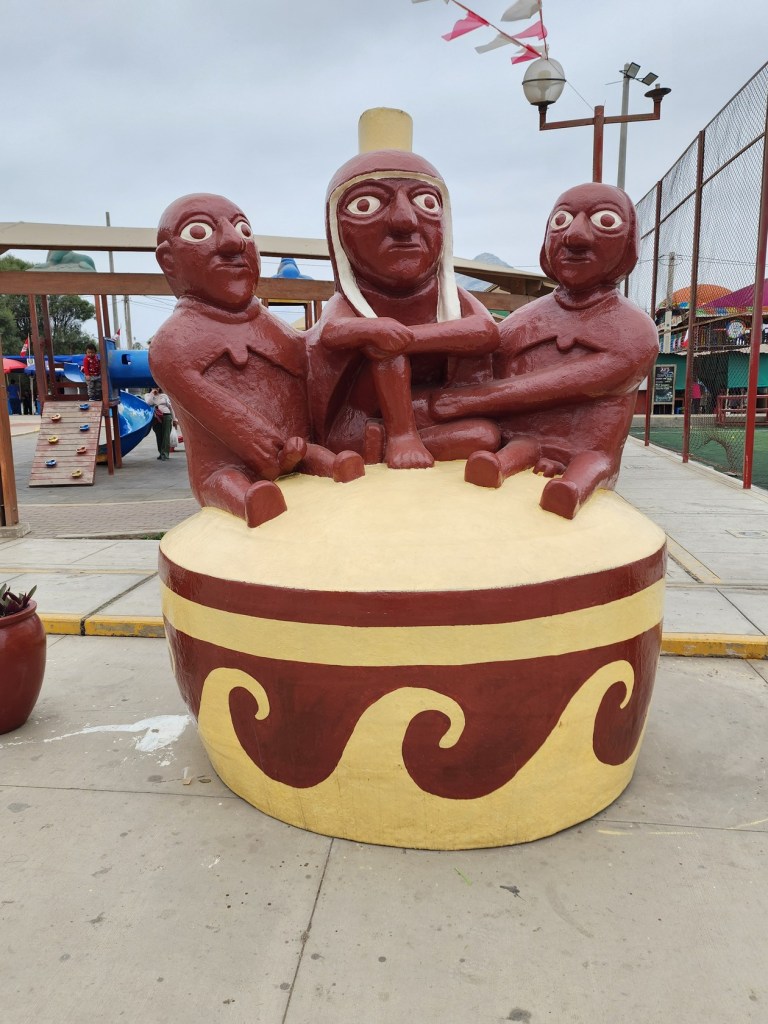
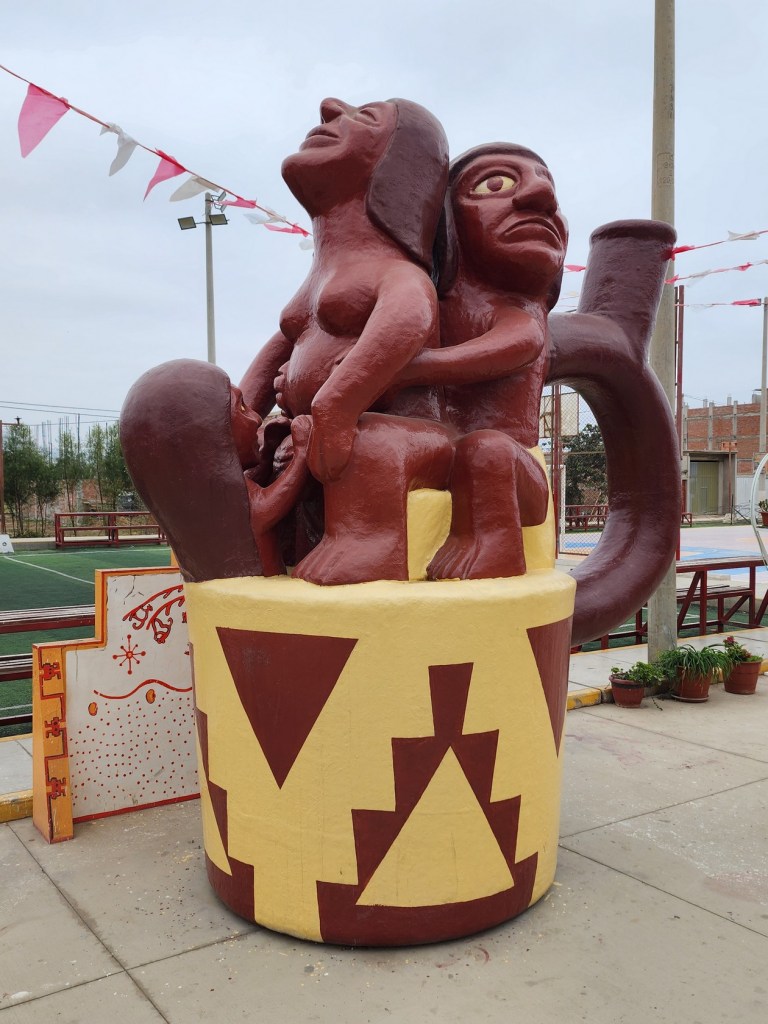
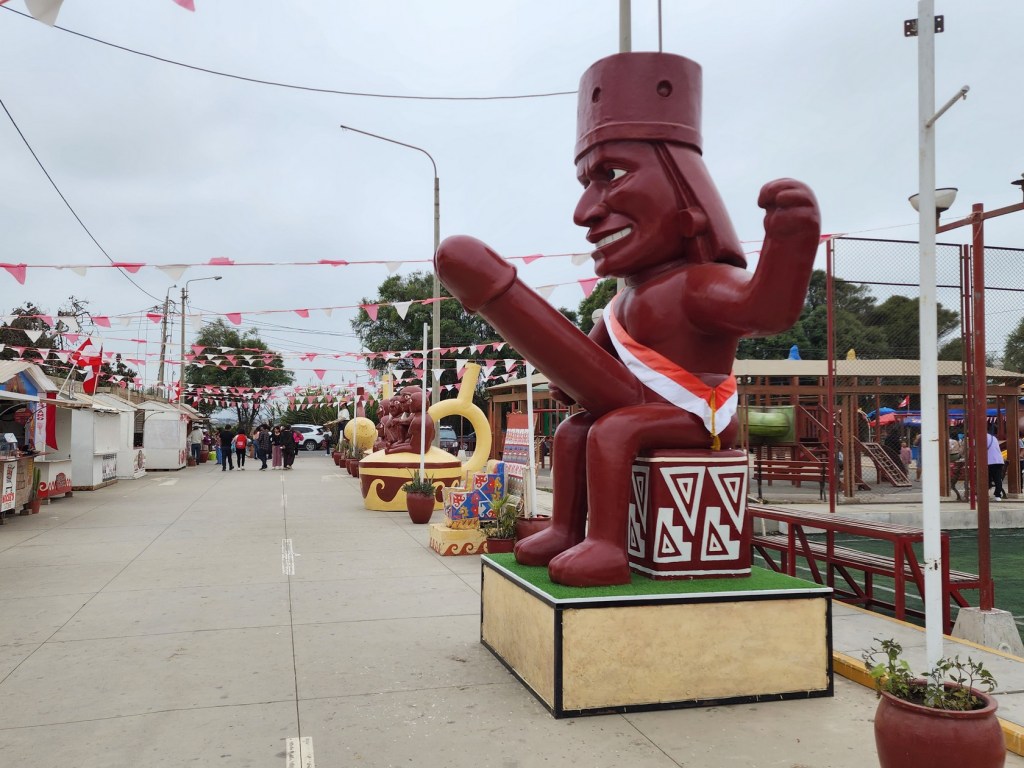
On the way back from the ruins, our driver stopped at a place displaying artwork connected to the Moche fertility rituals of the past. It’s all done in good fun, and there were local families all around the exaggerated and explicit sculptures.
We spend about an hour touring the Temple of the Moon and viewing the Temple of the Sun. From there we headed back to the city, but made a stop at an interesting spot along the way.
We stopped at the Huacos eróticos de la fertilidad Moche, which is a display of oversized Moche artwork depicting various fertility rituals. Although it is done in a humourous style, the art is very graphic showing male and female anatomy as well as sexual acts. Whole families were there, and the locals took it in the humourous spirit in which it was intended.
But be warned, some graphic images will appear in the following photos:


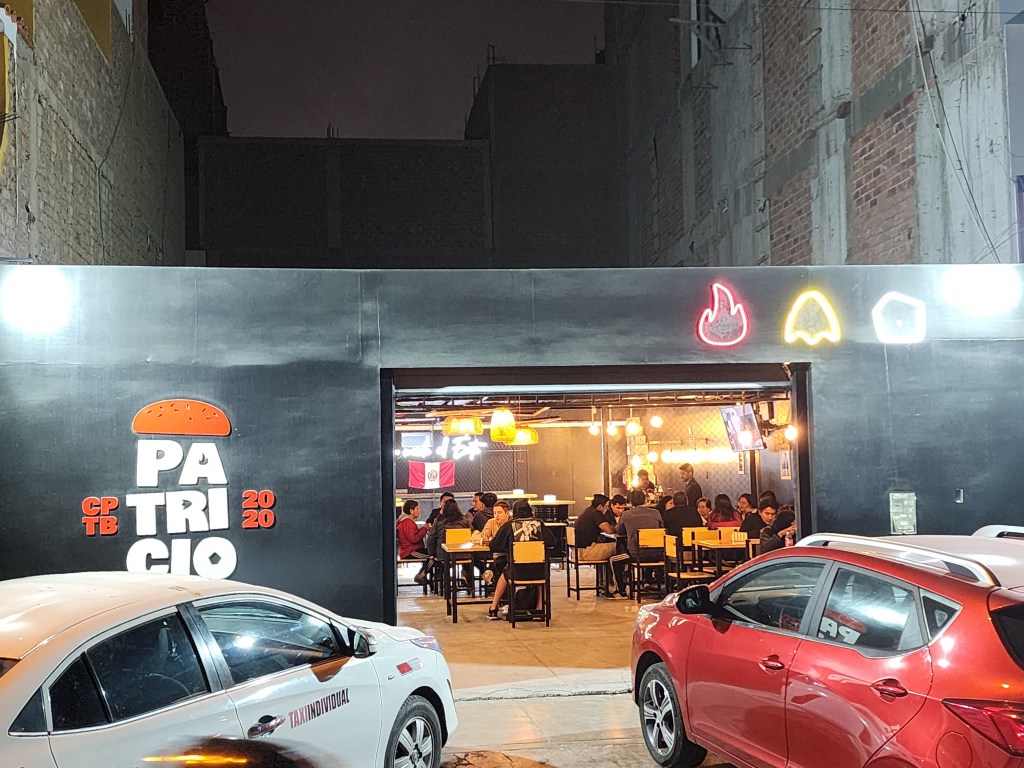
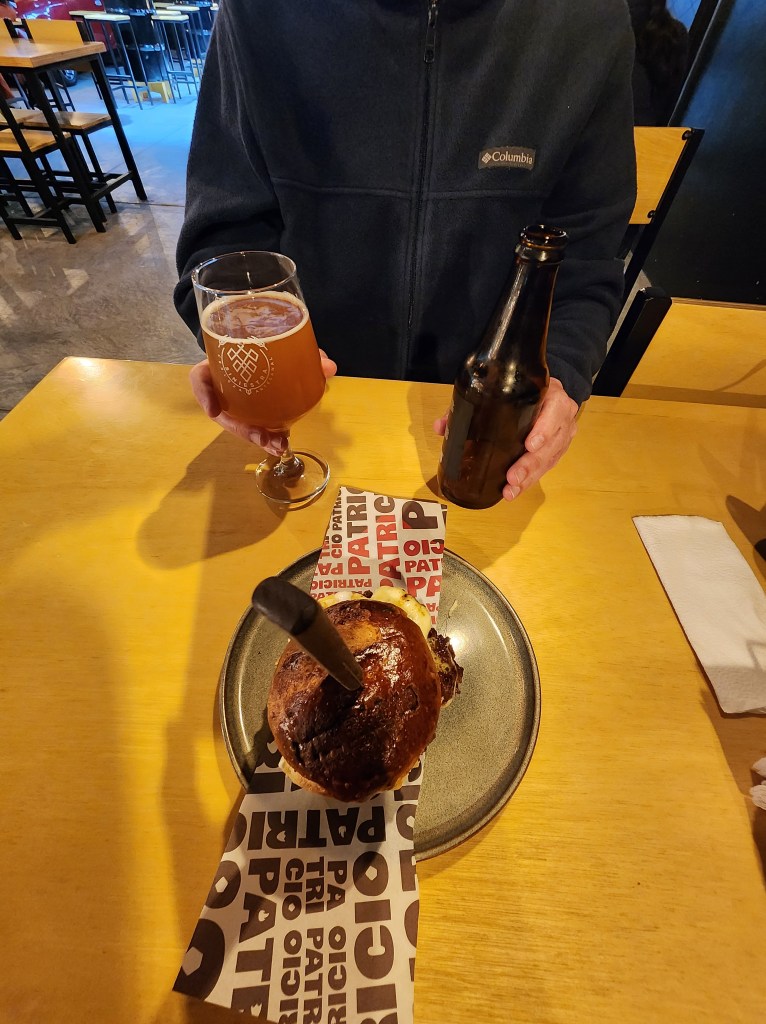
After a long day, we checked out a modern restaurant just down the street from our hotel. Burgers and local craft beers helped end the night on a high note!

We spent three nights in Trujillo, enough time to see the two temples as well as the Chan Chan complex (a UNESCO World Heritage Site) the next day. Our visit to Chan Chan will be the subject of the next post.
 Humphreys Travel