
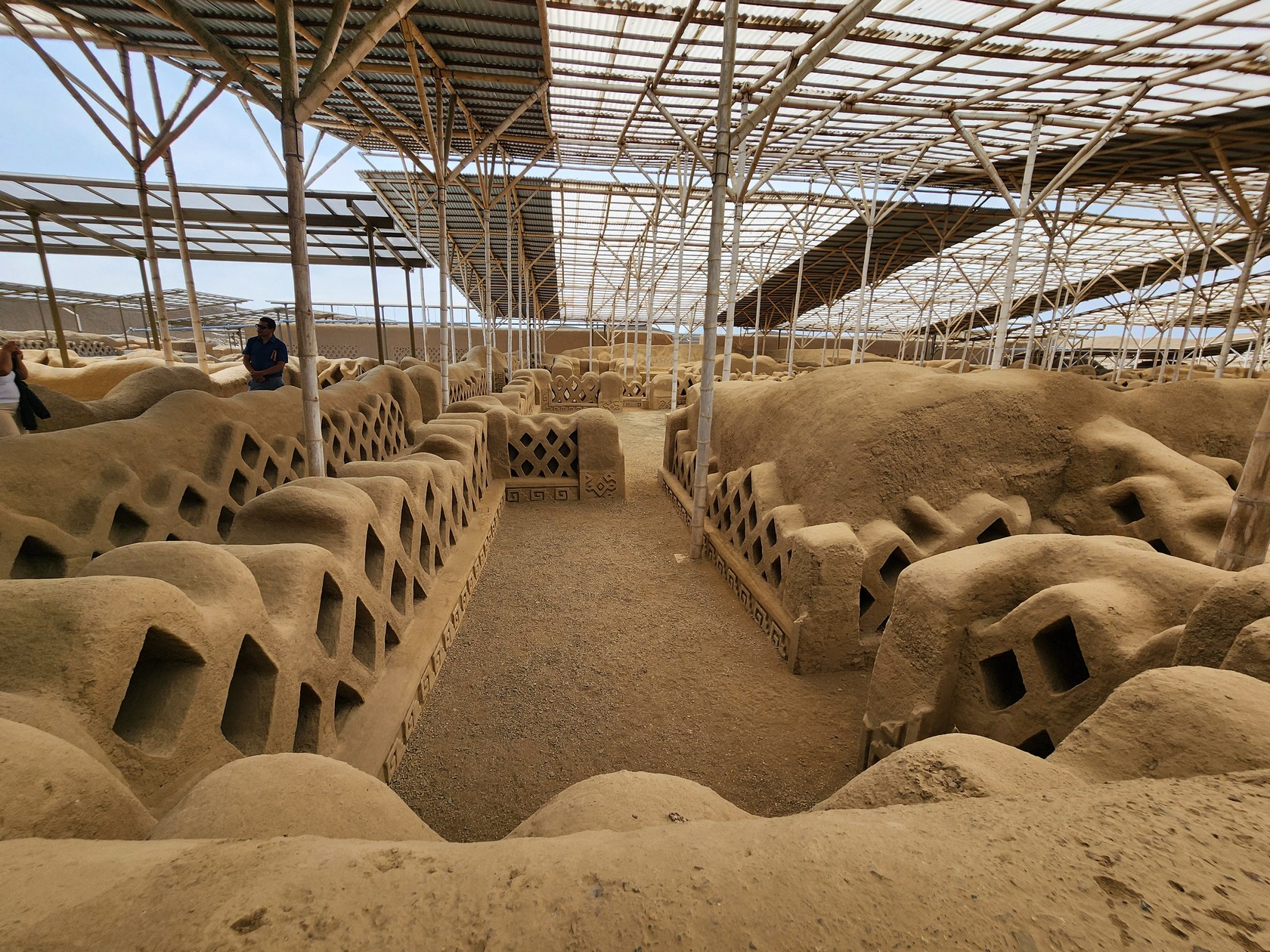

After taking in nearby Trujillo for three days, we were driven by taxi to our last destination of Huanchaco on the ocean. But along the way we stopped at Chan Chan.
Chan Chan (possibly meaning “Sun-Sun” due to the abundance of it) is located in the mouth of the Moche Valley and was the capital of the historical empire of the Chimor from 900 to 1470.
Chan Chan is the largest pre-Columbian city in South America and one of the most significant archaeological sites in Peru. It’s a sprawling city covering approximately 20 square kilometers (about 7.7 square miles) with an urban center of six square kilometers (2.3 sq mi). It is considered to be the largest adobe (mud-brick) city in the world.
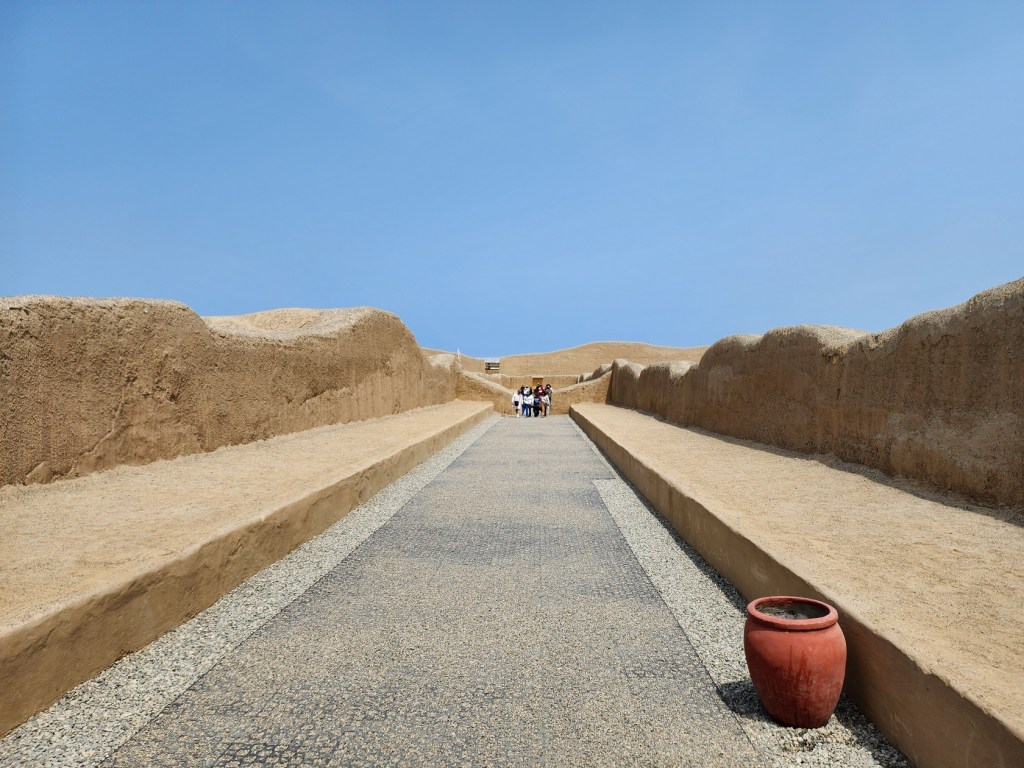

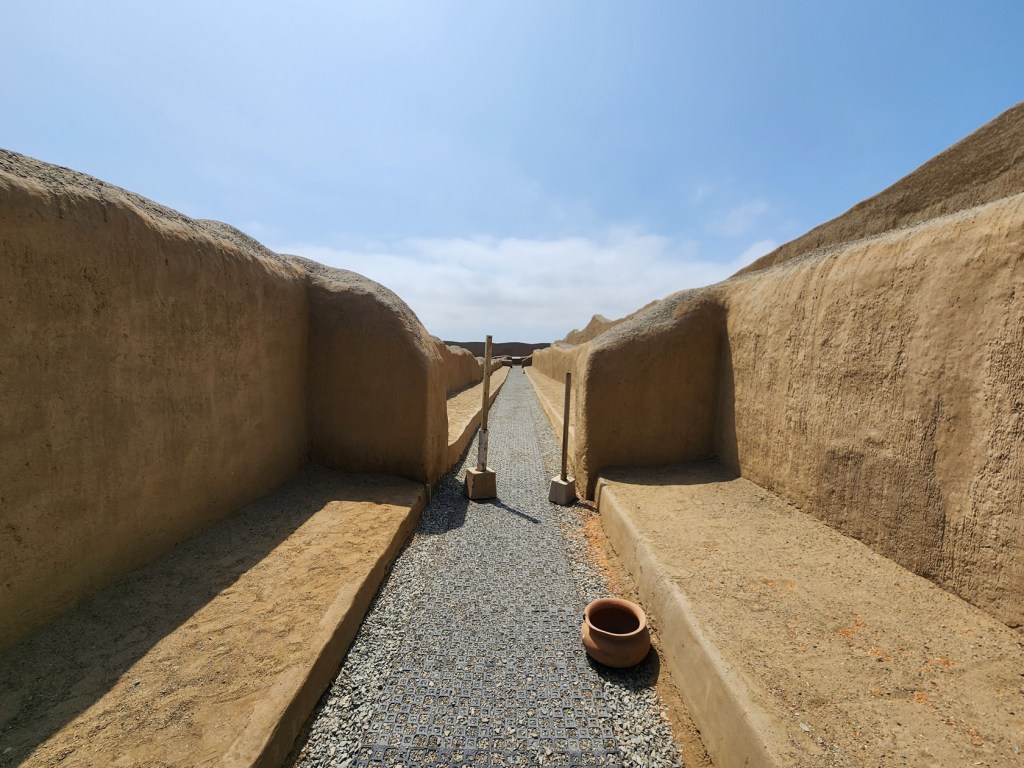
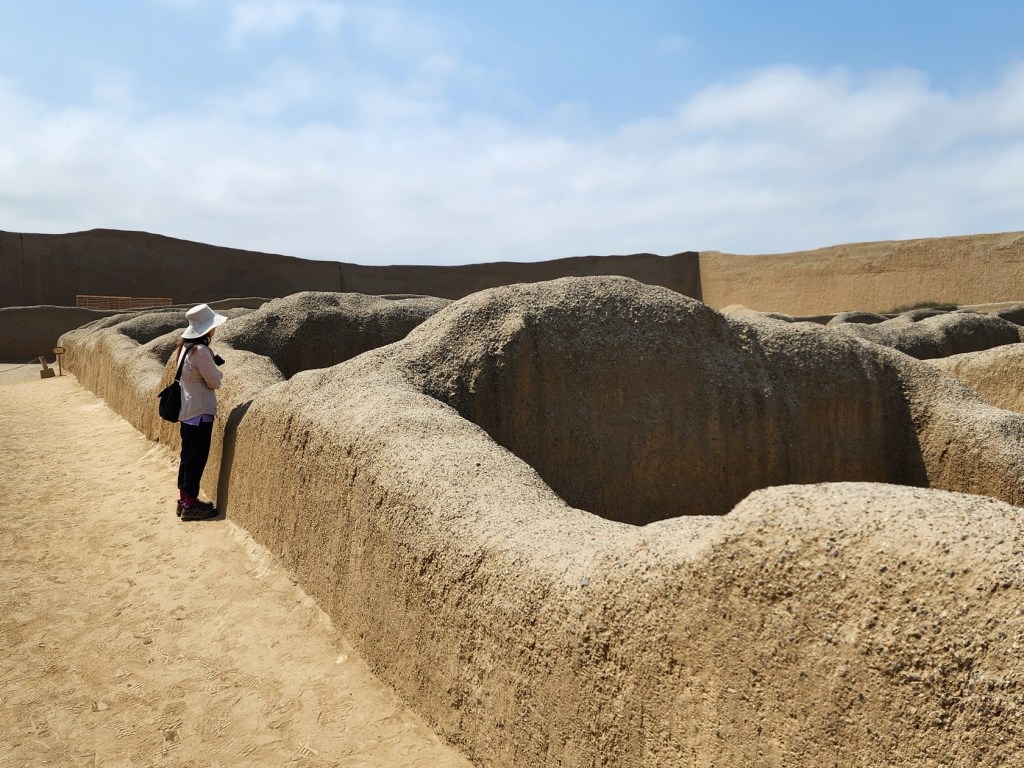
There are about ten walled compounds, each functioning as an independent royal or administrative center. Streets and walls were organized in a grid-like pattern with controlled access to different sectors. Chan Chan represents a pinnacle of pre-Incan urban planning and civil engineering. We were able to visit a large portion of them, though most had few or no visible features due to past destruction and ongoing erosion.
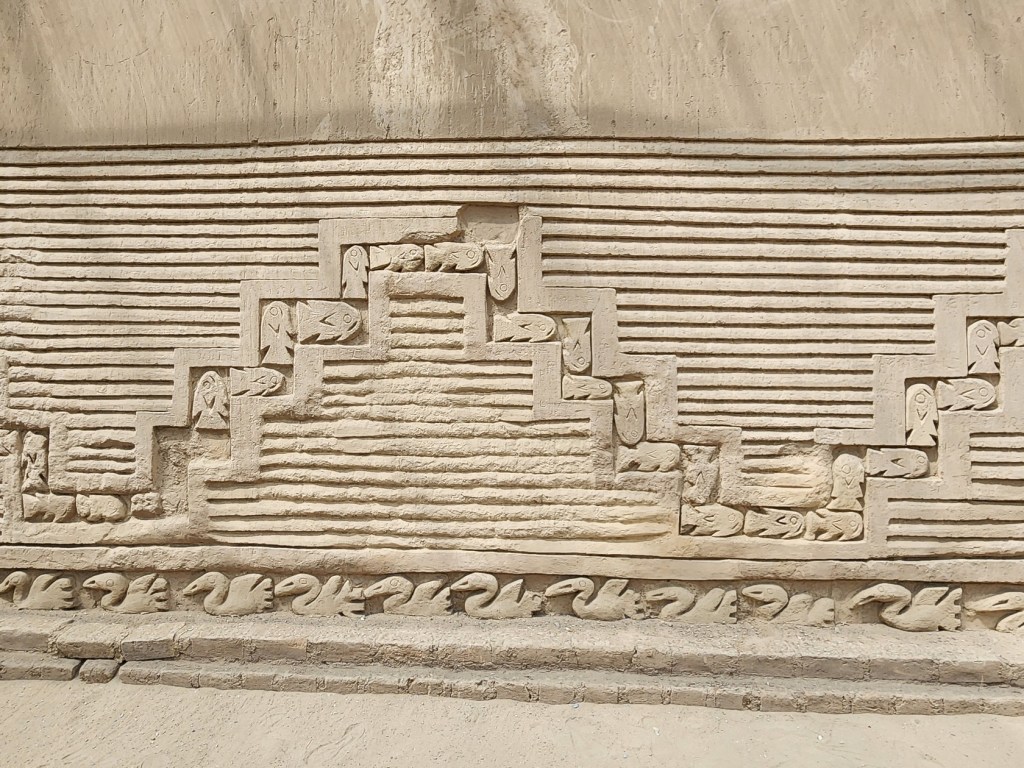
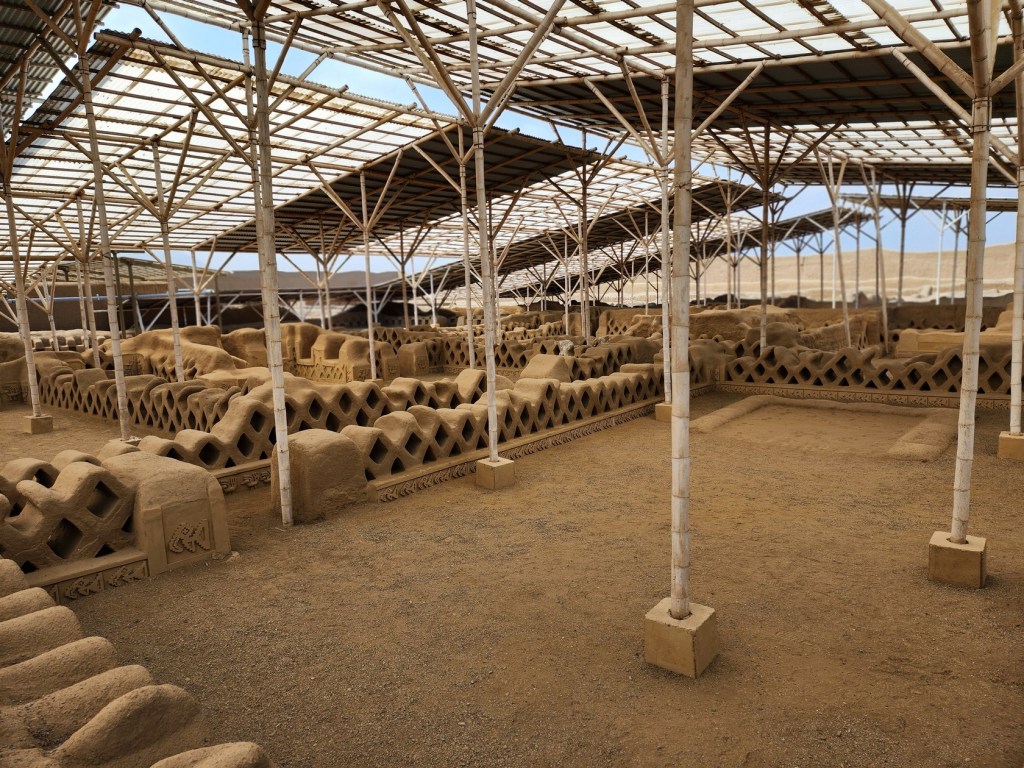
The walled complex shows the reverence for water, particularly of the sea, and of the cult that surrounded it in the Chimu culture. The high reliefs of the walls represent fish, directed towards the north and the south. Also depicted are waves, fishing nets, pelicans and anzumitos (a mixture of sea lion and otter).
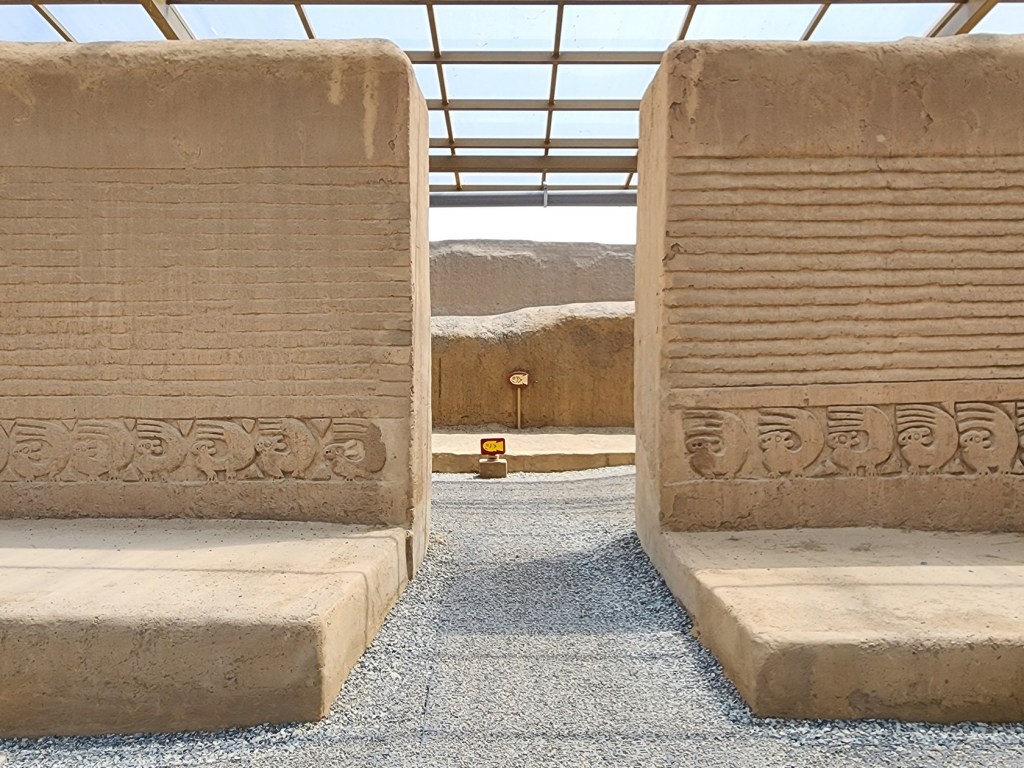
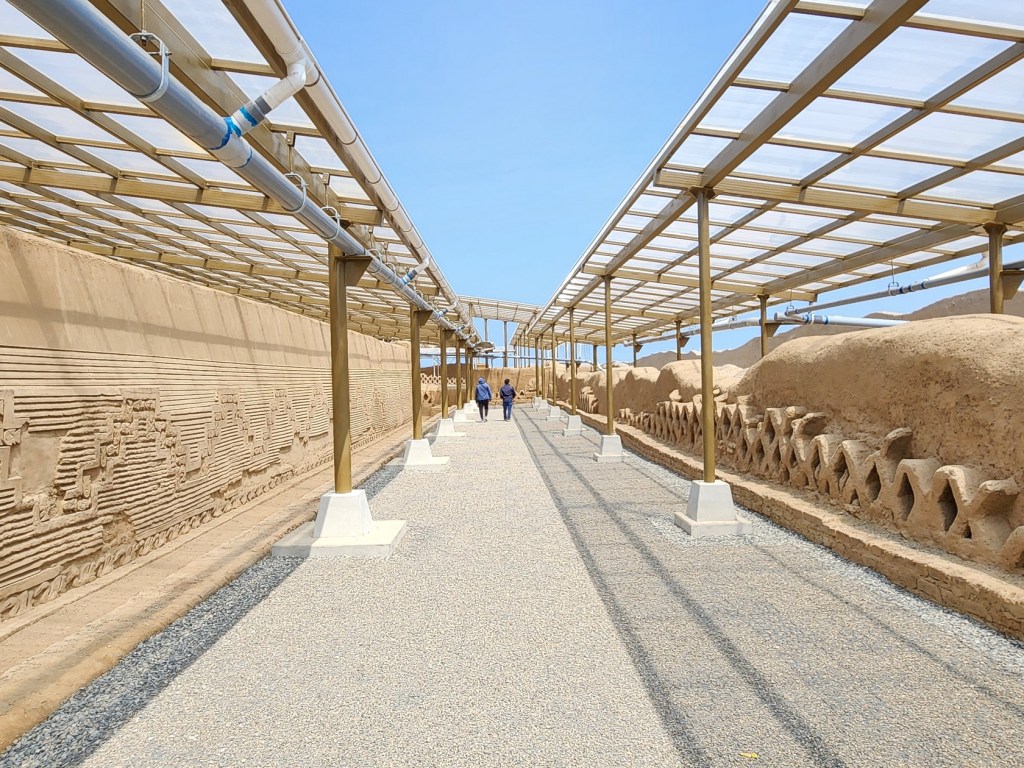
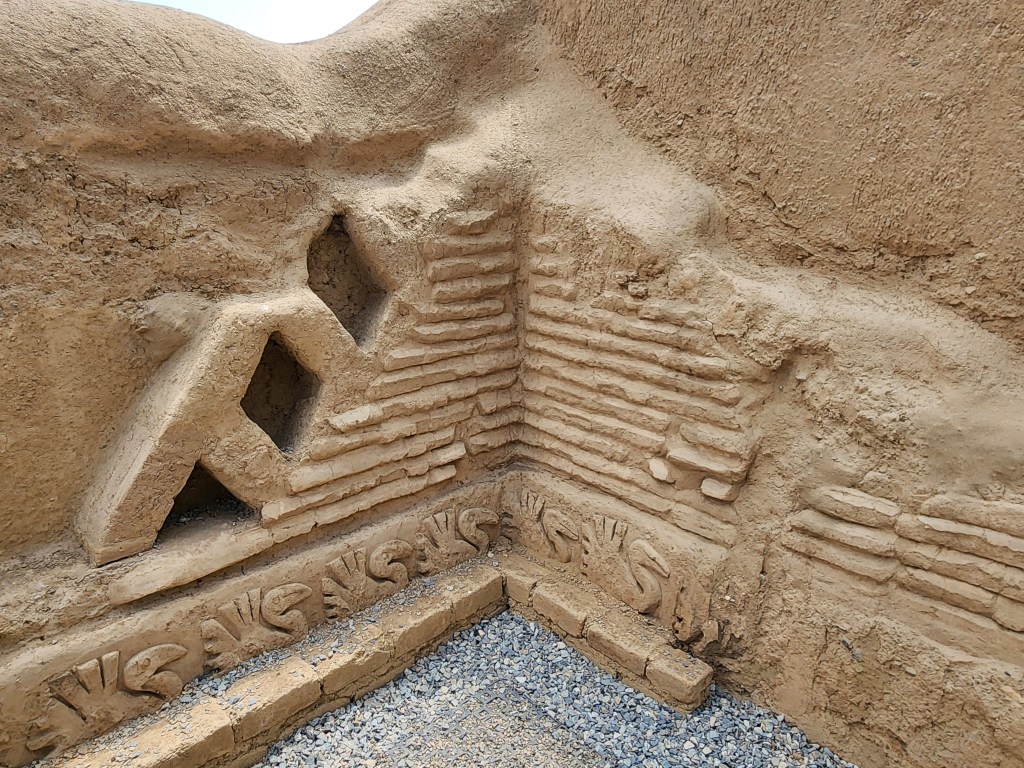
Unfortunately, the amount of erosion at Chan Chan means that you won’t see a lot of details at the site. You have to use your imagination to get a sense of the original city. On the positive side, visitors will see the walls, some of the designs and get a sense of the size of the place as you can walk quite a distance. There’s really only one section that gives the visitor a better sense of how things looked about a thousand years ago.

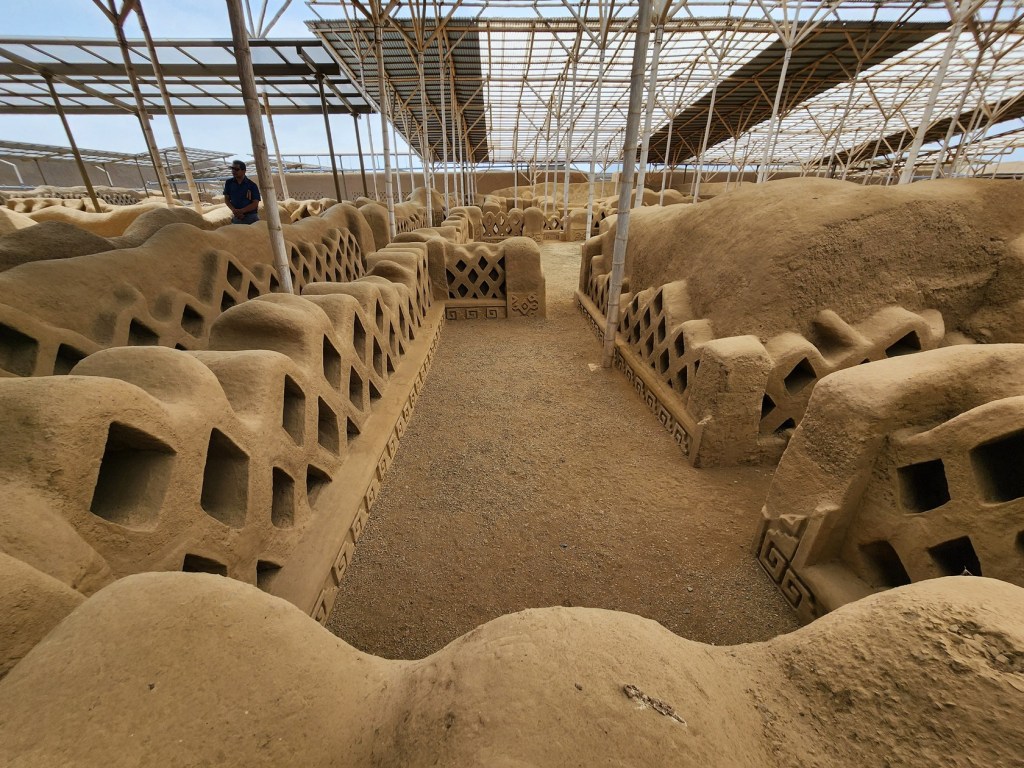
The best-preserved (or restored) palace is the Tschudi Complex. Inside, you can see more of the designs of the original adobe residences and rooms, though even here things are rough and incomplete.
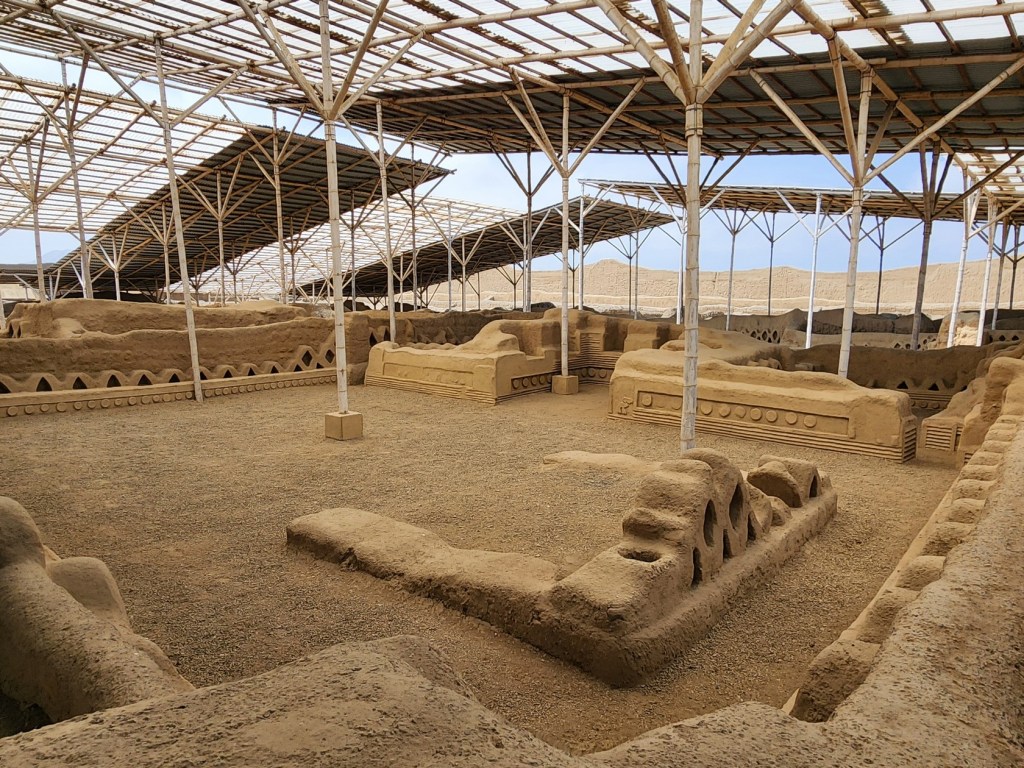
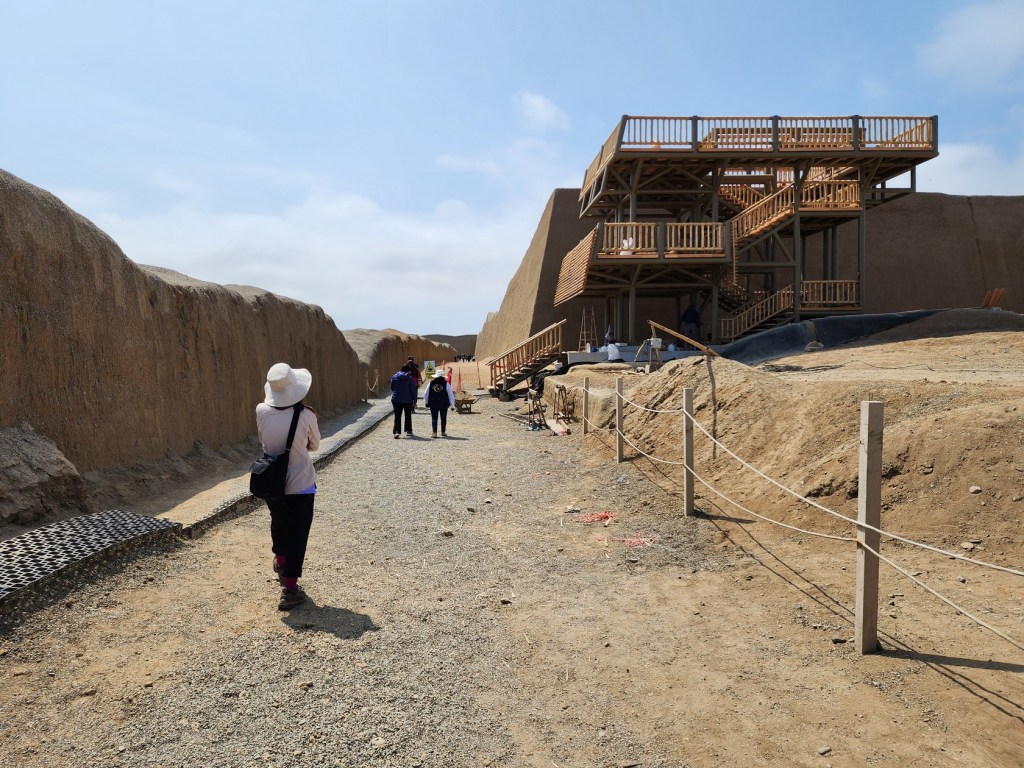
In 1986, UNESCO designated Chan Chan as a World Heritage Site, and placed it on the List of World Heritage in Danger. Archeologists have tried to protect this city in various ways. They include trying to create rain coverings over the buildings to protect them from the rain and save the adobe buildings that are deteriorating. They have also been trying to create new drainage systems to drain the rainwater faster as erosion is a constant problem.
Originally the city relied on wells that were around 15 meters deep. To increase the farmland surrounding the city, a vast network of canals diverting water from the Moche river were created. Once these canals were in place, the city had the potential to grow substantially.



Around 1470, Chan Chan was conquered by the Inca Empire under Topa Inca Yupanqui. The city declined rapidly after the conquest. Many of the residents were forcibly moved to regions controlled by the Inca in order to prevent uprisings and dissent. After Francisco Pizarro founded the Spanish city of Trujillo close by in the 1530s, the city declined even further.

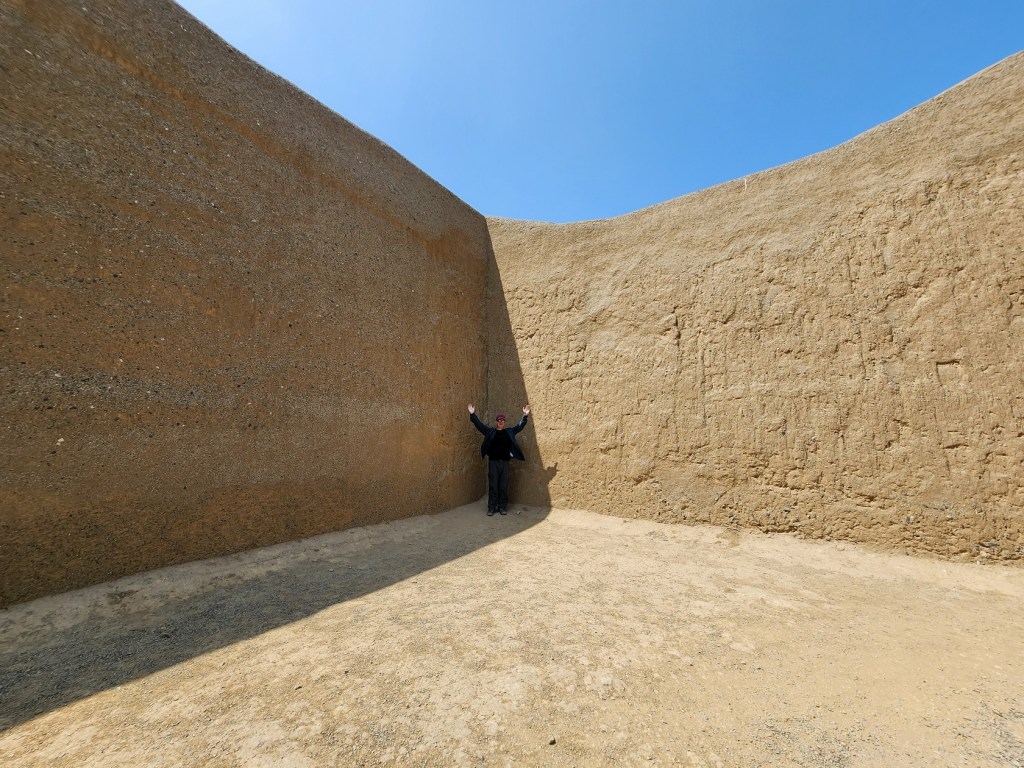


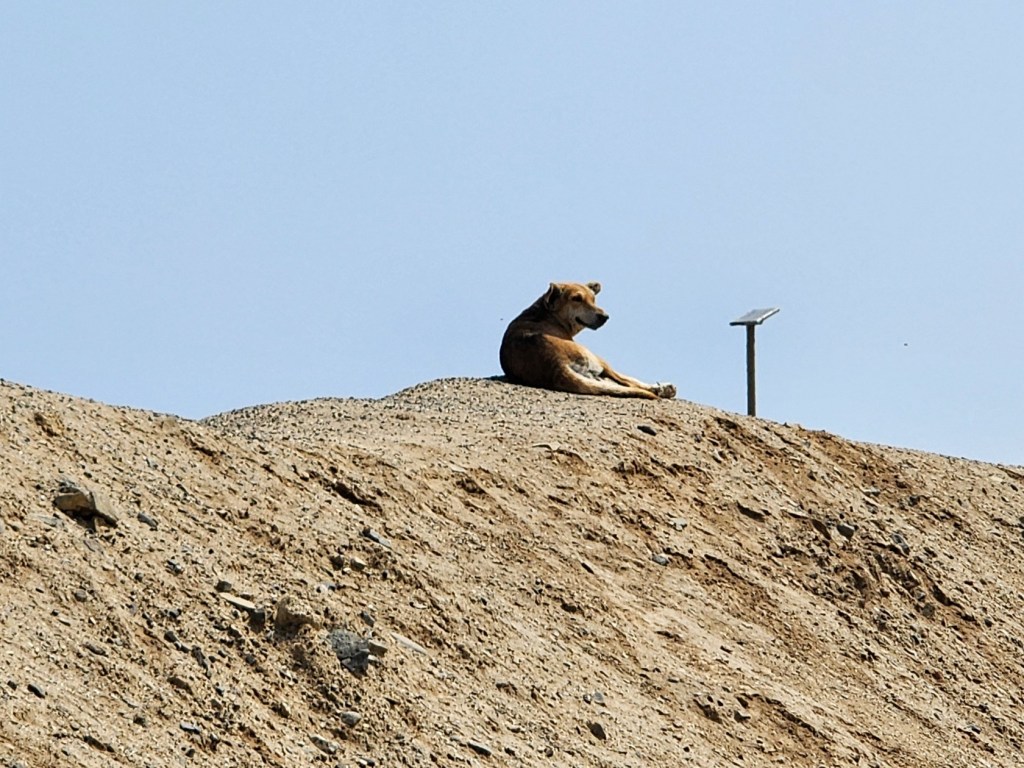
It took us a little more than an hour to walk through the site. Although there’s a bit of repetition to the ruins, it’s a unique place and we got a lot of steps in! Chan Chan is so different from the other Peruvian sites, with its size and style making it distinct from them.
From here we continued in the taxi for a short distance to Huanchaco, a coastal town famous for its surfing. This was our last stop on our month-long visit to Peru, and it will be the subject of the next post.
 Humphreys Travel