


From Trujillo we took a short taxi ride over to Huanchaco. The town is really for surfers, and when we went it was off season so even the surfing was quieter. It was just a way for us to finish the trip on the ocean, as we hadn’t see it since our time in Paracas early in the trip.

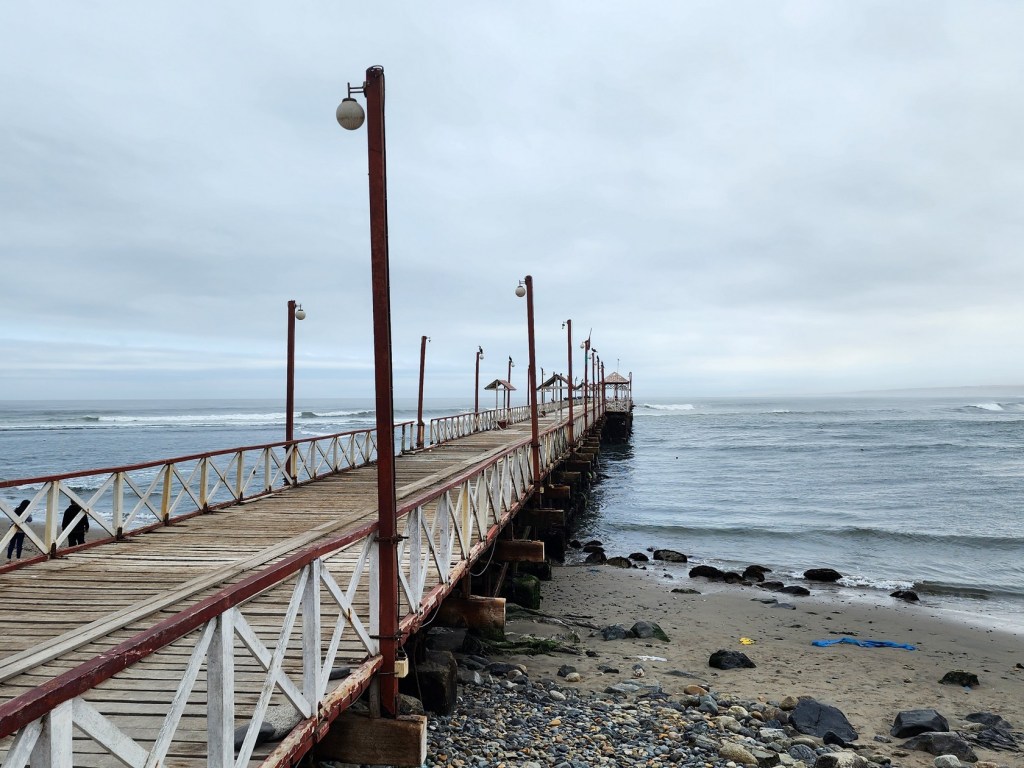
During the period of the Chimú culture, 800 to 1400, Huanchaco was the port for nearby Chan Chan, which we visited as well. It was also the main port during the Moche period. Later on the Inca took the region from the Moche. However, Huanchaco remained a significant coastal port under the Inca and continued its role in fishing and trade.

The Caballitos de totora are traditional reed watercraft used by Peruvian fishermen for over 3,000 years, especially along the northern coast near Huanchaco. Their name means “little reed horses” in Spanish, and they are still in use today, both for fishing and cultural demonstrations.

The little boats are made from totora reeds (Schoenoplectus californicus), a buoyant aquatic plant harvested from coastal wetlands and lagoons near Huanchaco. They are shaped like a canoe or kayak, with a pointed front and a raised back, which resembles the head of a horse, hence the name. They are typically about 4 to 5 meters long. Lightweight and narrow, the boats are ideal for navigating through surf.


Because we weren’t able to swim in Huanchaco, our options for entertainment were limited. We spent our last two full days wandering around the town and checking out some nearby ruins (the topic of the next post). The town itself didn’t take long to walk through, and food options were more limited, as were credit card options.
We arrived with no cash because of a situation with the taxi driver (also a topic in our next post) and the local supermarkets didn’t take our cards, nor did the pharmacies. There was only one ATM in the town, and it wasn’t working. So be warned, carry cash with you when you arrive! Fortunately many of the restaurants took credit cards so we didn’t go hungry.

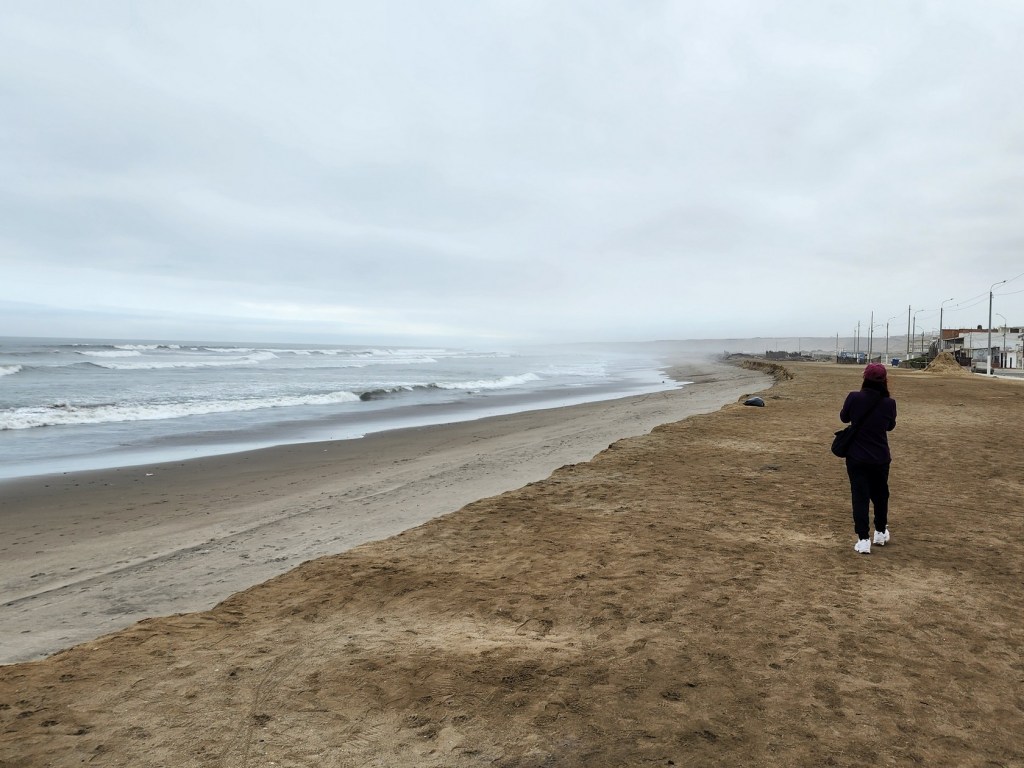
After the Spanish conquest, Huanchaco became part of the colonial economy, although it retained much of its fishing culture. When we visited we didn’t see much happening off the coast, but this might have been due to the time of year.
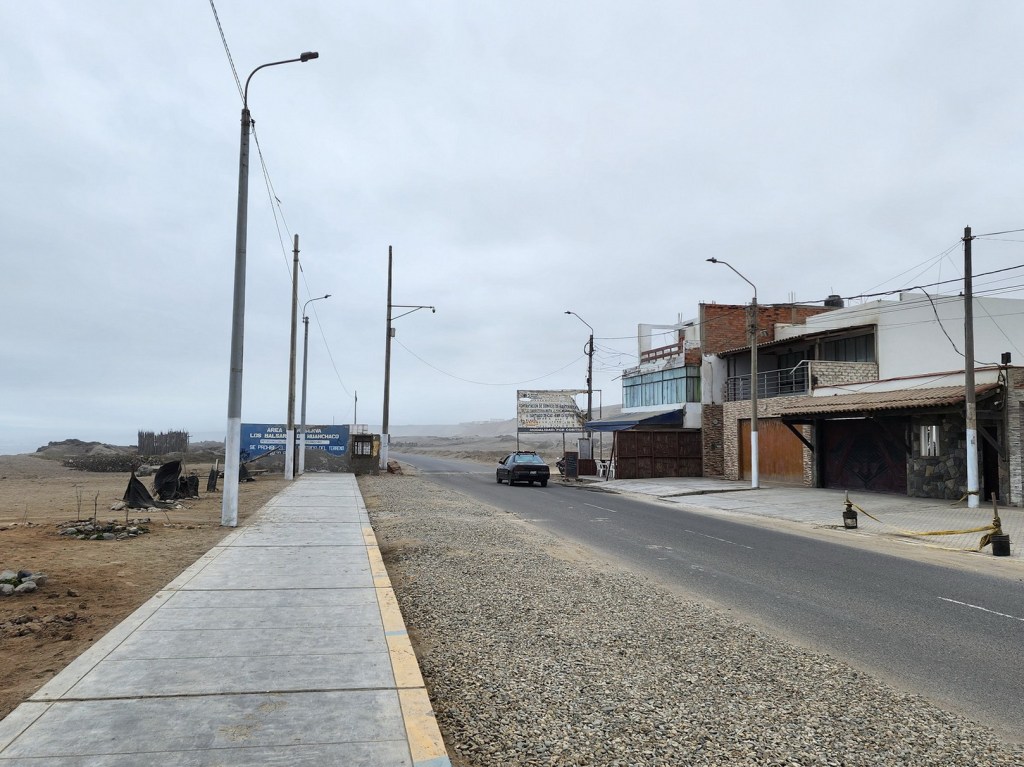
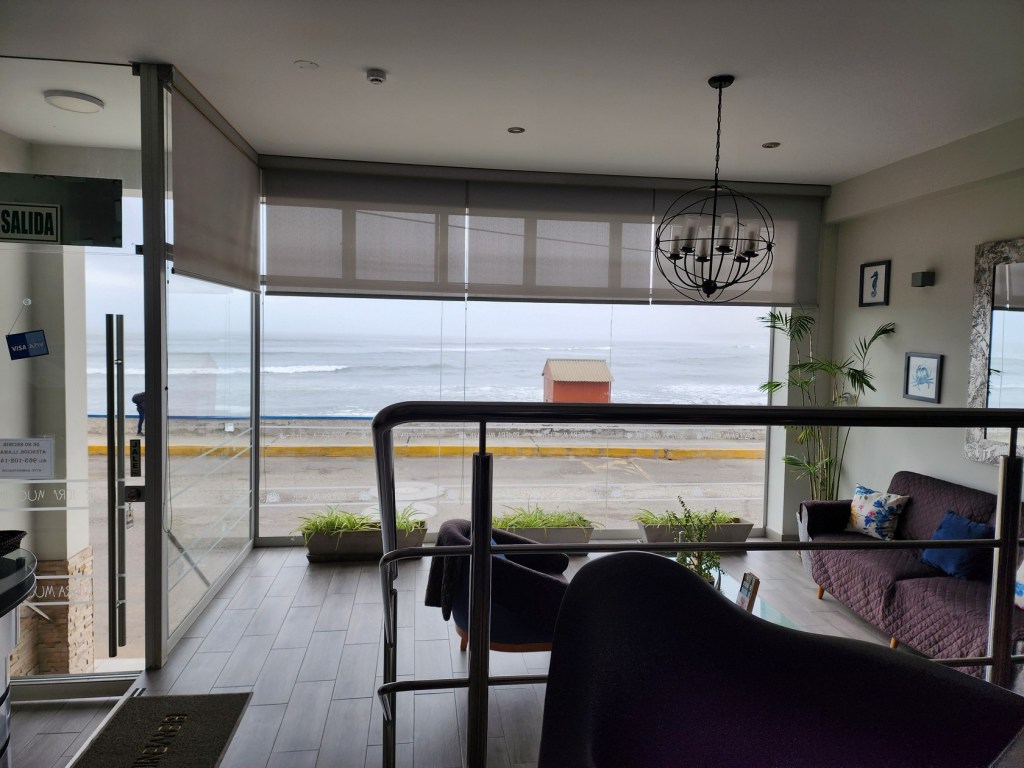
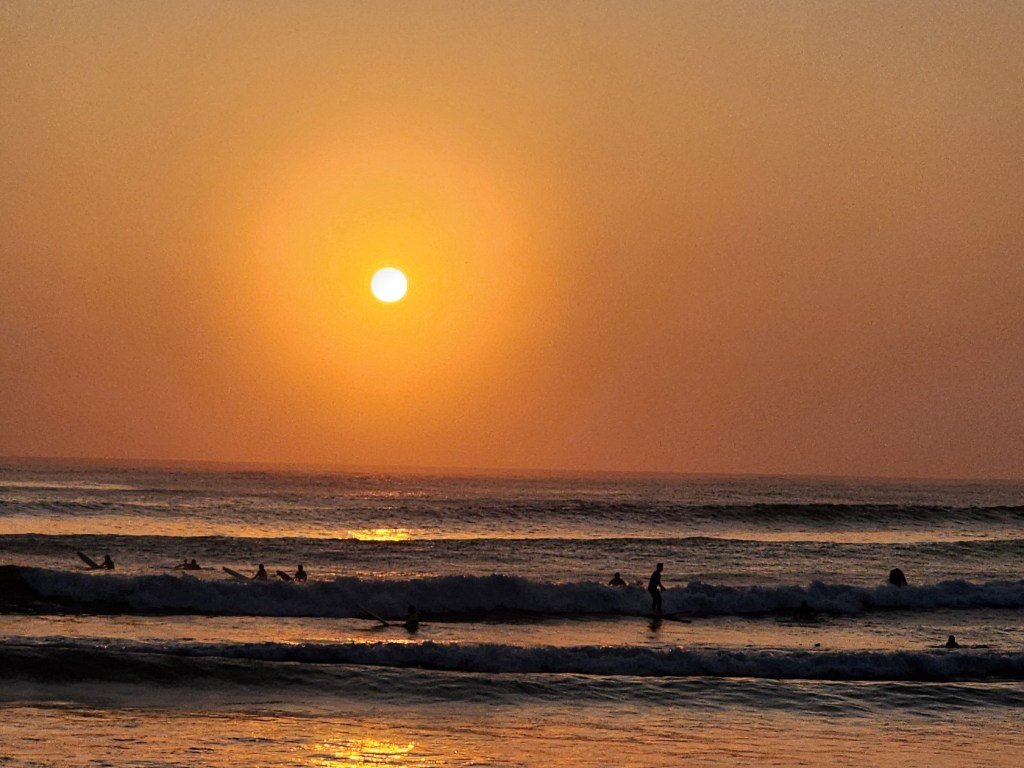
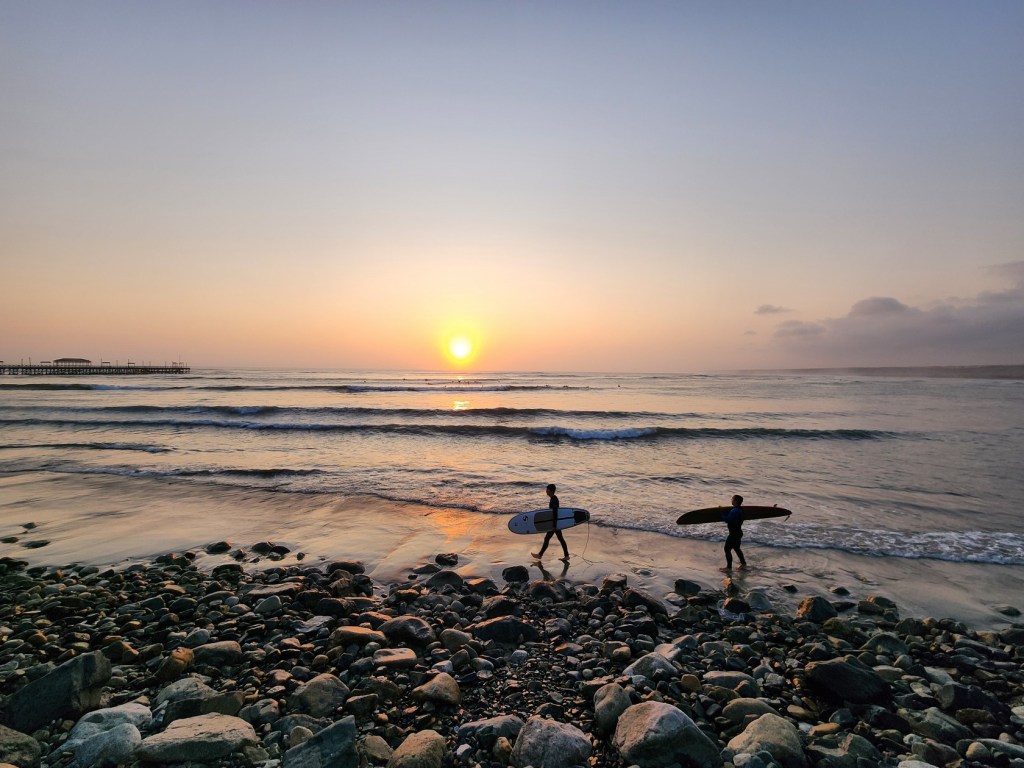
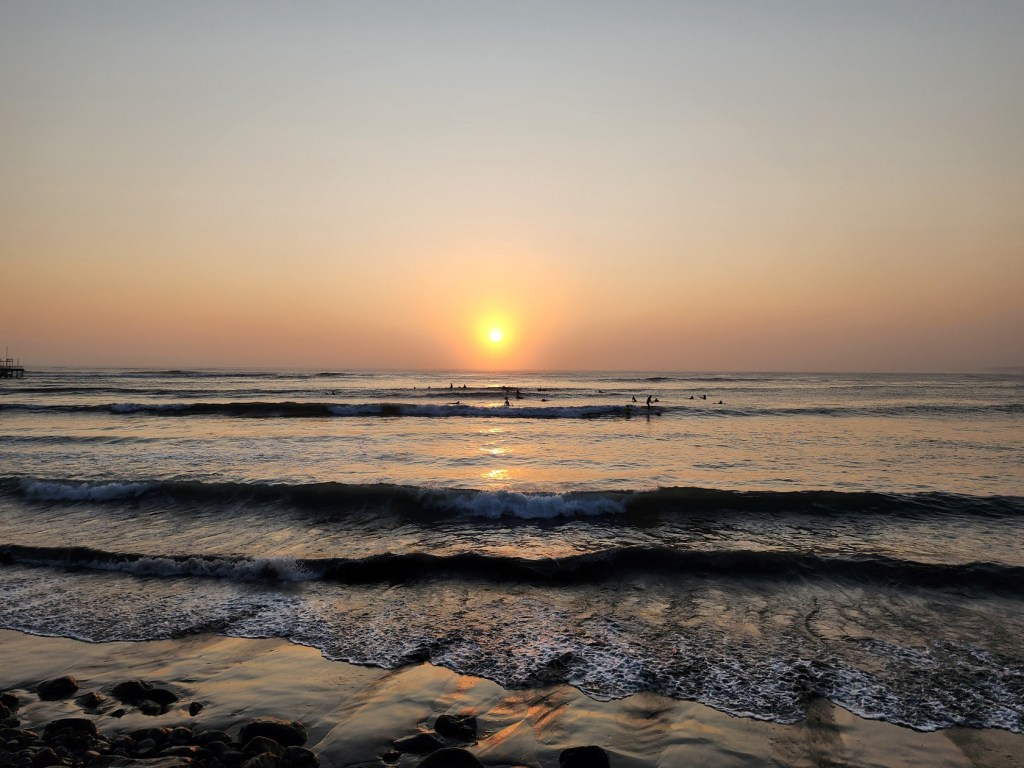
One of the things we really enjoyed in Huanchaco was the sunsets, as they were as good as any we had experienced in Greece, Costa Rica or Jamaica. Our room had a view overlooking the ocean, and we saw the surfers each night outside our window. We never got tired of the sunsets.


In more recent times, Huanchaco has gained fame for its surfing culture, as it’s considered one of the top surf destinations in Peru. It was declared a World Surfing Reserve in 2012, recognizing both its waves and its cultural heritage (particularly the caballitos de totora).


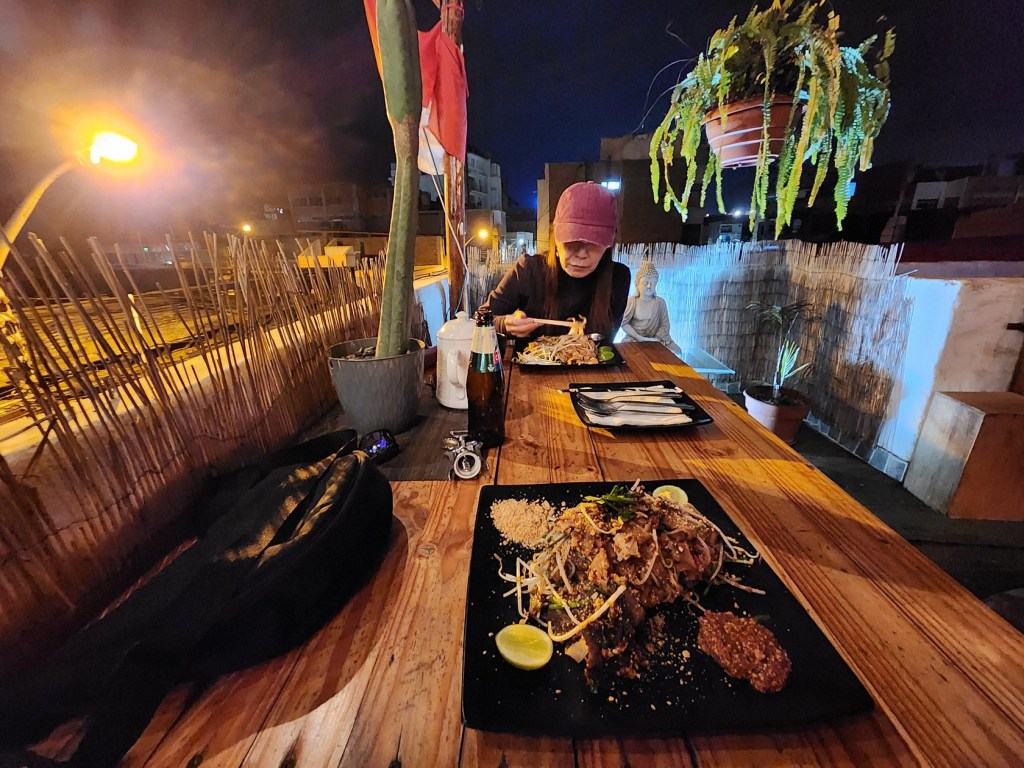
On this night, we decided to take a break from Peruvian food and try Thai. Although we had a nice night, we ended up getting food poisoning the next day with Kim feeling it worse than me. We’re not certain whether it was the Thai restaurant we visited, but we had a strong suspicion. We more or less recovered in time for the flight back to Lima and then home.


This was the end of our month in Peru. The week in the north felt a little less comfortable than the south, and things went less smoothly. Part of it was our fault, as we had grown accustomed to everything being clear and straightforward as it was in the south of the country. But we did enjoy seeing a different side of Peru, and feel this part of Peru is worth the visit.
 Humphreys Travel