


After spending a day in Dublin we headed just an hour’s north to see some new sights. We had originally planned to spend two full days in Dublin, but found out that we had one chance to reserve a spot to see Brú na Bóinne (Newgrange, Knowth, Dowth) or else we would miss it the same way we missed out on Kilmainham Gaol Museum. If you don’t book in advance on the Heritage Ireland site, you will definitely miss out!
It was an easy drive on the “M” highways to County Meath. Since our reservation was for 2 p.m., we used the extra time to visit nearby Hill of Slane, a site of great historical significance. After entering Slane, the road narrowed as we made our way up to the hill. When we arrived, the parking lot had ample spots available. From there we opened a gate and walked across an open field to visit the site.
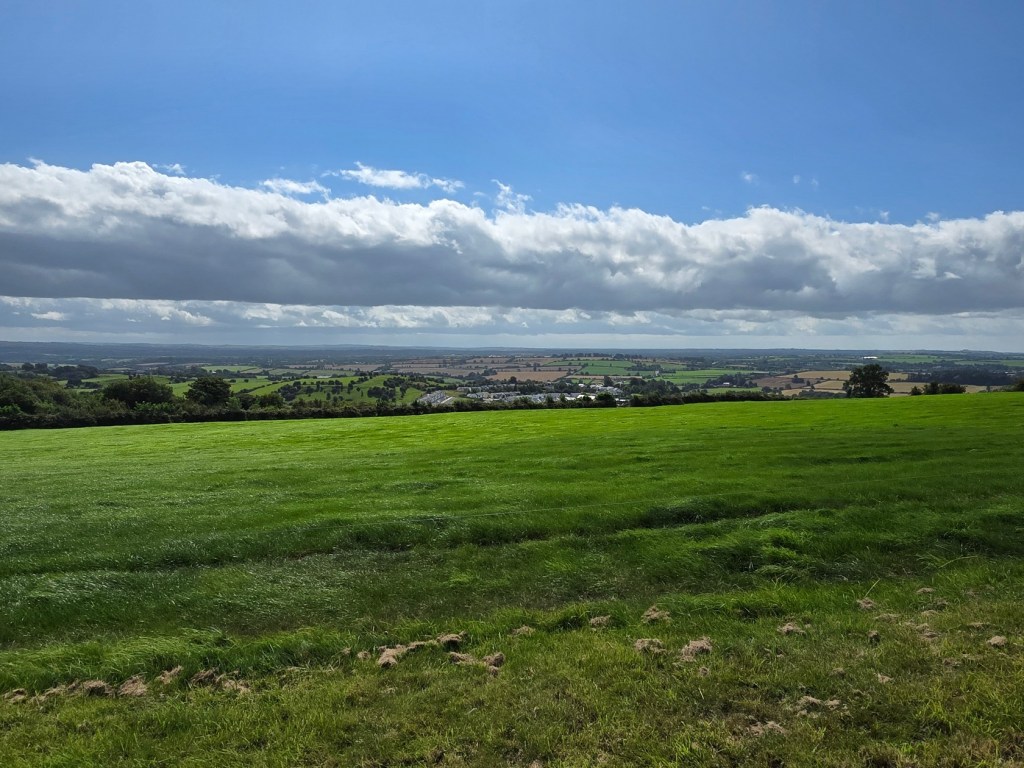
Located approximately 158 meters (518 feet) above sea level, the Hill of Slane has a commanding viewpoint over the surrounding Boyne Valley. The Hill of Slane is most famous for its association with St. Patrick and the introduction of Christianity to Ireland, along with its prehistoric and medieval remains.
As another hilltop location, some researchers believe it was linked to the ritual landscape of Brú na Bóinne, part of a wider network of sacred hills and monuments in the Boyne Valley.

The story of St. Patrick is the most well-known aspect of the site. Around 433 CE, during the reign of the High King Laoghaire (Lóegaire) at Tara, St. Patrick came to Slane. On Easter Eve, he lit the Paschal fire on the Hill of Slane before the king’s fire was lit at Tara. This act defied royal and pagan authority, as no fire was to be lit before the High King’s at Tara during Beltane or major festivals.
The king’s druids saw Patrick’s fire and warned that if it was not extinguished, it would “never be put out” in Ireland. This tense moment is often seen as a symbolic victory of Christianity over paganism, as St. Patrick ignored the pagan kings and continued to spread Christianity in Ireland.
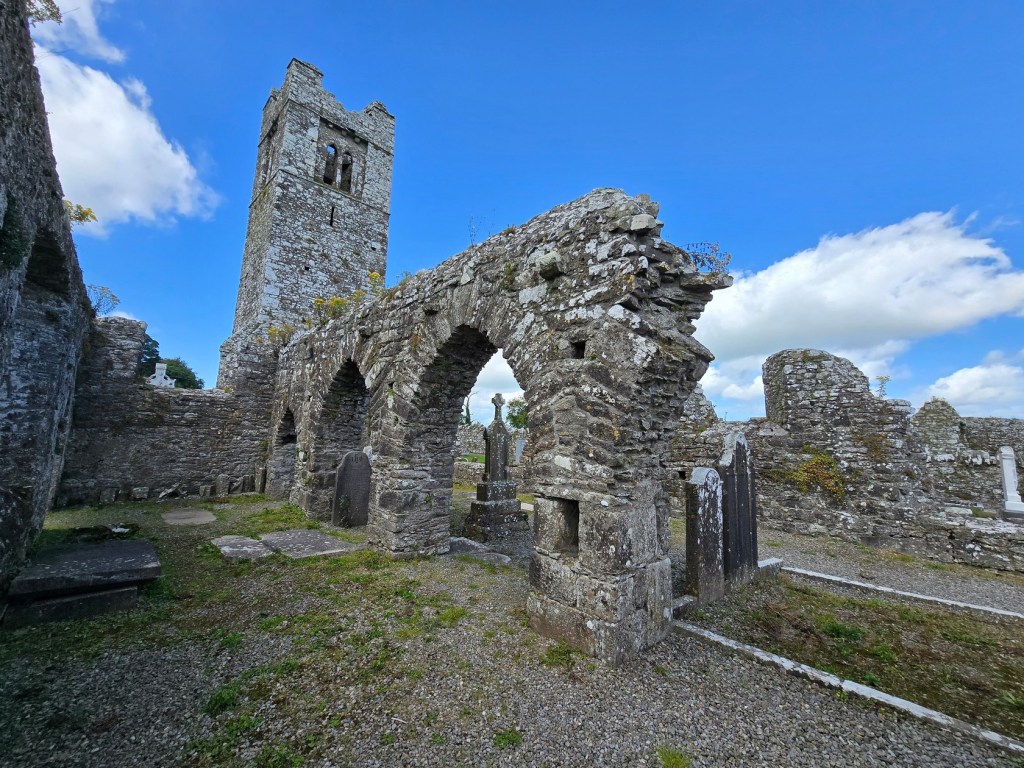
Later on, a monastery was established on the Hill of Slane around the early medieval period. The site became a religious center, associated with bishops and saints, and held importance through the early Christian and medieval periods.
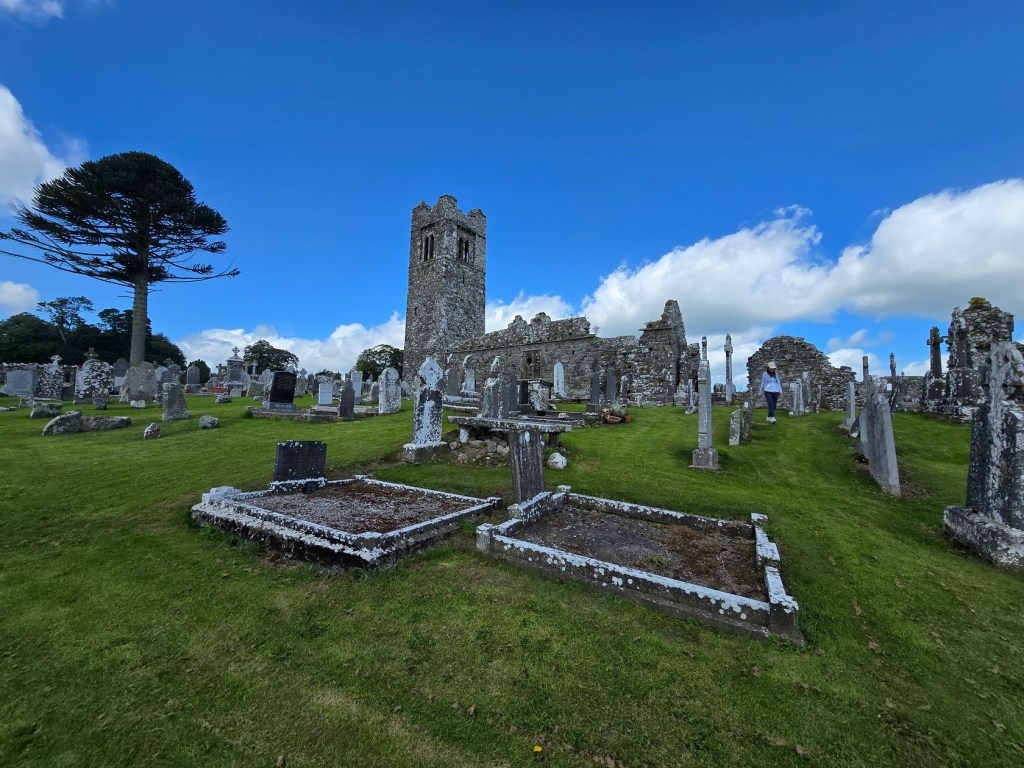
Visiting the site now, there are a few ruins to see. The main part of the site is the ruins of a church and cemetery. Nearby are 16th-century Franciscan friary ruins, along with a college ruin and a 19 m (62 ft) high tower.

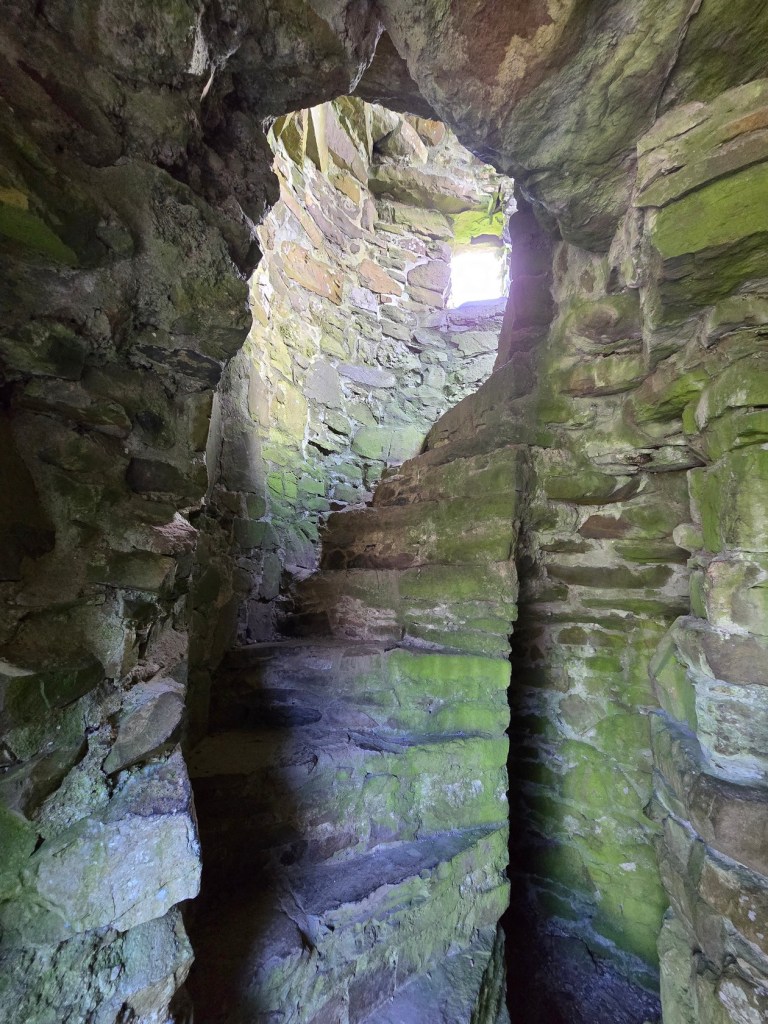
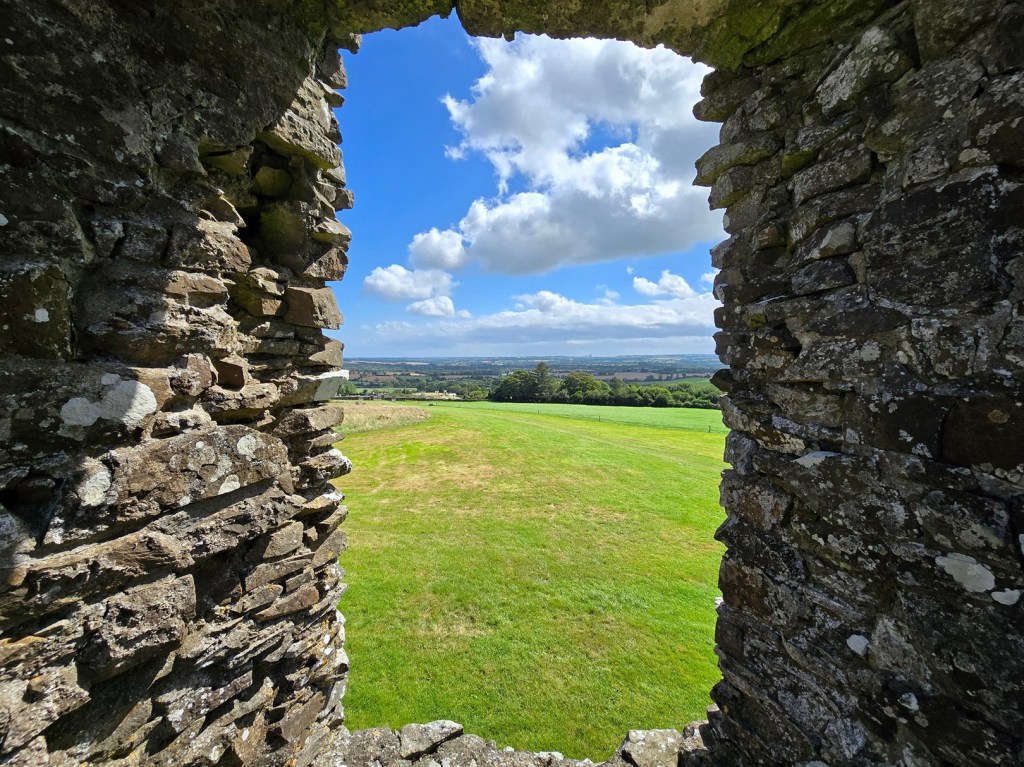
The weather was perfect and we had great views of the valley from the hill. There were only a few other people there and we were able to climb the stairs to the second level of the ruined college and tower.
Our other stop on the day was the Brú na Bóinne complex. Located near a bend of the River Boyne, Brú na Bóinne is a Neolithic site that is around 5000 years old. This makes it older than Stonehenge and the Great Pyramids of Giza.
The complex contains over 90 Neolithic monuments, but the most famous are the three passage tombs at Newgrange, Knowth, and Dowth. Together, they represent some of the most sophisticated examples of prehistoric engineering and art in Europe.

We used our Heritage Card again instead of paying the 18 euro entrance fee. We had only been in Ireland two days and we were more than half way to paying for the cost of the 40 euro Heritage card. For anyone hitting many of the major sites in Ireland over a longer visit, it is well worth the cost.
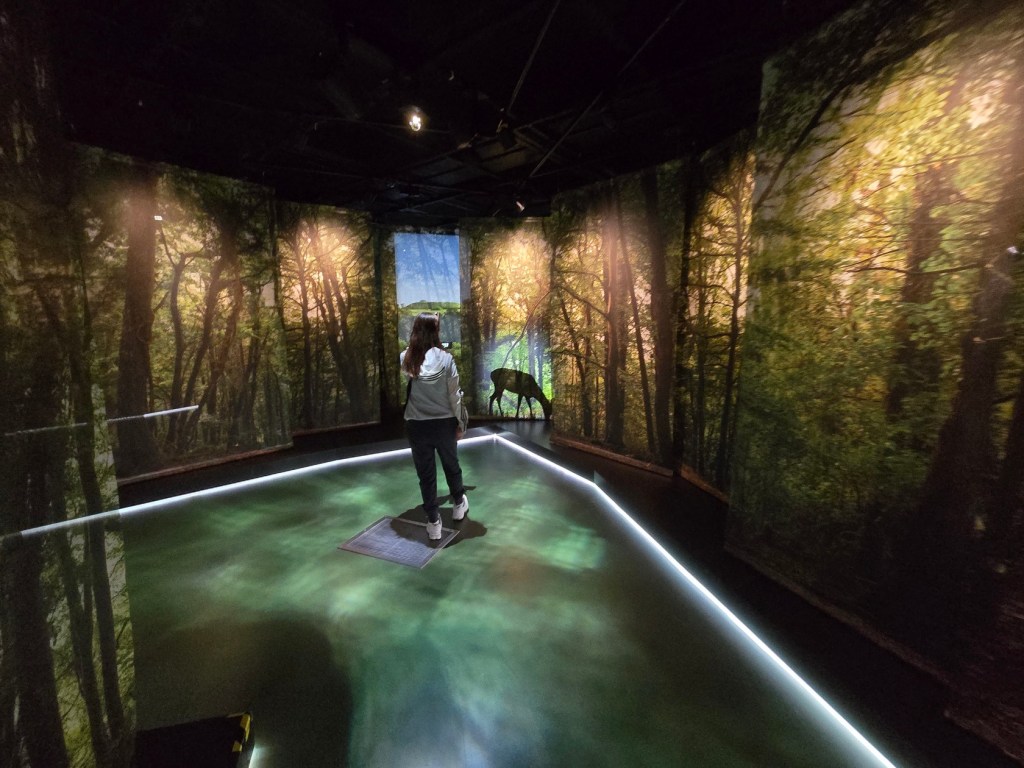
The visitor centre was of a decent size, and has a number of interactive exhibits. We only spent about a half hour looking around but were impressed by it.

We still had some time to kill before our tour time so we had a quick bite in the cafeteria. It was our first chance to try Irish soda bread but it wouldn’t be our last!


The Brú na Bóinne site runs an efficient operation. About 30 minutes from the timeslot, visitors walk through the back of the visitor centre out to a path that crosses the River Boyne. Eventually the scenic walk leads to a bus stop where the tour buses arrive. It was a short ride to the first stop: Knowth.

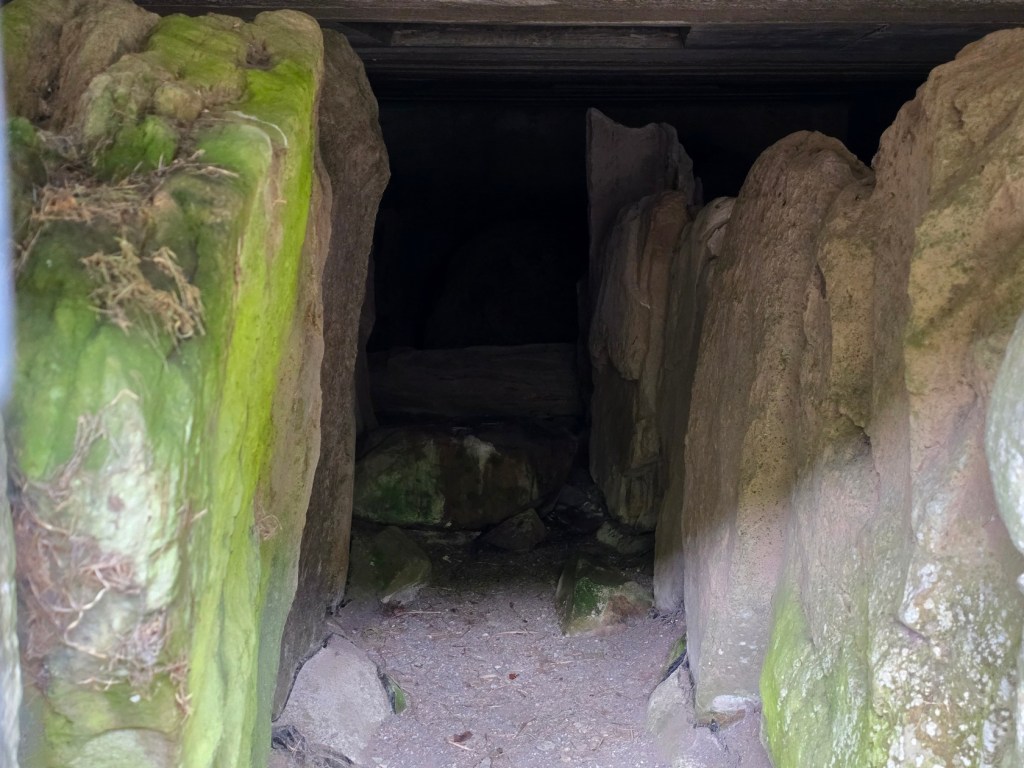
Knowth is slightly larger than Newgrange at about 80 m across and 12 m high. It contains two passage tombs, one facing east and one facing west. The main tomb is surrounded by 18 smaller satellite tombs. Unfortunately you cannot enter the passage at Knowth, though you can walk on top of it.


Knowth has the largest collection of megalithic art in Western Europe, with over 300 decorated stones. The motifs include spirals, serpentine lines, concentric circles, and more abstract patterns. As we walked around the main tomb we could easily make out the different designs on the boulders that made up the base of the tomb.
Archaeological finds show evidence of long-term use, including habitation in later periods (Bronze Age and Early Medieval). These discoveries suggest that it wasn’t just a tomb but also a focus of continuous ritual and settlement activity.


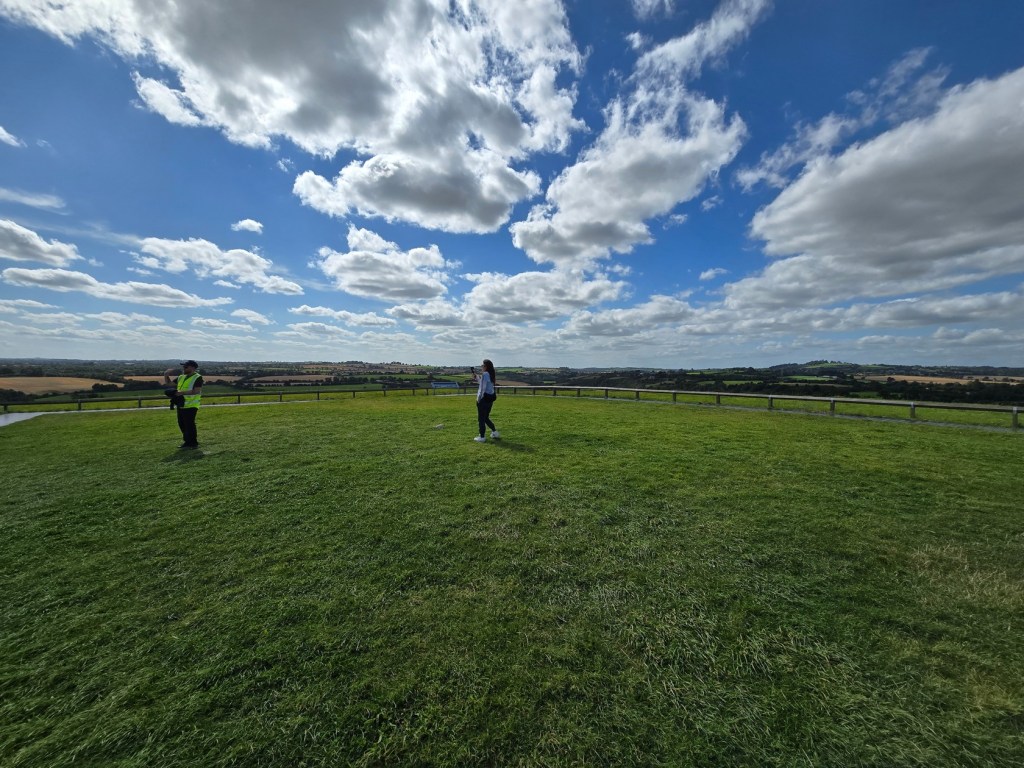
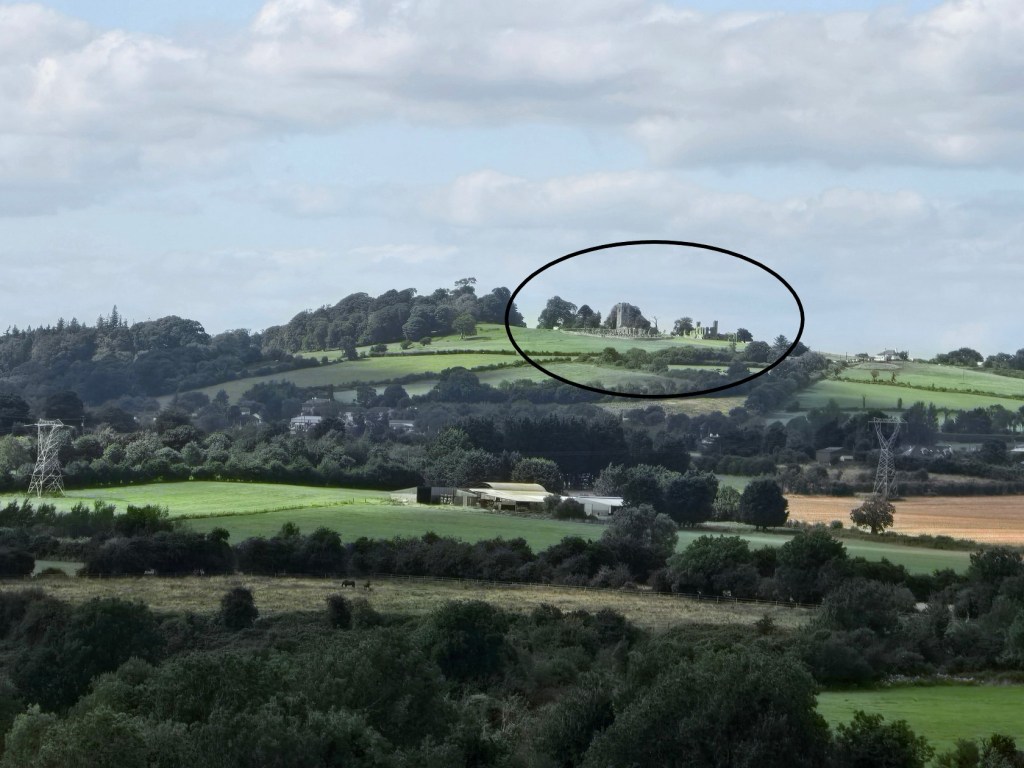
The guide was very knowledgeable in explaining the history and significance of the site. This was a trend that would repeat with many of the OPW sites. They generally had excellent guides leading the tours.


After a walk around and on top of Knowth, we headed back to the bus. The bus then took us to the other part of the tour: Newgrange. We had a different guide for this one, but she was just as good as the previous one.
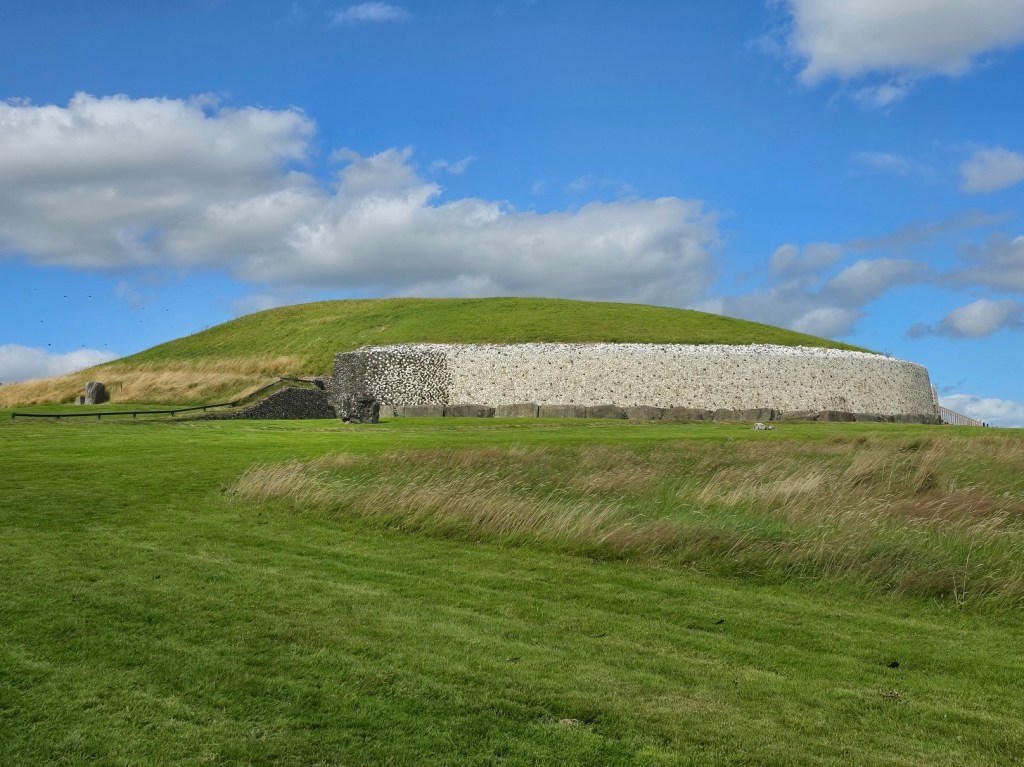
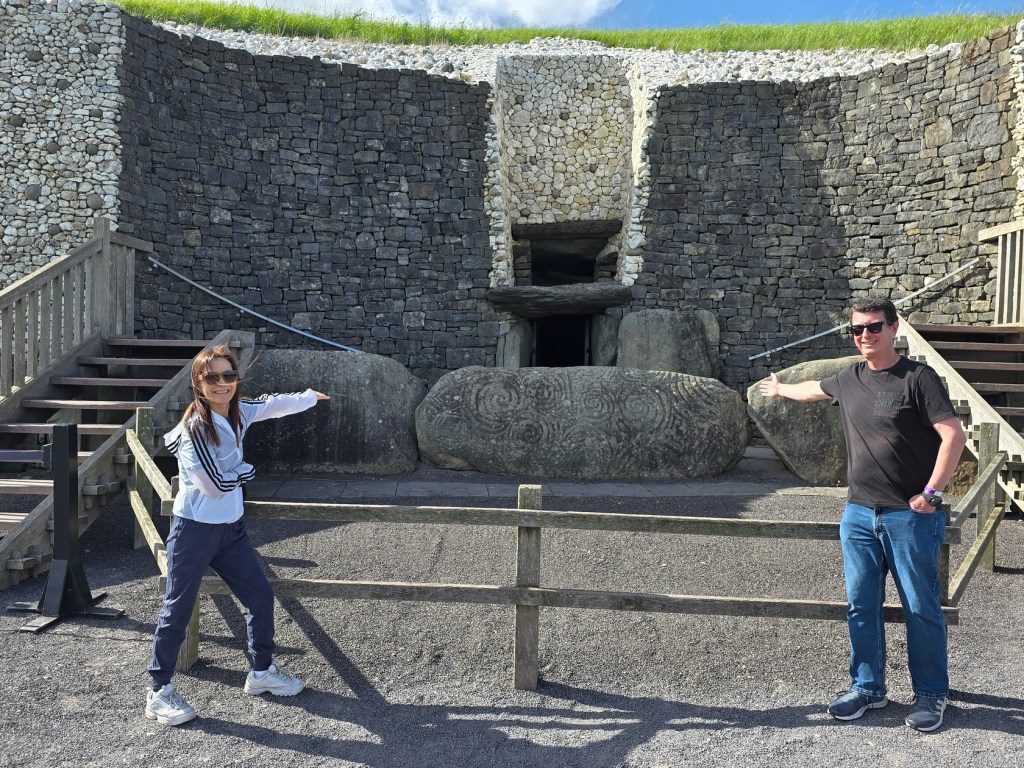
Encircled by 97 kerbstones, many decorated with megalithic art (spirals, lozenges, chevrons), the site is substantial in size. It is about 85 m (279 ft) in diameter and 15 m (49 ft) high. There are two tomb passages—one facing southwest, the other west. Newgrange contains a 19 m (62 ft) passage leading to a cruciform (cross-shaped) chamber with a roof that is still watertight after 5,000 years.


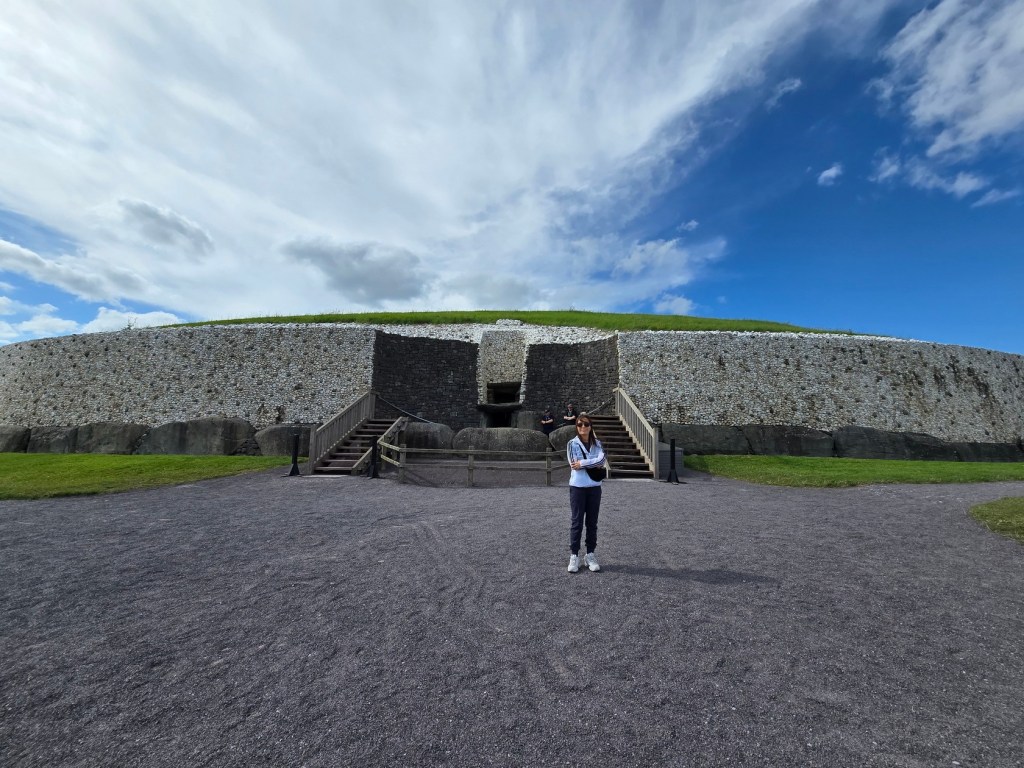
Unfortunately we weren’t allowed to take photos inside of Newgrange, but the accompanying video at the end of his post does have some views of the interior. The inside of Newgrange was spectacular, and still in excellent condition.
On the winter solstice (December 21st), sunrise light enters through a “roof box” above the entrance and illuminates the inner chamber. This alignment shows a deep understanding of astronomy and seasonal cycles. Newgrange’s solstice event is world-famous—entry to the chamber on Dec. 21 is by lottery due to high demand!
Our guide turned off all the lights and we got a sample of how a shaft of light would come in through the entrance. It didn’t illuminate the back of the passage because it was the wrong time of year, but it was a impressive sight nonetheless.

We still had enough time to drive over to Dowth, the last of the three main sites at Brú na Bóinne. This one is free for good reason as it’s located on farmland and it’s condition is far poorer than the other two sites. Much less restored than Newgrange or Knowth, Dowth gives a more “raw” impression of the mound. Unfortunately, 19th-century excavations damaged parts of the monument and collapsed part of the roof.
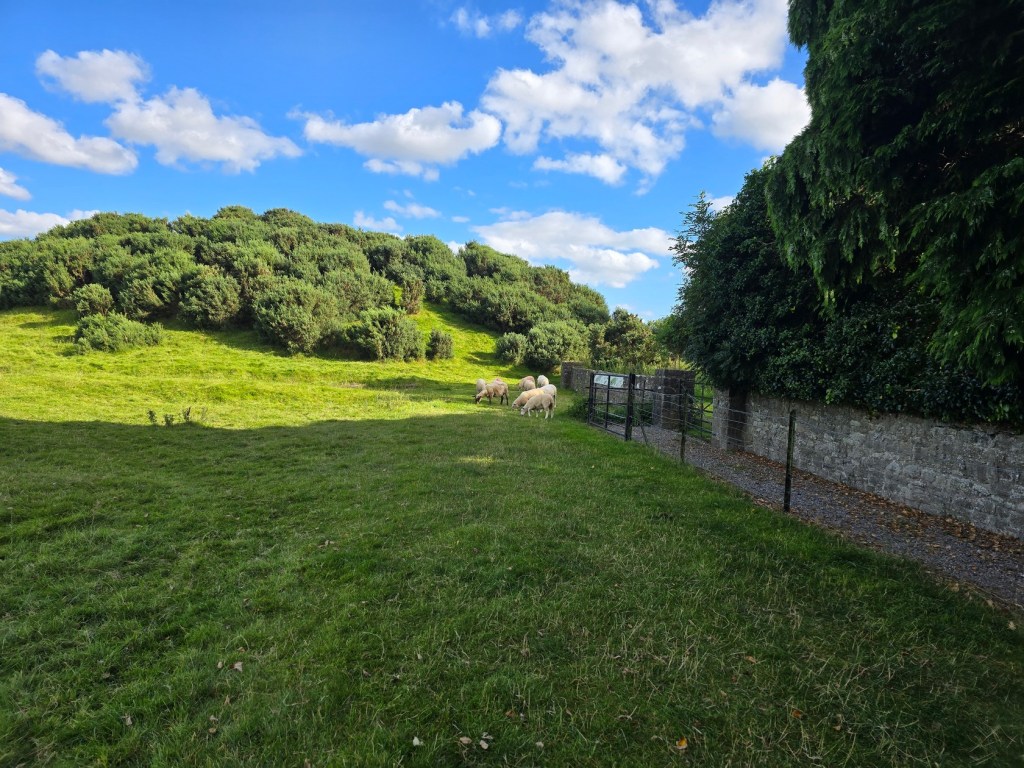
Dowth comes from the Gaelic Dubhadh, meaning “darkening” or “eclipse,” and reflects mythological associations with the site. Although there wasn’t much darkness on this day, there wasn’t much to see either.
Aside from the entrance at the back and a few of the building stones, you would hardly know it was a 5000 year old Neolithic site. One the plus side, we walked around the site and saw only one other person who briefly passed by. We had the place all to ourselves. Regardless, we ended up staying there just long enough to circle around Dowth.


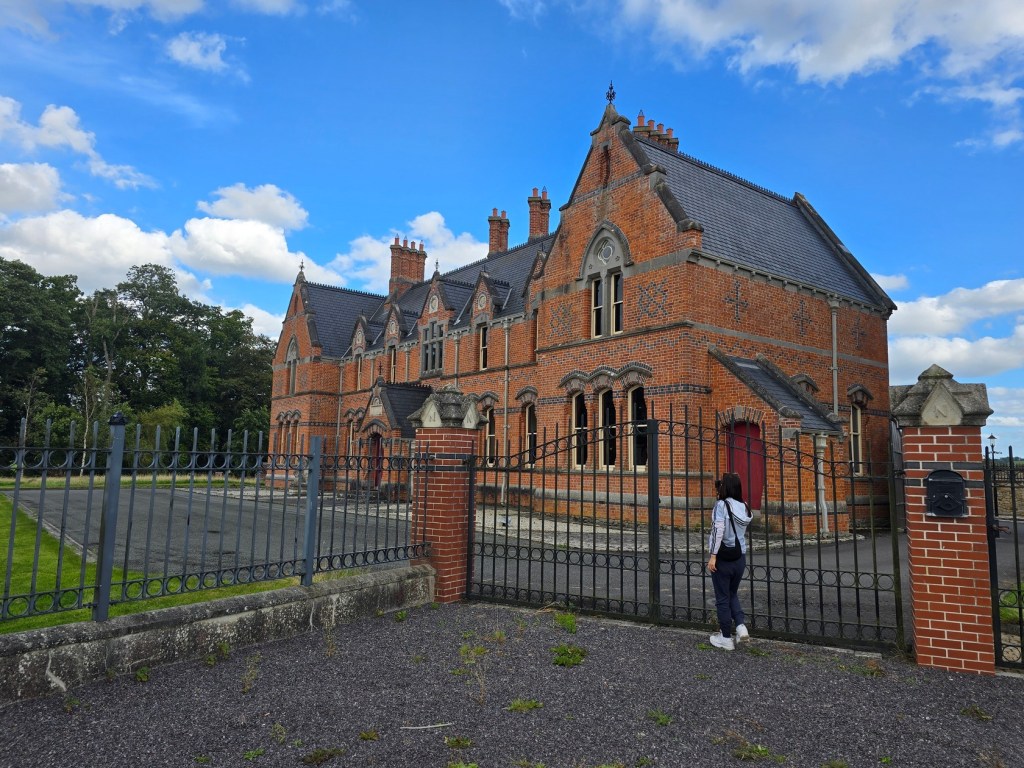
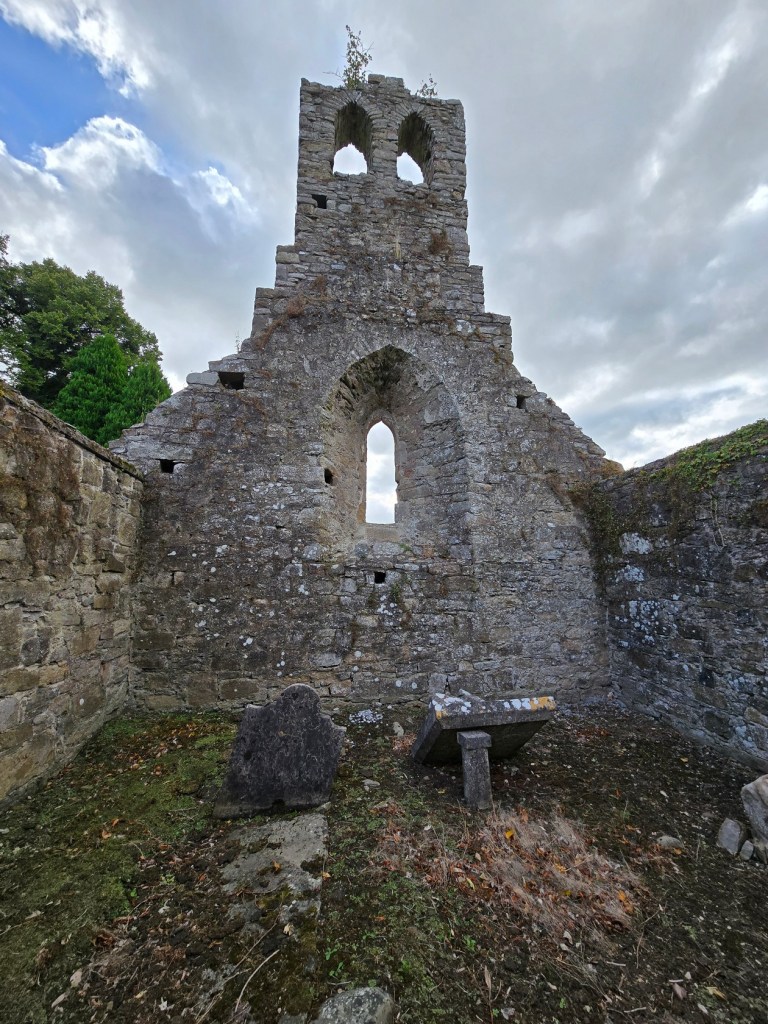
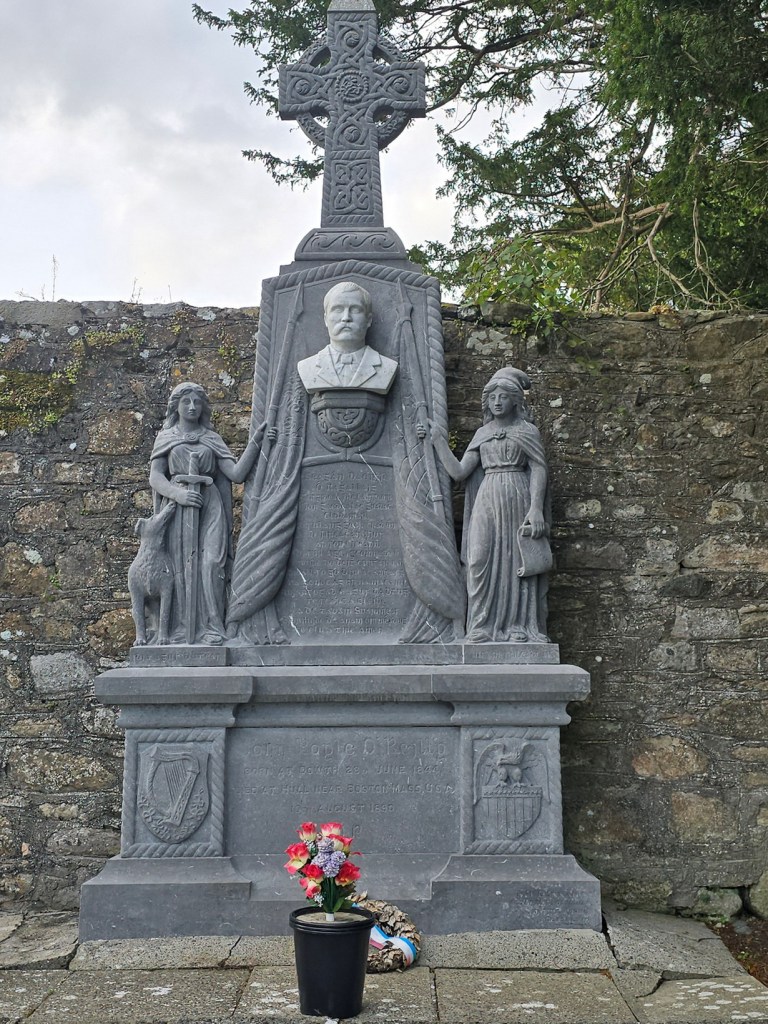
As we were leaving Dowth, we spotted an interesting building and ruin just across the field. Rather than navigating through the sheep manure, we we drove up to the entrance to check it out. The building (The Netterville Institute) was closed to the public, but the ruins of Dowth Abbey were free to visit.


The perfect weather combined with wide open spaces and some incredible sights made for a wonderful day. Even though the reservation system for Brú na Bóinne can be a bit of a hassle, we were glad it is being used. The timed entry limited the number of people at the site, making the site more enjoyable and giving us no crowds to deal with. The whole site was a memorable experience, and when combined with the Hill of Slane, made for a excellent introduction to Ireland’s early history.
In the next post we’ll be driving southwest where we checked out a cave, and ran into an unexpected car show at a castle ruin!
 Humphreys Travel