

After spending our first three days around Dublin, we headed southwest. Along the way we dropped into the town of Kildare to see the ruin of Grey Abbey. We easily parked our car in a public parking space near the entrance to a newer church located in the centre of Kildare town. It was a short walk to the abbey.

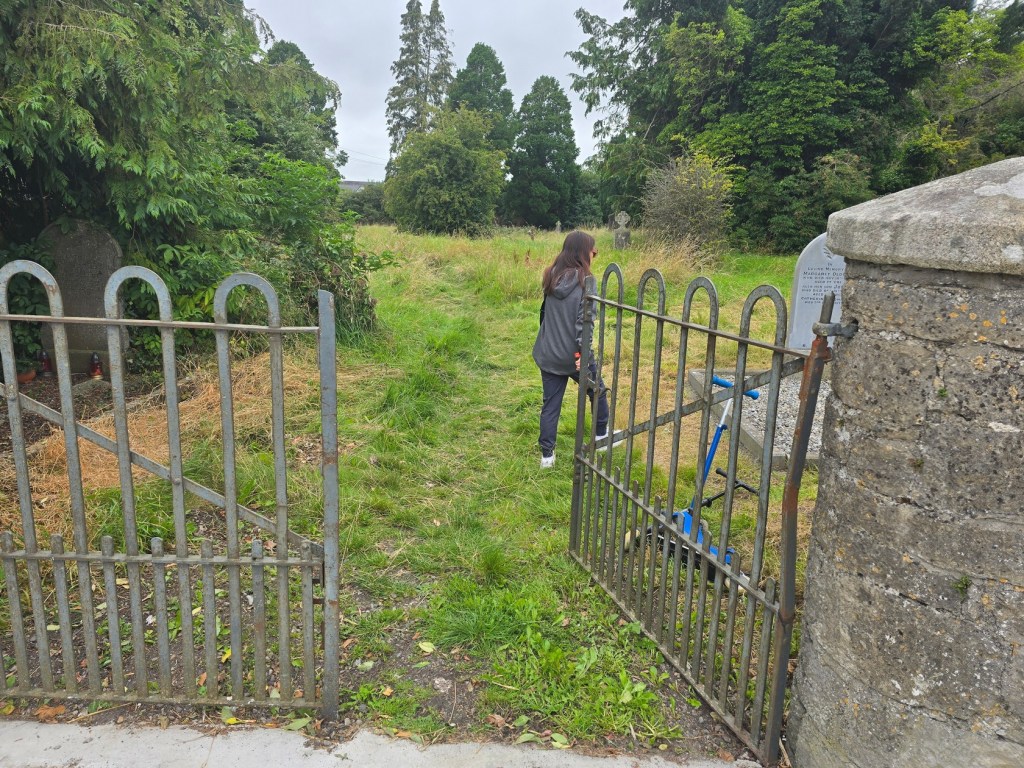
Grey abbey was established around 1260 and the name simply refers to the colour of the habit that the Franciscan monks wore. At least four Earls of Kildare are said to be buried there. There are a lot of old graves in the site, a number of which had Celtic crosses on them.
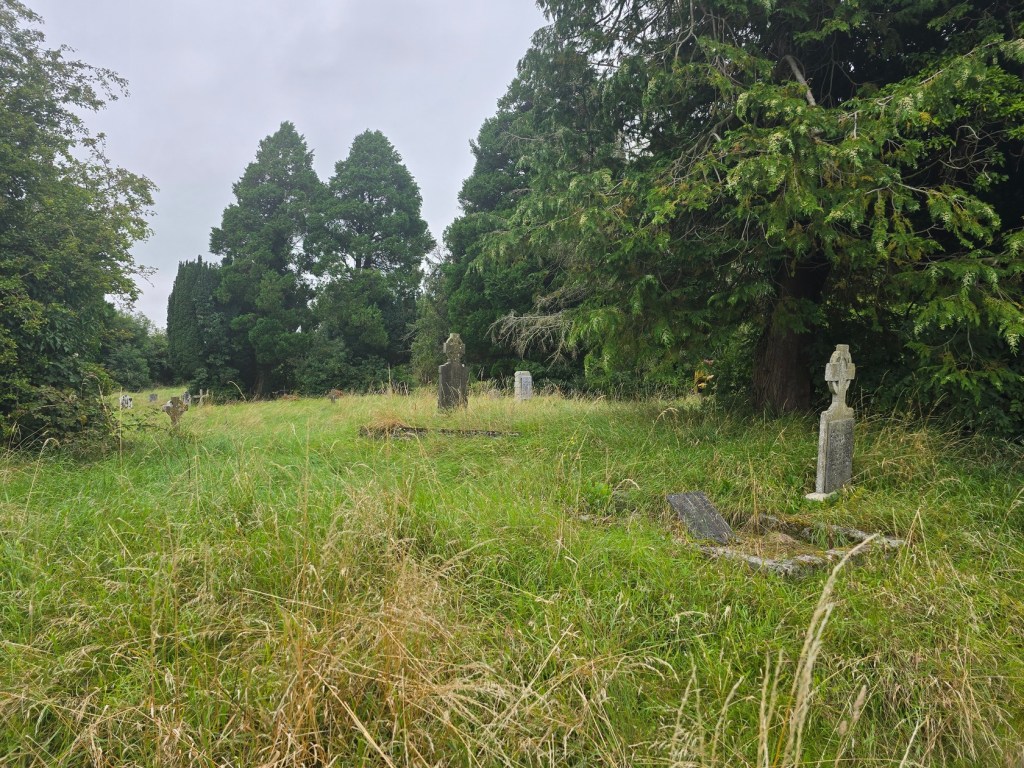


The structure is unsafe and no longer accessible, but its walls offer a glimpse into the scale and grandeur of the original abbey. It didn’t take long to check it out and then head back to the road.

With more driving ahead, we didn’t have much time in Kildare so we missed out on the White Abbey (founded by the same group of Franciscans) and the ruins of Kildare castle. We quickly discovered there are ruins everywhere in Ireland, so it’s impossible to try to see them all. Just more for next time! But the town of Kildare itself looked quite nice and had a very well-maintained downtown. Parking was free on the weekend, which was nice.
We drove onward towards Kilkenny, where our next stop was Dunmore Cave.
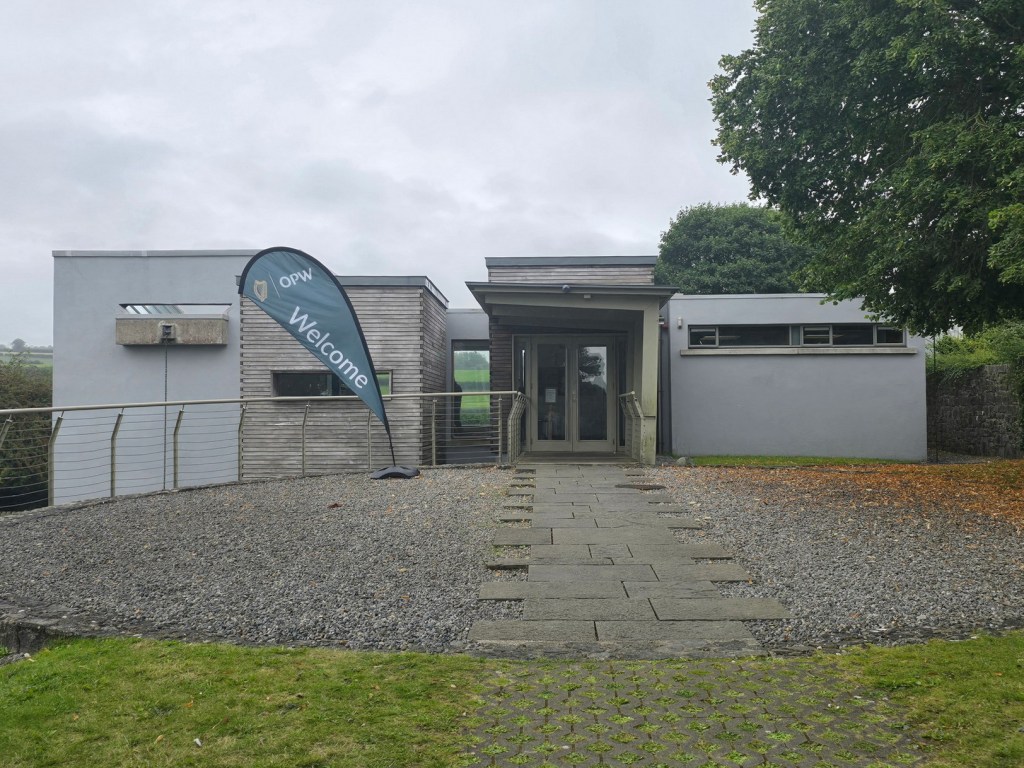
After parking the car we went to the small visitors’ centre. We used our heritage pass so it was free admission for us. It cost 5 euros per adult for general admission. Access to the caves is by guided tour only. Tours are limited in number each day and have a maximum capacity of 50 people per tour.
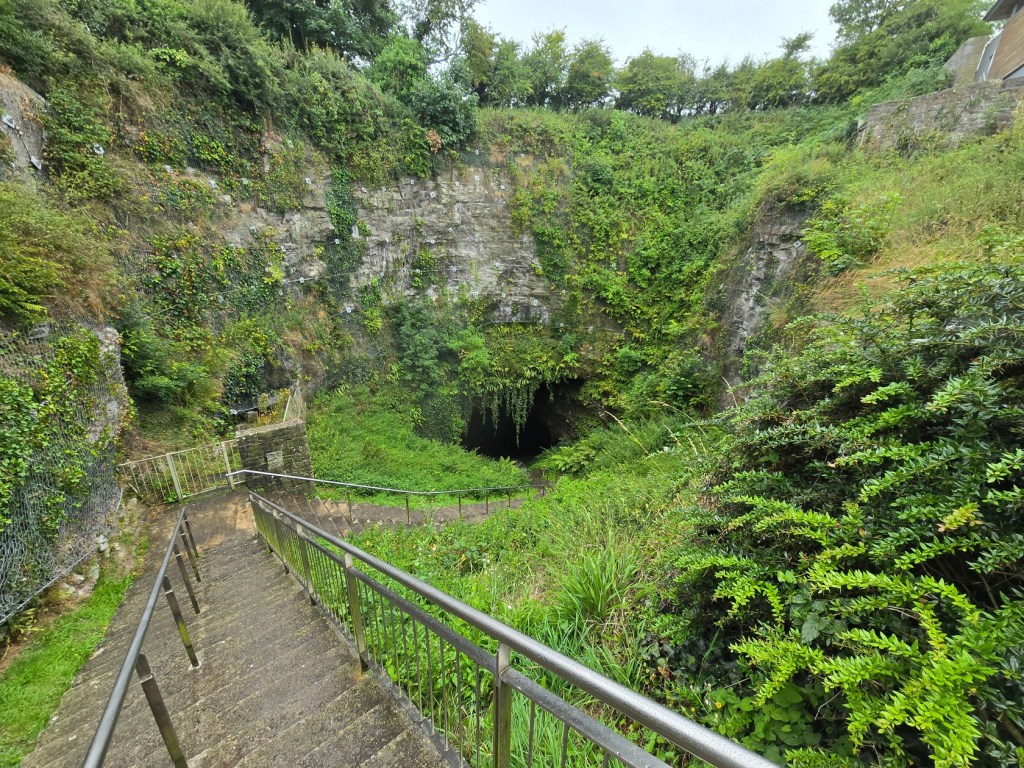
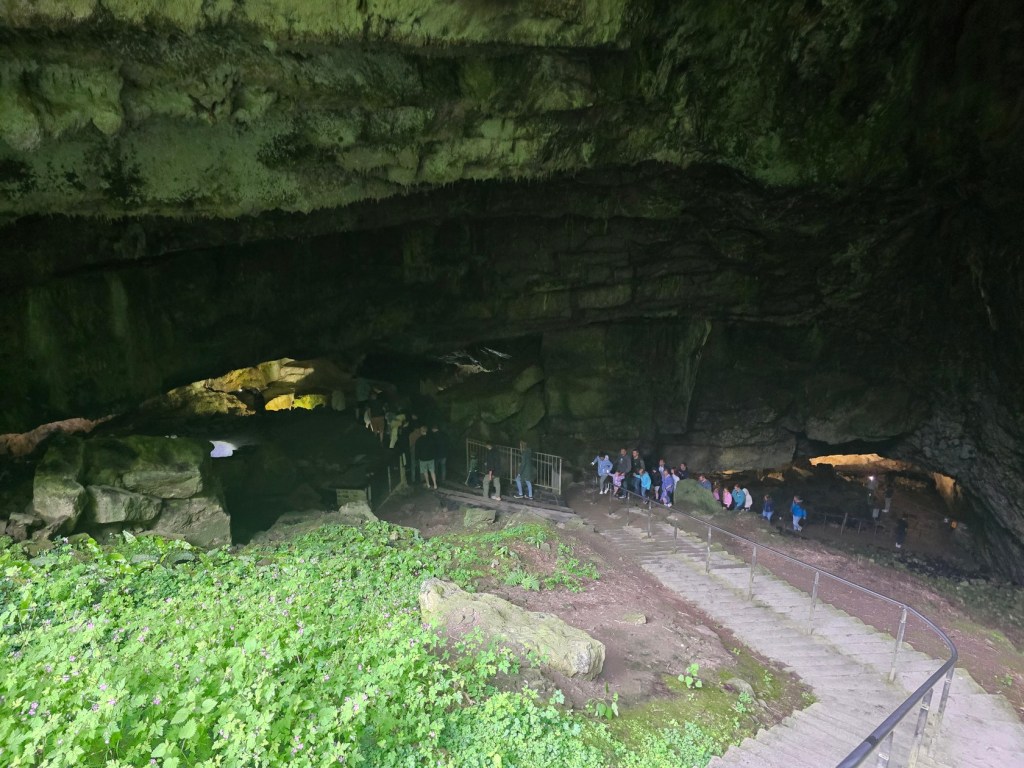
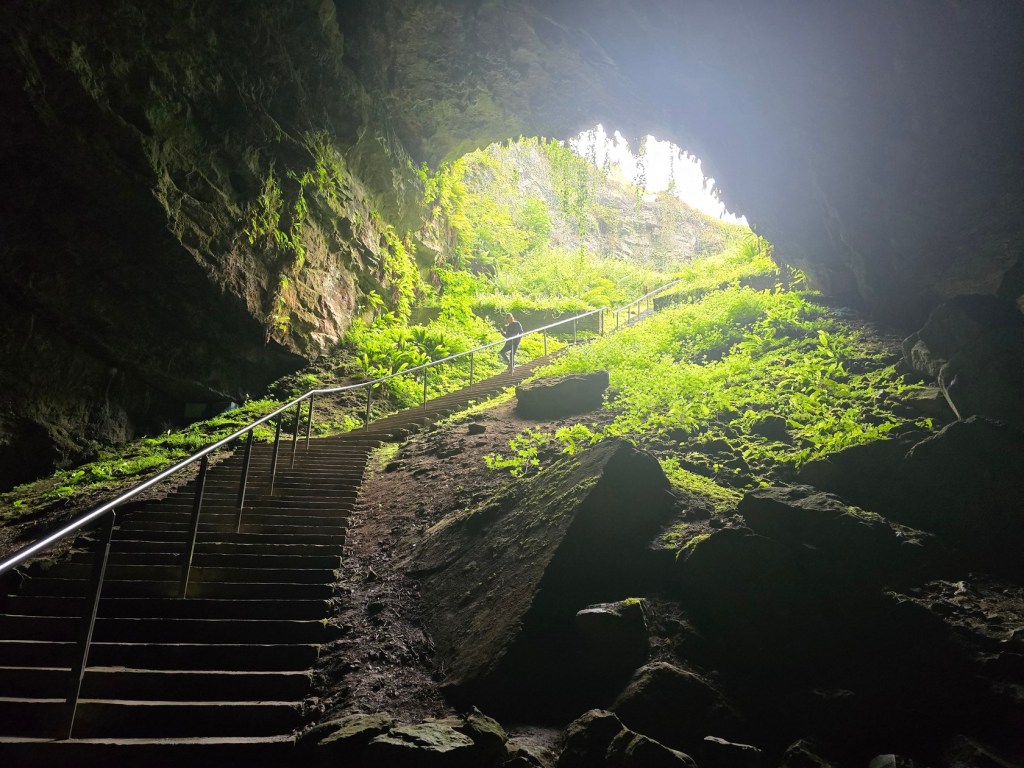
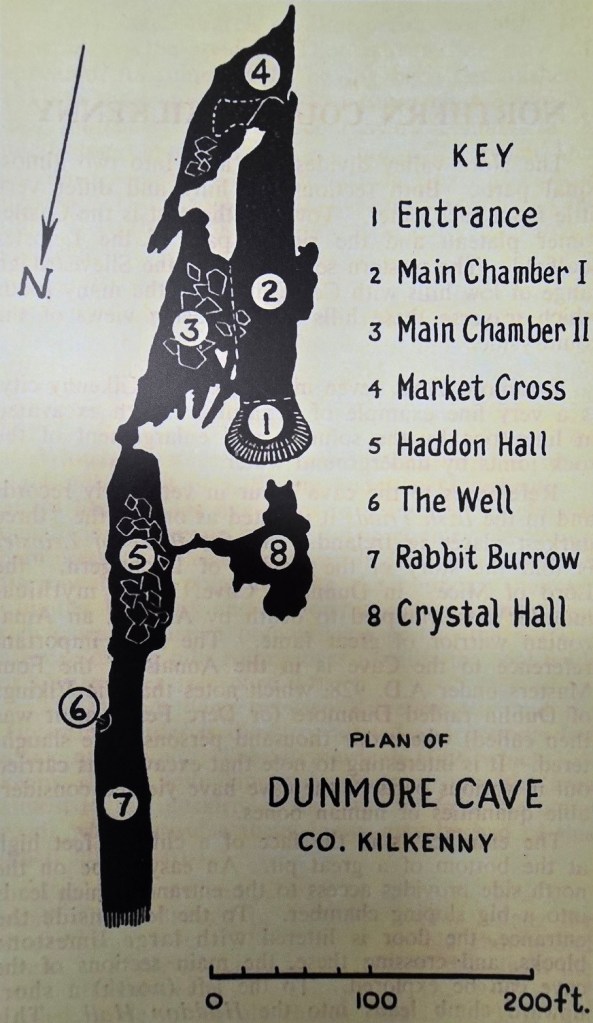
The tour of the cave took about 45 minutes. Although it’s not a large cave, it had some interesting chambers and was worth the visit. Our guide was very knowledgeable and explained the history and geology of the caves in detail.

Dunmore Cave is a series of limestone chambers formed over millions of years. It contains some of the most impressive calcite formations found in any Irish underground structure.
The cave has been known for many centuries and was first mentioned in the ninth-century Triads of Ireland, where it is referred to as one of the ‘darkest places in Ireland’. The most gruesome reference, however, comes from the Annals of the Four Masters, which tells how the Viking leader Guthfrith of Ivar massacred a thousand people there in AD 928. Archaeological investigation has not reliably confirmed that such a massacre took place but finds within the cave – including human remains – do indicate Viking activity.

Archaeological evidence is unable to reliably confirm the events described in the Annals. However, large quantities of human bones have been recovered from the cave interior during an excavation in 1869. In 1973, archaeologists found further remains of 19 adults and 25 children, in addition to an associated hoard of silver coins dated to around AD 930.

Our tour group included families with kids. The kids sometimes made noises as kids tend to do. However, our tour guide was having none of it and hushed the young children from time to time! Although he was quick to shush, he also asked specific questions for the kids to keep up their interest.


There was one moment the tour guide asked all of us to turn off our phones and cameras just to feel how dark the cave can be without artificial lights. It truly felt like one of the darkest places in Ireland.


Our last stop on the day was Duckett’s Grove near Carlow County. As we entered the site there was a long line of vehicles that passed us by. We had no idea why so many vehicles driving in and out at first but soon found out a vintage car show was being held in the manor property!

You can see the ruined estate to the right and the restored section on the left
It turns out we arrived on the weekend that Duckett’s Grove was hosting the Carlow Vintage and Classic Motor Club Annual Show. Once we parked our car in a free parking lot prepared for the car show, we walked toward the showplace. Although we arrived later in the afternoon, there were a lot of people there ranging from children to senior citizens. It looked like a very popular family event. Since we were a little hungry after driving around and visiting two sites in the morning, we got some sausages and chips.


We wandered around and took in the various vintage and modern cars. At this point things were starting to wind down but there was still a number of cars going through the judging line. After enjoying the show for an hour or so, we turned out attention to our original destination and headed over to the entrance to Duckett’s Grove.
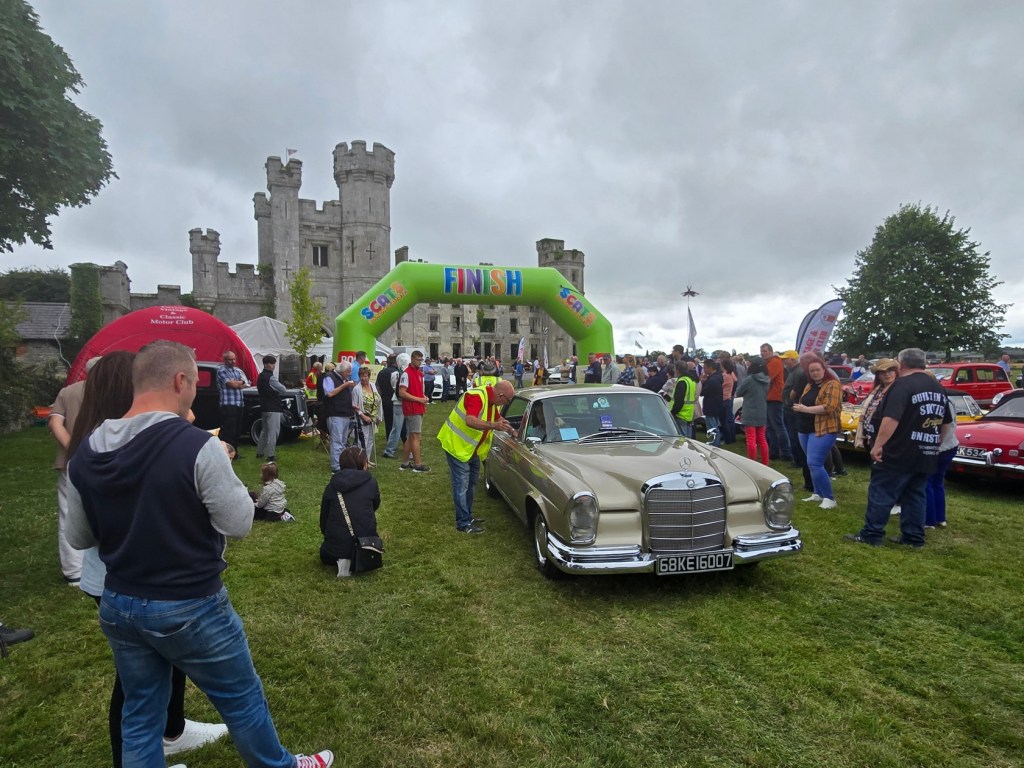
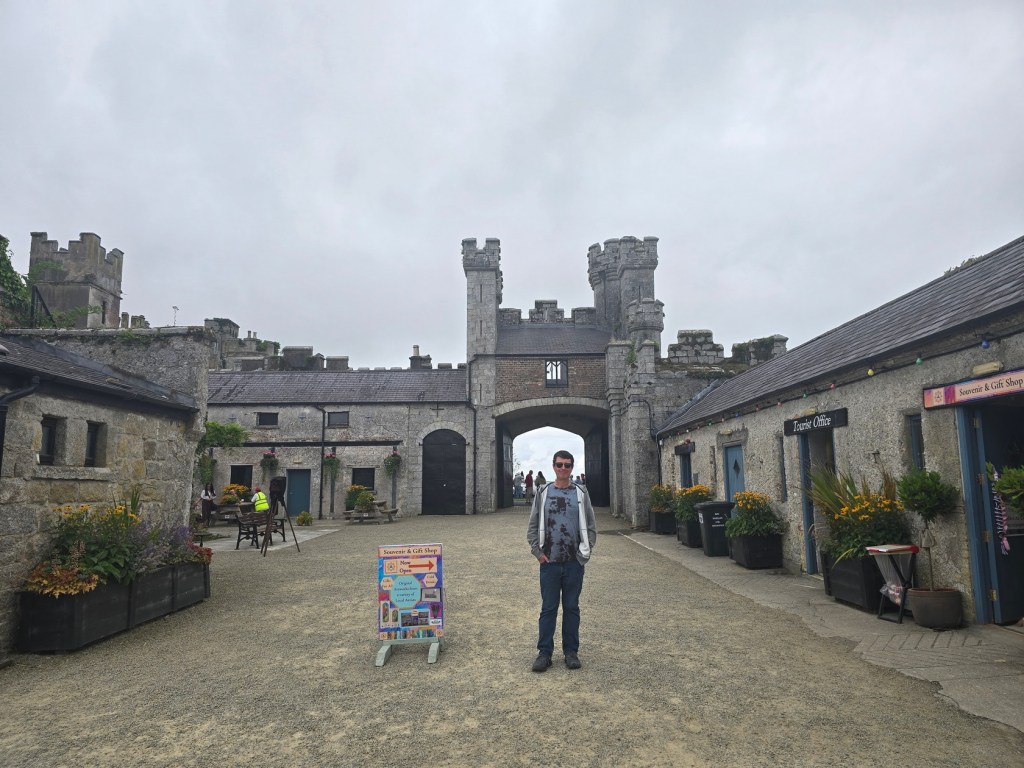
As the original entrance to the estate is in ruins, we actually passed through an arch to the left of the estate. This section was restored and renovated, quite a contrast with the ruins next door.

Duckett’s Grove was built around 1745 by the wealthy Duckett family who originated from England. The estate was originally over 20,000 acres of land. The most notable member of the family, William Duckett, was a landlord and a significant figure in the local community.
However, like many Anglo-Irish families, the Ducketts’ fortunes declined in the early 20th century, leading to their eventual departure and the estate’s decline.

The building started as a standard two storey Georgian county home. In the mid 1820’s John Dawson Duckett employed English architect Thomas Cobden to redesign it into the gothic revival style ‘castle’ that stands in ruins today.
In the early 1920’s Duckett’s Grove was temporarily used as a base for the IRA (Irish Republican Army). In 1933 it was heavily damaged by a fire and left abandoned for many decades.
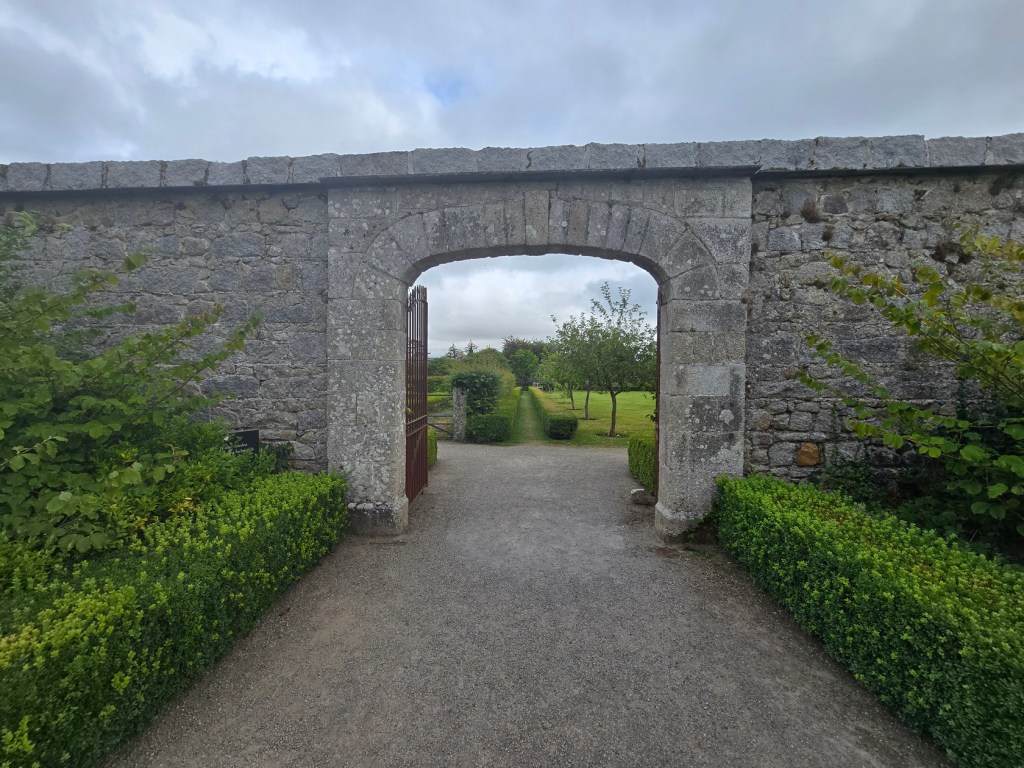
We walked through the manor property and eventually found a door connected to the restored gardens. We didn’t expect to see the beautiful gardens behind the property. The view of the manor with trees and flowers in the gardens were so picturesque.

In 2005 the Carlow County Council acquired Duckett’s Grove and restored the two walled gardens at the rear of the property. It has been open to the public since 2011 and some of the stables in the rear courtyard have been restored.


When we were leaving the gardens, we found another door leading to a walking trail. We walked along the trail and could see the magnificent view of the manor again. It was so photogenic. At the end of the trail, we arrived at the property with more vintage old cars in the foreground of the manor.
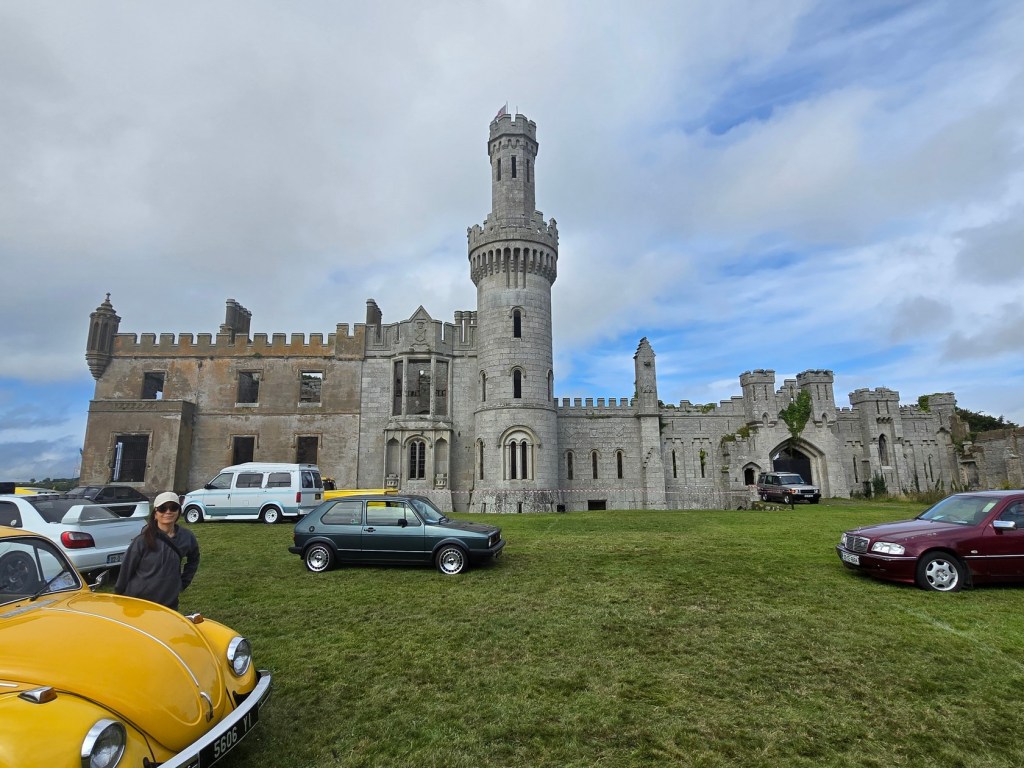
You can’t go inside the original estate as most of it is overground ruins closed to the public. However, it is frequented by paranormal investigation groups who do actually go inside as they have specialised liability insurance. There are a number of ghost stories associated with Duckett’s Grove including a curse, a banshee and the ghost of William Duckett himself!


It turned out to be a fine day for us. The weather was wonderful, and we could manage to visit three unique places in the same day. After spending the night in Carlow, our next destination was the south coast of Ireland.
 Humphreys Travel