
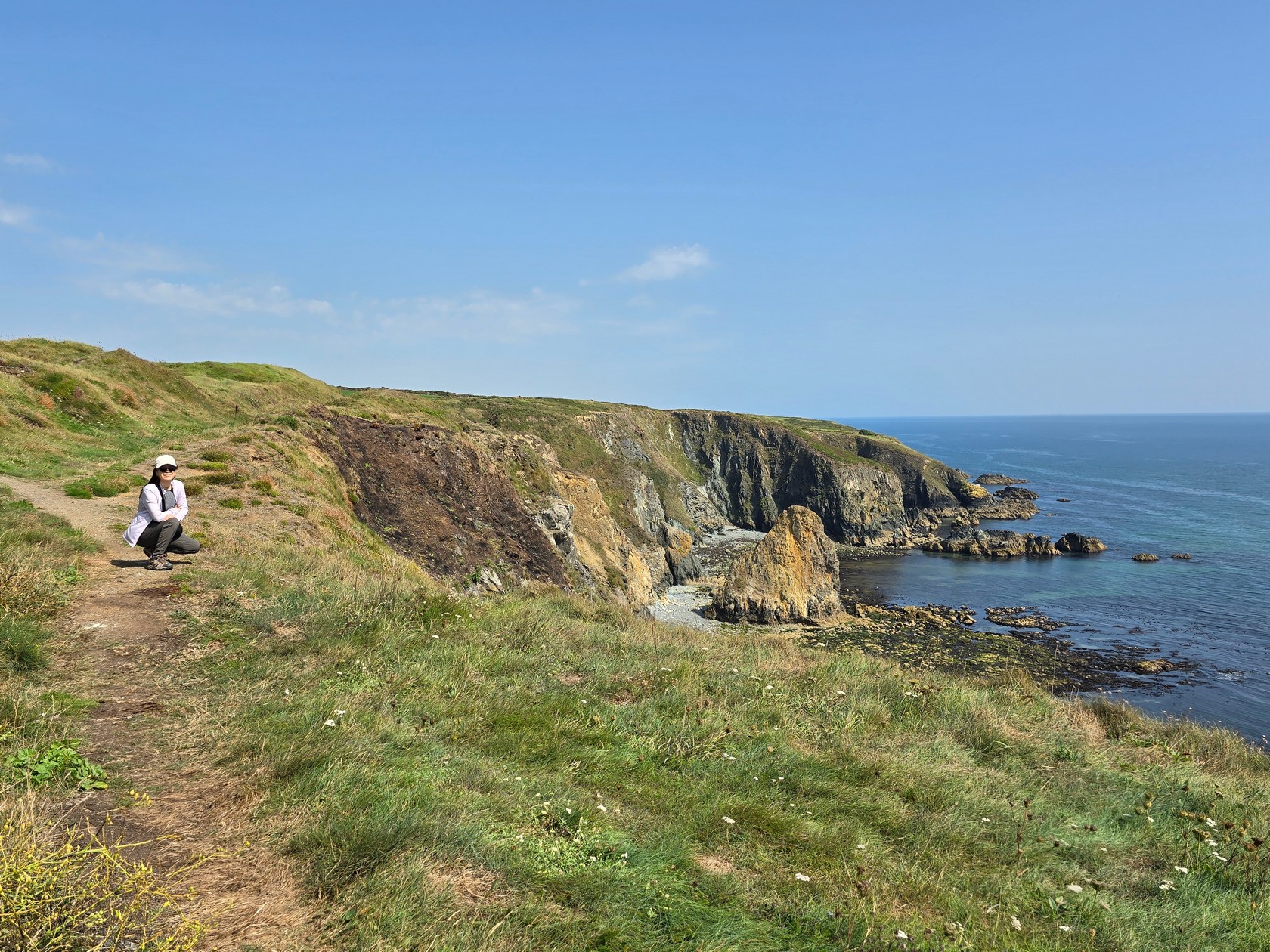

We continued to drive westward along the south coast of Ireland as we took in more of County Waterford along the way. We were now fully in the UNESCO Copper Coast Geopark, a notable feature of this part of the south coast. Copper was mined extensively in the area during the 19th century, giving the geopark its name.

To the north lie the Comeragh Mountains, which reach a height of 750 m. The coast is spectacular with numerous sandy and rocky coves displaying sea stacks, arches and blow holes. It comprises some 25 kilometres of spectacular coastline consisting of scalloped beaches and coves buttressed and enclosed by rocky headlands.
The R675 is a nice coastal road that goes through some of the most interesting parts of the Copper Coast region. We used this route to take us along our way towards County Cork.

On this day we visited four sites located between Waterford and Cork:
- Tankardstown Copper Mine
- Bunmahon Geological Park
- Ballyvoyle Tunnel
- Mahon Falls
1. Tankardstown Copper Mine
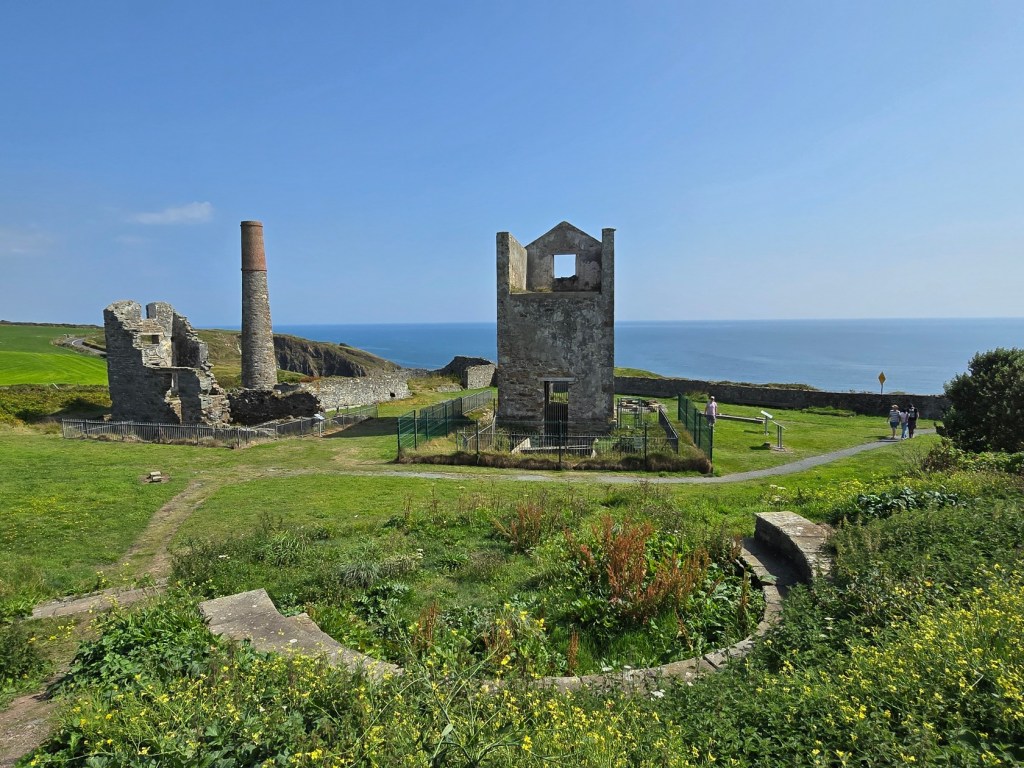
Our first stop on the day was the ruins of the Tankardstown Copper Mine, an easy stop along the way. The Engine House and buildings at Tankardstown are publicly accessible and with a car park close by and interpretation signage on site.


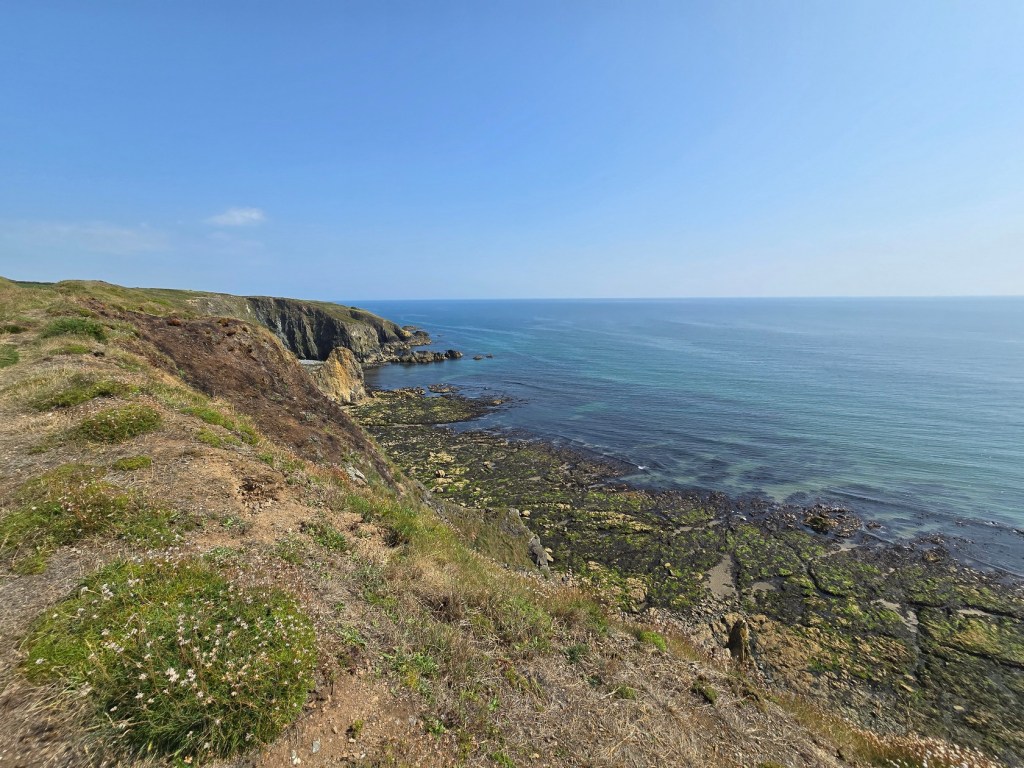
2. Bunmahon Geological Park
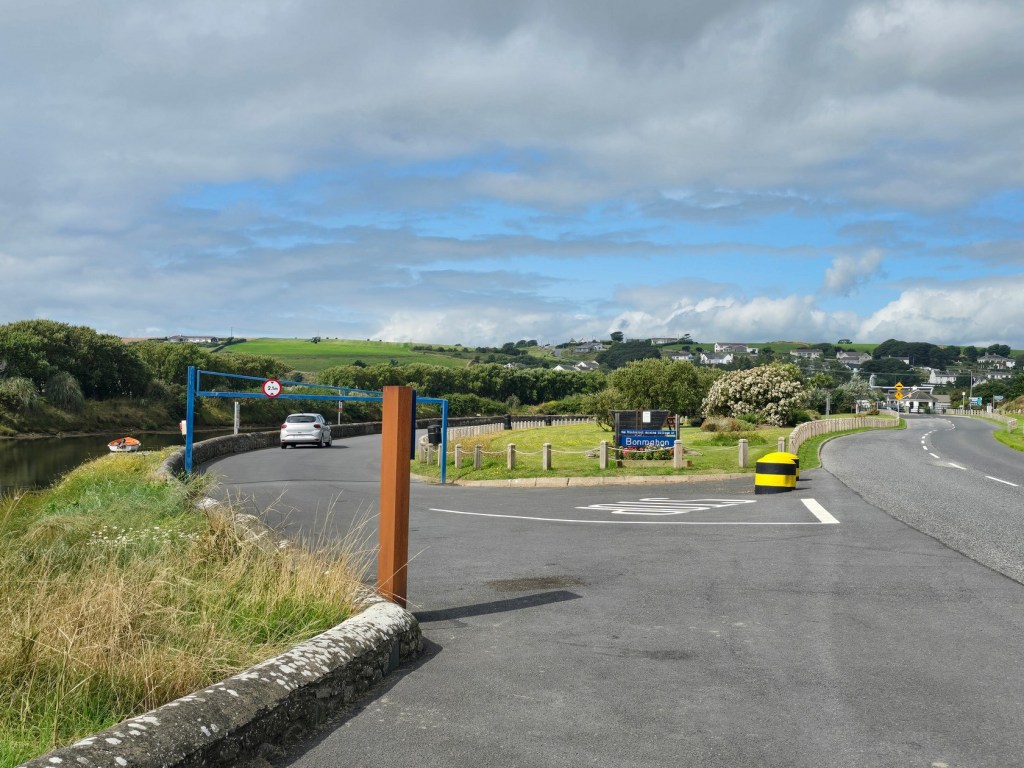
Just a short distance from Tankardstown was another site closely connected with the Geopark. The history of the Bunmahon geological park, within Ireland’s Copper Coast UNESCO Global Geopark, is a story of ancient geology, 19th-century mining, and modern preservation. Its geological significance stems from ancient volcanic activity and continental collision, represented by its unique rock formations.
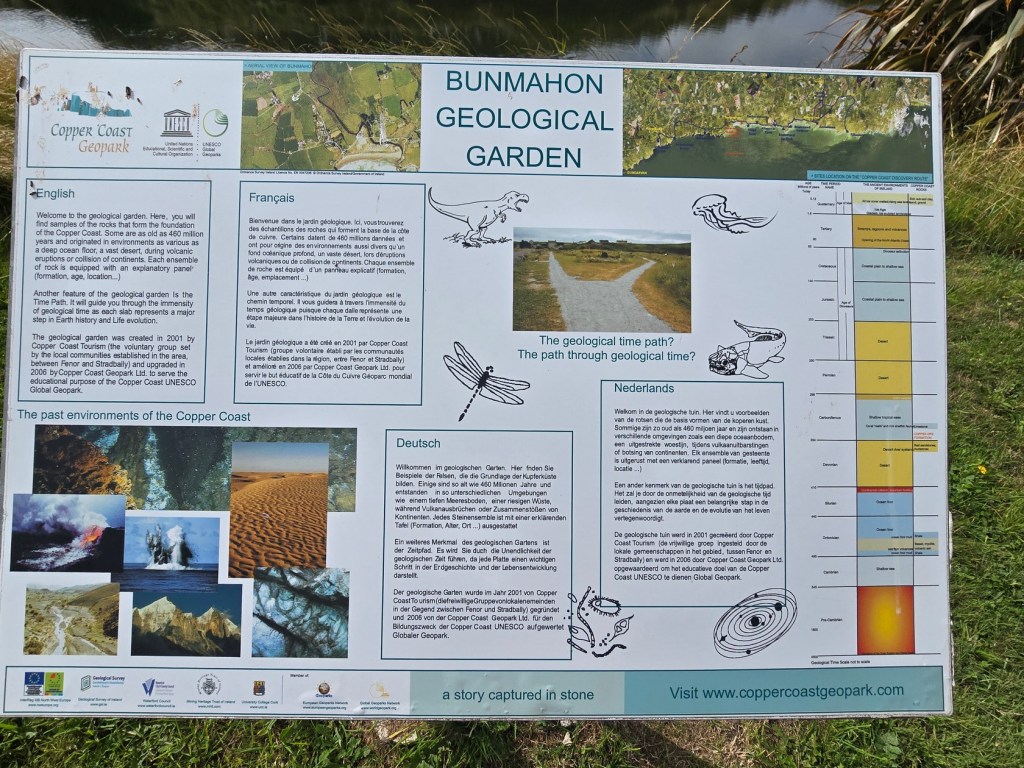
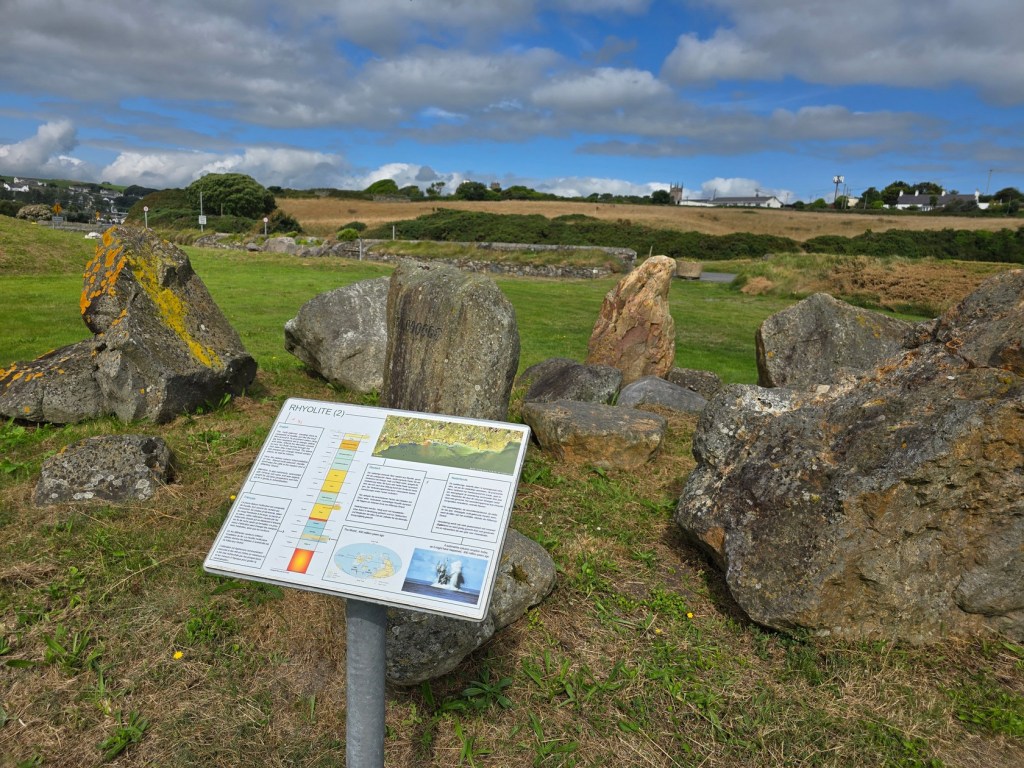
The geological garden was created and is maintained by Copper Coast UNESCO Global Geopark. It provides visitors with a glimpse into the geology of the Copper Coast. Cross-sections of these rocks are scattered around the garden with explanations included.
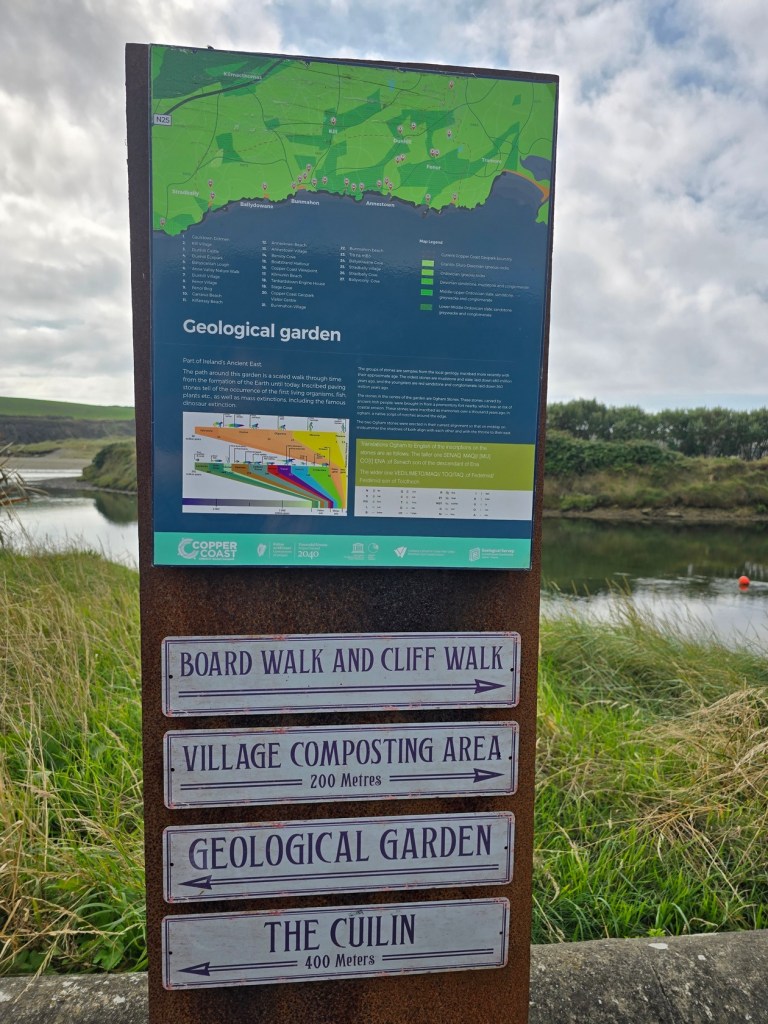

The Copper Coast is an outdoor geology museum with a geological heritage that reflects the variety of environments under which the area has evolved over the last 460 million years. The Time Path in the garden will guide you through geological time with 28 slabs depicting the major steps in Earth history and evolution of life. It takes the visitor in a counter-clockwise walk around the garden. Watch out for the ogham stones, the curious “cursing stone” and the herb garden.
It’s a small spot and may not interest you if geology isn’t your thing, but we found it worth the quick stop. It’s also easy to access from the main road with parking next to the entrance.
3. Waterford Greenway Trail and Ballyvoyle Tunnel
It only took about 15 minutes to reach our next stop. The Waterford Greenway trail is an extensive series of trails that go through county Waterford, the main one following a railway track from times past.

Regardless of where you park, you’ll have to do some walking before you reach the entrance of Ballyvoyle Tunnel. We chose the closest car park to the tunnel, making it about 25 minutes to reach. We envied the locals since they have access to this beautiful walking trail at any time.


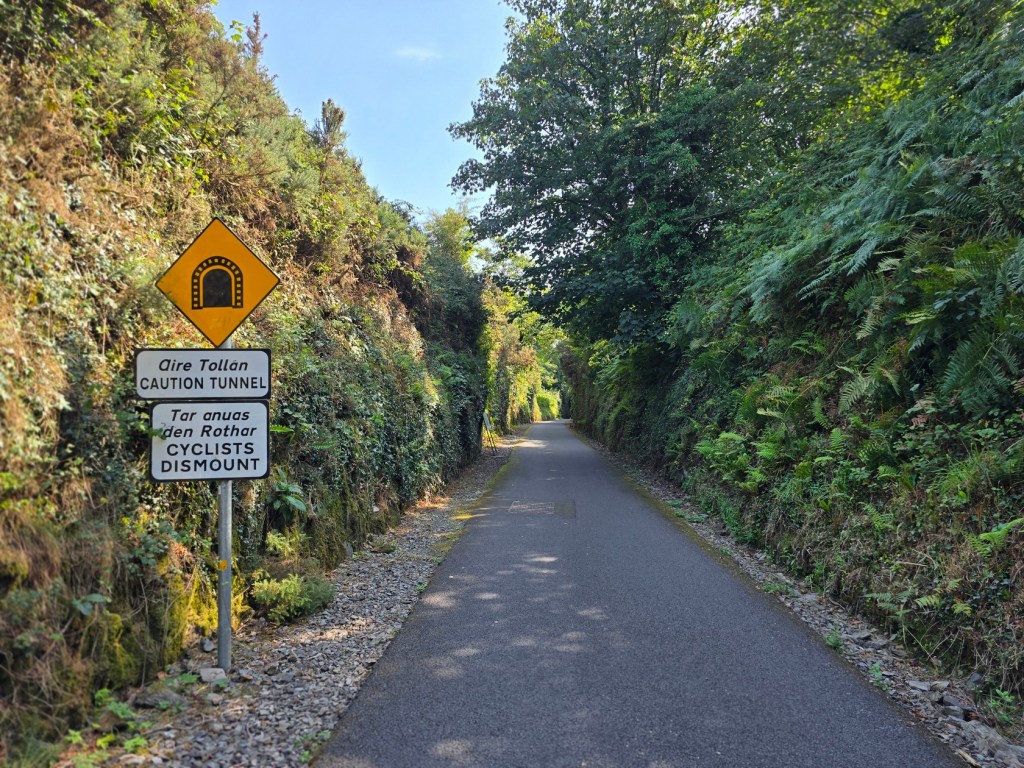


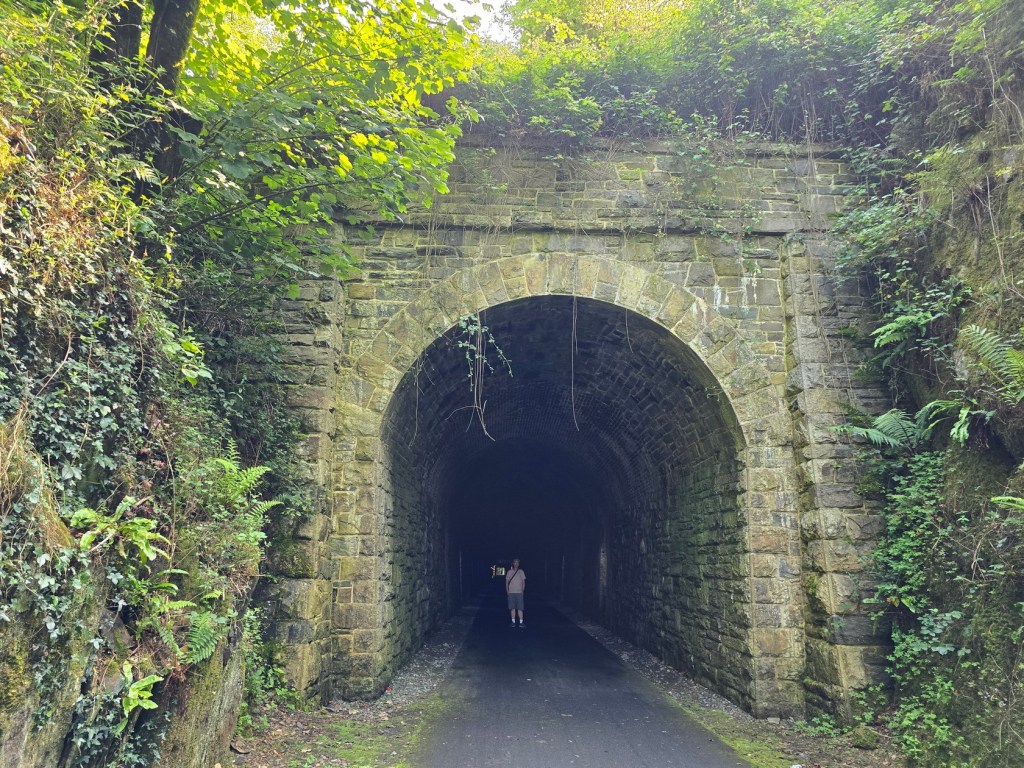
The Ballyvoyle Tunnel was built in 1878 by the Fishguard and Rosslare Railways & Harbours Company as part of the Great Southern Railway line in County Waterford. It was a functioning railway tunnel until 1967 and is now a preserved historical feature of the Waterford Greenway cycling route. The tunnel, which is 400m long and made of brick, remains a significant example of 19th-century civil engineering
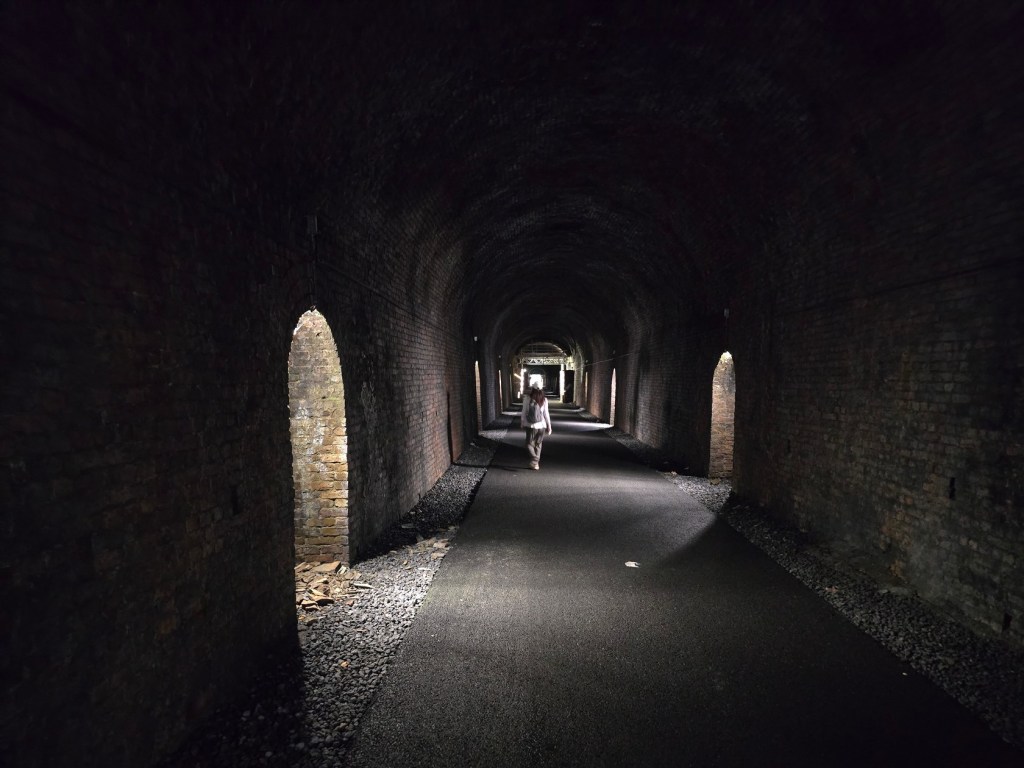
We like horror movies so we particularly loved the surreal and almost mystic entrance to this tunnel since it reminded us of the typical place where something horrific happens in horror movies. It would be interesting to come back to this tunnel on Halloween day in the future!
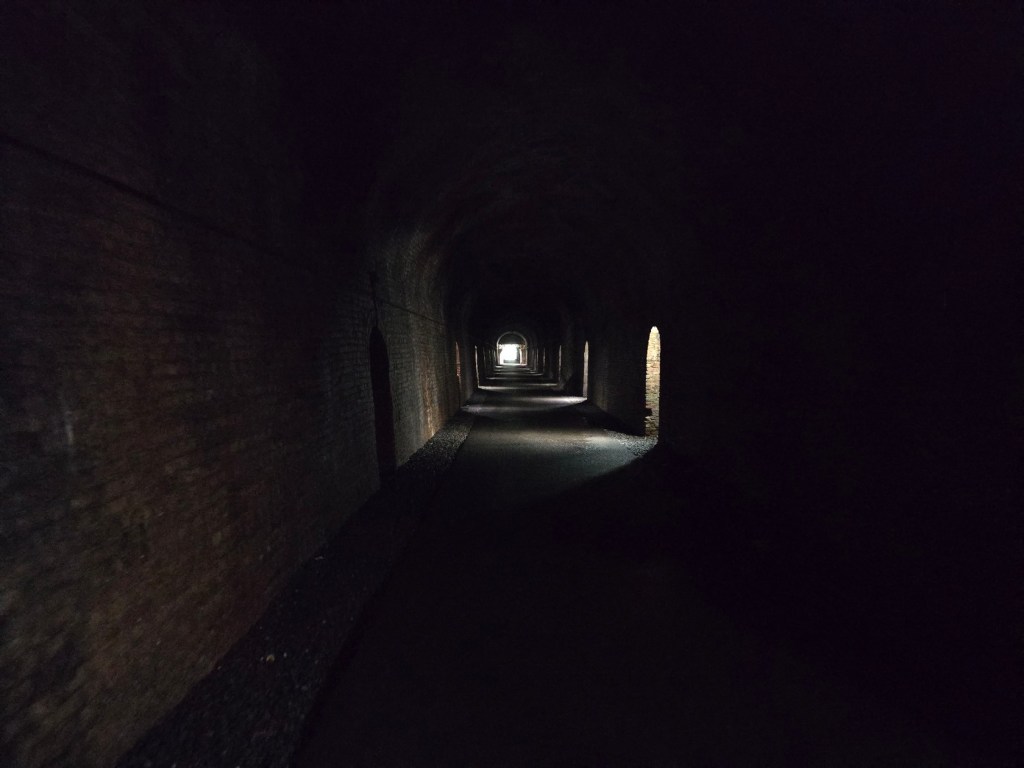
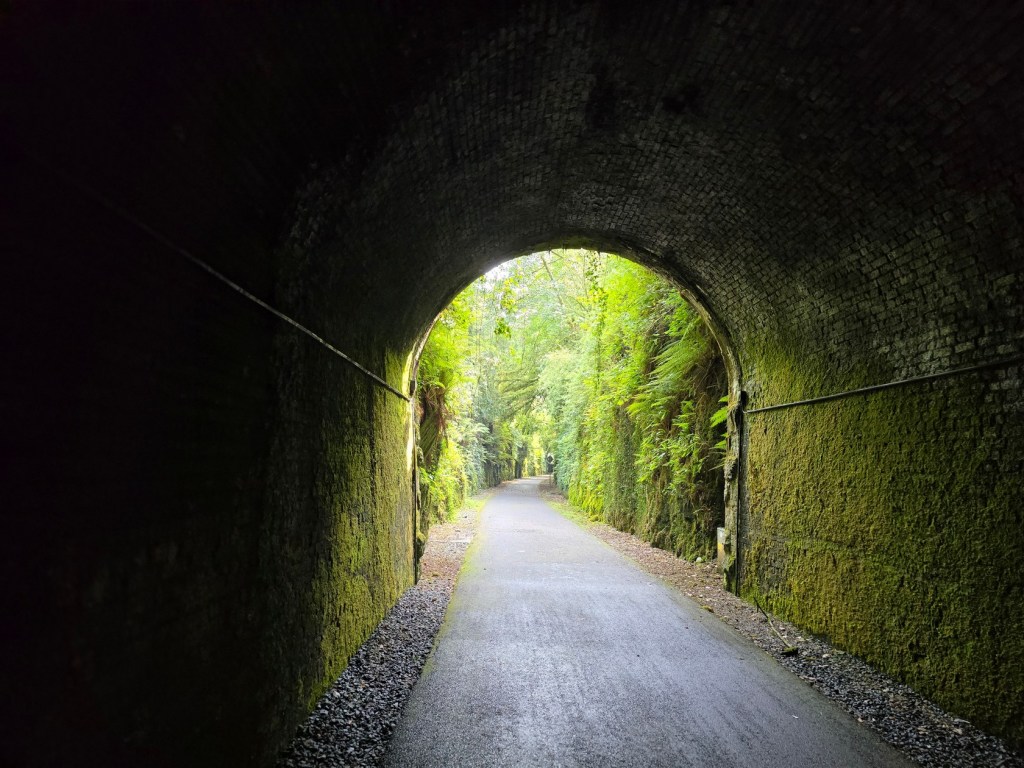
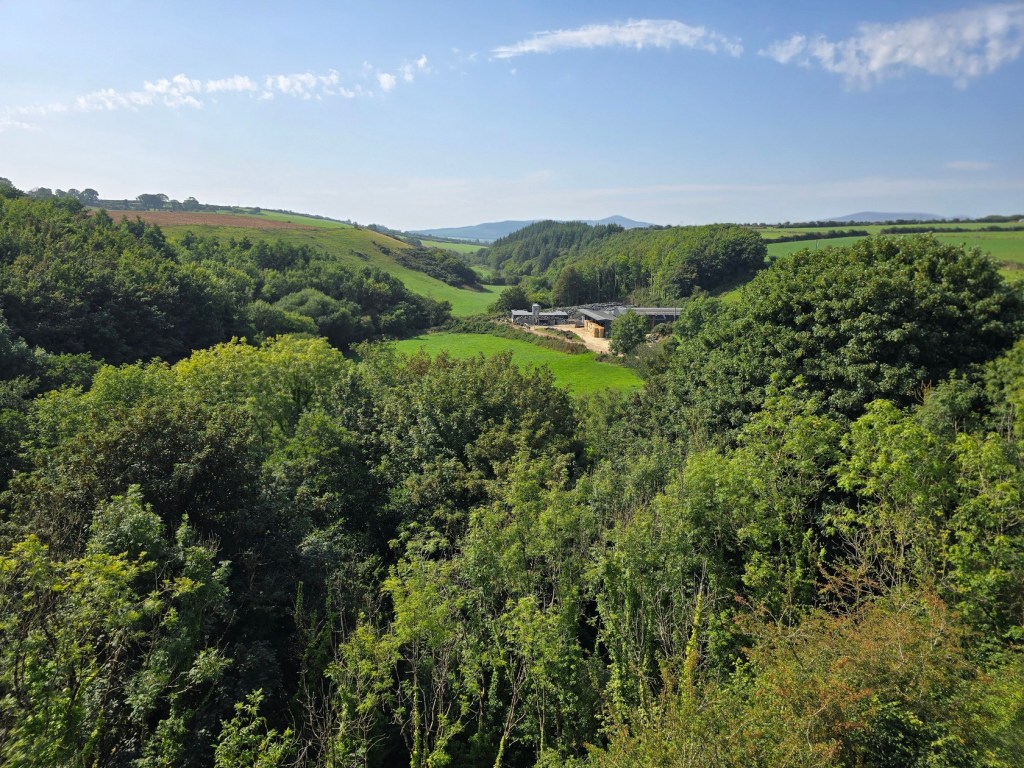
We spent a little over an hour and a half walking the Waterford Greenway Trail. It’s a great spot that is popular with walkers and cyclists alike. Keep an eye out for the cyclists as they sometimes appear out of nowhere, and stay to one side of the road. Cyclists are supposed to dismount in the tunnel but most did not, so being alert in there is even more important!
4. Mahon Falls
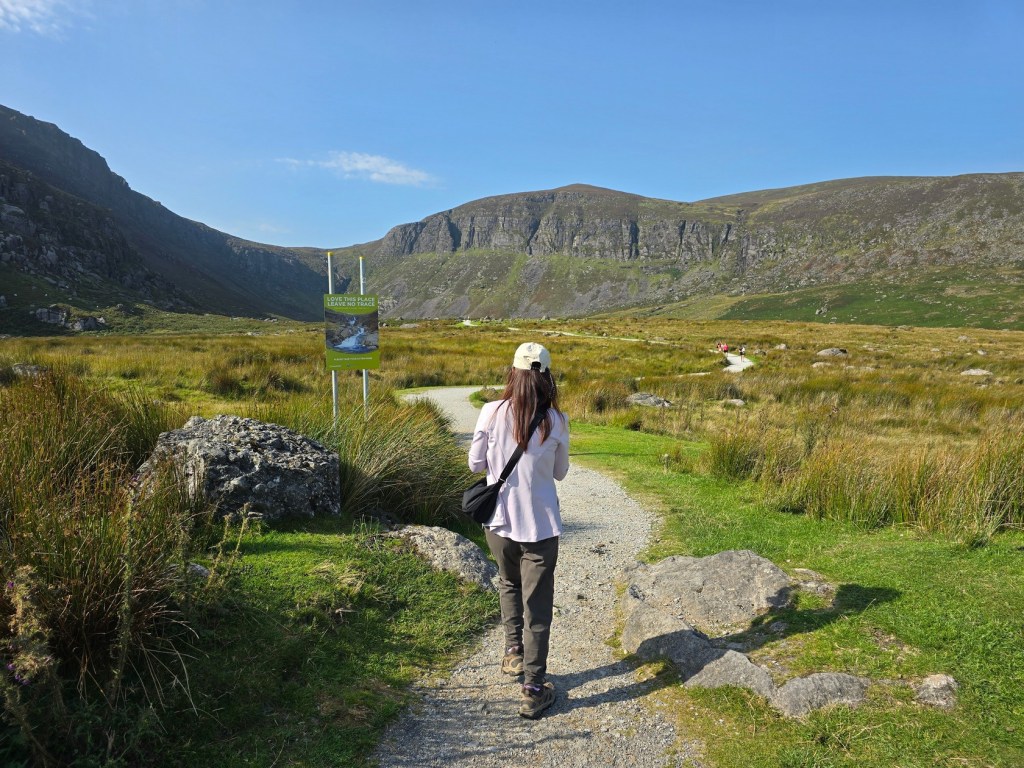
Our last stop on the day was Mahon Falls. It was only about 20 minutes from the Ballyvoyle tunnel going due north. The drive was straightforward, though the road gets narrow close to the car park and you need to watch out for sheep crossing the road!
You can see the falls from the car park, though it still takes awhile to get there. There’s a well marked gravel trail that is mostly flat, making it an easy walk.

Mahon Falls is an 80-meter waterfall located in the Comeragh Mountains in County Waterford, Ireland, known for its scenic beauty and hiking trails. The falls are formed by the Mahon River cascading over sheer sandstone cliffs in a glacial corrie, creating a dramatic and peaceful landscape. The area is popular for hiking, with various trails suitable for different fitness levels.
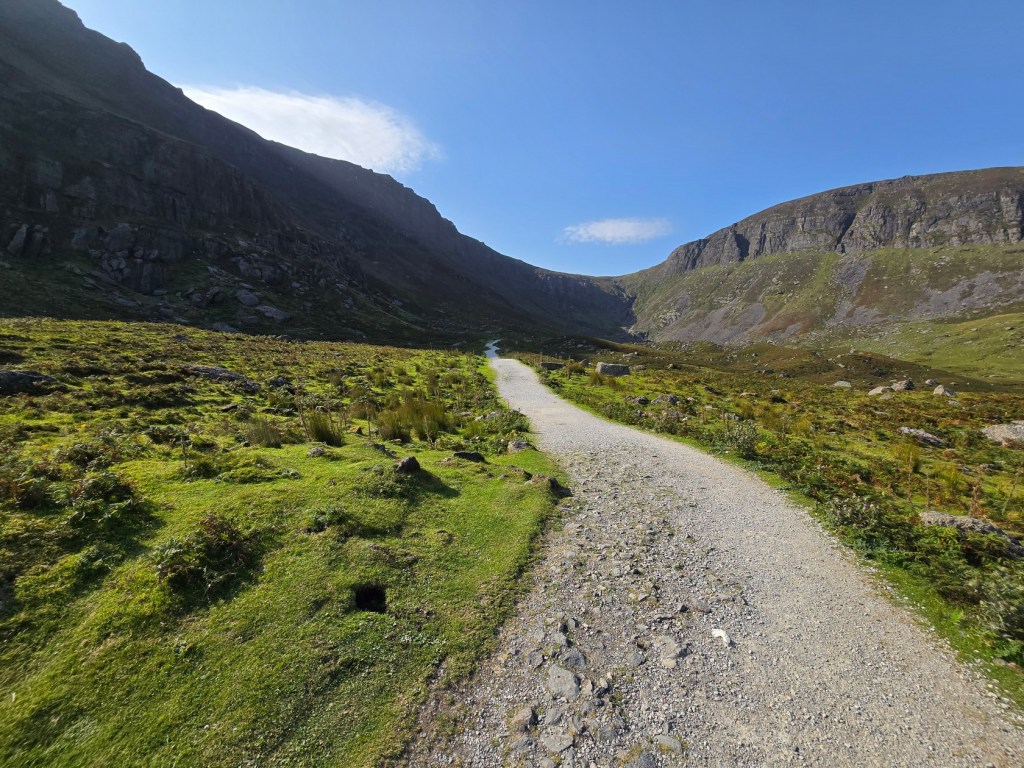
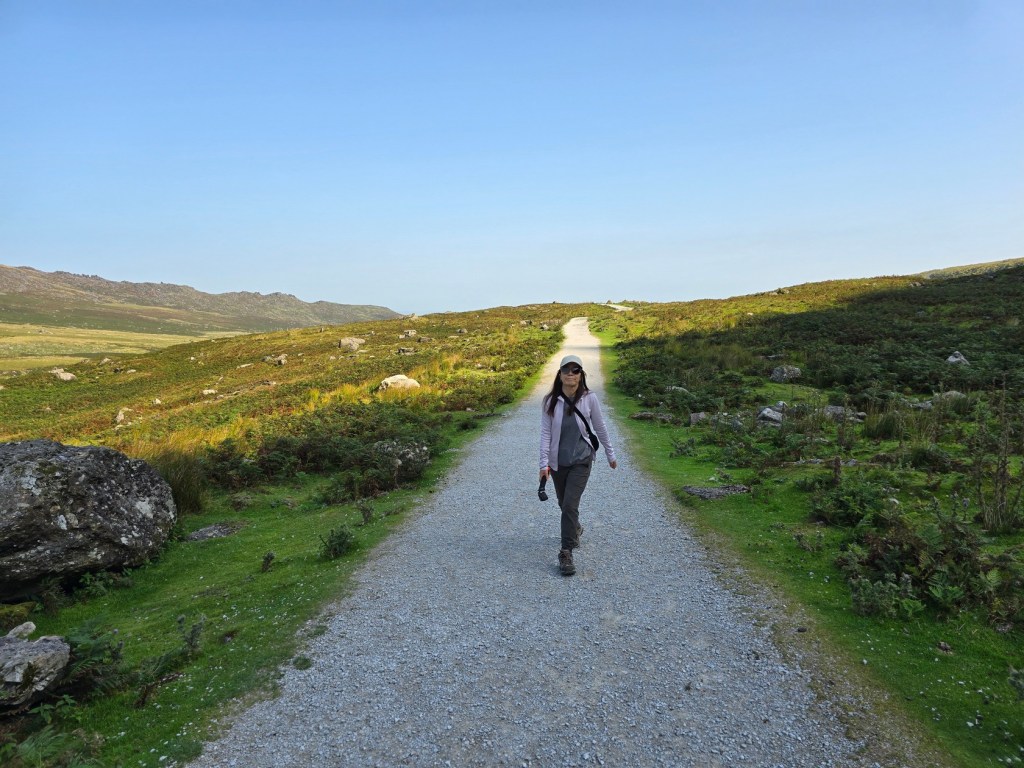

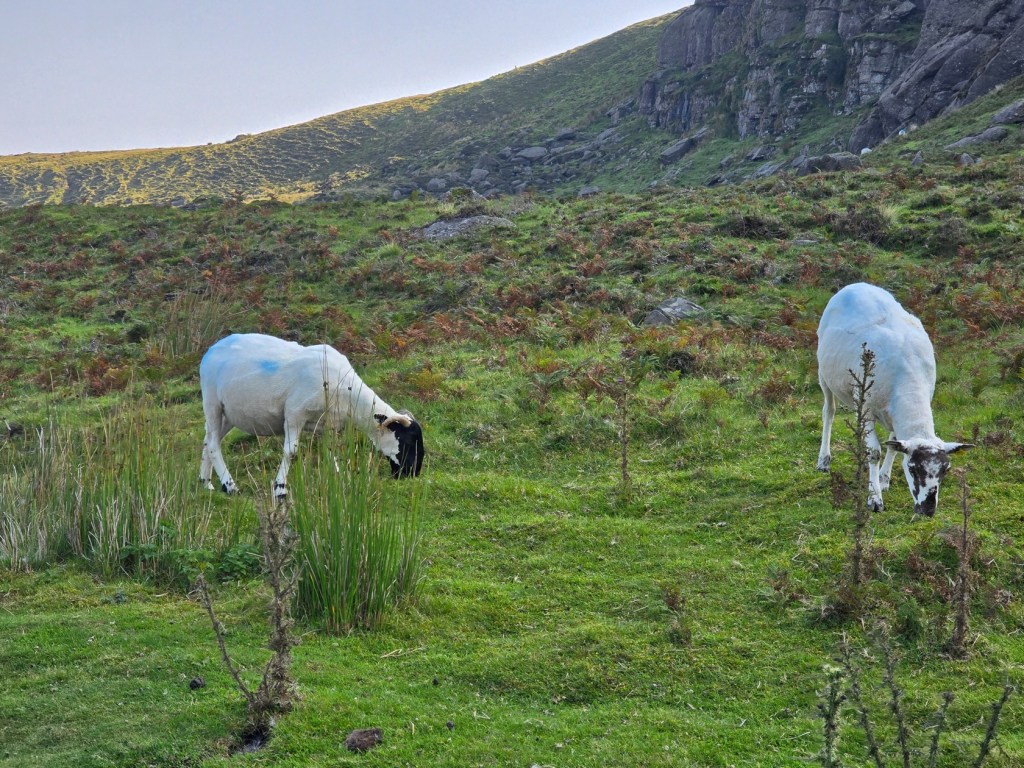
From the car park to the falls and back, it’s a handy little stroll that’s just over 3km and takes less than 50 minutes. For much of the walk the only problem we faced was the sheep shit covering parts of the trail. You have to be careful to avoid it! But we were the ones intruding on sheep land, not the other way around, so we had no cause to complain.
More bothersome were the flying menaces. We arrived a little late in the afternoon so there were a lot of flying, biting insects that came out as the sun disappeared behind the walls of the valley. We recommend exploring Mahon Falls well before sunset at this time of year.

Eventually we reached the falls. Because it was mid-August, the falls were not as strong as they are earlier in the year. Still, it was a nice end to our hike. We didn’t stay long because the insects were worse in the shade, and the valley was rapidly becoming shaded all around. So we quickly made our way back.


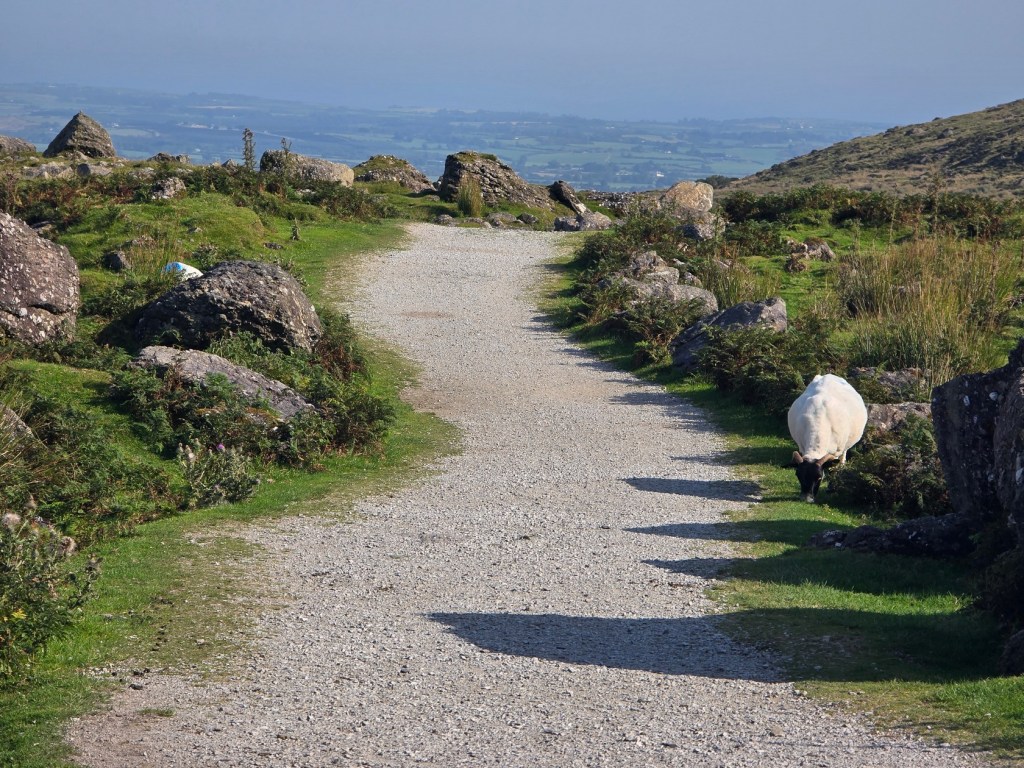
It was an active day of different sights along with lots of walking. The variety of scenery was lovely, and the weather was improving from the previous couple of days. In fact, the weather would be mostly excellent for the rest of the trip. It was something we appreciated as we made our way towards County Cork, the subject of the next post.
 Humphreys Travel