
After doing the Ring of Kerry, we continued northward on the western side of Ireland towards the Dingle Peninsula. Once there we would be staying at an Air B&B that was part of a century farmhouse just outside of the town of Dingle. The owners were Gaelic speakers whose jobs were connected to preserving Gaelic language and history in the region. One of them was even born in the same farmhouse where we stayed.
Our visit to the Dingle peninsula was all we expected and more. It was one of the few places we stayed three nights, and we were glad we did. On our first full day we explored the town of Dingle and some of the locations close by.
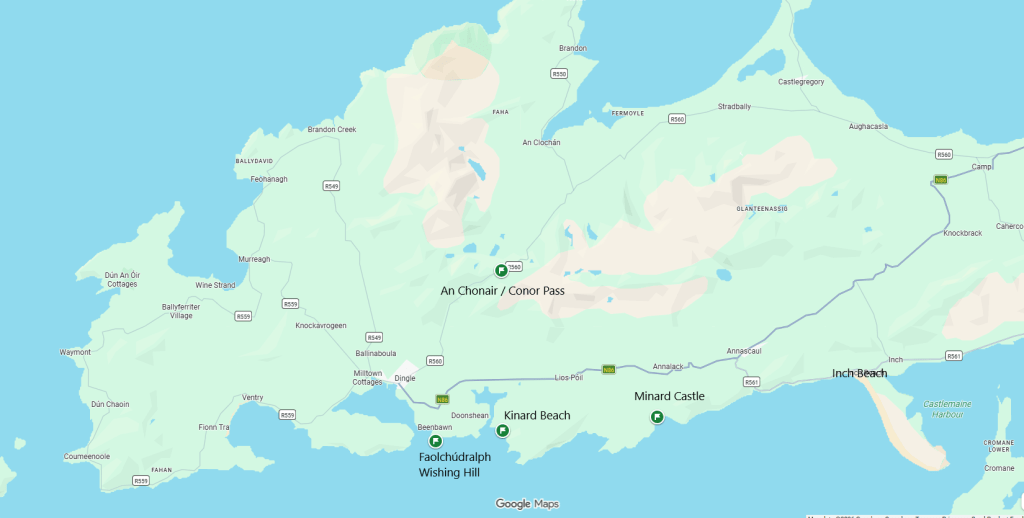
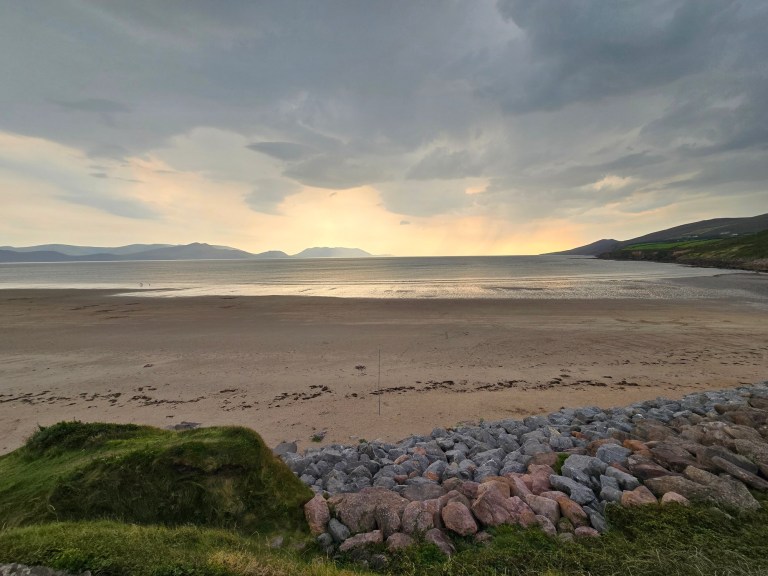
We dropped by Inch Beach on the way to our Air B&B on the first night on the peninsula. We arrived in the late afternoon and it was quiet with few people around.
Stretching for several kilometers into Dingle Bay, it is a popular destination for surfing, walking, and scenic photography. After a brief stay we went on our way.
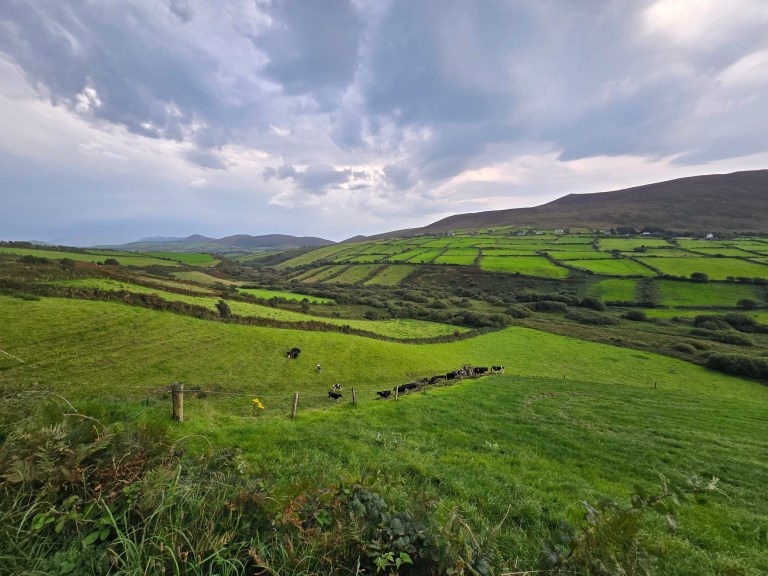
The next morning we headed out to do Conor Pass, one of the highest mountain passes in Ireland. There was a steady rain falling when we headed out. By the time we visited the main stop off on the pass there was thunder and lightning, so we had to finish the pass early and headed back down the mountain to the south.
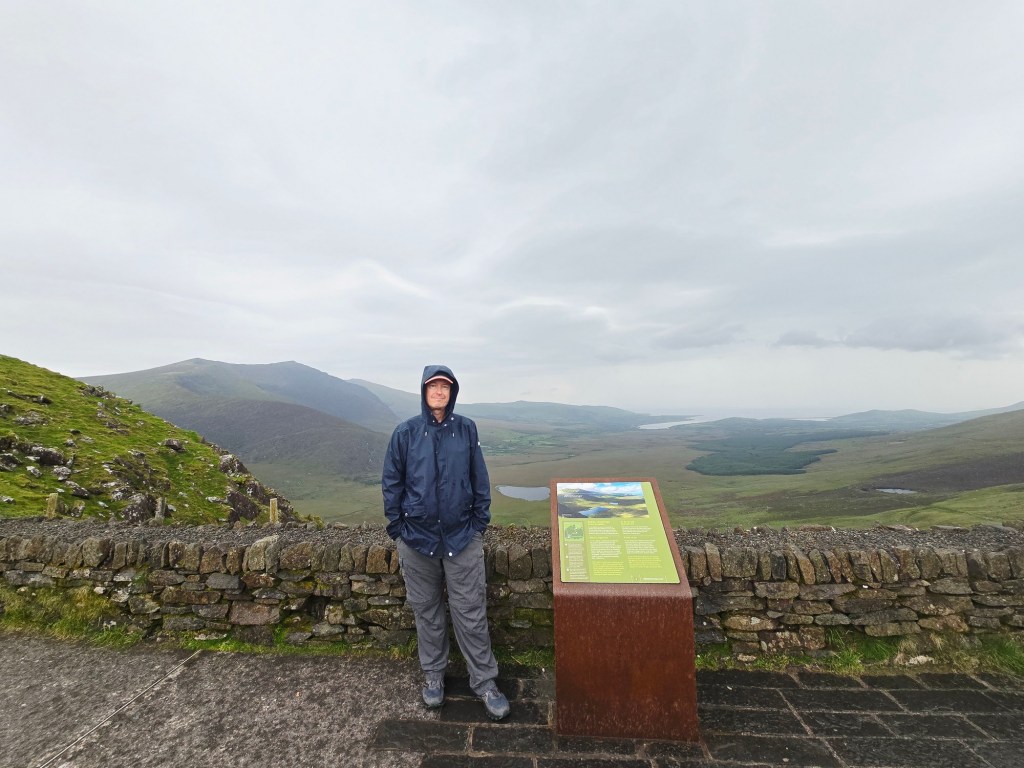
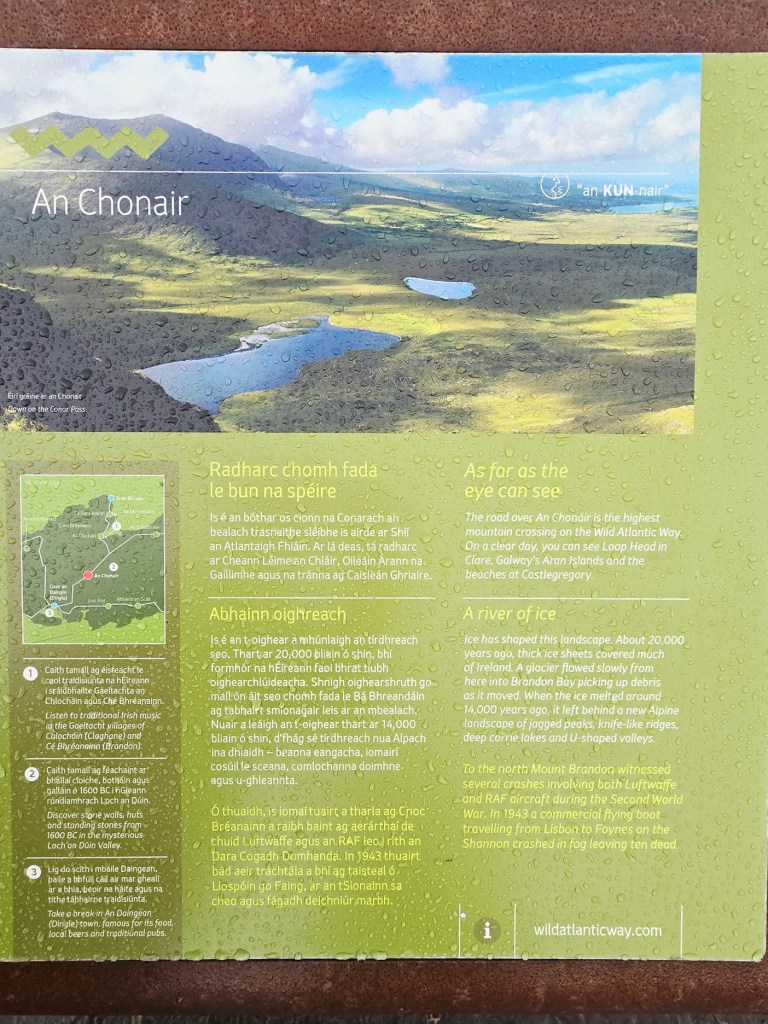
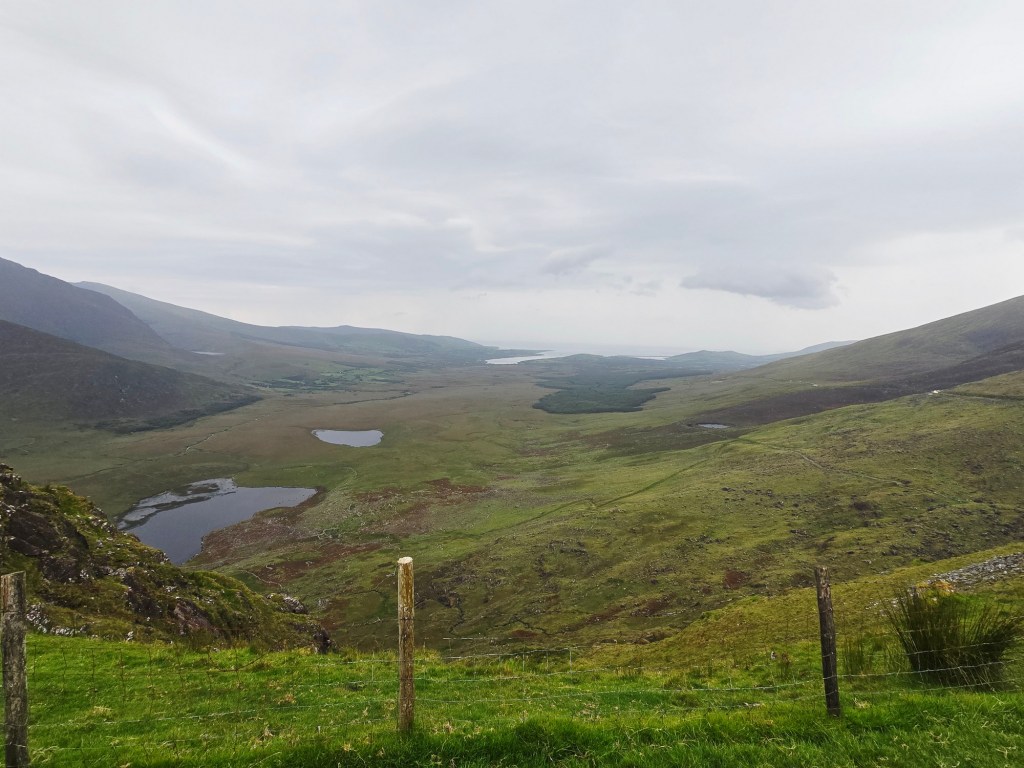
After cutting short our visit to Conor Pass, we headed back down to the southern coast of the peninsula. The weather improved a bit as we made our way to the first stop: Minard Beach and Castle.
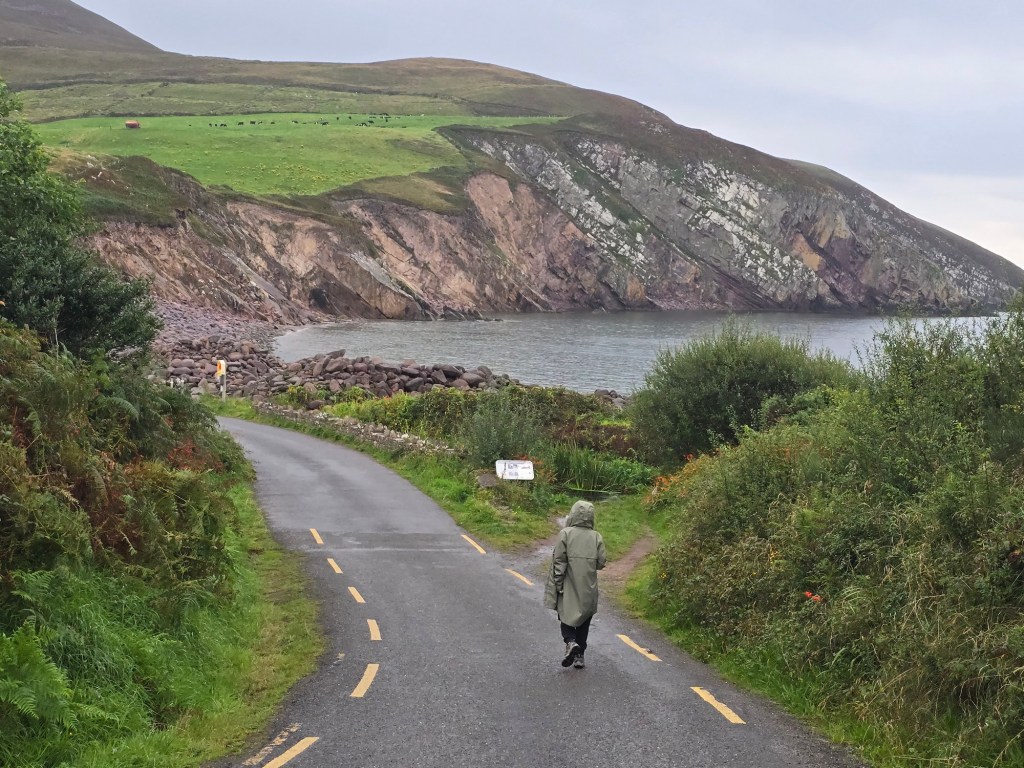
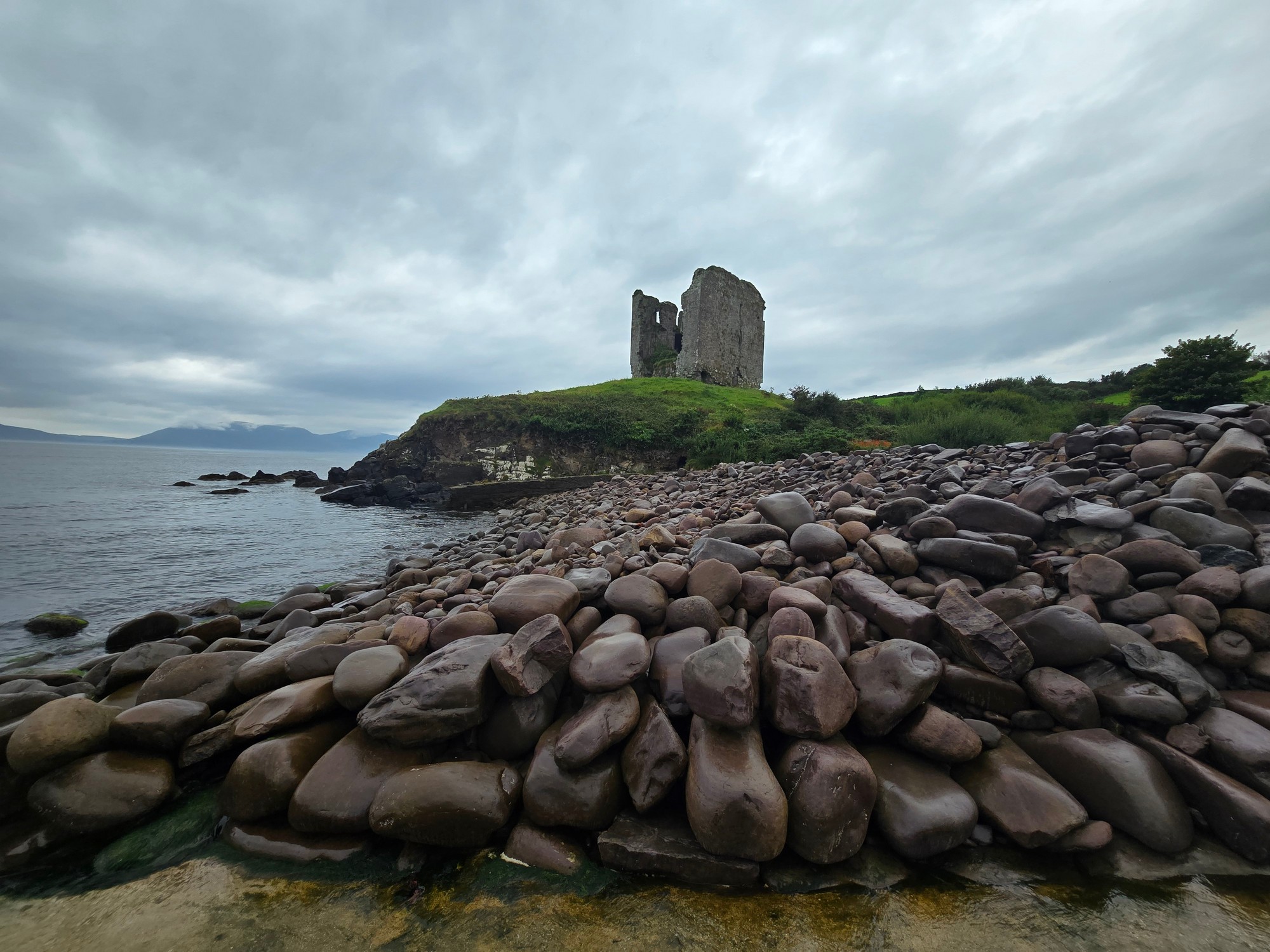
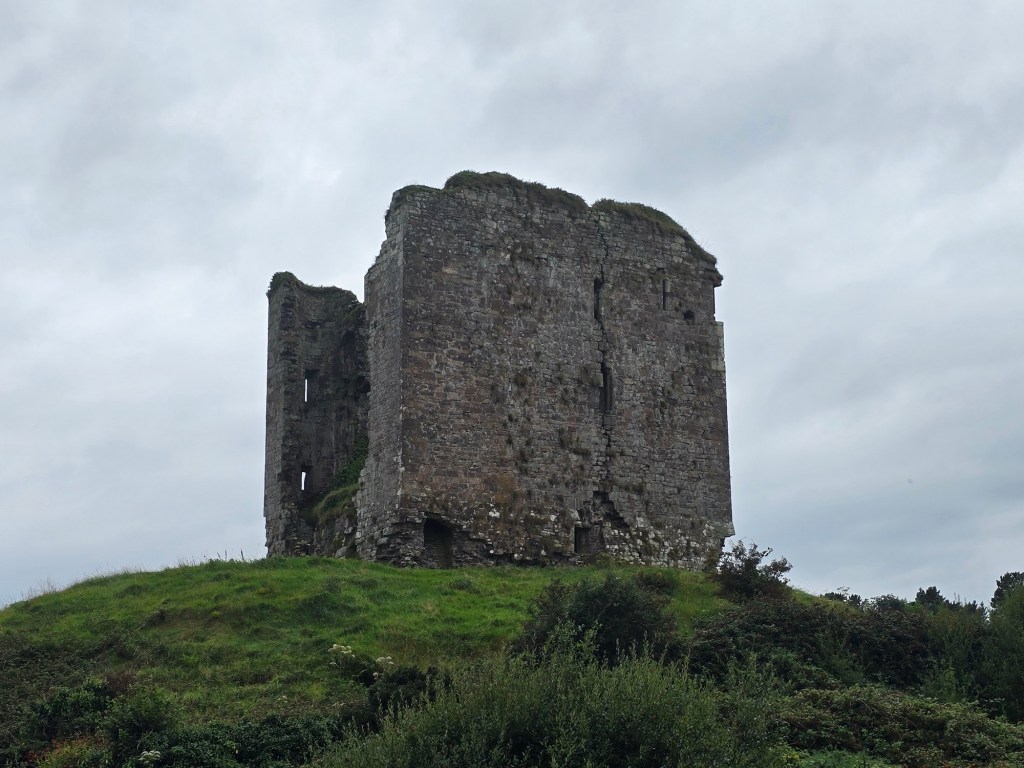
Minard Castle is a 16th-century tower house — a type of fortified residence common in Ireland during the late medieval period. It sits on a small hill overlooking Minard Bay on the southern coast of the Dingle Peninsula, with views across the Irish Sea toward the Iveragh Peninsula. The castle was built in the mid-1500s by the Fitzgerald family, an important Norman-Irish dynasty, and was one of only three mid-16th century Fitzgerald castles on the peninsula.
Below the castle is Minard Beach, known as a storm beach due to its huge rounded sandstone boulders thrown up and polished by Atlantic storms. It’s considered to be one of Ireland’s finest examples of this phenomenon.
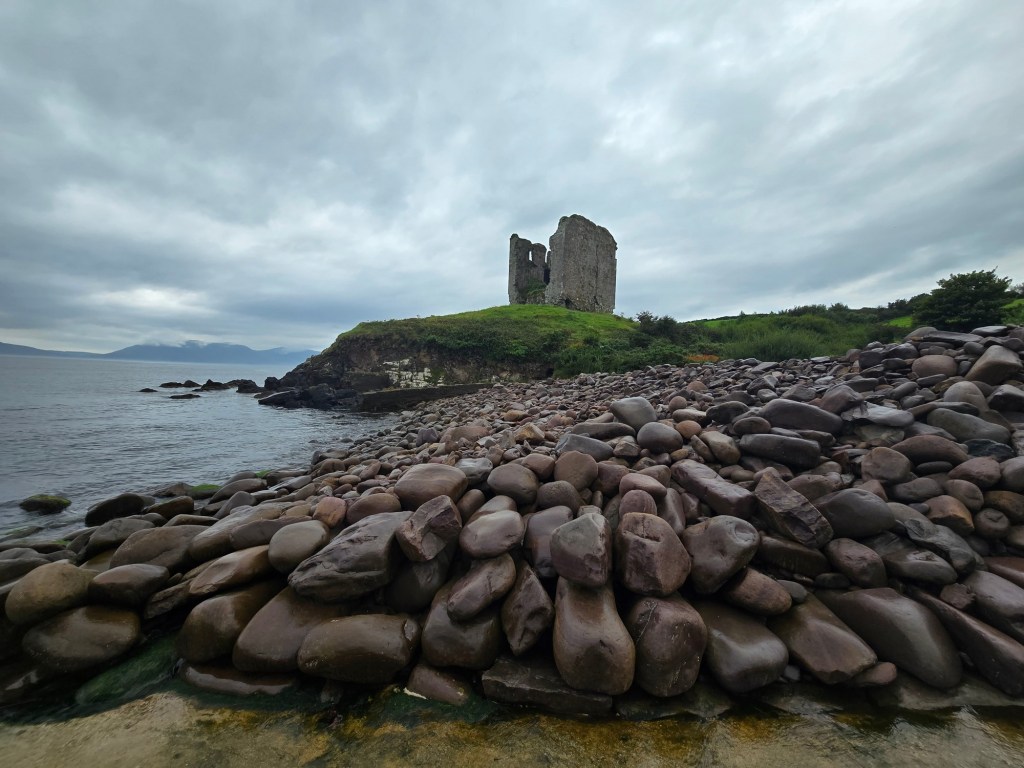
Minard Castle originally rose four storeys high with the ground and first floors vaulted. Today you can still see three storeys of the rectangular sandstone tower, though the top level has been lost.
During Oliver Cromwell’s campaign in Ireland (circa 1650), the castle was attacked by Parliamentary forces. They detonated charges at several points around it, killing all defenders and badly damaging the structure.
After doing Minard Beach we headed a bit further west to Kinard Beach, located closer to the town of Dingle. We travelled some narrow roads but there were few other cars along the way, so it was a relatively short and easy trip.
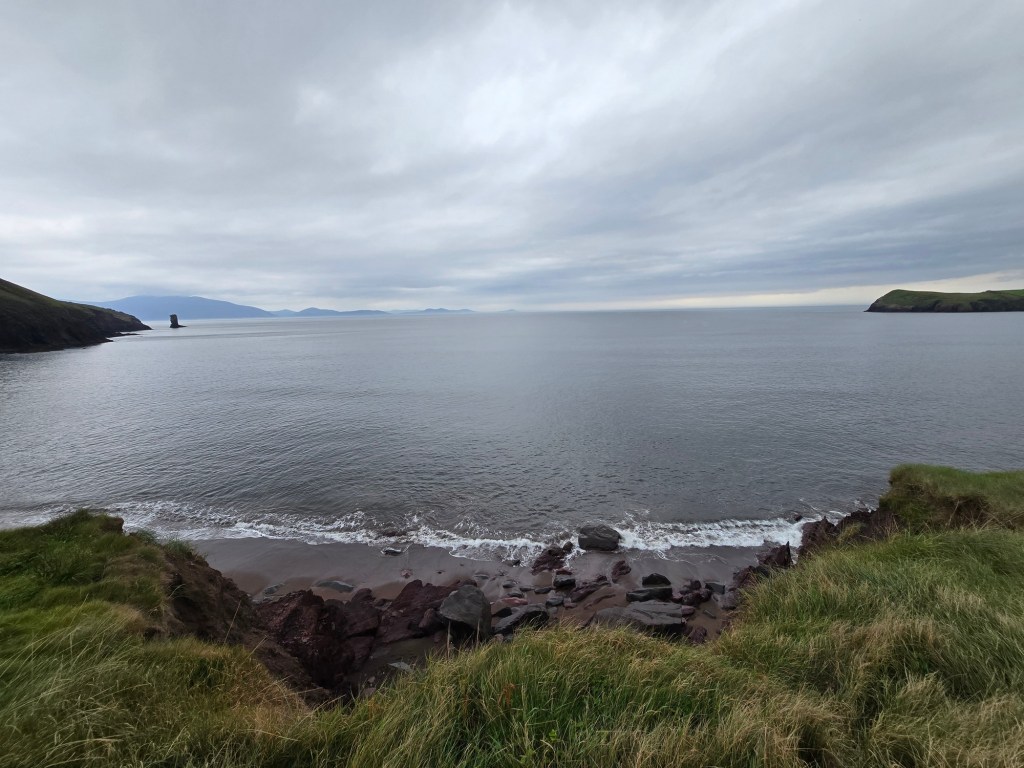
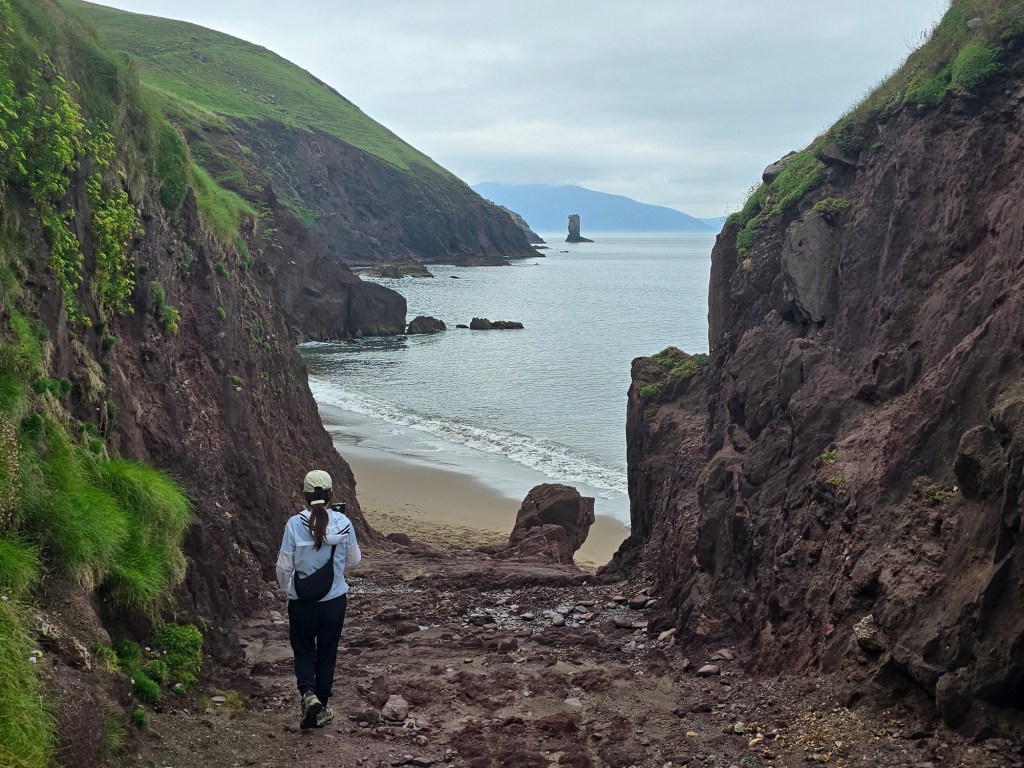
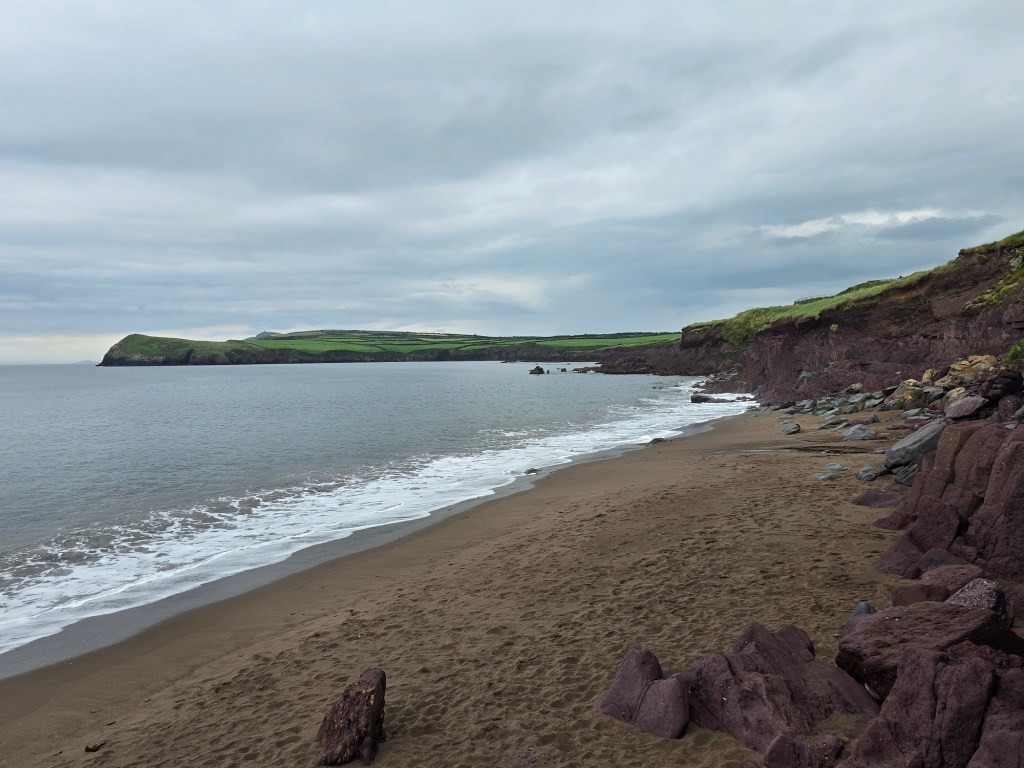
Kinard Beach is a small beach on the southern side of the Dingle Peninsula, about 8–9 km east of Dingle town. It was an easy walk down from the parking area to the beach.
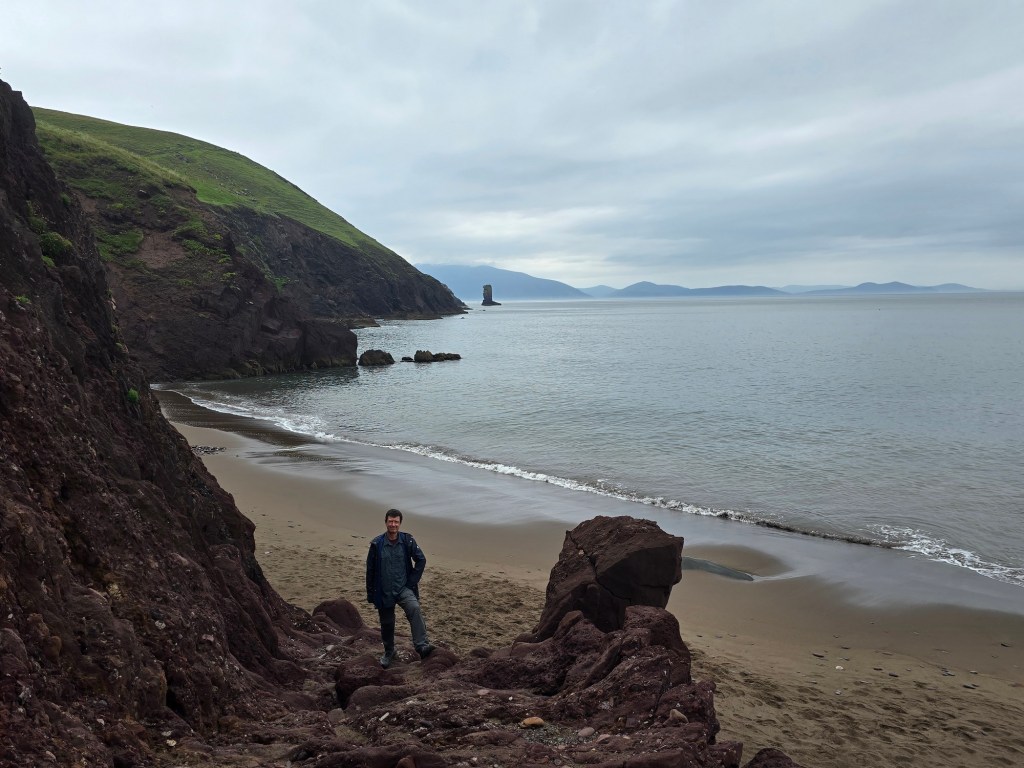
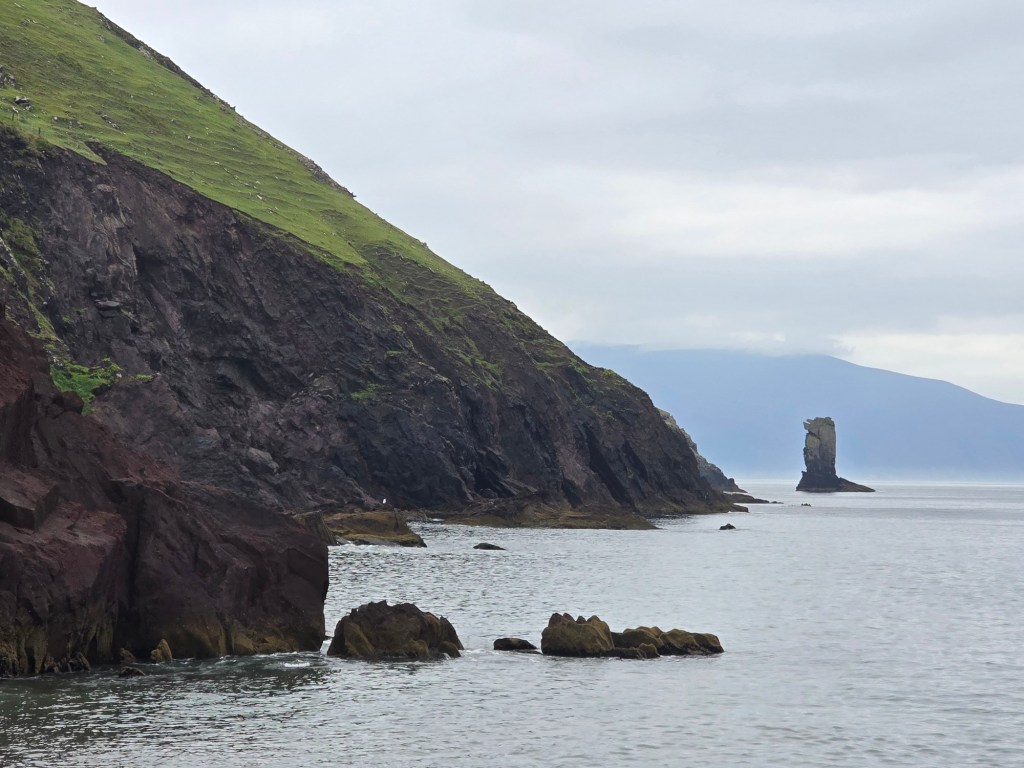
No one else was there when we visited, and it was a peaceful spot. Just offshore is a dramatic sea stack known as An Searrach or The Foal — a tall column of rock rising from the sea that dominates the view and makes the location especially striking for photography and sightseeing.
After a break for lunch, we headed over to the town of Dingle. It was only a 10 minute drive from where we were staying.
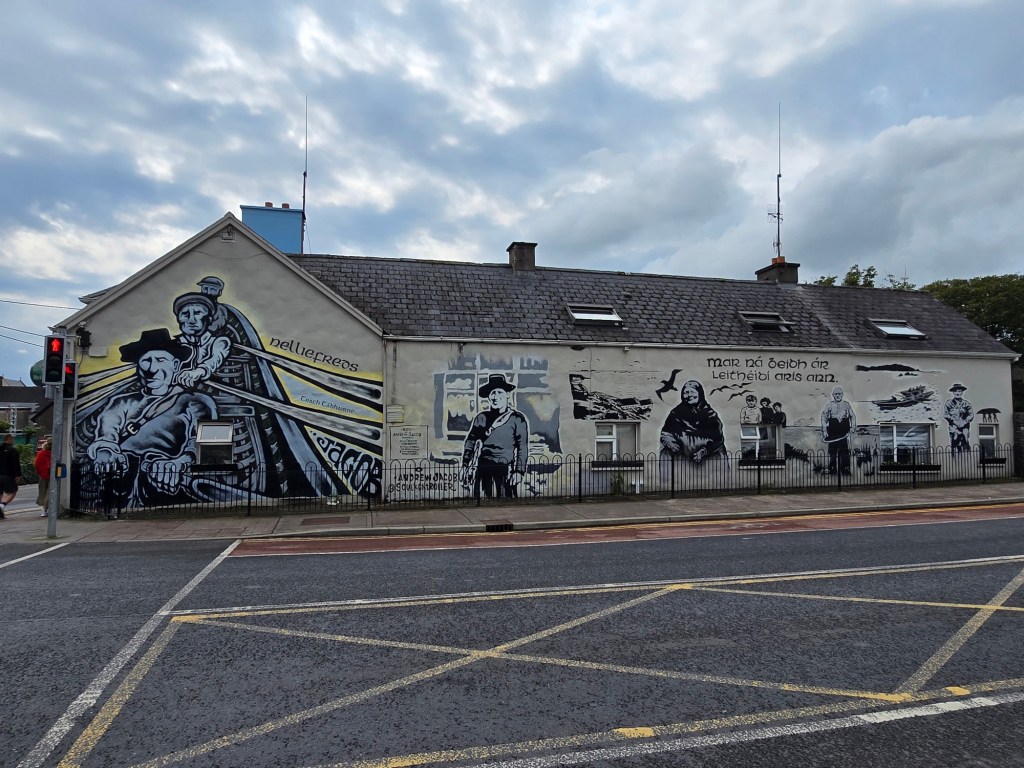
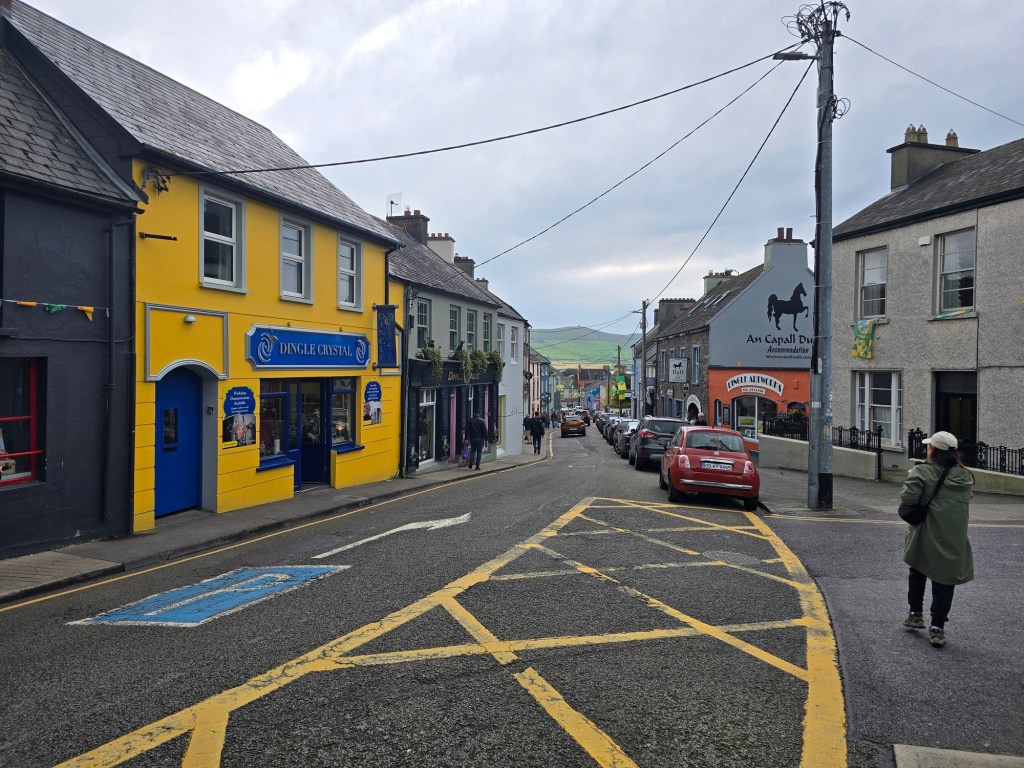
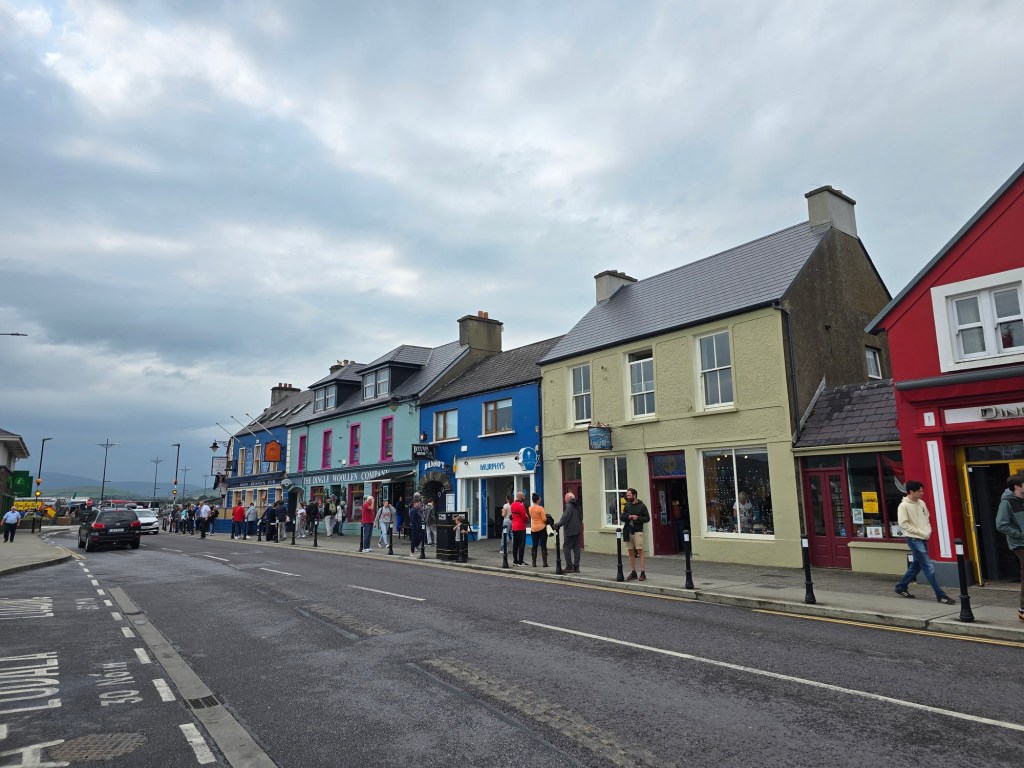
Dingle is a colourful harbour town and a popular part of Ireland’s famous Wild Atlantic Way. The town developed as a Norman port in the 13th century and became an important trading centre between Ireland, Spain, and France. Although it’s small (population around 2,000), it’s a popular place to visit thanks to its location and dedication to preserving Gaelic culture.
The reason is because Dingle lies in the Corca Dhuibhne Gaeltacht, one of Ireland’s Gaelic-speaking regions. Gaelic is still heard locally, especially outside the town and in nearby villages. This included our Air B&B hosts who gave us quite a bit of information about the region’s rich Gaelic heritage.
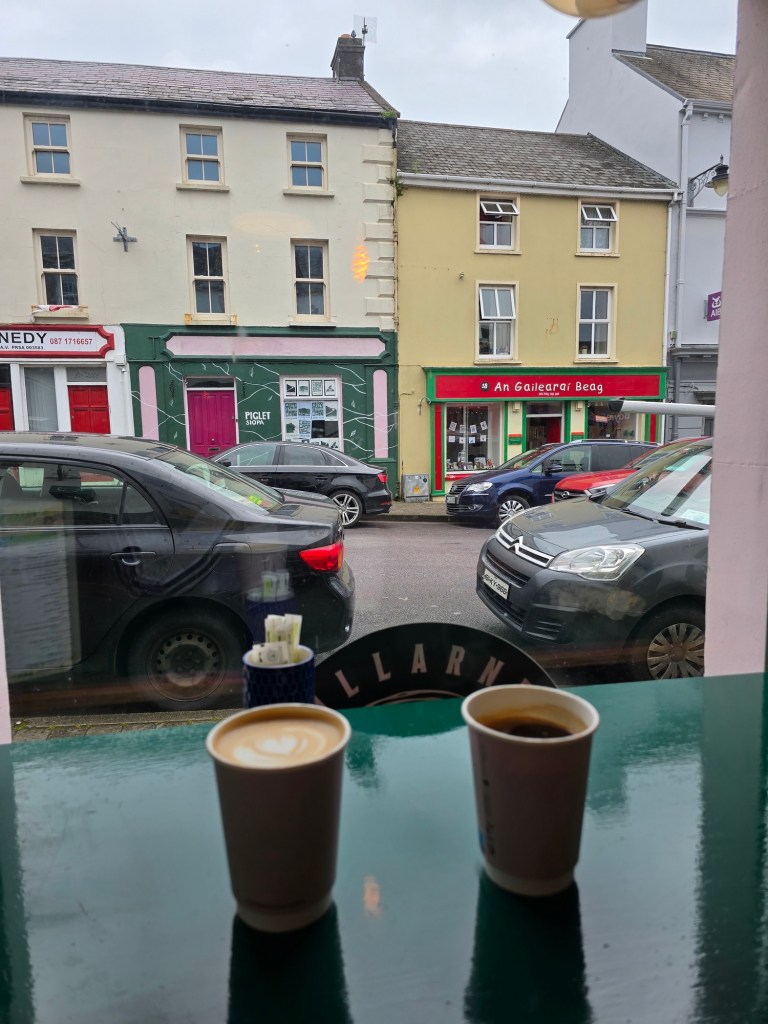
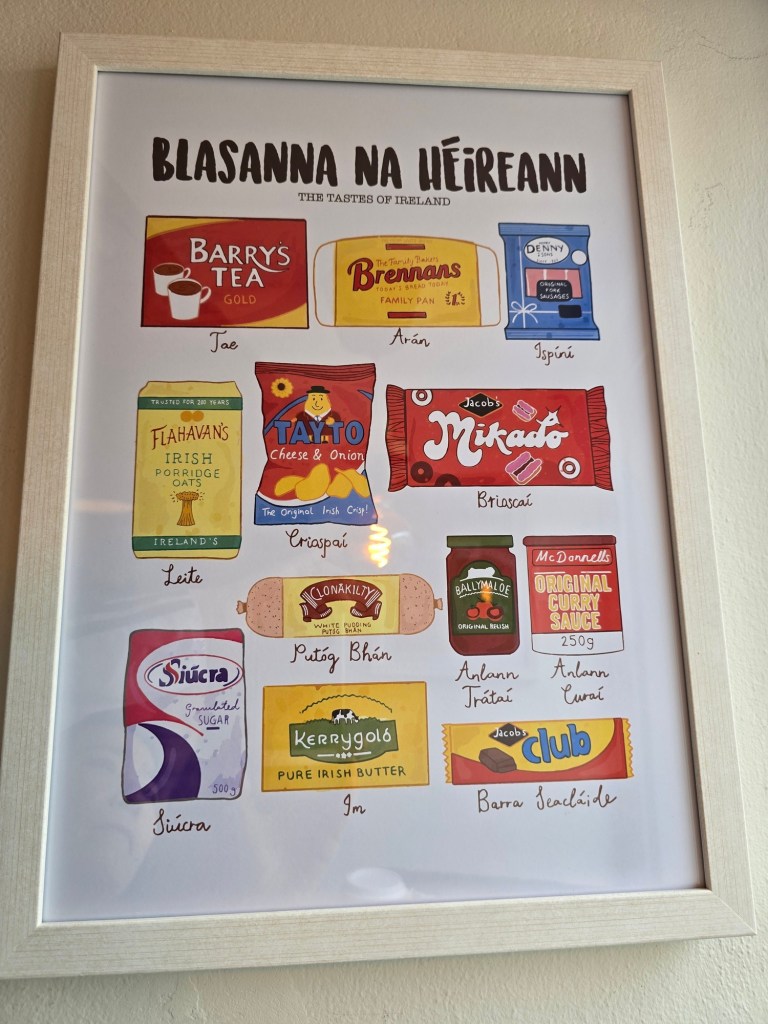
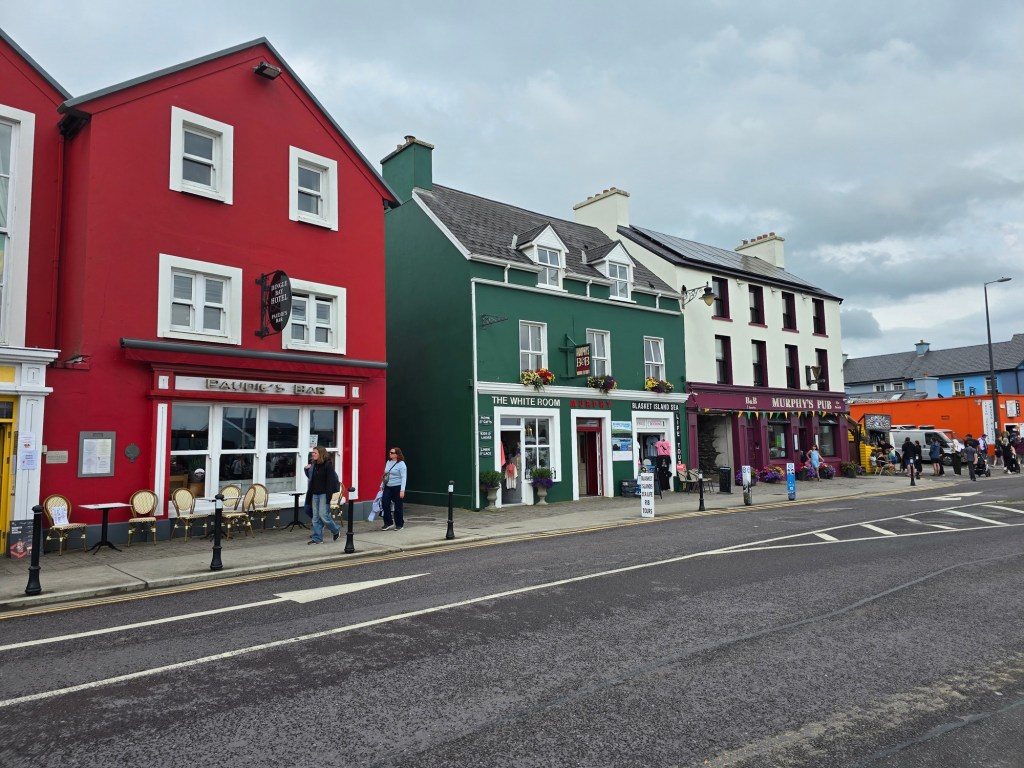
We spent a few hours wandering around Dingle. The town was quite busy with tourists so we parked our rental car in one of the supermarket lots further away from downtown. From there we walked towards the busy central area as well as the harbour. It didn’t add too much time as the town is compact, and it was less stressful after trying to find parking in the town centre and having no luck at all.
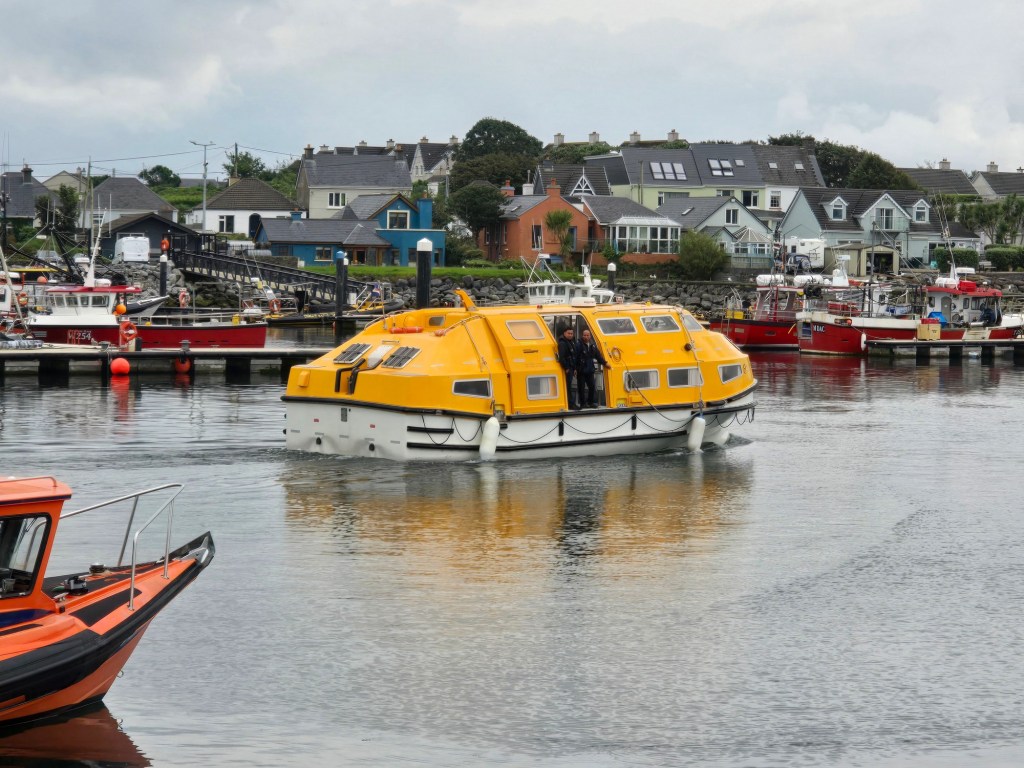
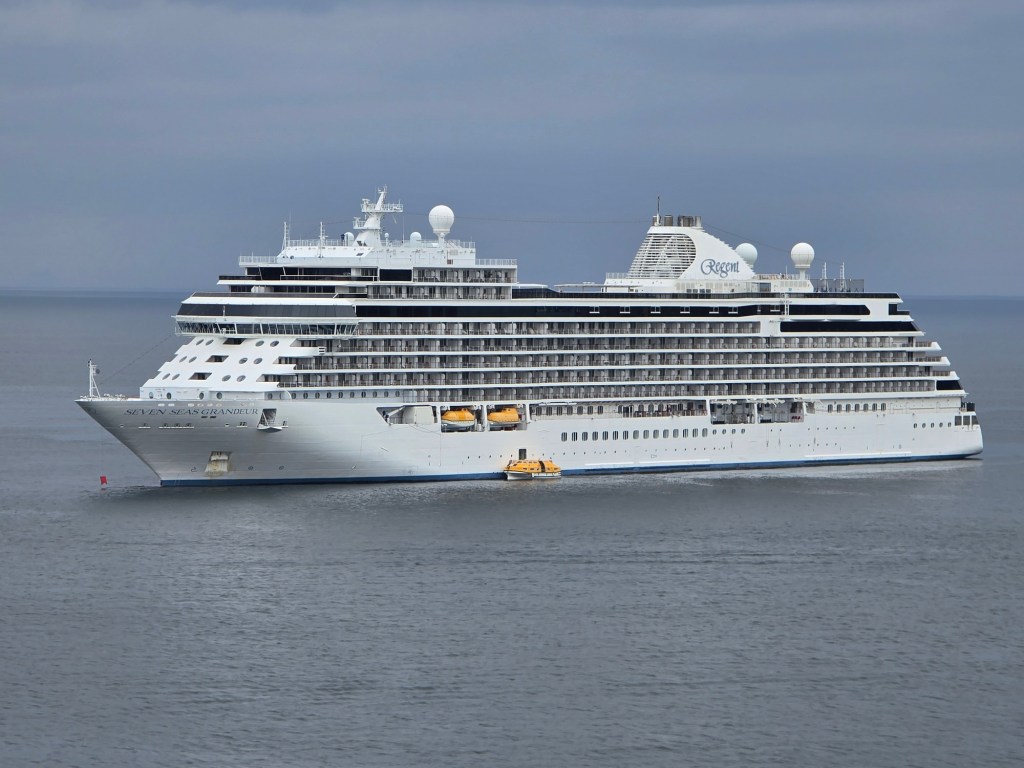
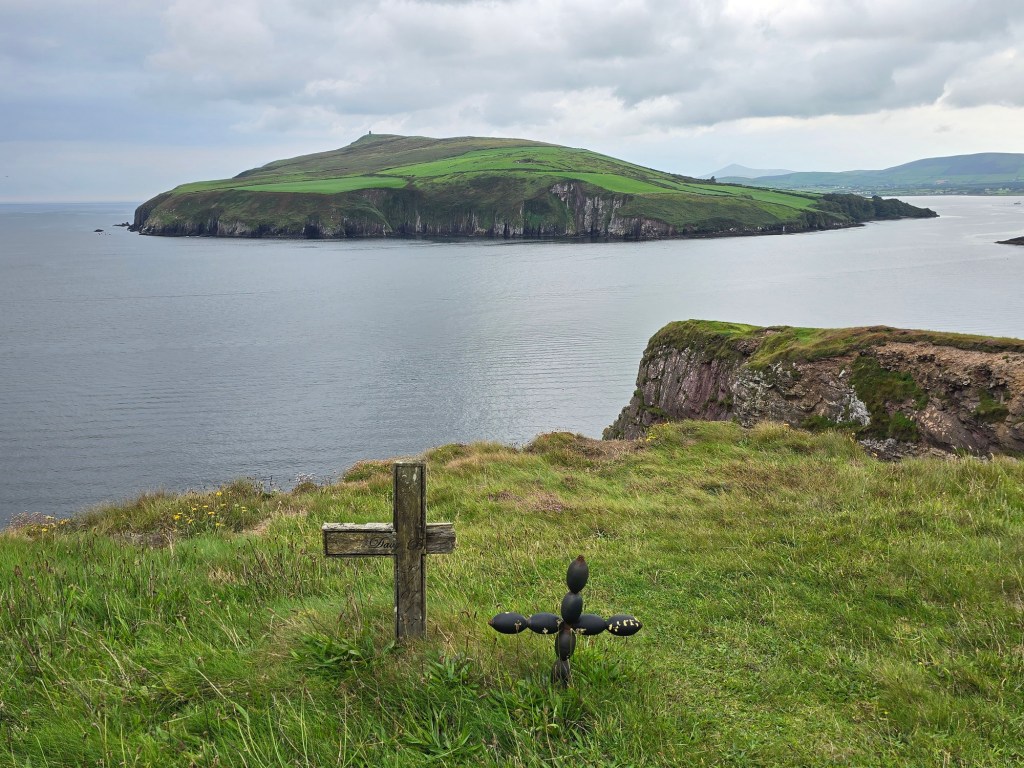
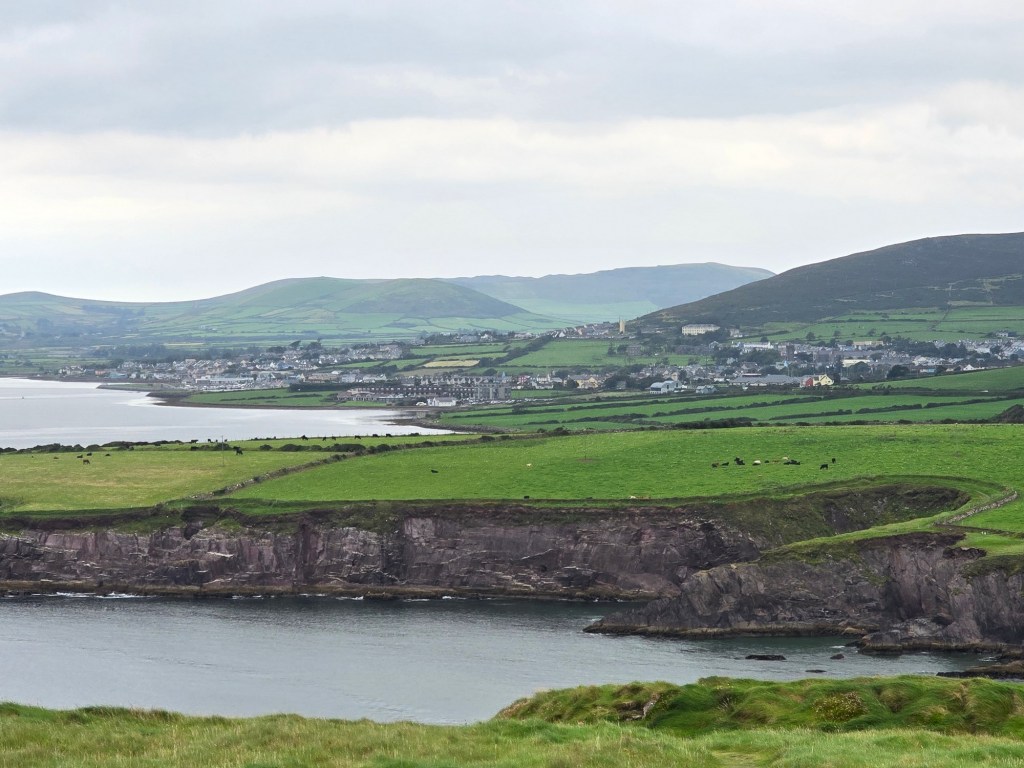
Our last stop around Dingle was the Faolchú Wishing Hill (or just Wishing Hill). This was located a short distance outside the town of Dingle and was a great spot for views of the town, coast and nearby hills. While we were there we even saw a large cruise ship waiting just offshore. No wonder the town was so busy in the summer!
The Wishing Hill is a small but distinctive roadside hill on the Dingle Peninsula in County Kerry, Ireland, best known for its long-standing wishing tradition and panoramic coastal views. It is supposed to be a spot where cars have the illusion of rolling upward if put in neutral, but considering the weather and steep gradient in the parking area, we weren’t interested in putting it to the test.
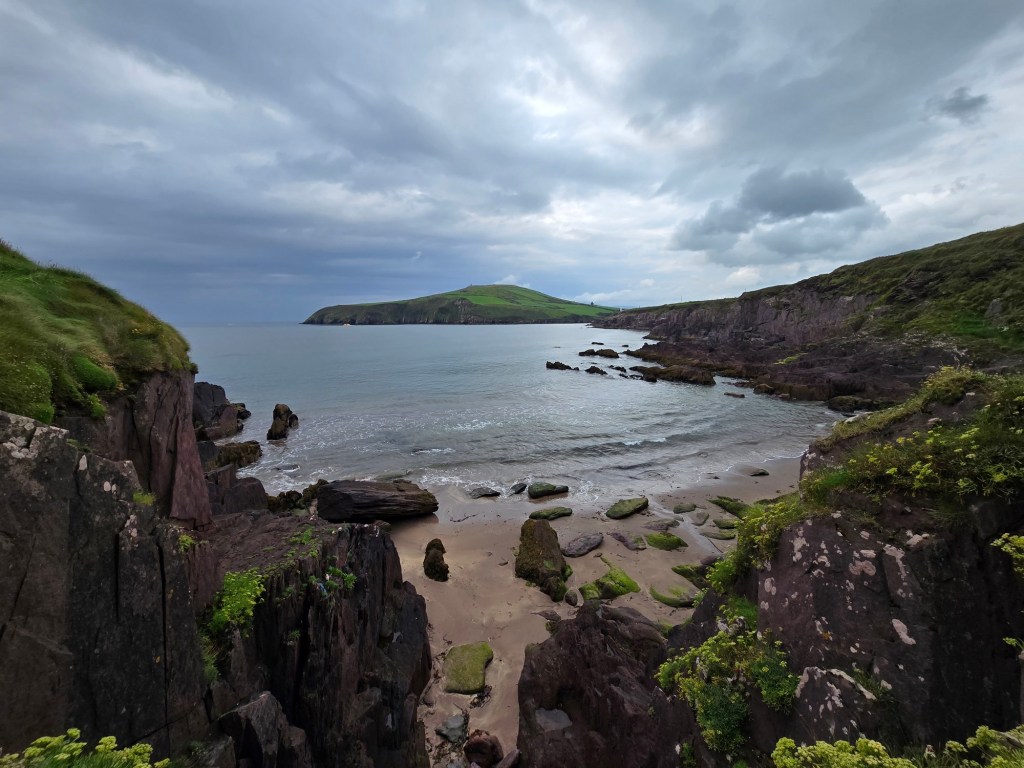
It was a short walk from the parking area to a small beach near the hill. Later we saw three women swimming there even though the weather was gloomy and the water was cold.
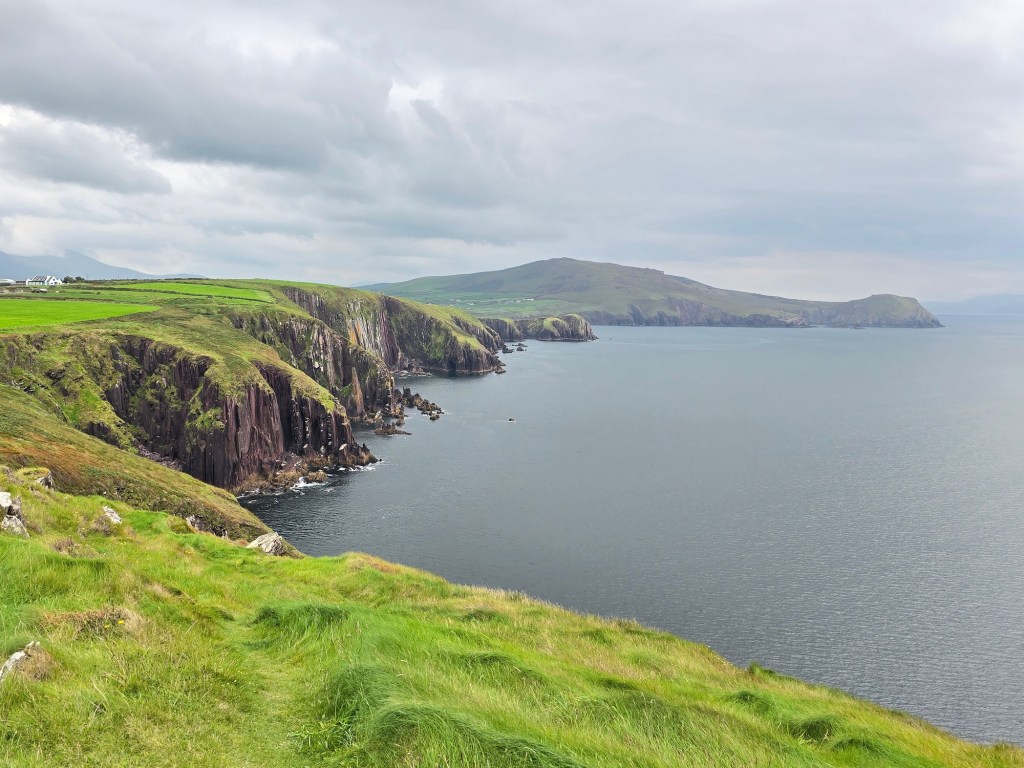
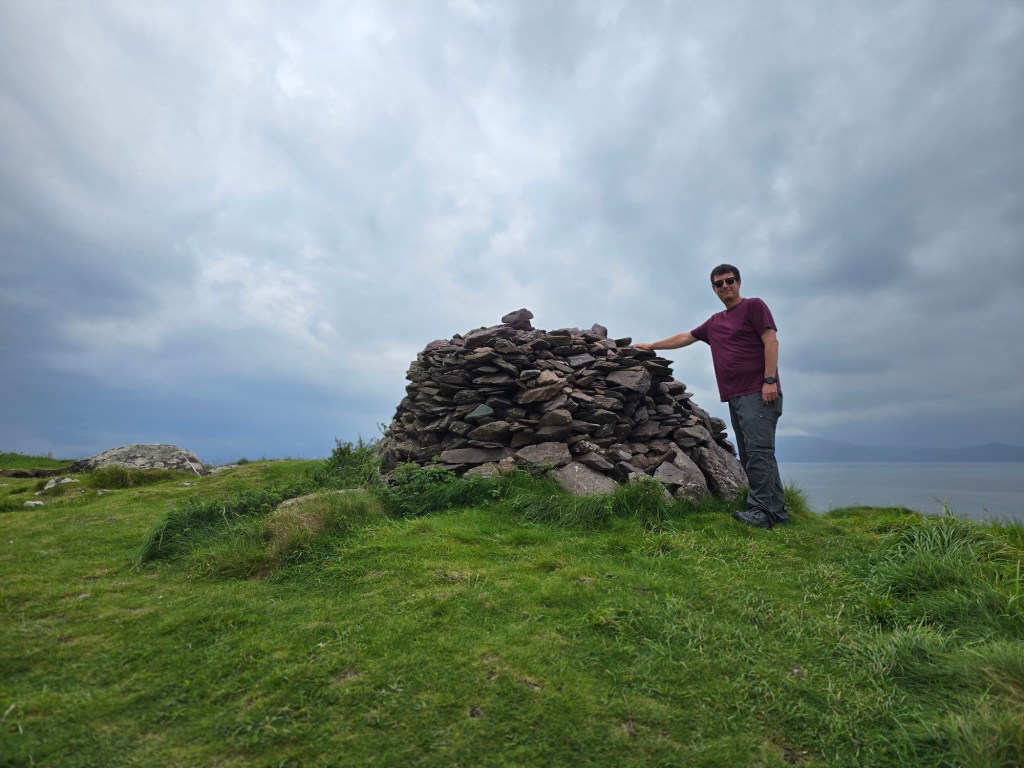
After checking out the beach we headed towards the coast. It took about 10 minutes of walking to reach the southern edge of the peninsula. As well as views facing south, we had impressive views towards the east and west, as well as back towards the town of Dingle. We highly recommend visiting this spot if you visit the Dingle Peninsula.
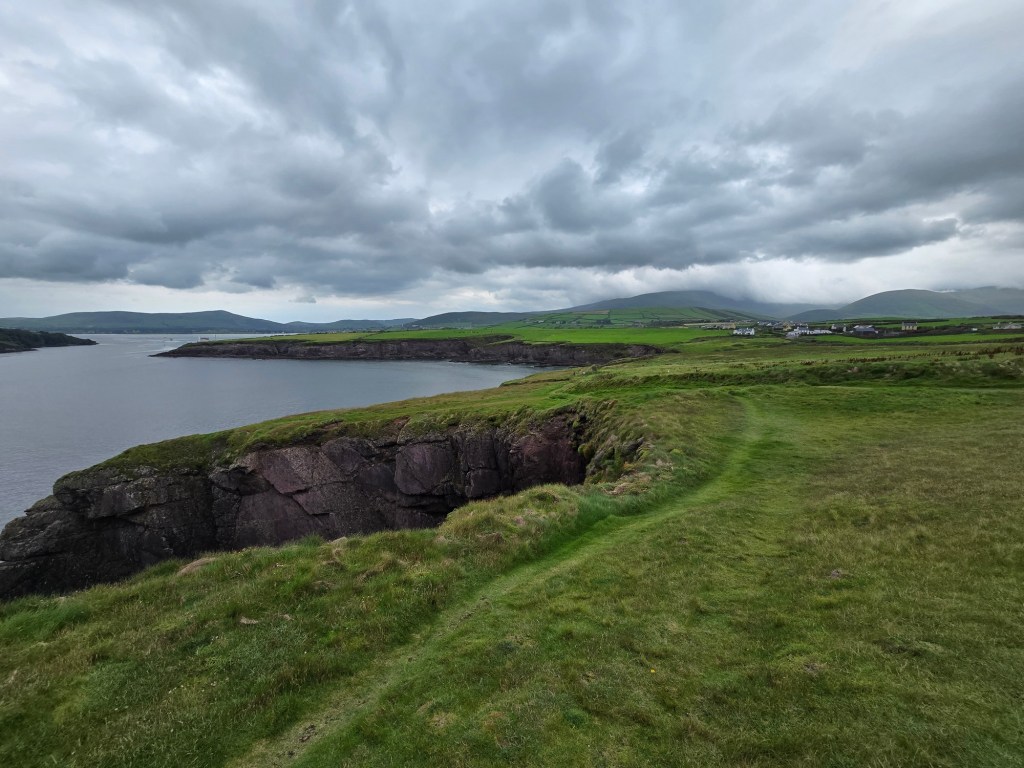
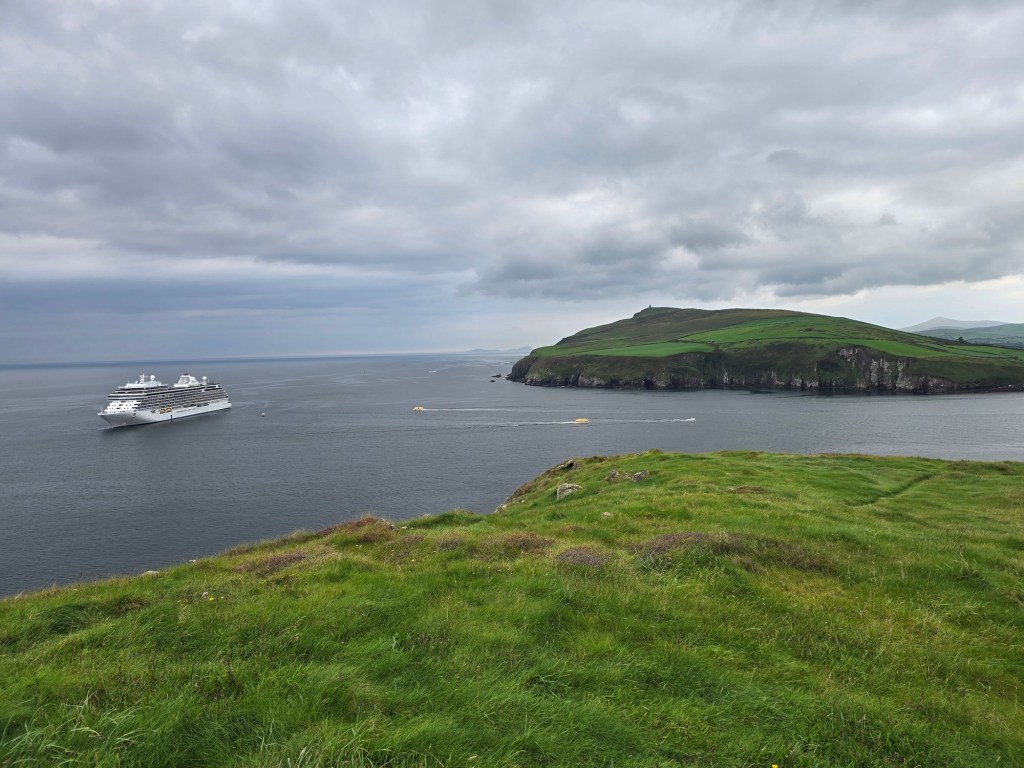
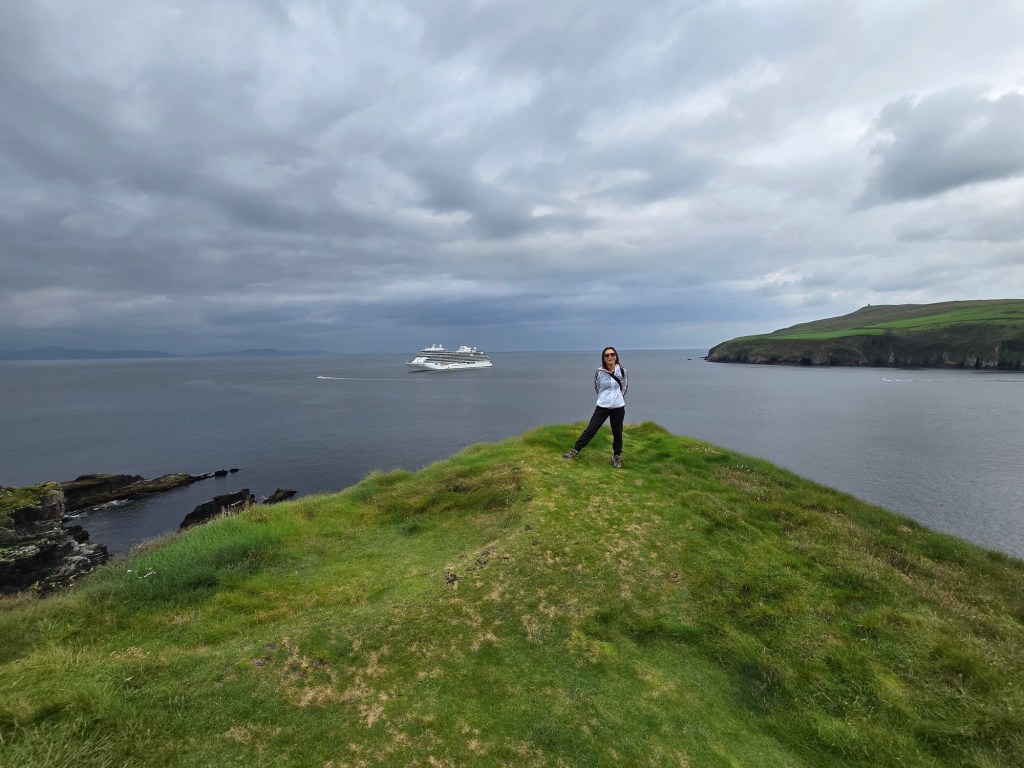
This day was a great introduction to the Dingle Peninsula. The weather was a bit cool and wet, but aside from cutting short the Conor Pass visit we didn’t mind because it added a bit to the dramatic views. On the next day our plan was to do the Slea Head Drive, a dramatic circular route along the coast of the peninsula. That one will be in the next post.
 Humphreys Travel