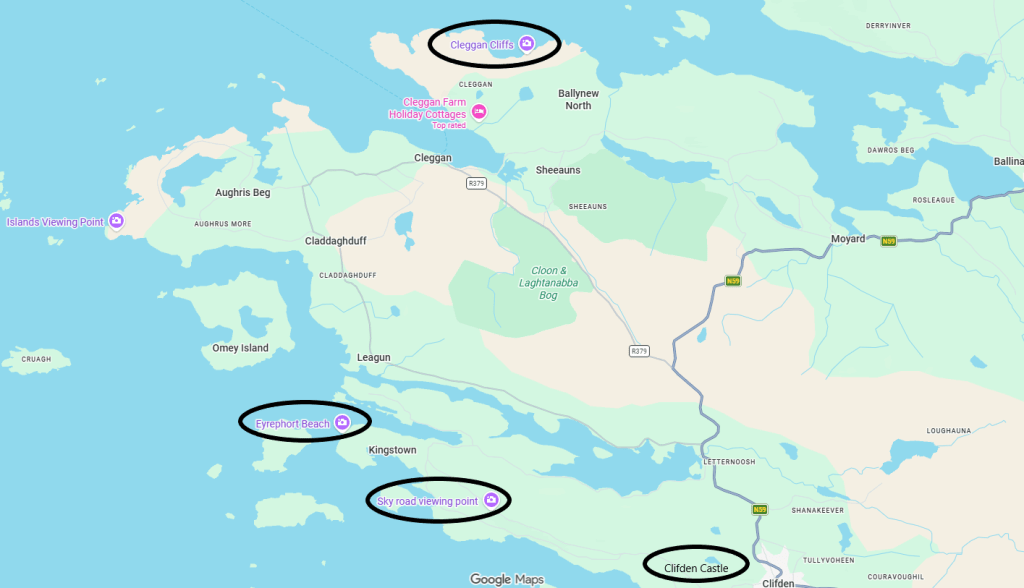
While staying a little to the west of Galway City (an area called Lettermuckoo), we spent one day doing the Sky Road loop. Part of the Wild Atlantic Way coastal route, the loop itself takes less than an hour to do. But with all the stops, walks and detours added to it, this part of the Connemara region of County Galway ended up taking most of the day for us.
Clifden Castle
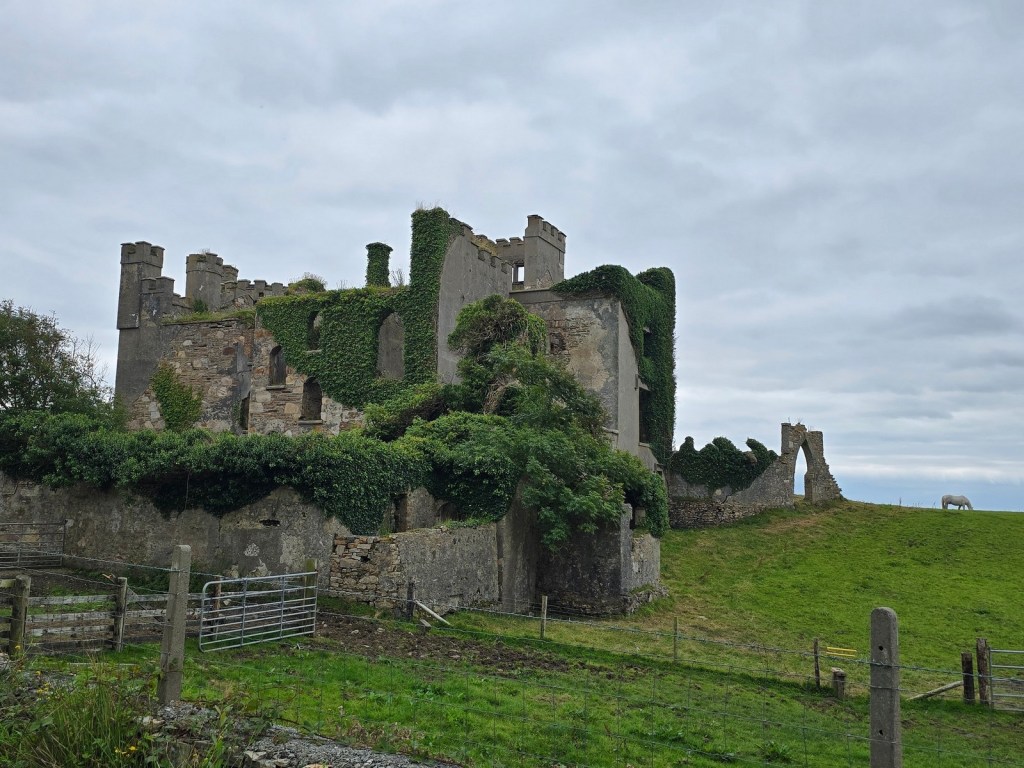
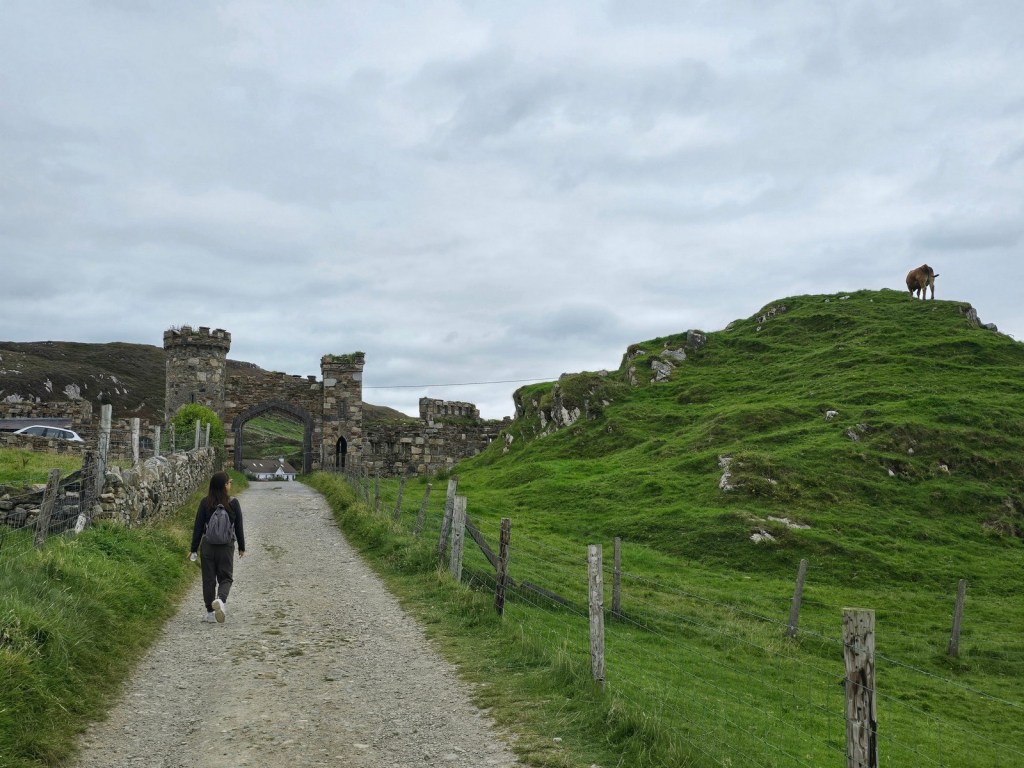
We started by visiting Clifden castle near the start of the route. Sitting just off the Sky Road near the town of Clifden, it’s less a “castle” in the medieval sense and more a romantic 19th-century manor built to look like one. There is ample parking near the ceremonial entrance and castle entry is free–very nice!
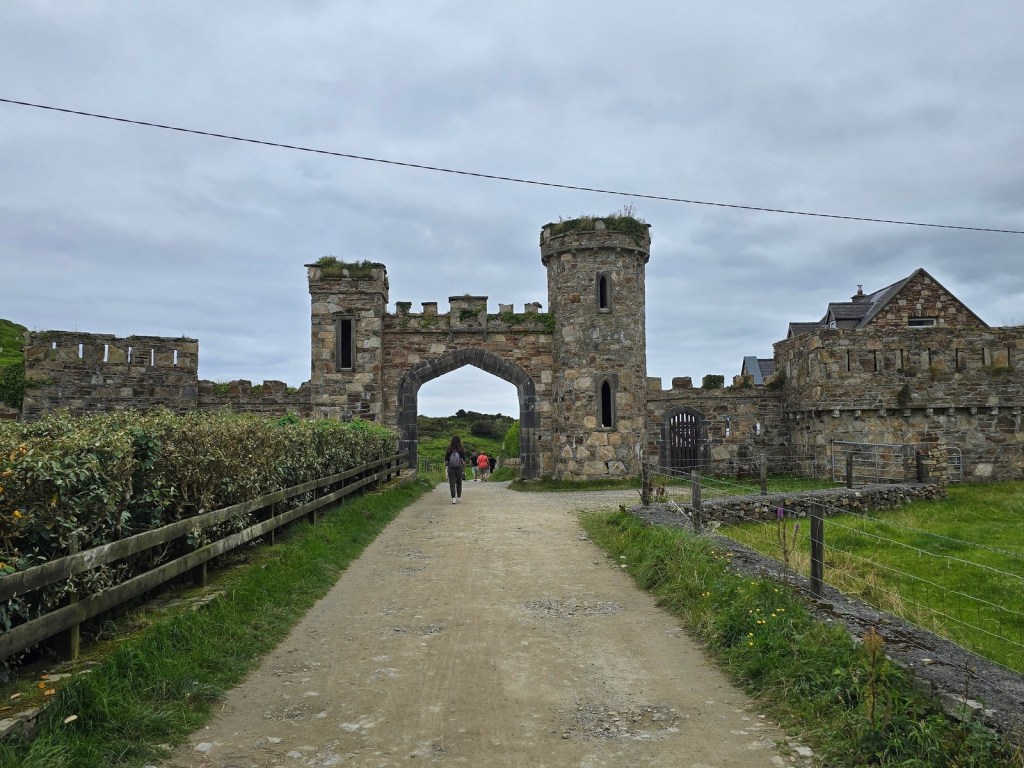
To get to the castle there’s a 20 minute walk through the countryside on a rough dirt road. It’s quite picturesque with views of rolling hills and the ocean. The site wasn’t too busy when we visited, partly because the long walk to the castle spreads the visitors over a wide area.
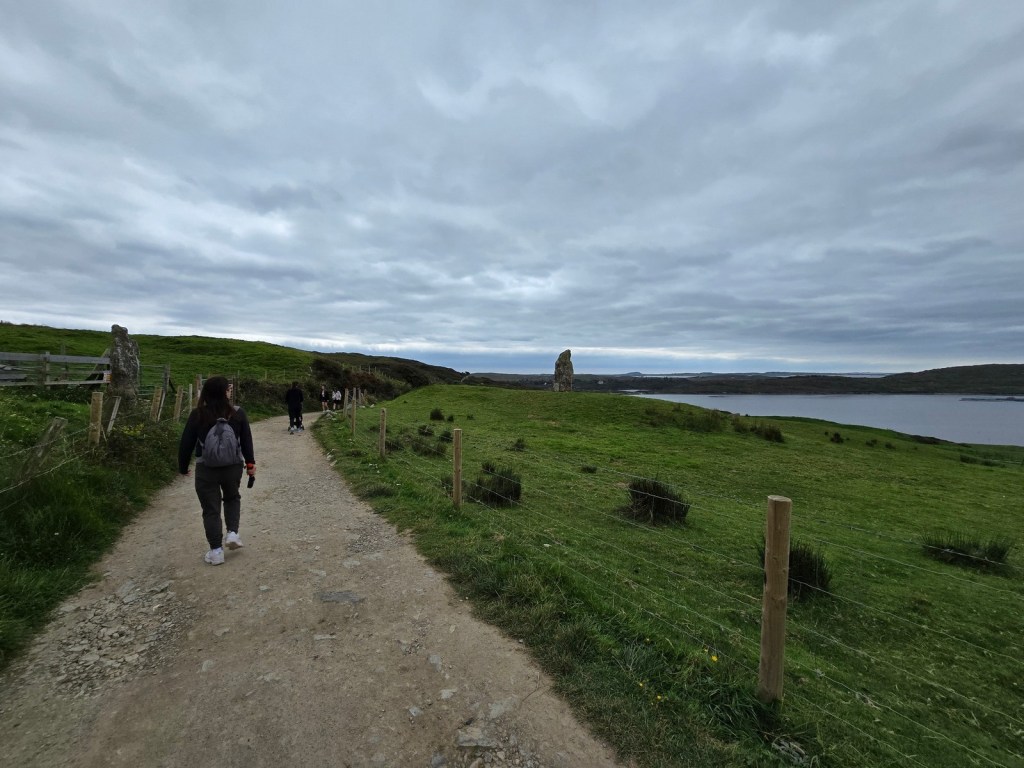
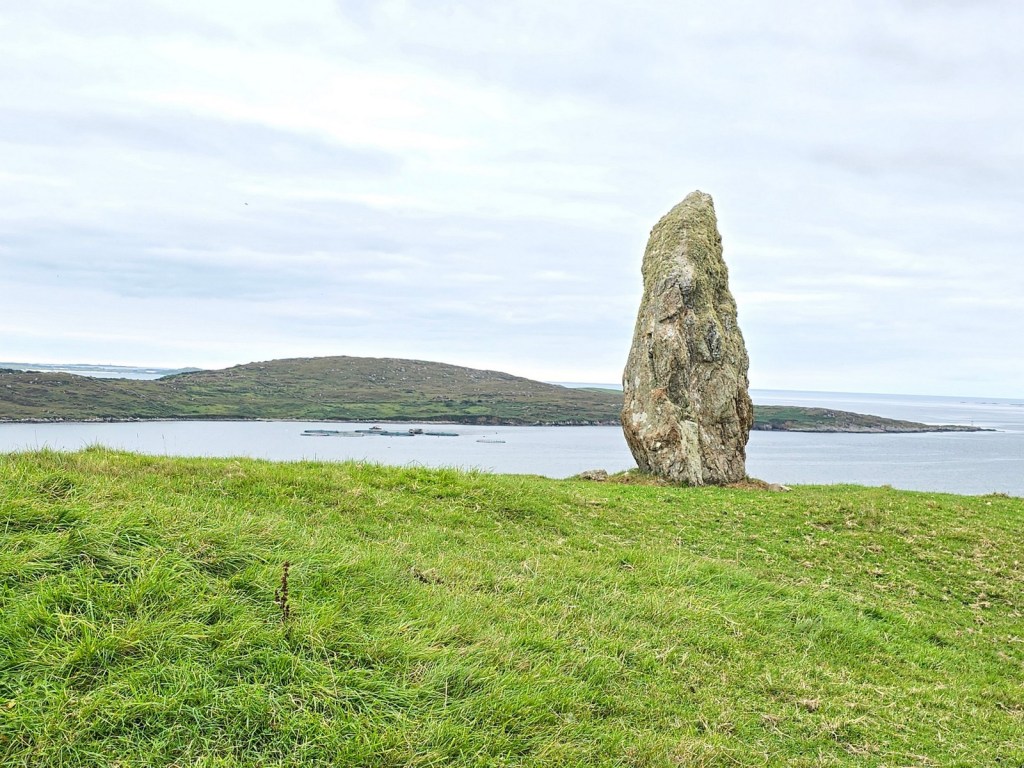
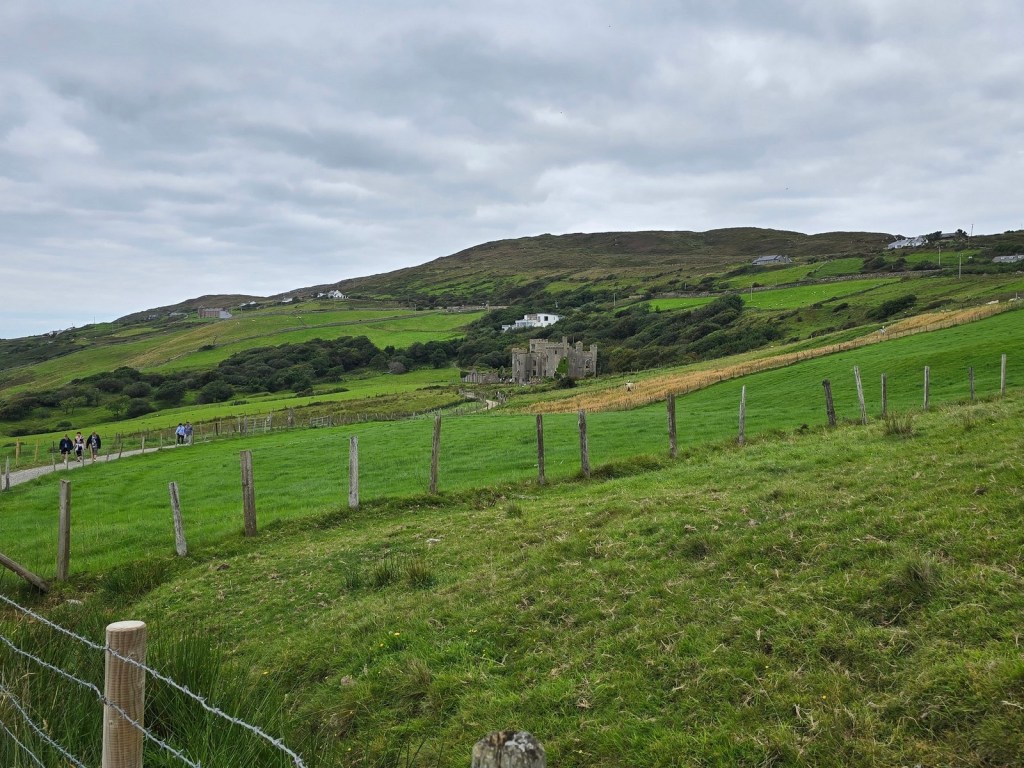
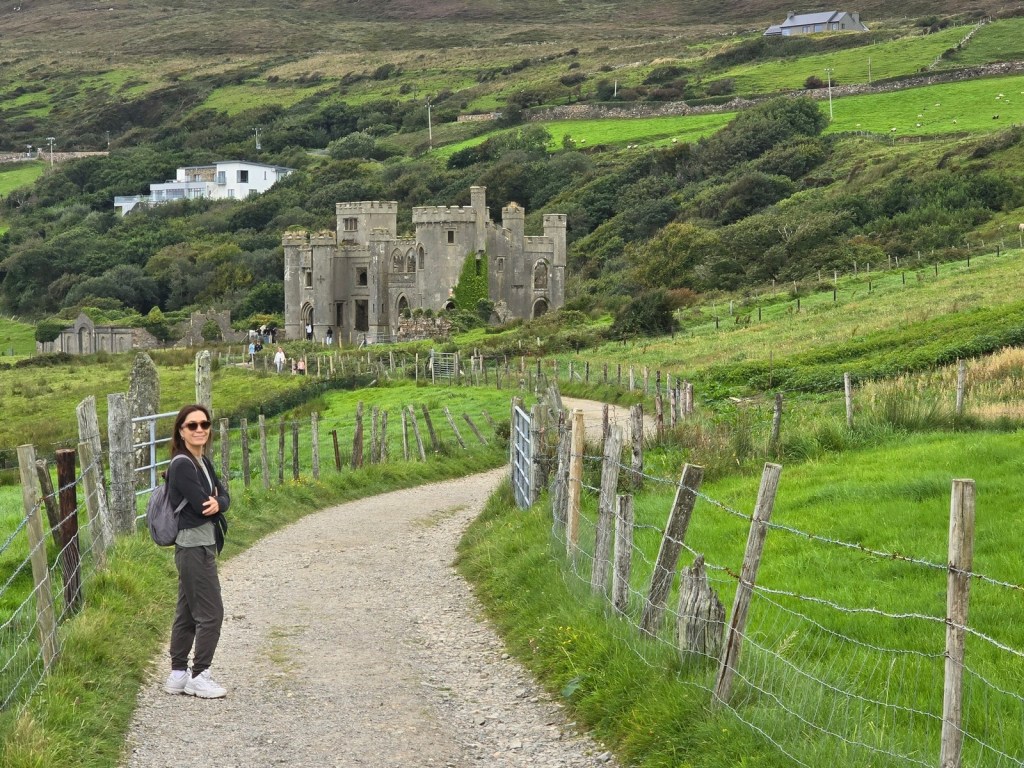
The castle was built around 1818 by John D’Arcy, the man who essentially created the town of Clifden from scratch. It was designed in the Gothic Revival style with pointed arches, turrets and battlements. It sat at the heart of a massive estate (over 17,000 acres). This castle wasn’t defensive. It was a status symbol, meant to project power and refinement. And for a time it did.
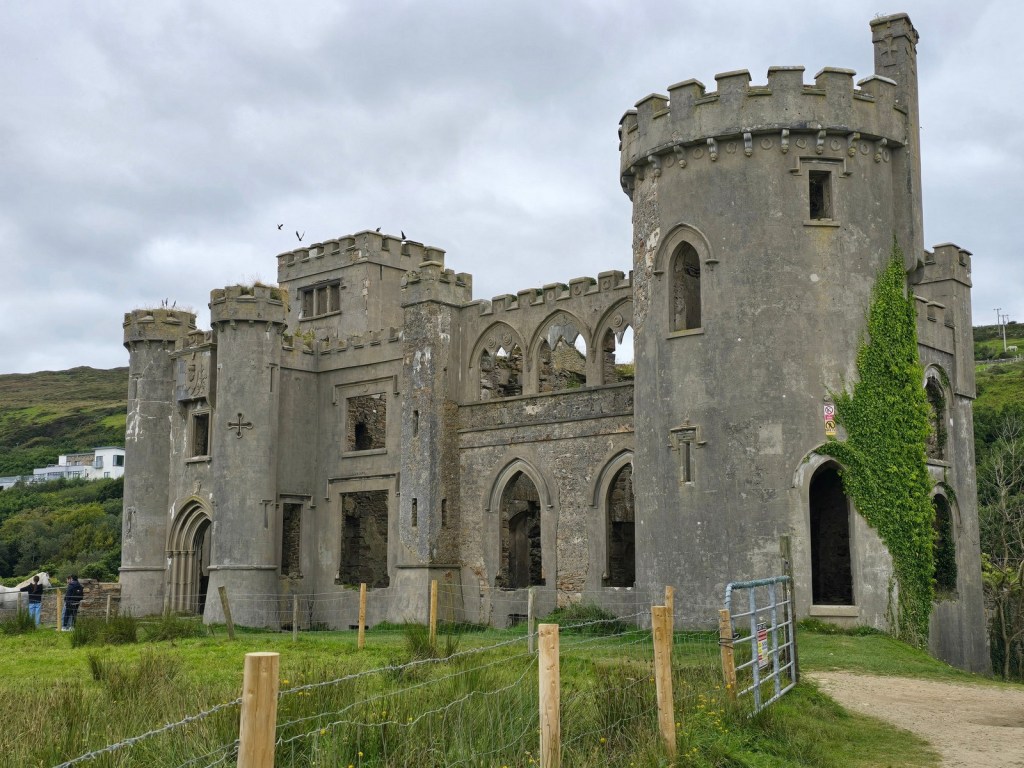
At the time, this part of Connemara was remote and underdeveloped. D’Arcy built both the castle and the town as part of an ambitious plan to modernize the region. The castle’s story is tightly tied to one of Ireland’s darkest periods—the Great Famine. After John D’Arcy died in 1839 Income collapsed, and the estate went bankrupt by 1850. His son Hyacinth D’Arcy inherited the estate but struggled financially. The famine devastated tenants as many couldn’t pay rent and the loss of income was too much for the D’Arcy family. It changed hands a number of times before falling into ruin early in the 20th century.
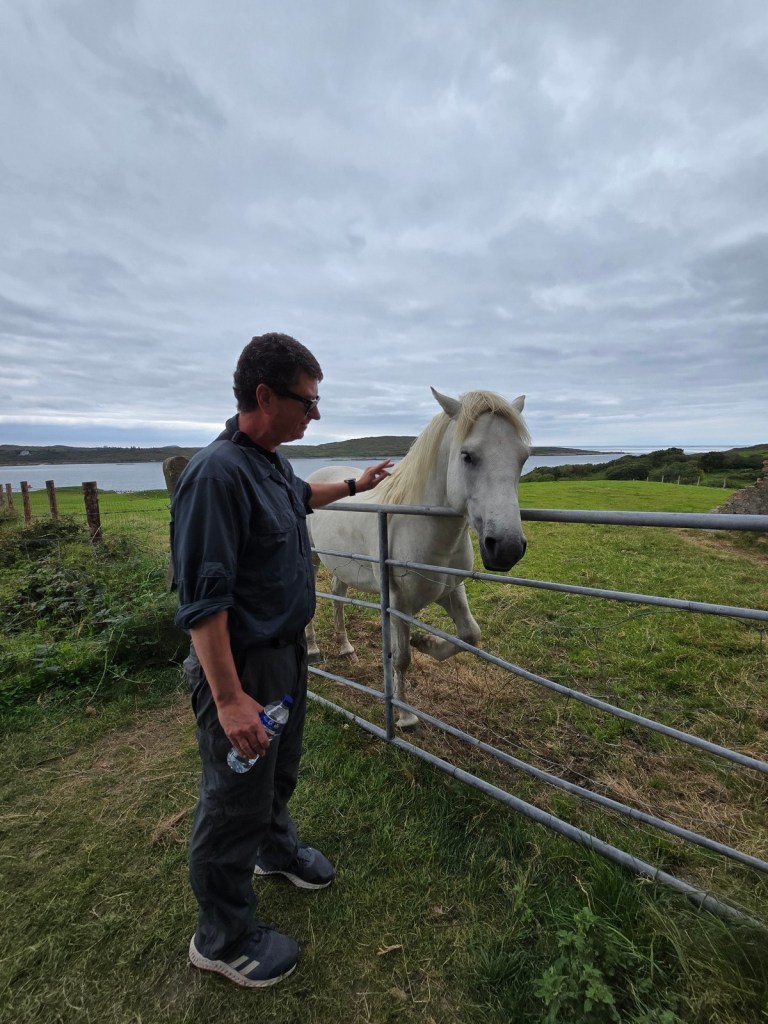
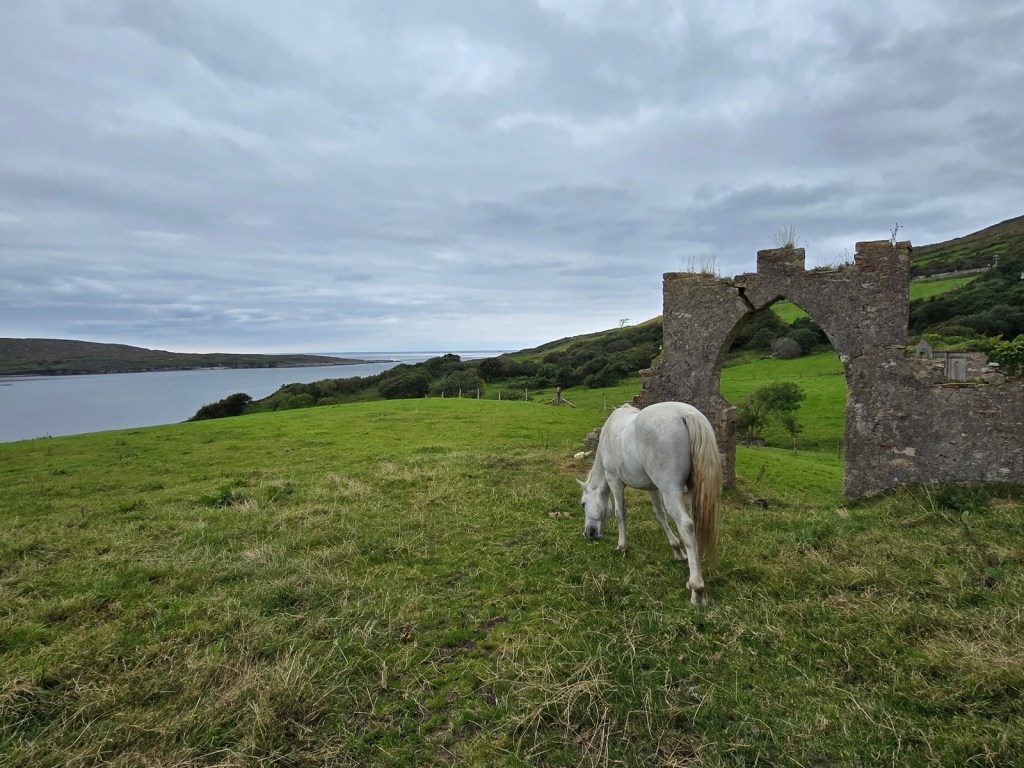
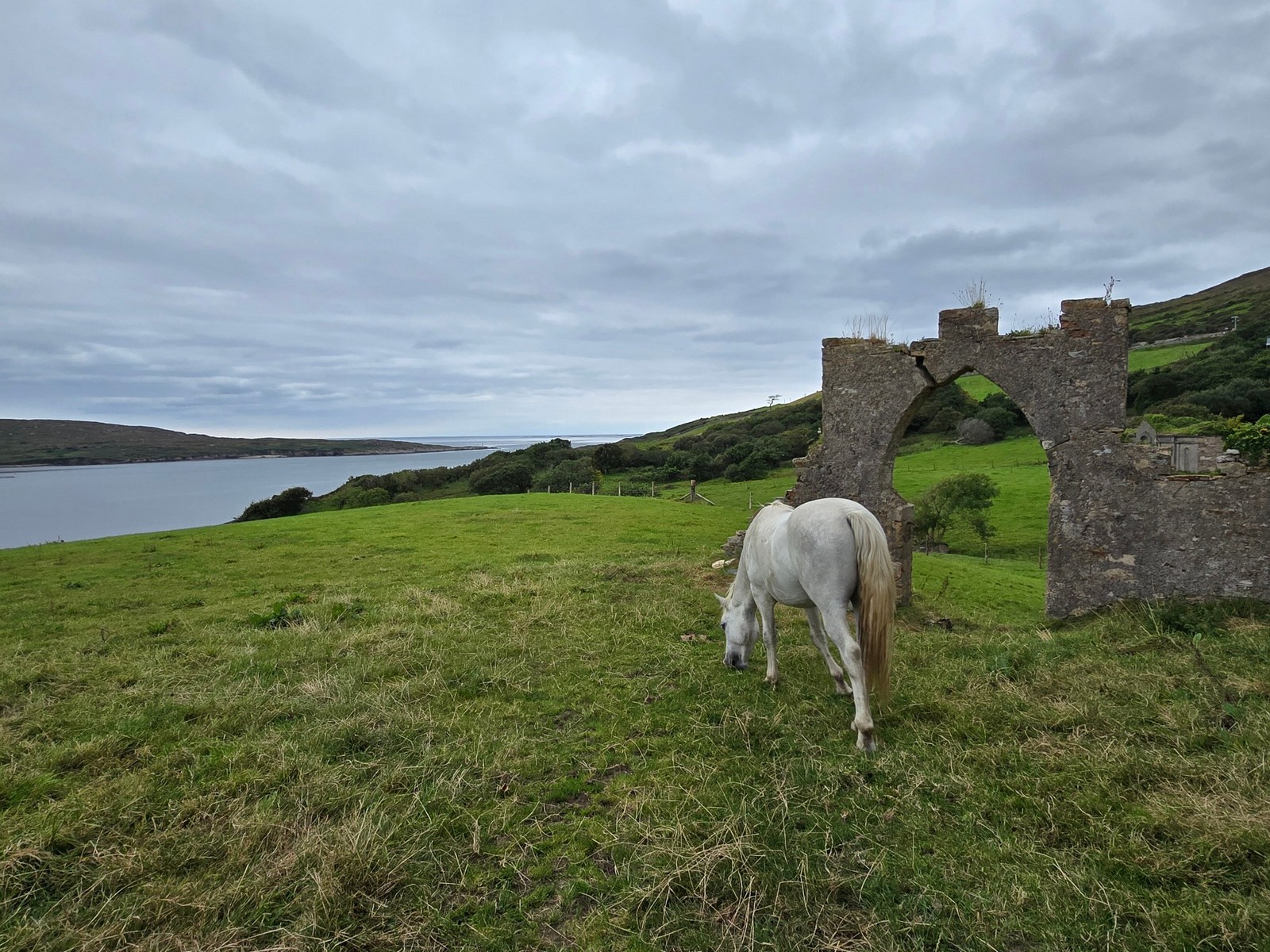
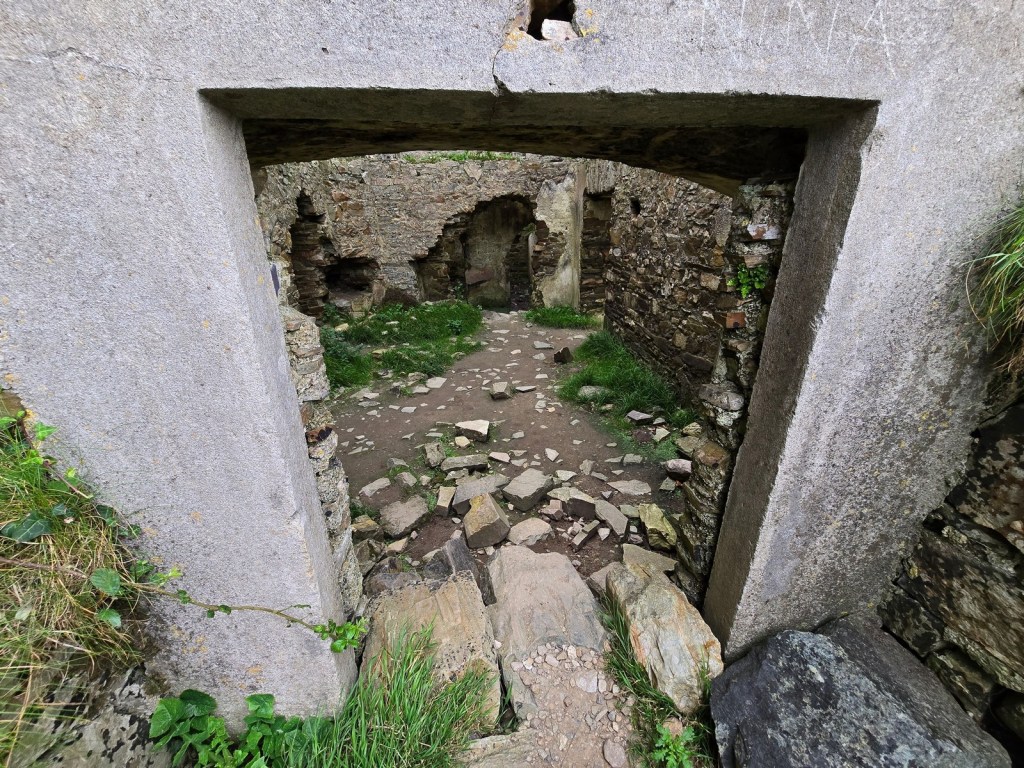
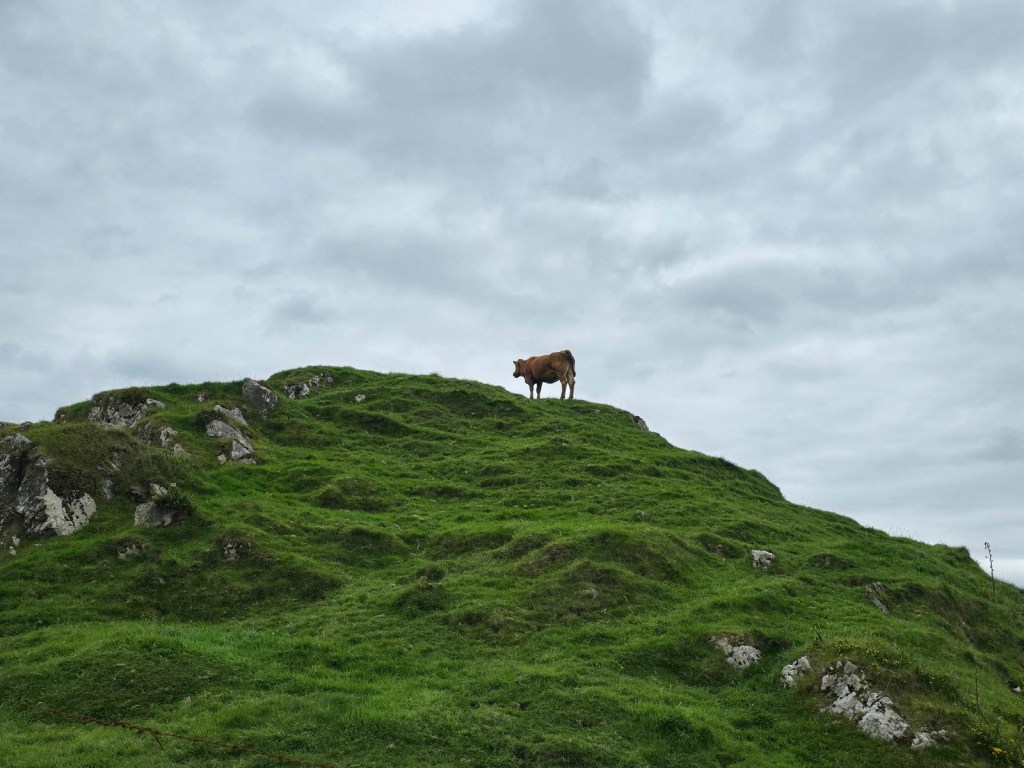
After having a brief visit with a horse stationed just outside the castle (this was becoming a trend!), we made our way into the castle. We had to enter through the basement level as all of the floors were gone. The place was quite large inside as we walked through it.
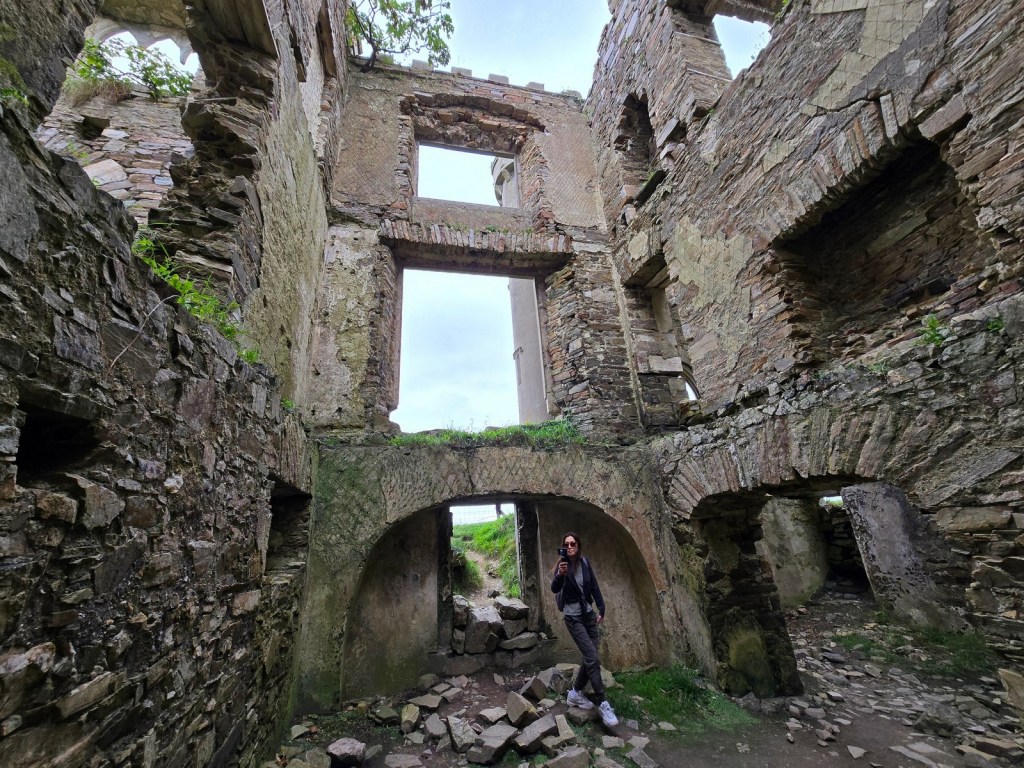
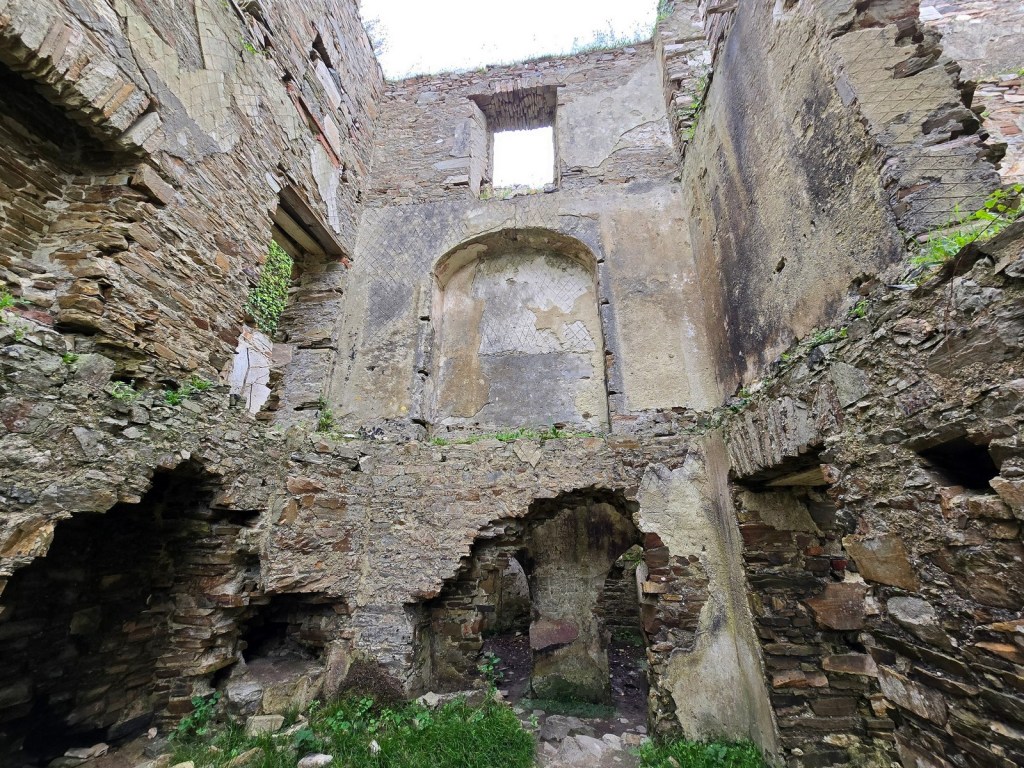
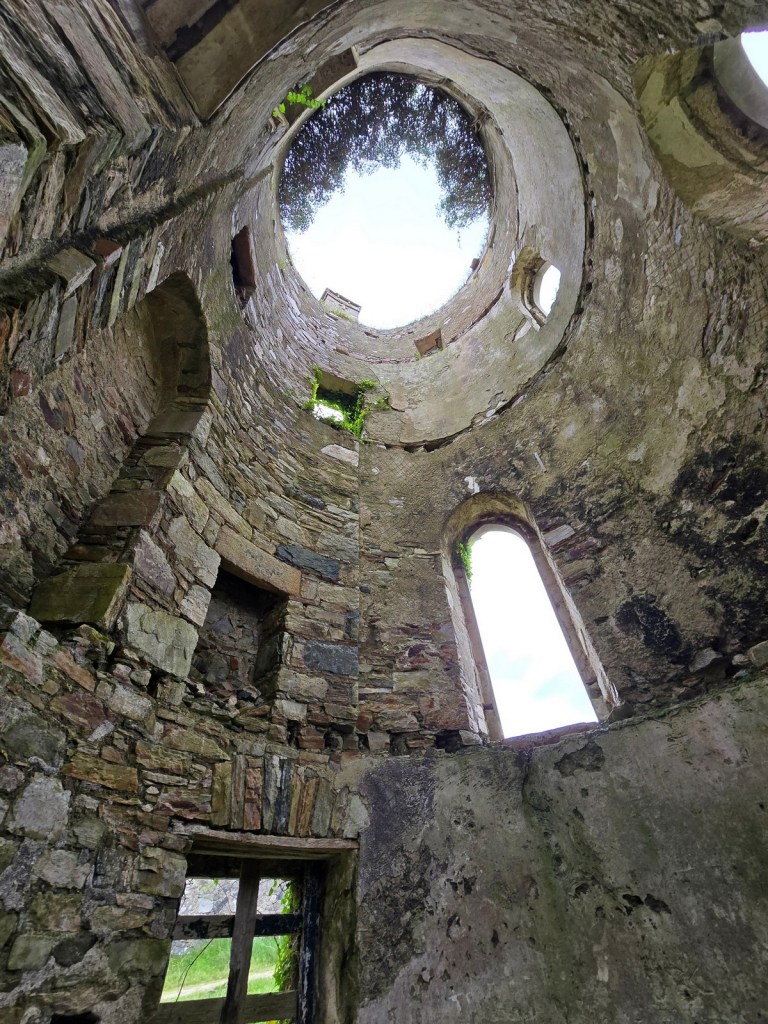
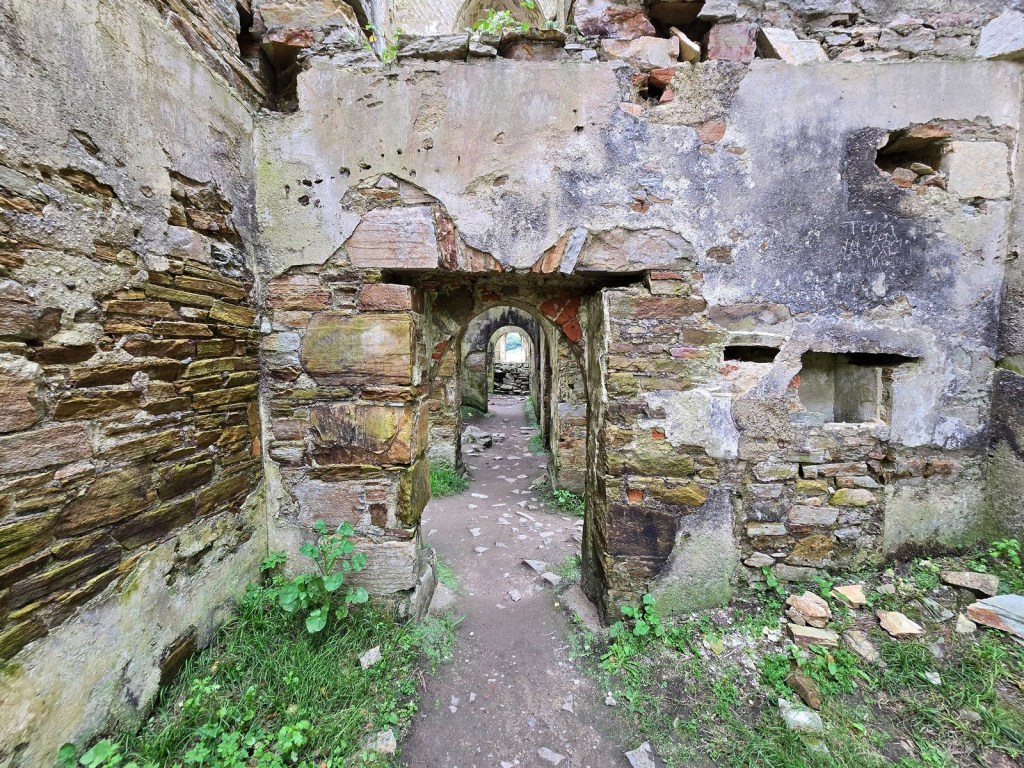
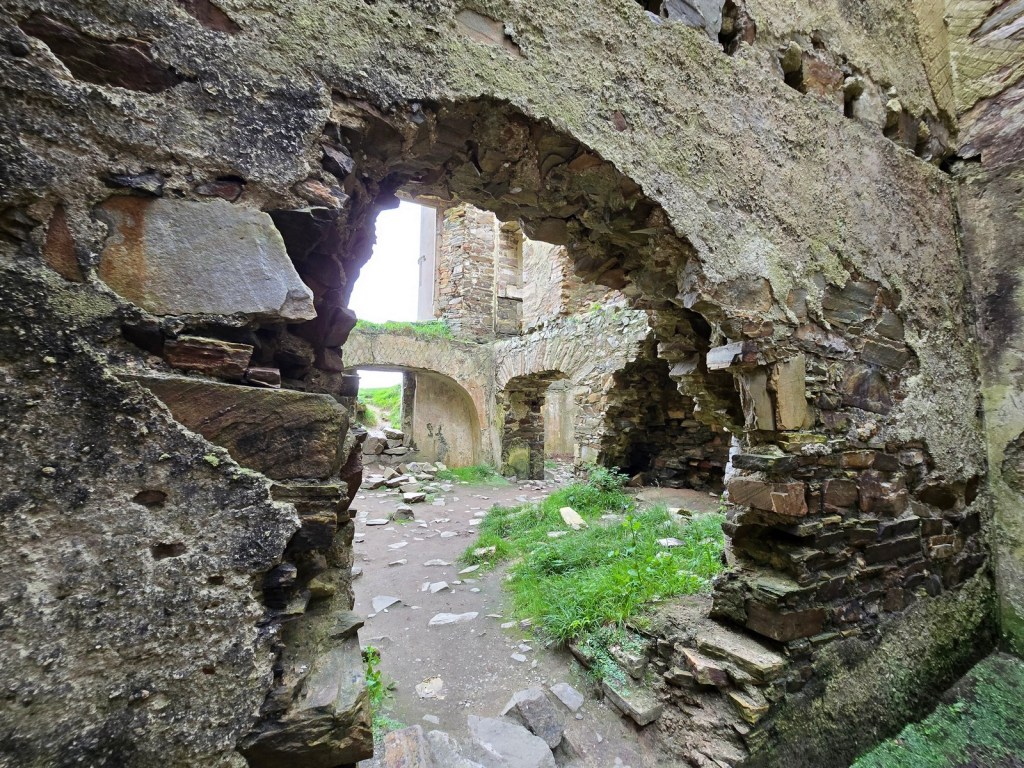
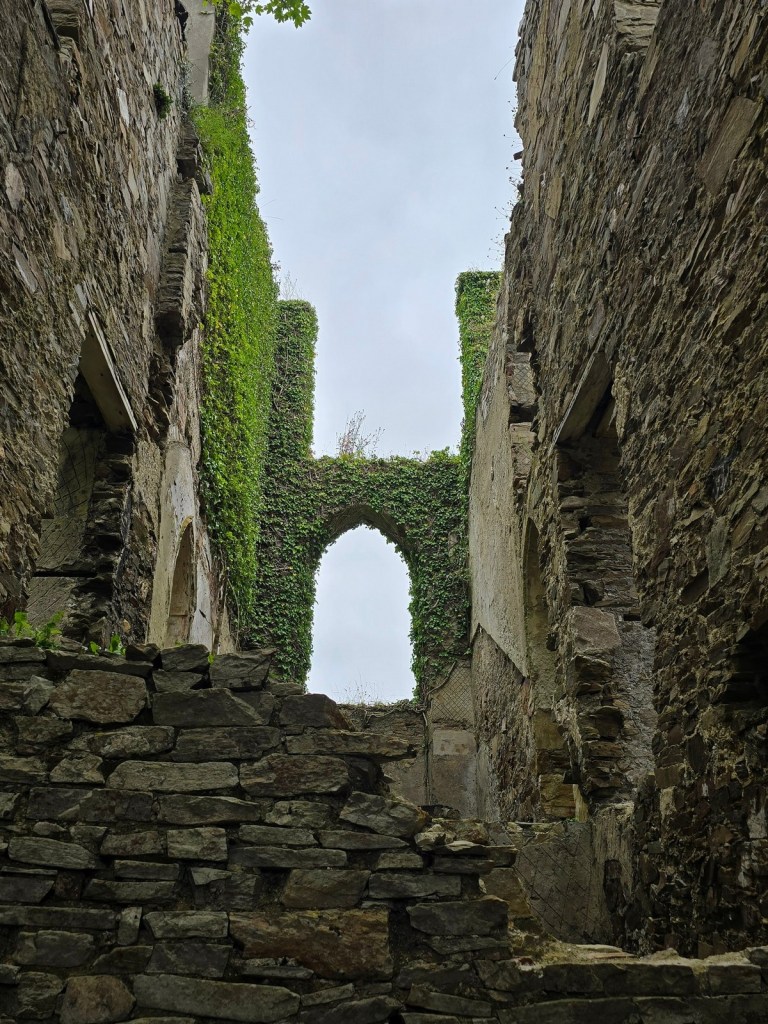
Back outside, we noticed a path that went behind the castle and further along the hills. Nobody else was going that way so we decided to check it out.
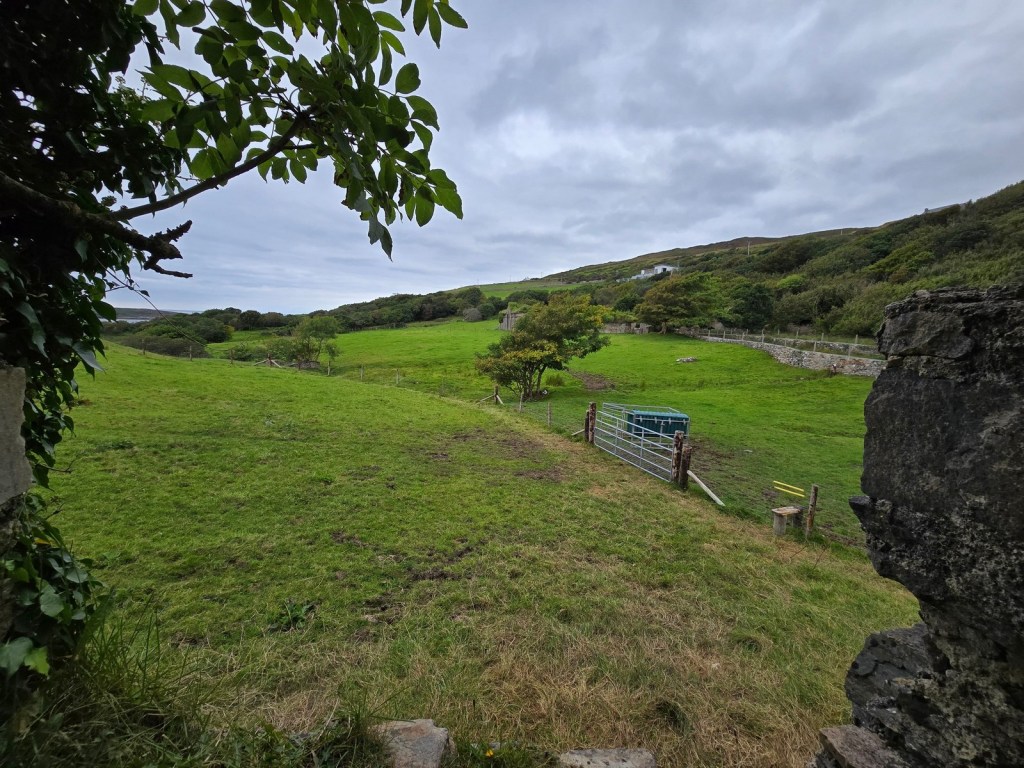
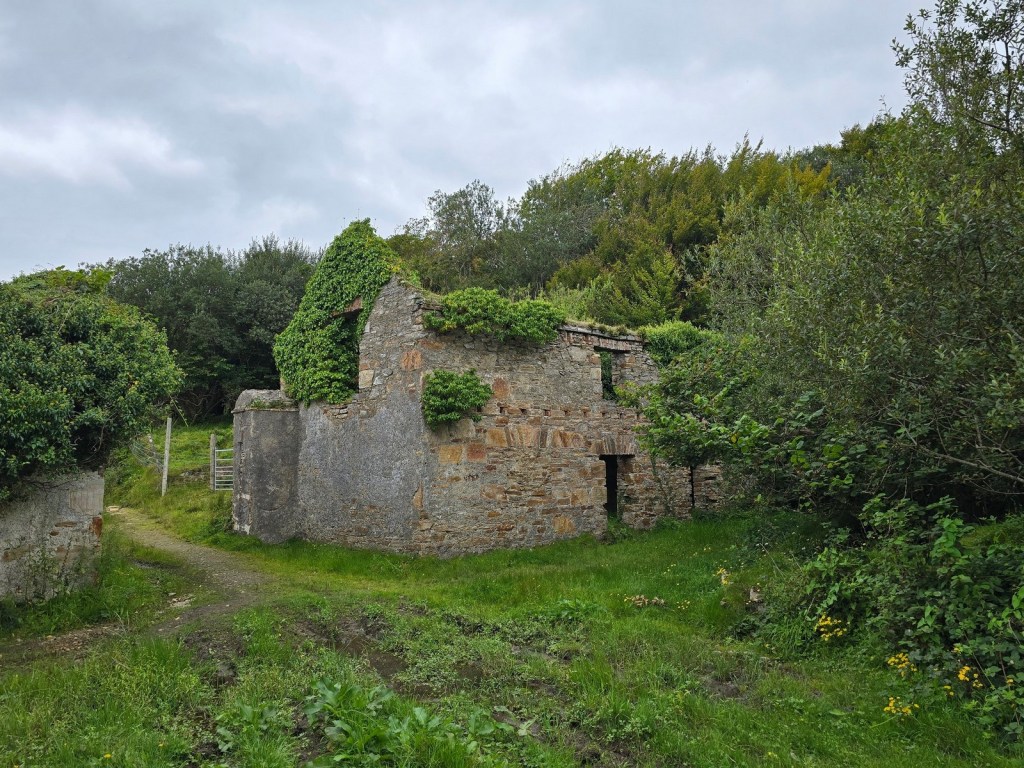
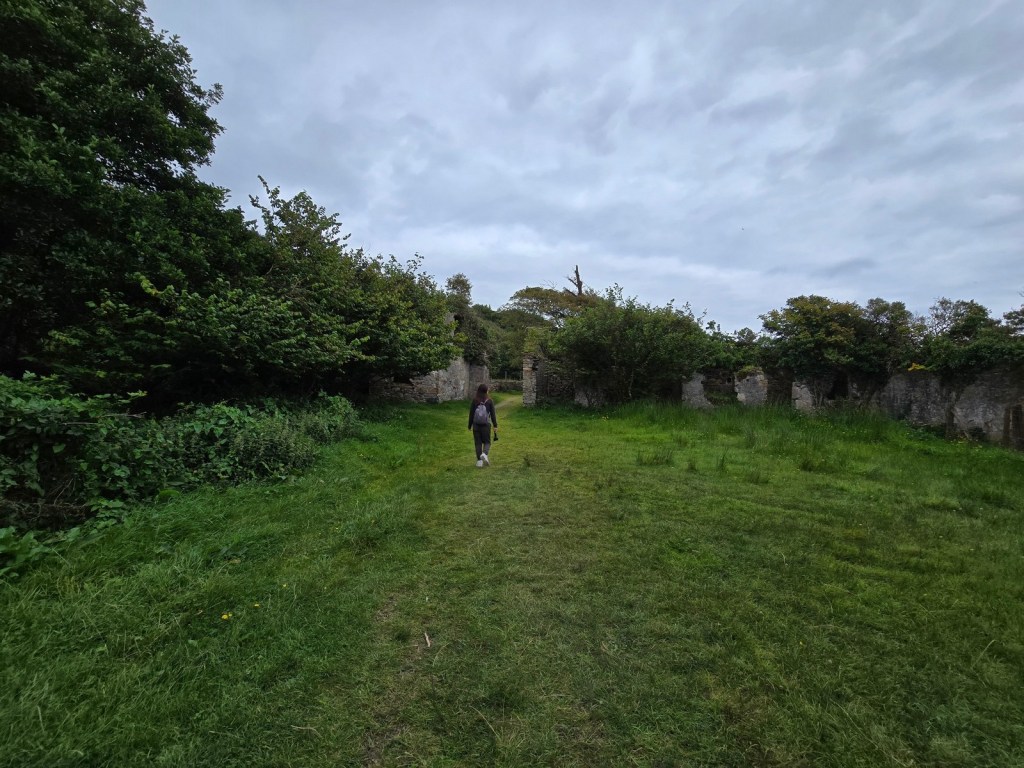
After walking through the ruins of a garden, some stables and other quarters, we decided to head back. Clifden Castle was well worth the stop. Long walks are never boring when paired with striking visuals!
Sky Road Lookout Point
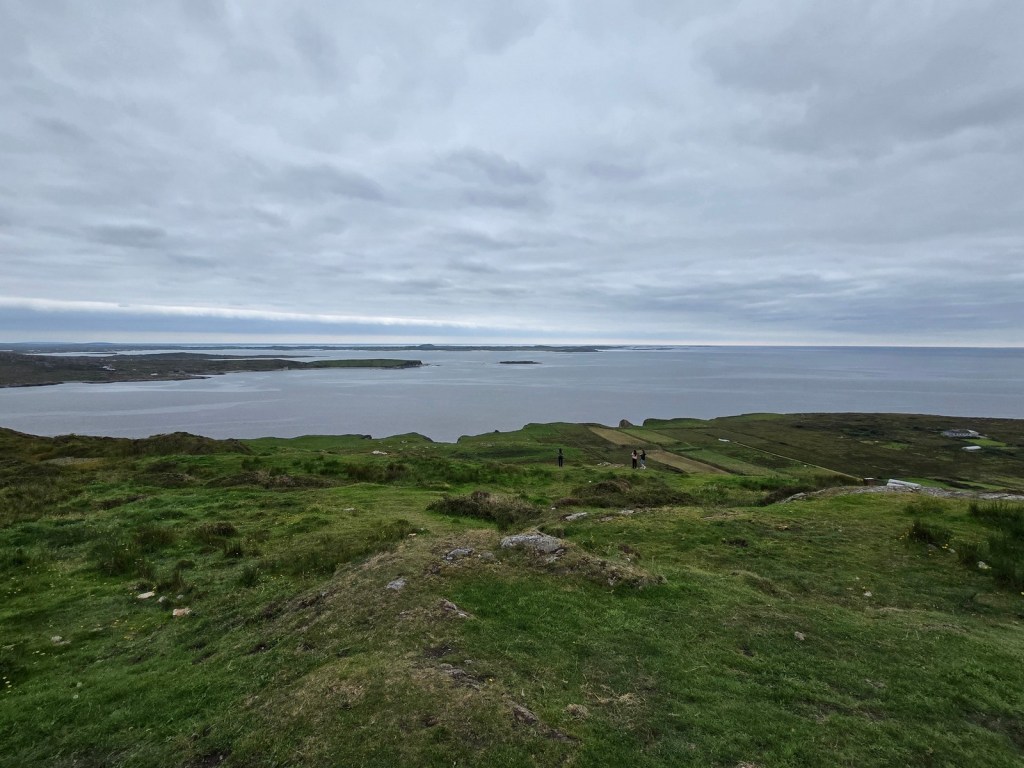
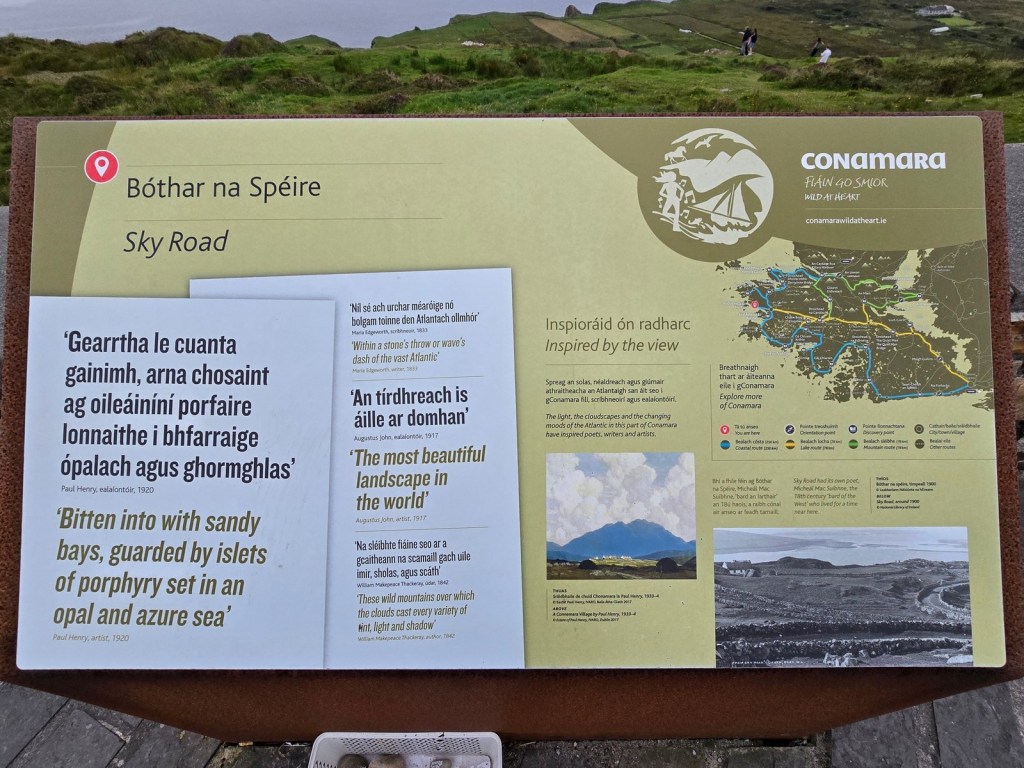
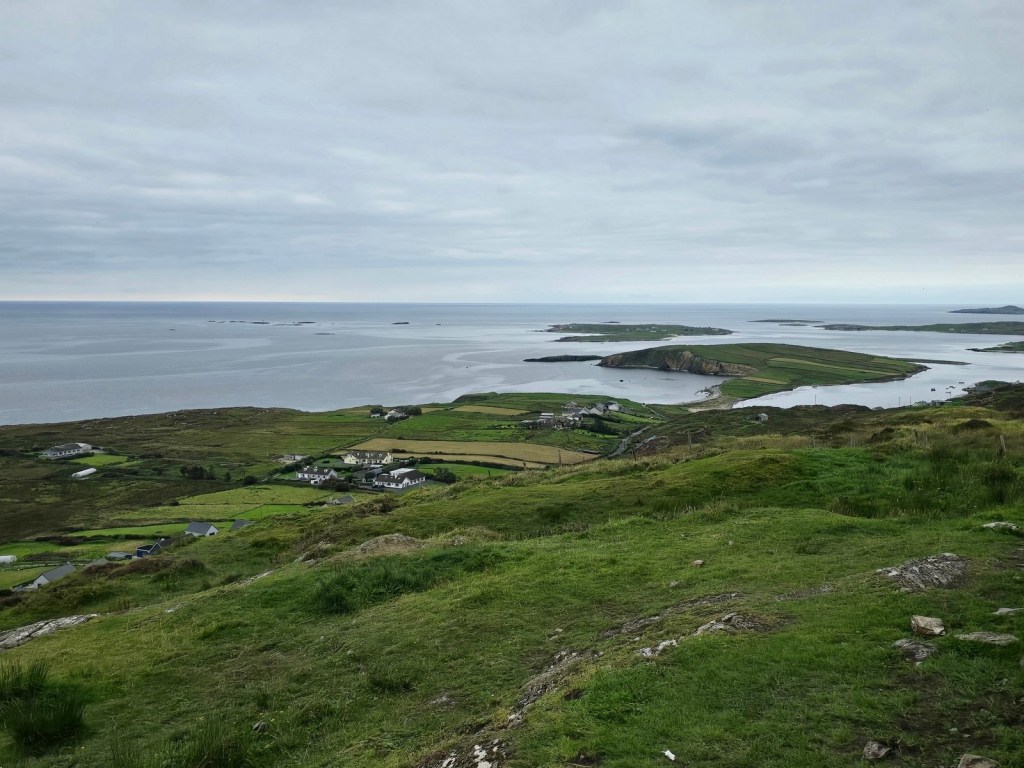
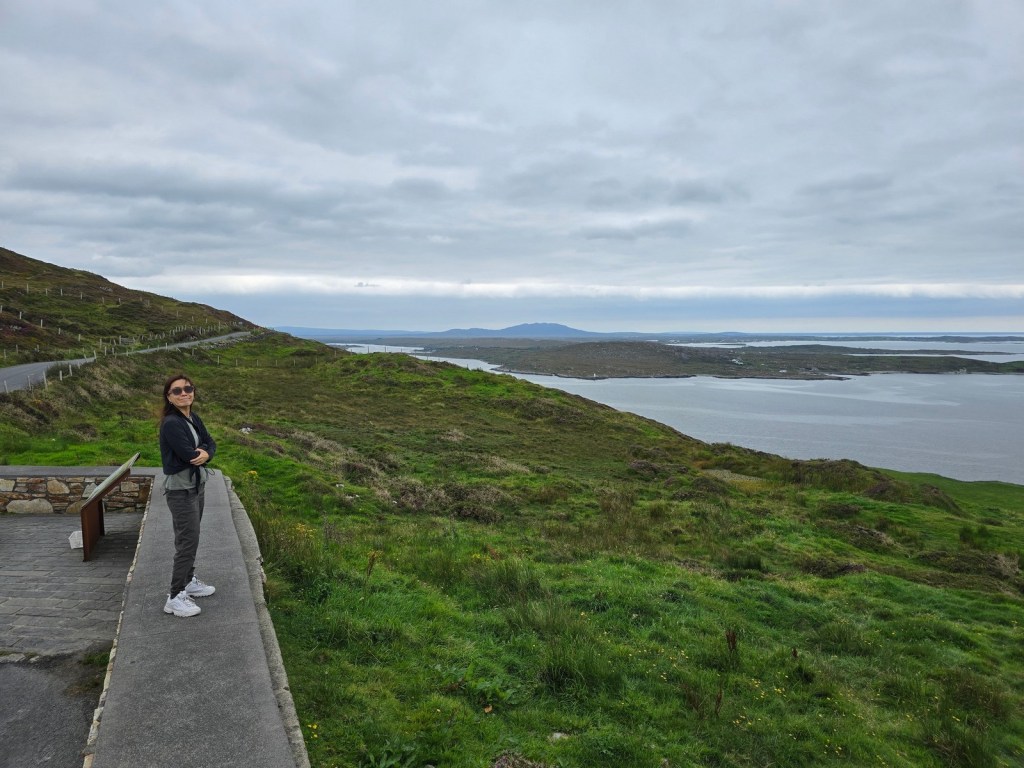
After doing Clifden Castle we continued further along Sky Road until we hit a few lookout points. Parking is limited but we were fortunate each time and found a spot. We found that the Wild Atlantic Way coastal route became quieter the further north we drove. It was nice having fewer tourists sharing these impressive views with us.
Eyrephort Beach
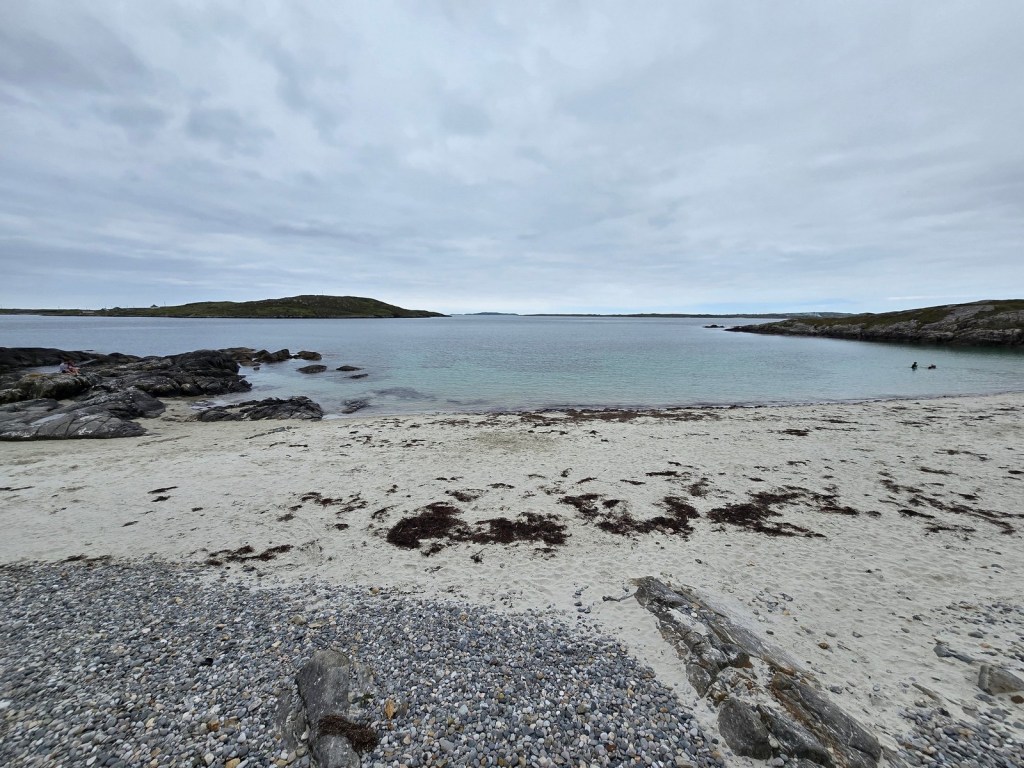
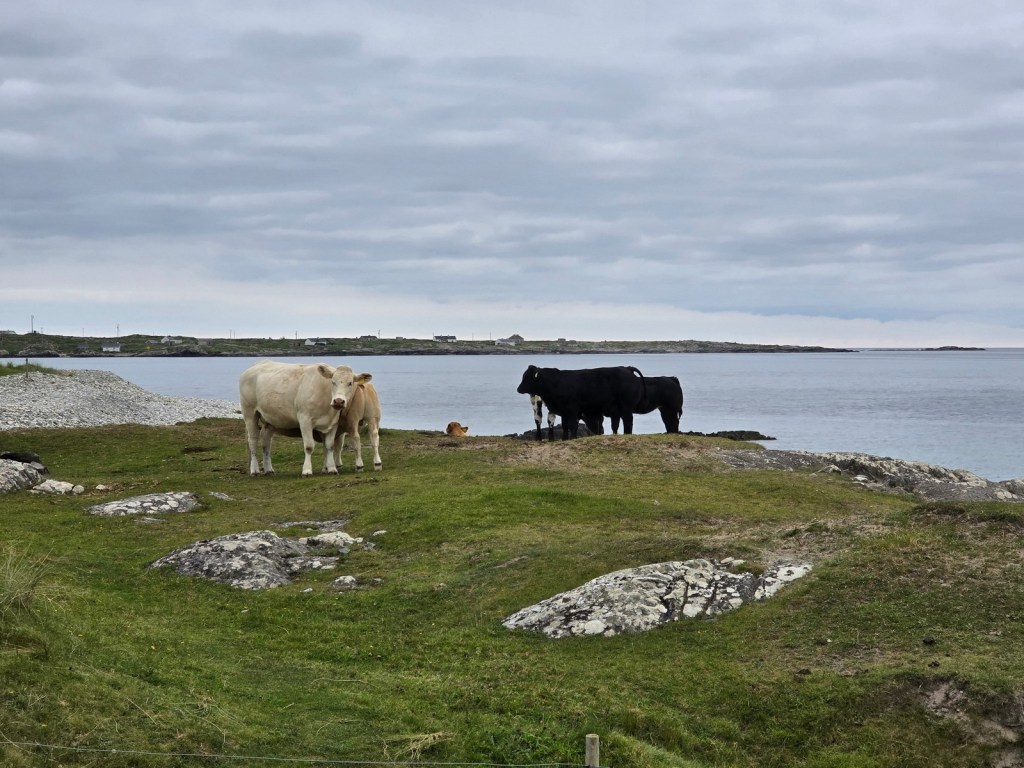
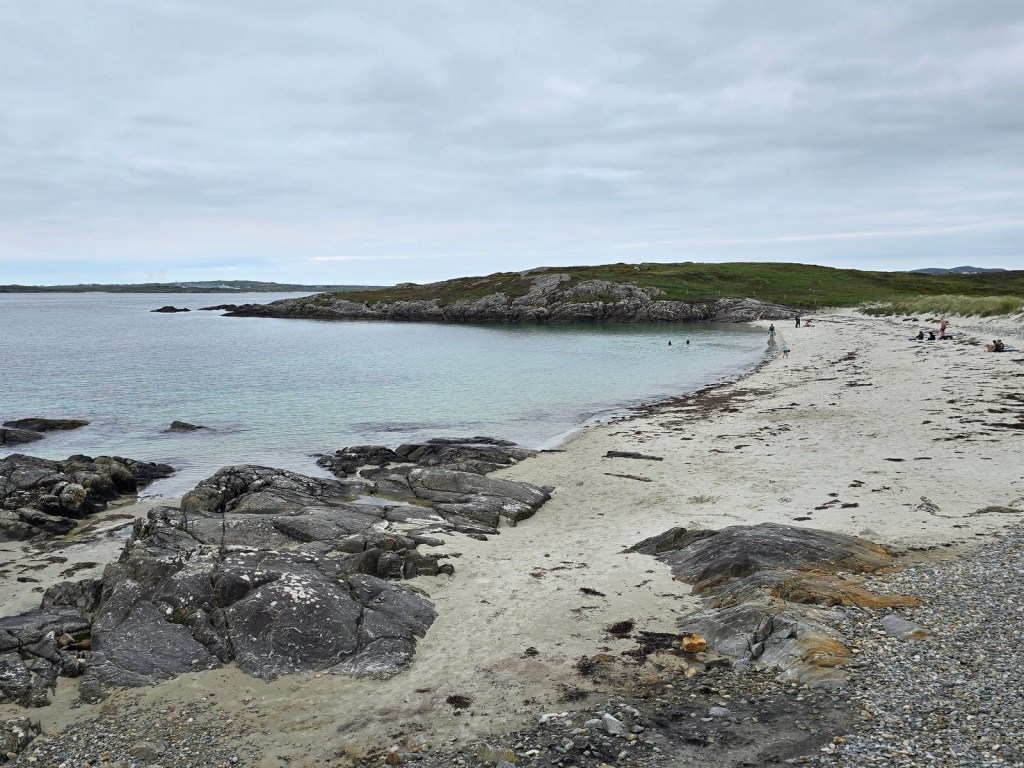
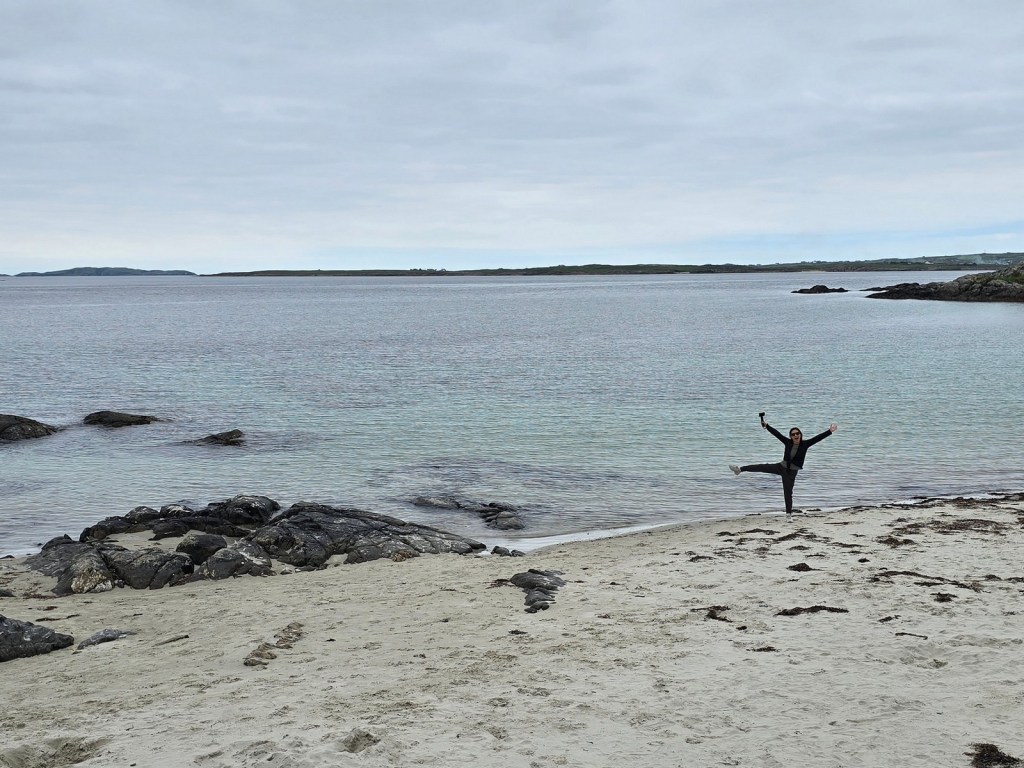
About 15–20 minutes northwest of Clifden is Eyrephort Beach. Backed by low hills and open countryside, this is a very clean white sand beach with clear shallow water. A few people were swimming in the water, though it was quite cold. I tested it up to my ankles, and that was enough for me!
Cleggan Cliffs
After spending a short stop at the beach, we finished the Sky Road and then went north until we reached the Cleggan Cliffs. The way there includes a narrow, winding country road once you leave the main road, but it’s worth the trip. Once we reached the dirt road we parked and walked the rest of the way to the cliffs. Don’t continue on the dirt road because it’s a walking trail only and very rough!
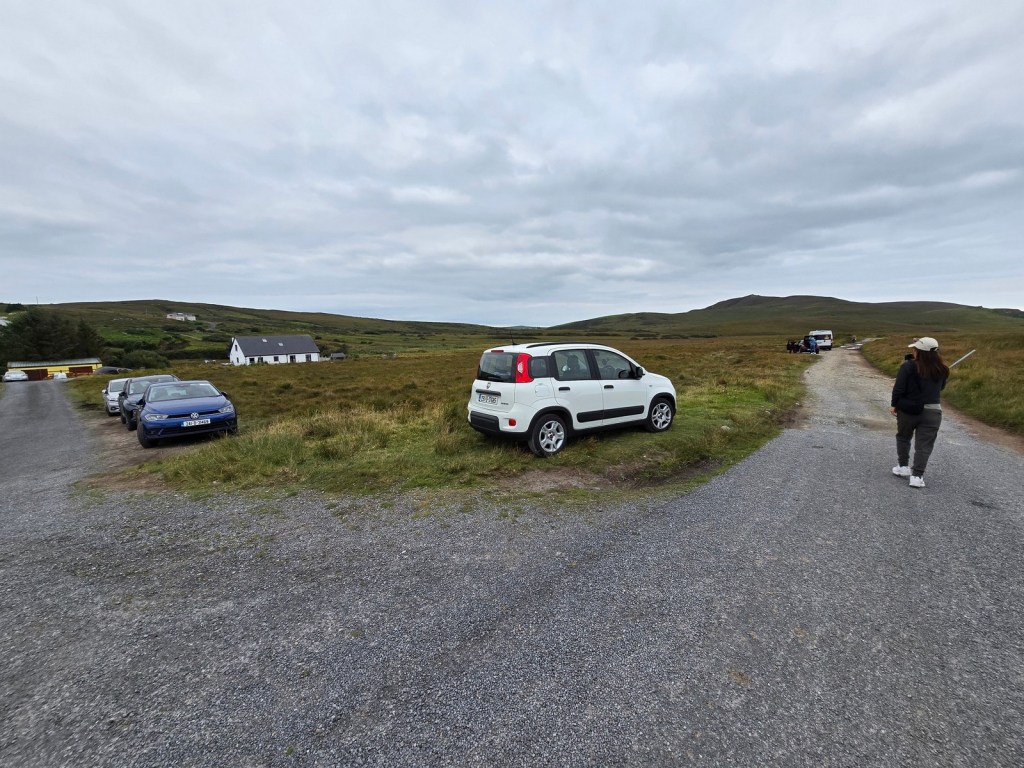
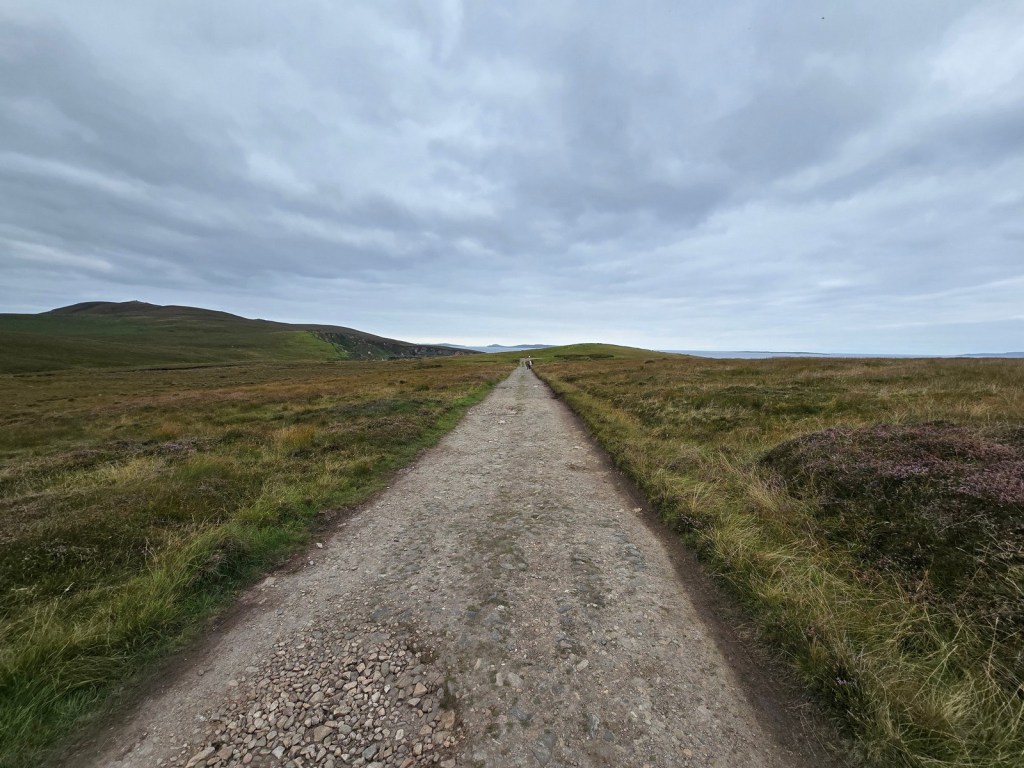
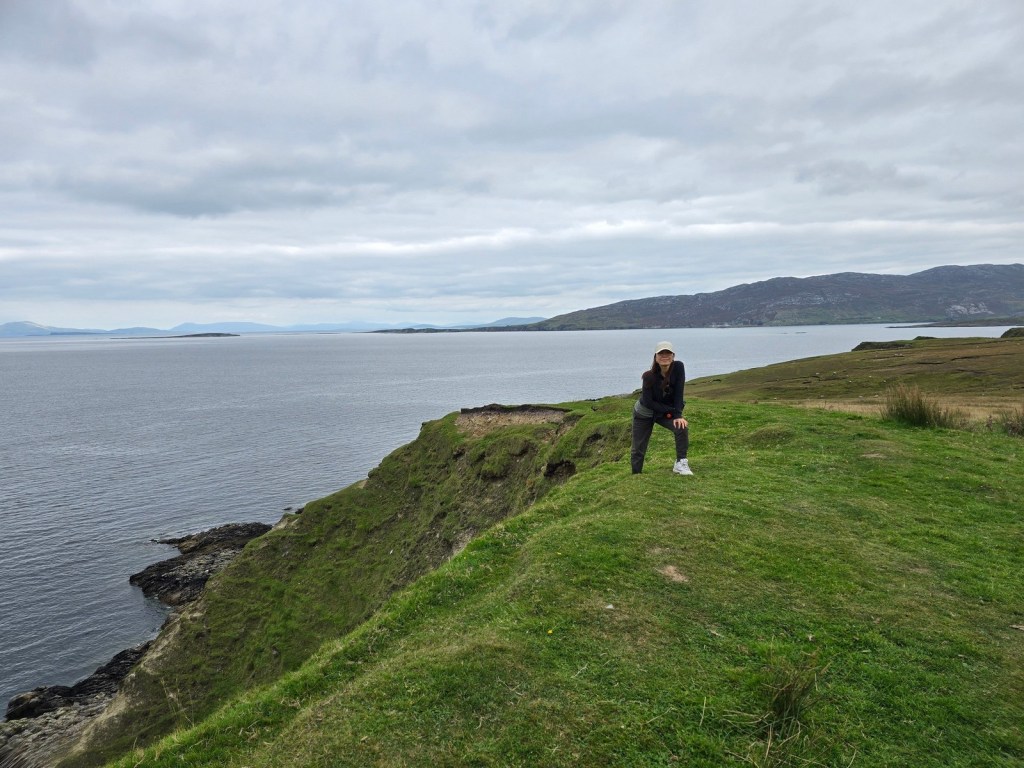
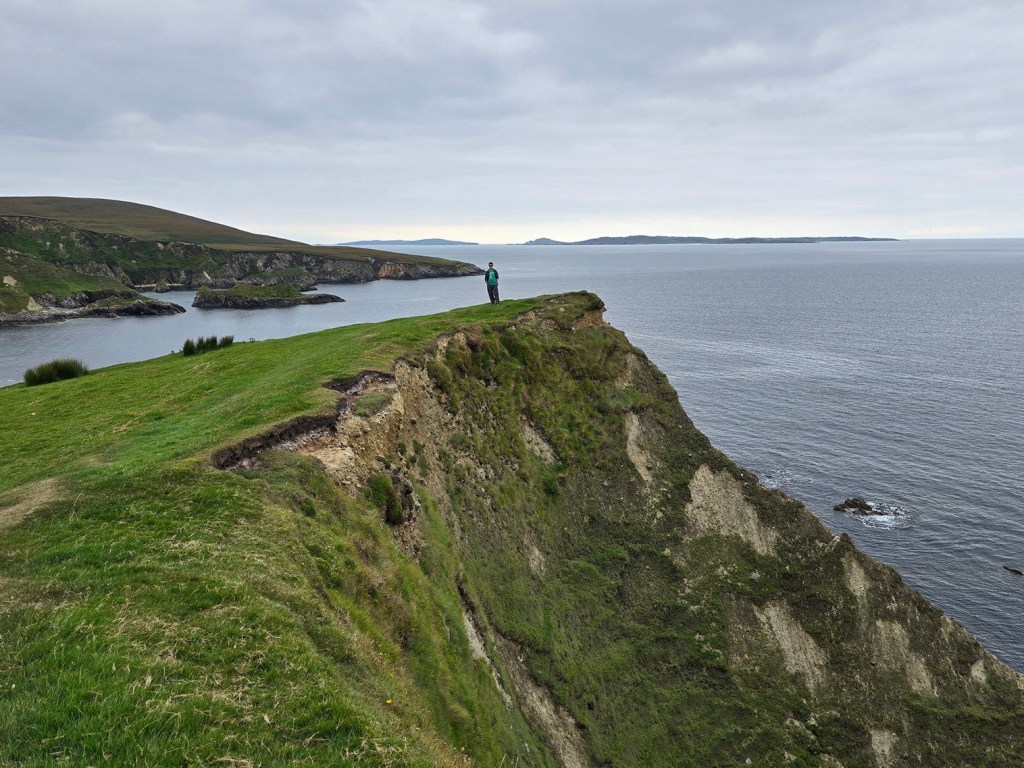
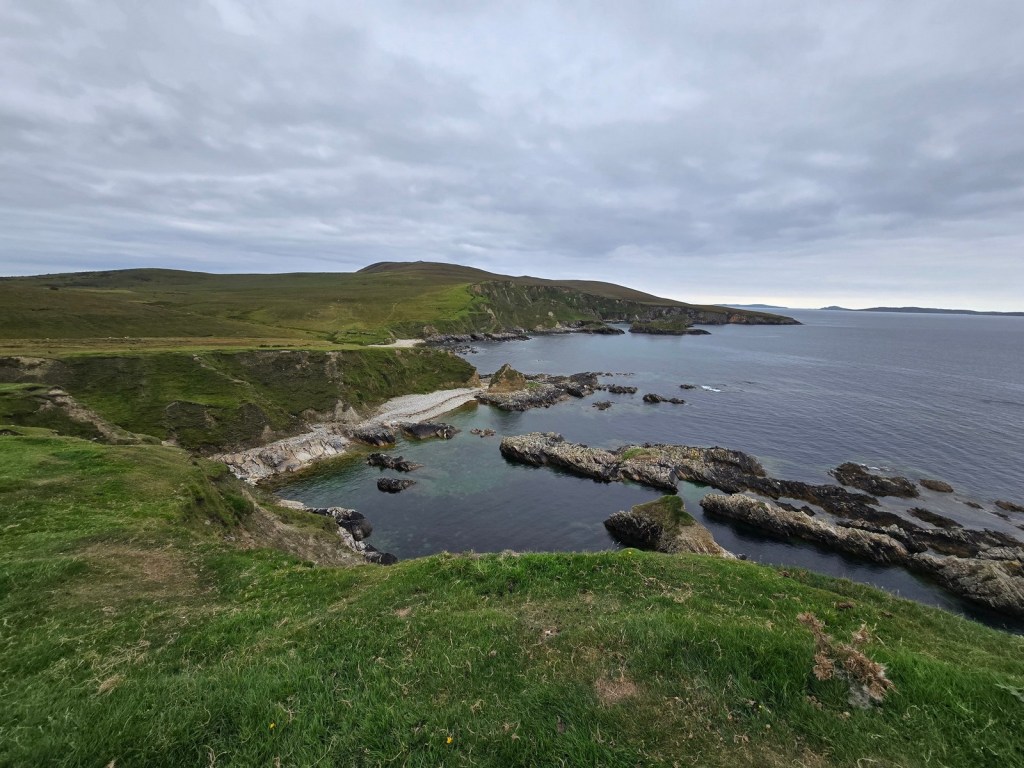
Walking along the Cleggan Cliffs, we experienced the long, uneven coastline shaped by the constant action of the Atlantic waves. These rugged cliffs have open views stretching out to the Atlantic Ocean, and you can see offshore islands like Inishbofin from here. With few other people around it was both beautiful and peaceful.
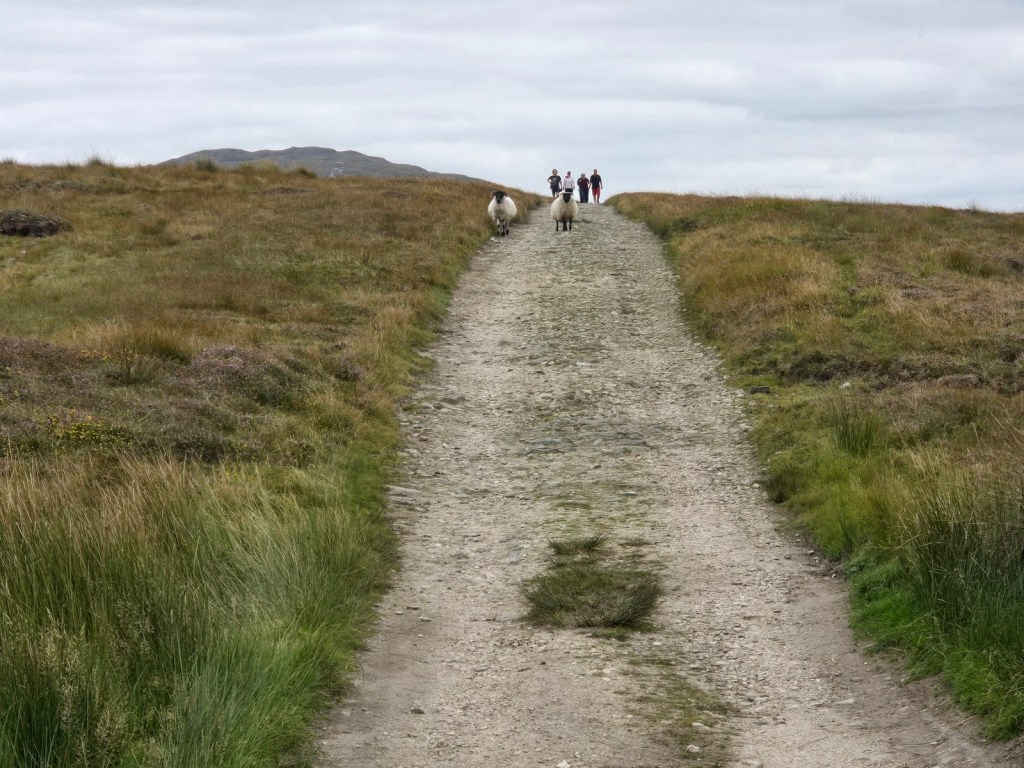
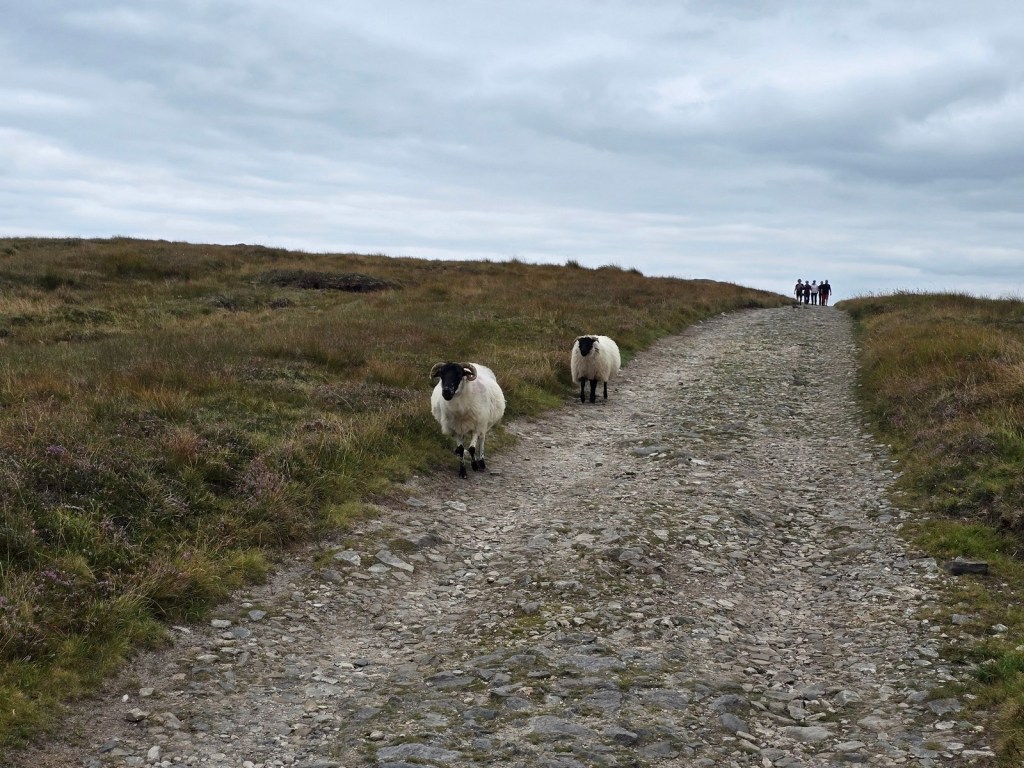
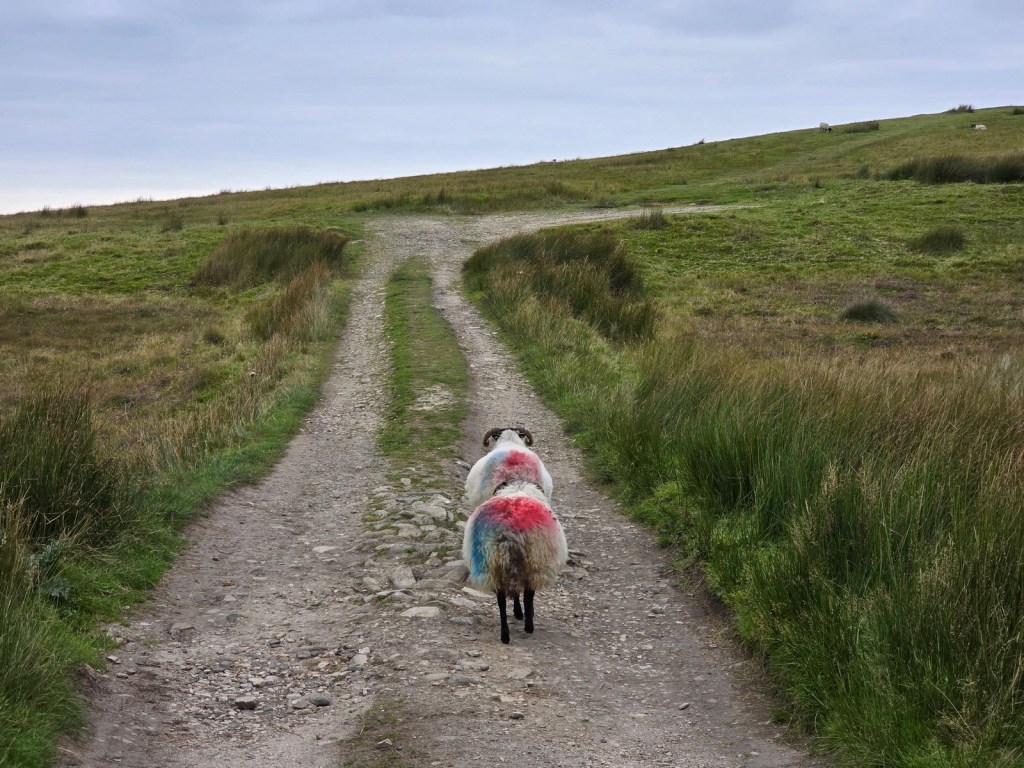
On the way back we met some sheep, something we were doing with regularity during out trip to Ireland! In this case, the pair confidently ambled down the road before stopping when they reached us. They carefully gave us a wide berth as they left the trail and went around us.
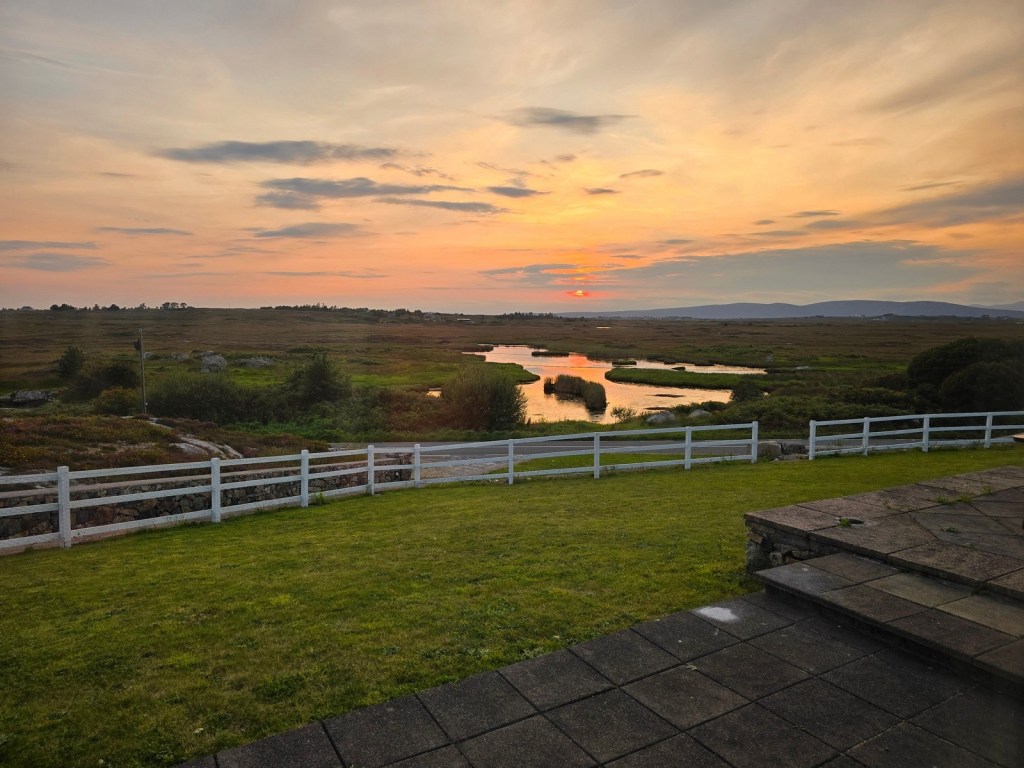
After a busy day we returned to the farmhouse where we were staying. It had fine sunset views looking over Connemara. The next day we would make our way north for a drive through County Mayo, the subject of the next post.