
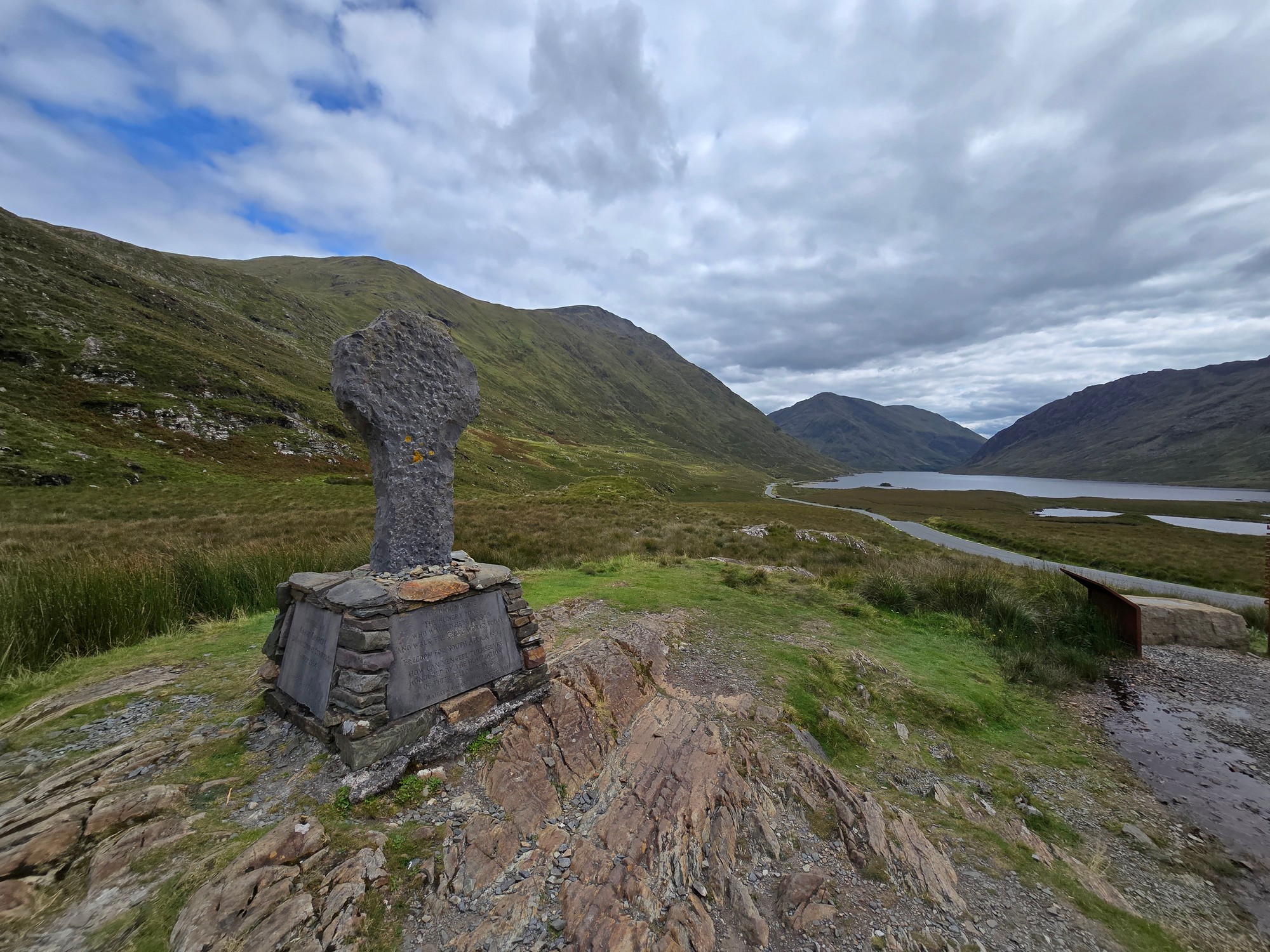
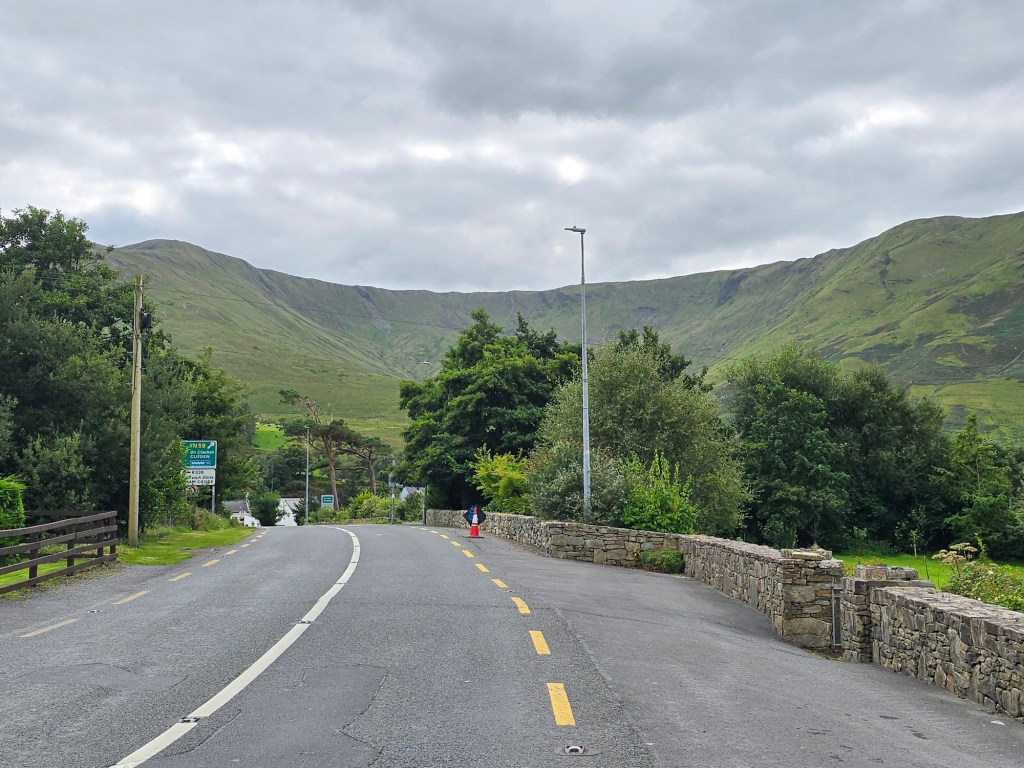
As we drove north from Galway, we crossed into County Mayo. Instead of taking the easy way up the N59, we instead took the R335 north through Doolough. This was a quiet and picturesque driving route that took us next to a long lake, but also revealed a sad part of Ireland’s history.
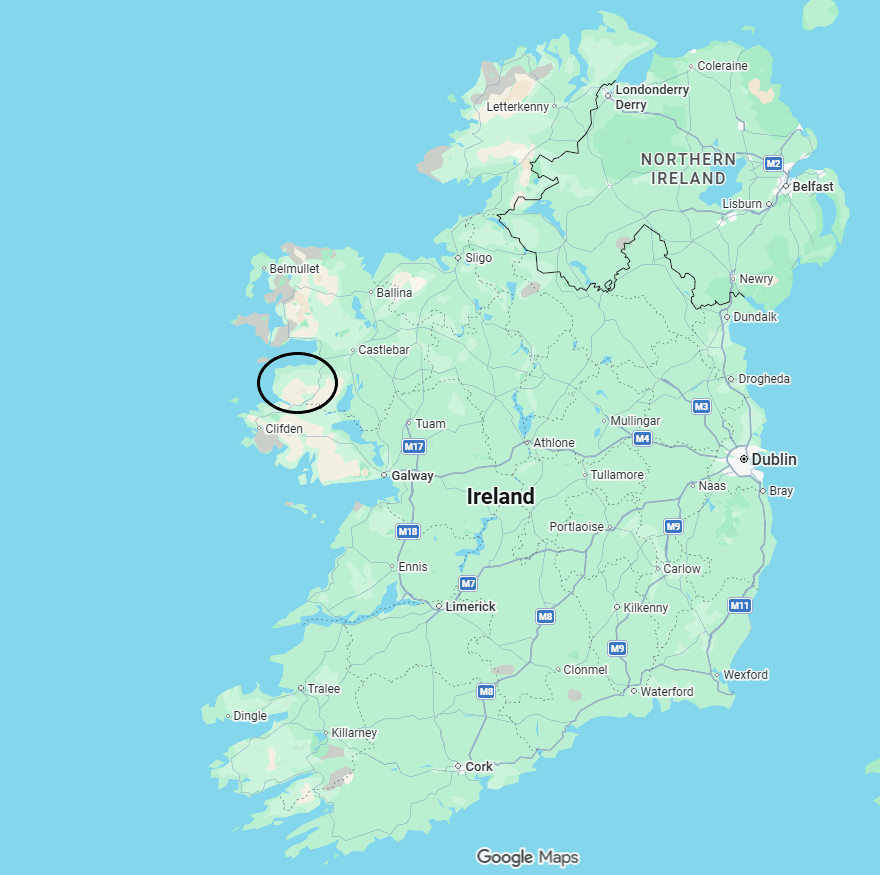
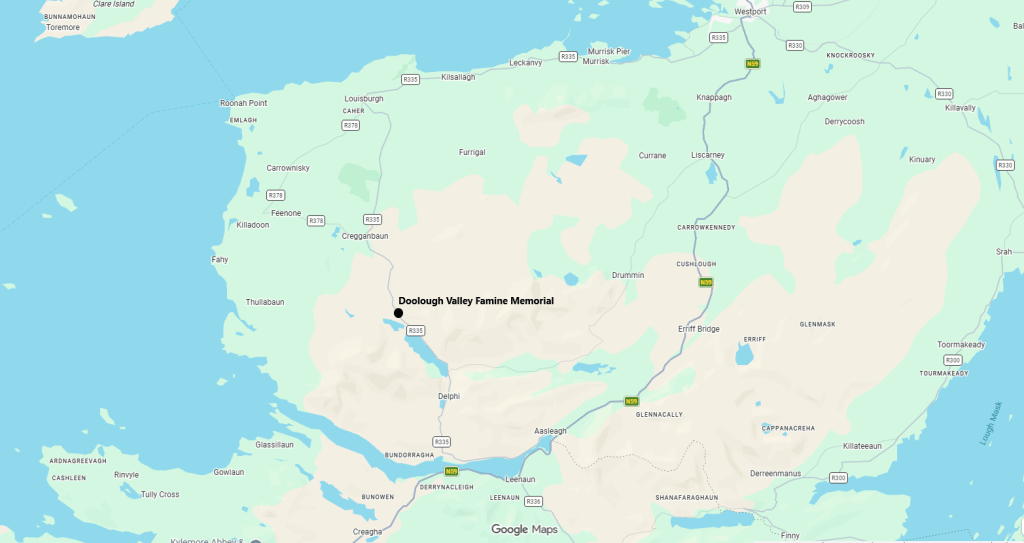
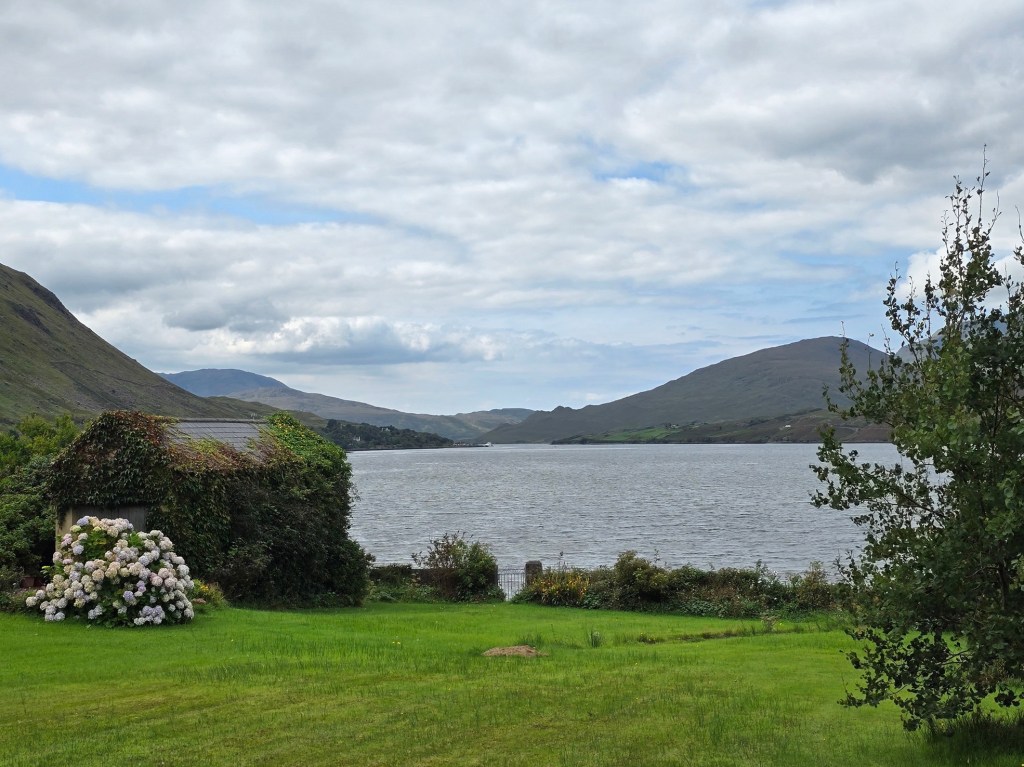
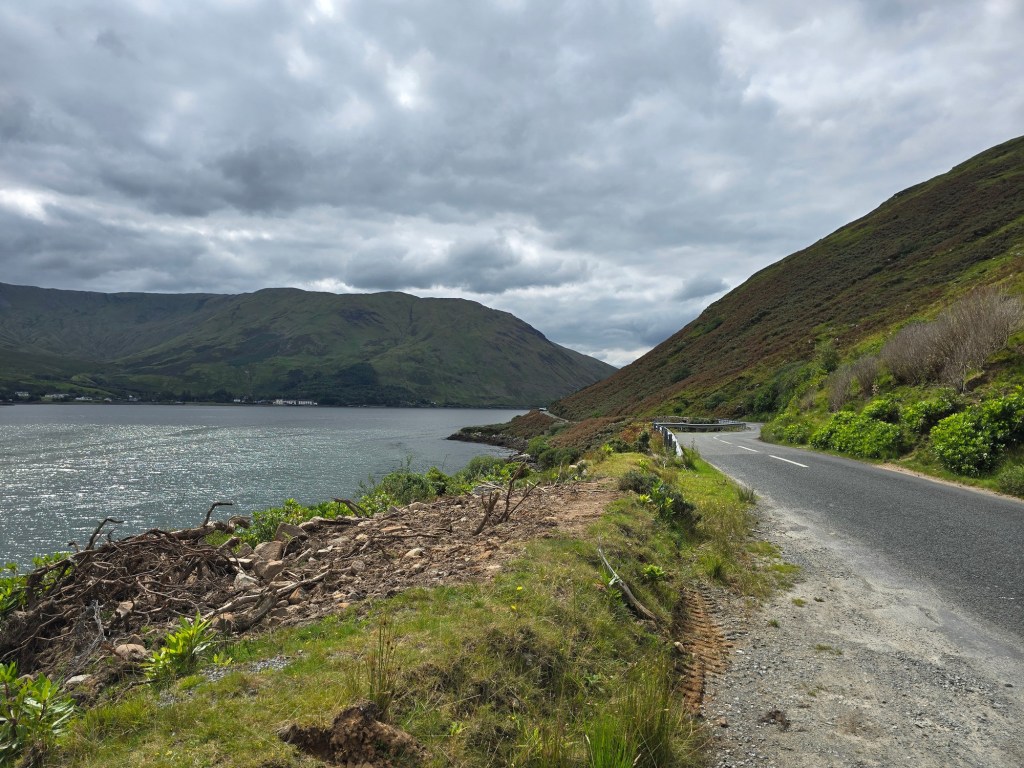
After arriving in the town of Doolough, we made our way along the eastern side of the lake. It was very quiet and we saw few cars and even fewer people. In fact, there were more sheep along the side of the lake than people! We had to slow down and take care as the sheep had no issues wandering onto the narrow road.
We didn’t know much about the history of Doolough when we passed through, but we soon learned more after doing a little research. There was an in depth article about the event done a number of years ago that described the events of the famine and subsequent deaths. It indicated why the deaths occurred along with the callous and uncaring attitude of the authorities in Ireland and England who allowed it to happen:
One hundred and sixty years ago Colonel Hogrove and Captain Primrose arrived in Louisburgh to inspect the paupers claiming famine relief there. It would have been a pitiful task: the famine was in its fourth year in a county hit harder than most – where one-third of the Irish population depended on the potato for subsistence, in Mayo that figure was 90 per cent.
The British government had been keen to let market forces solve the problem: Indian grain was imported but supplies were released slowly to control the price (throughout the famine years Ireland remained a net exporter of food). A system of public works had been introduced – into a country where most of the population lived an entirely subsistence existence – so that the people could earn money rather than expect handouts.
The only people allowed to claim poor relief were those who had less than a quarter of an acre of land. It was these poor, starving folk that Messrs Hogrove and Primrose had been sent to inspect, and to issue with a 3lb allowance of grain, at Louisburgh.
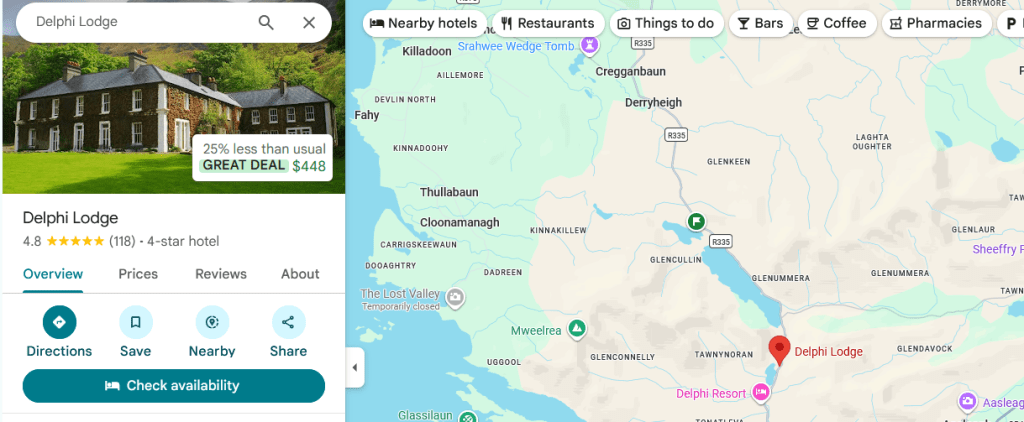
According to a letter sent to the Mayo Constitution dated 5 April 1849, the two inspectors instead set off immediately for Delphi Lodge, roughly 12 miles to the south, leaving instructions that the poor should assemble there for inspection on the morning of 31 March.
“In obedience of this humane order, hundreds of these unfortunate living skeletons, men, women and children might have been seen struggling through the mountain passes and roads to the appointed place,” said the letter.
The article went on to state:
When they arrived at Delphi, those that had survived the night were made to wait until the inspectors finished lunch before the inspection took place. They were given no grain, nor anything to eat at all.
They set off back for Louisburgh but many of them didn’t make it. According to local tradition, up to 400 people may have perished between Louisburgh and Delphi; many of them so light and weak that they were blown into the lake by the strong wind. Corpses were found by the roadside, some of them with grass in their mouths from one last futile attempt at nourishment.
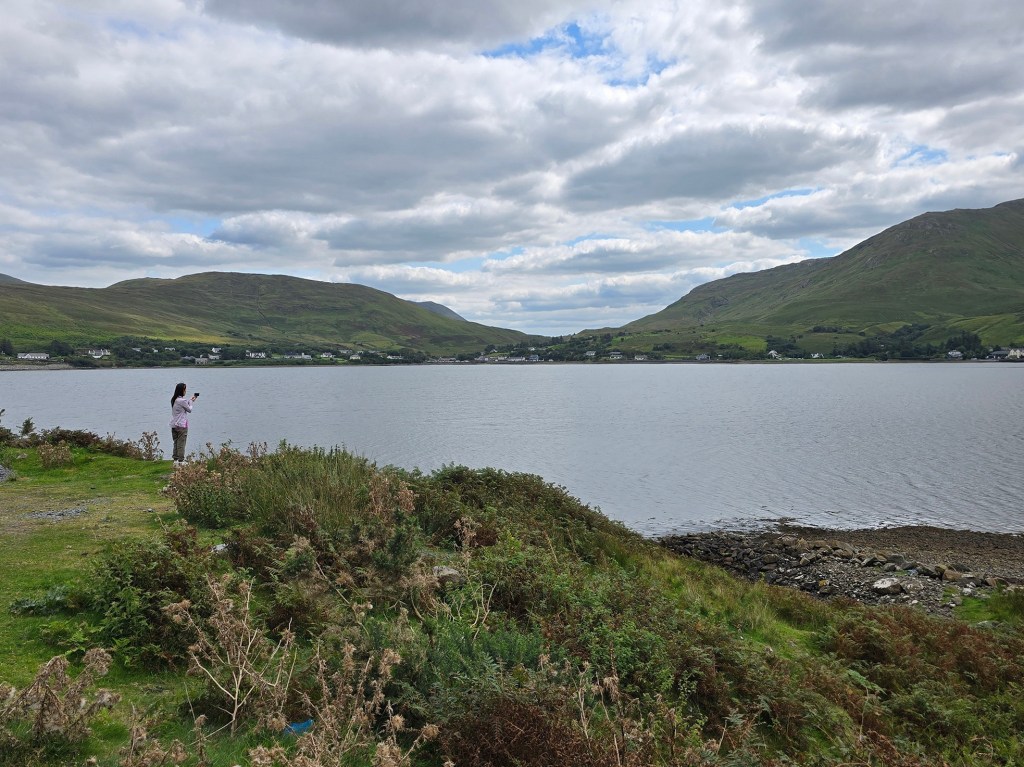
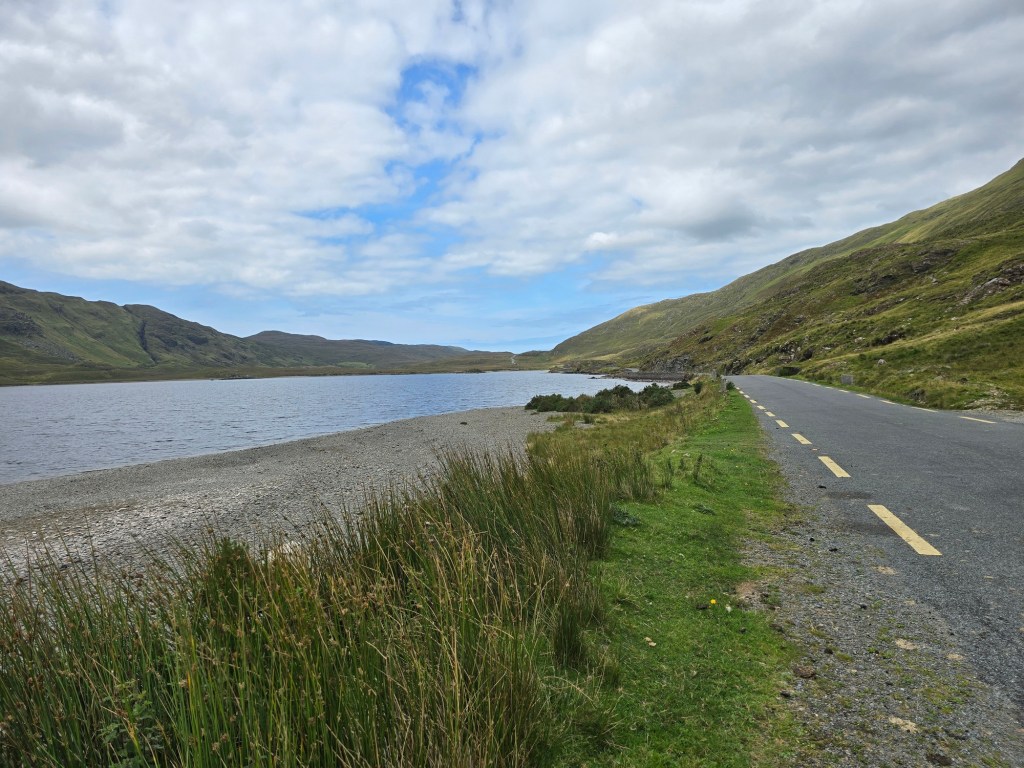
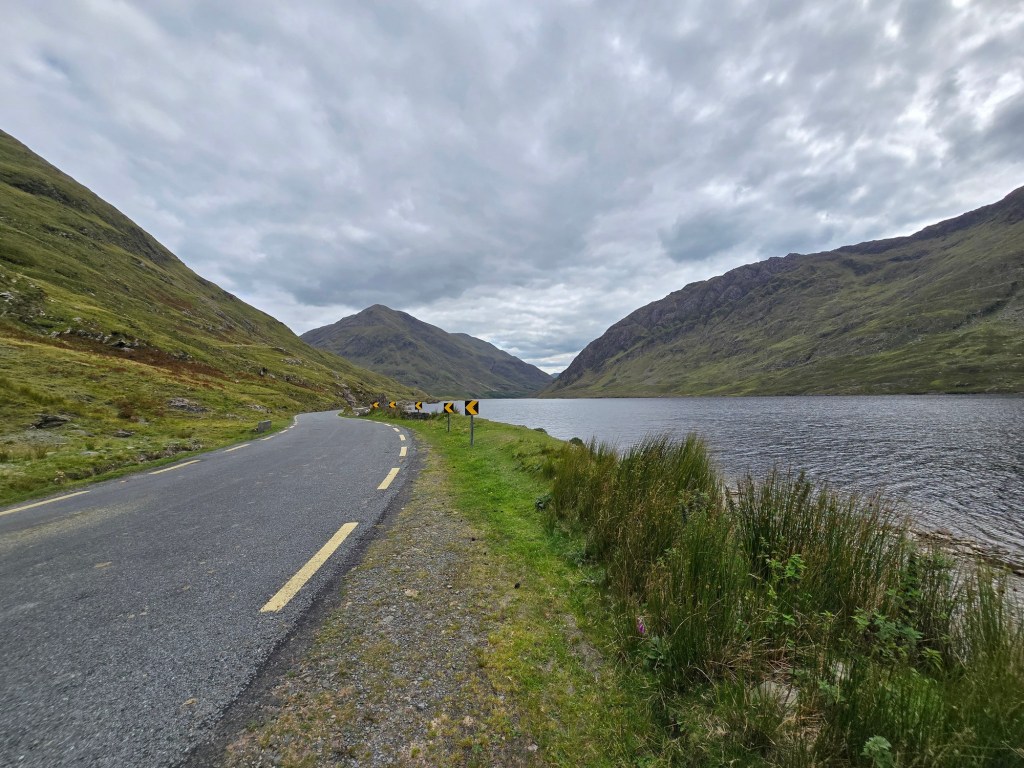
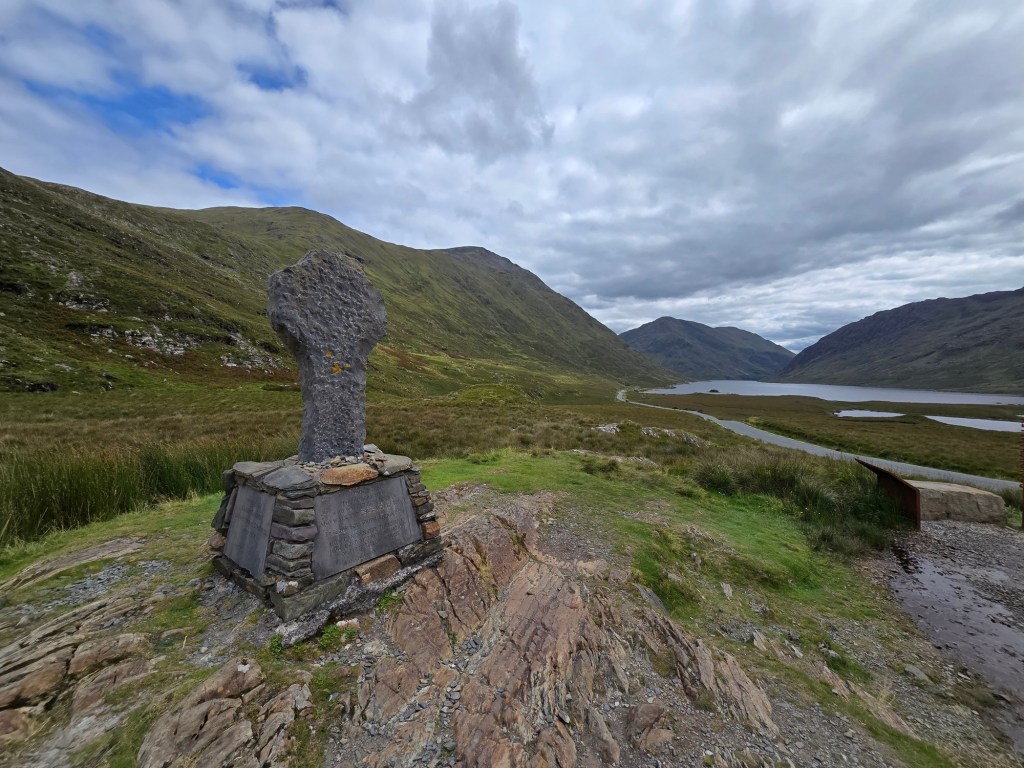
The Doolough Famine memorial is located at the northeast end of the lake. It’s easy to miss on the way past the lake, so watch for it once the lake is no longer on the left. There’s a small parking area and we only encountered one other car when we visited.
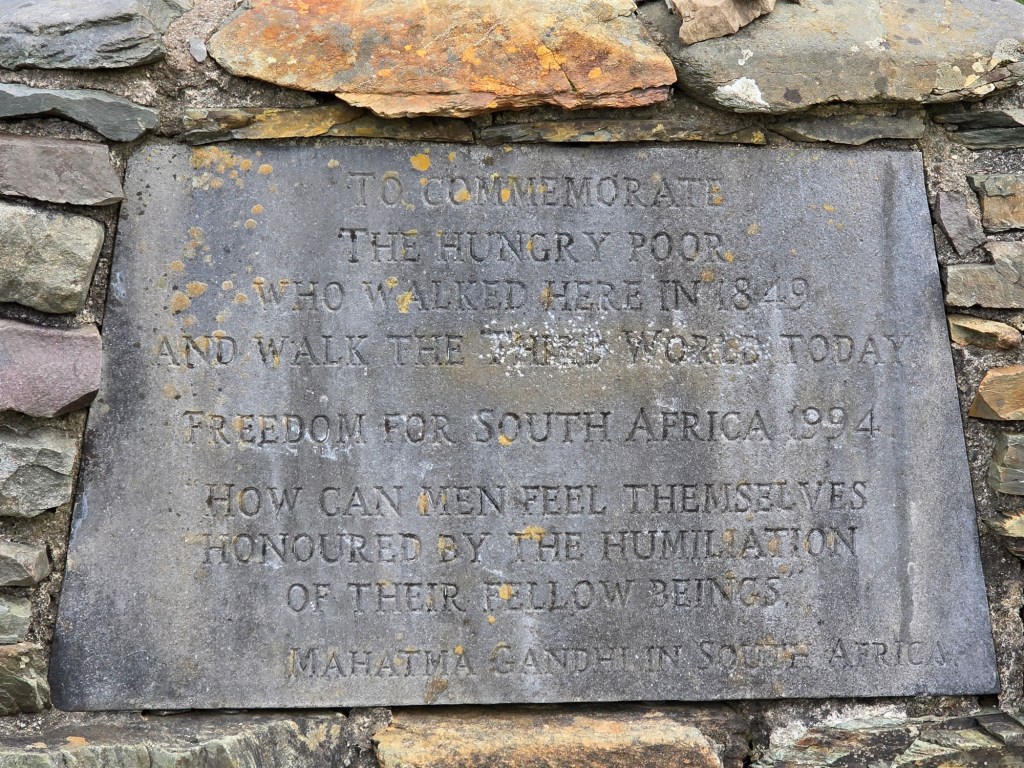
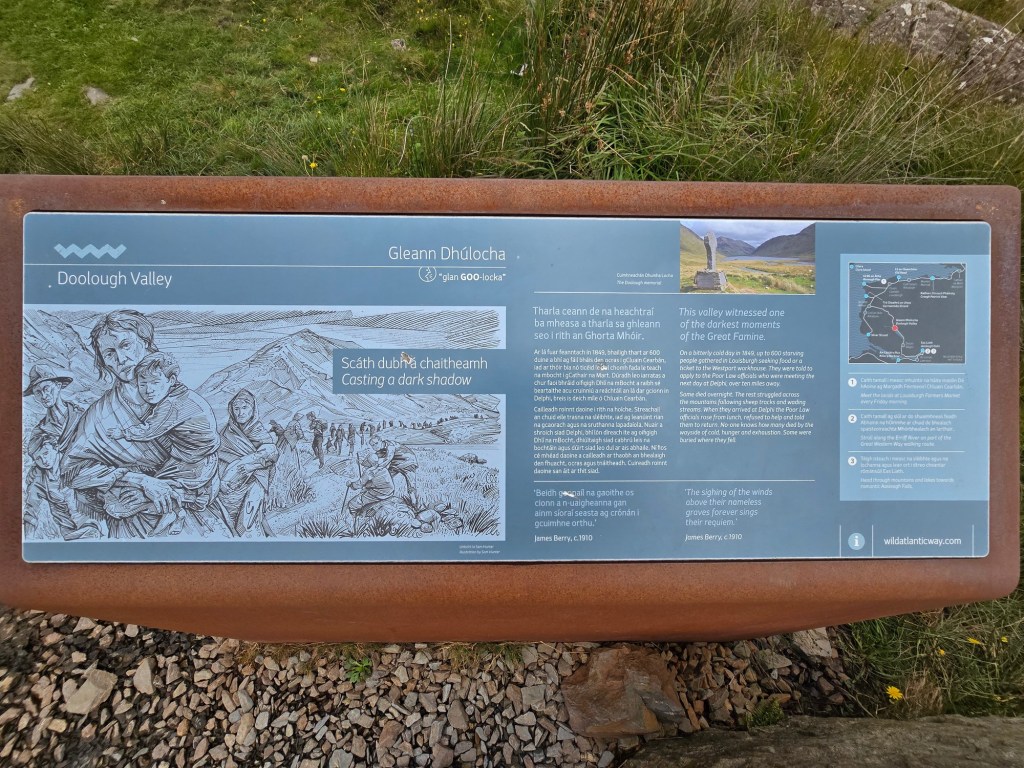
The events at Doolough had never been forgotten, and a Famine Walk was created in 1988 to commemorate the event as well as to raise funds for famine relief around the world:
Every year since 1988 there has been a walk along this route in memory of the Doolough dead and to highlight the starvation of the world’s poor still today. Archbishop Desmond Tutu has done it, the children of Chernobyl have done it. So has the Cellist of Sarajevo, Vedran Smailovic who played daily in his city despite sniper fire in the 1990s while it was under siege. And Kim Phuc – the woman who was made famous in photographs of her as a girl running naked and burned by napalm in Vietnam – she has done it too.
As have Native American Indians. When they learned of the tragedy in 1849, members of the Choctaw tribe raised $710 which they donated to Irish famine relief. They did so because the story reminded them of their own plight when, 18 years earlier, they were forcibly removed from their land by the white man to make way for modern-day Oklahoma. Their march was some 500 miles and they lost lives along the way. The Indians’ march became known as the Trail of Tears.
In 1992 a group of Irish people returned the Choctaw Indians’ kindness by walking the Trail of Tears, raising a huge $710,000 which they donated to famine relief in Africa.
https://www.irishcentral.com/roots/history/mayo-villages-death-famine
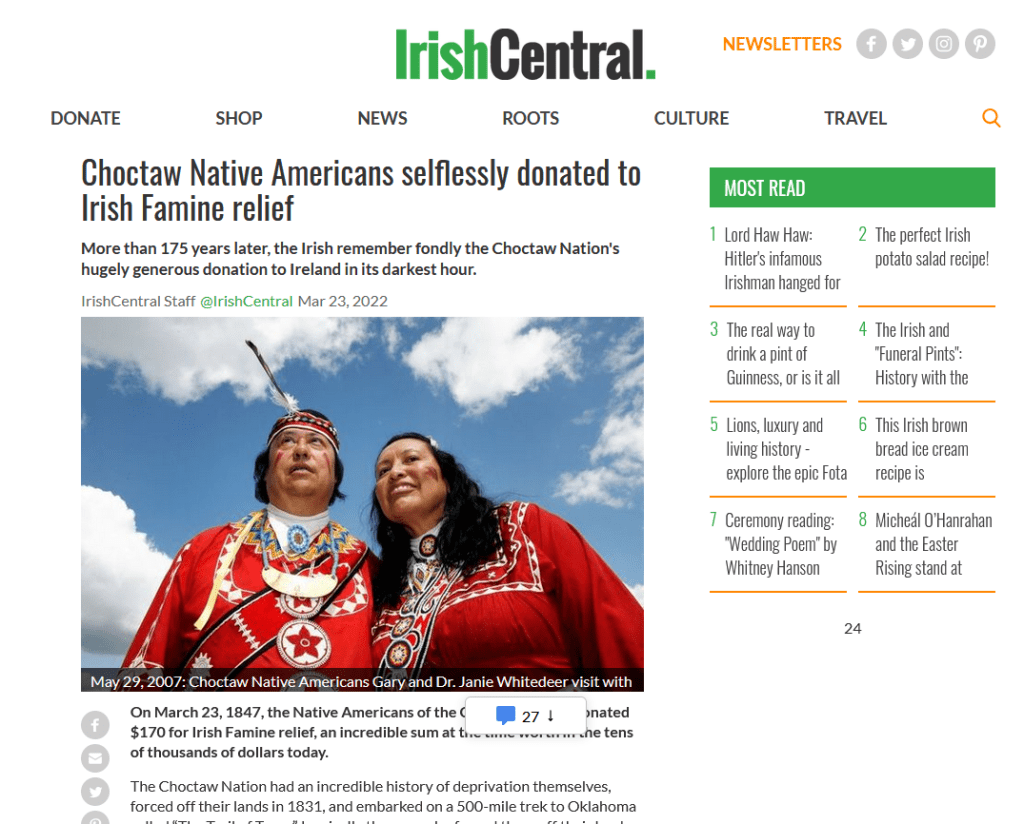
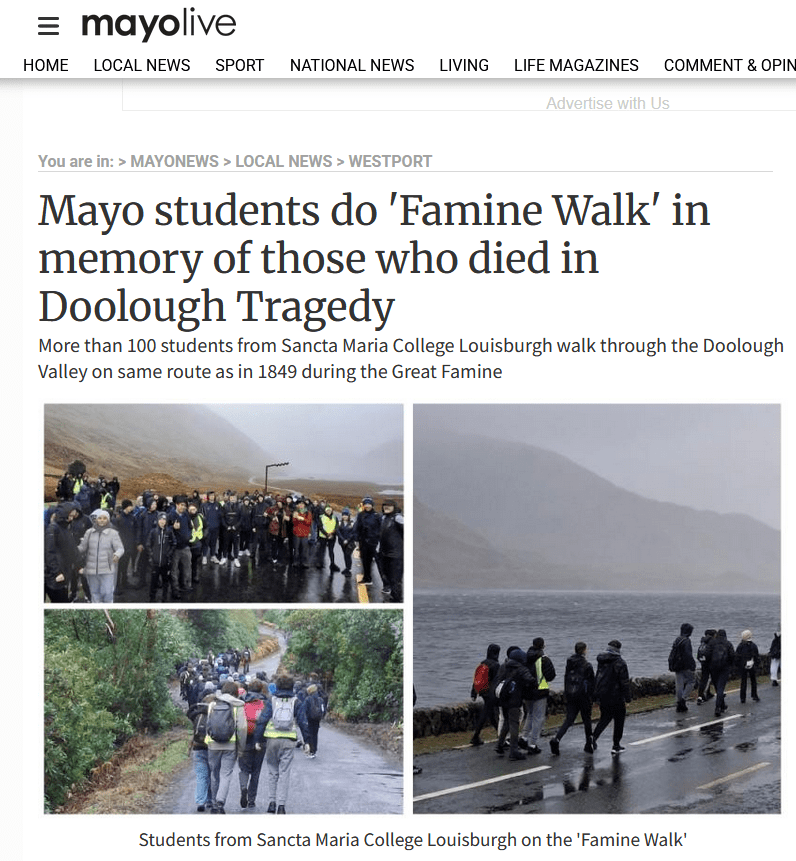
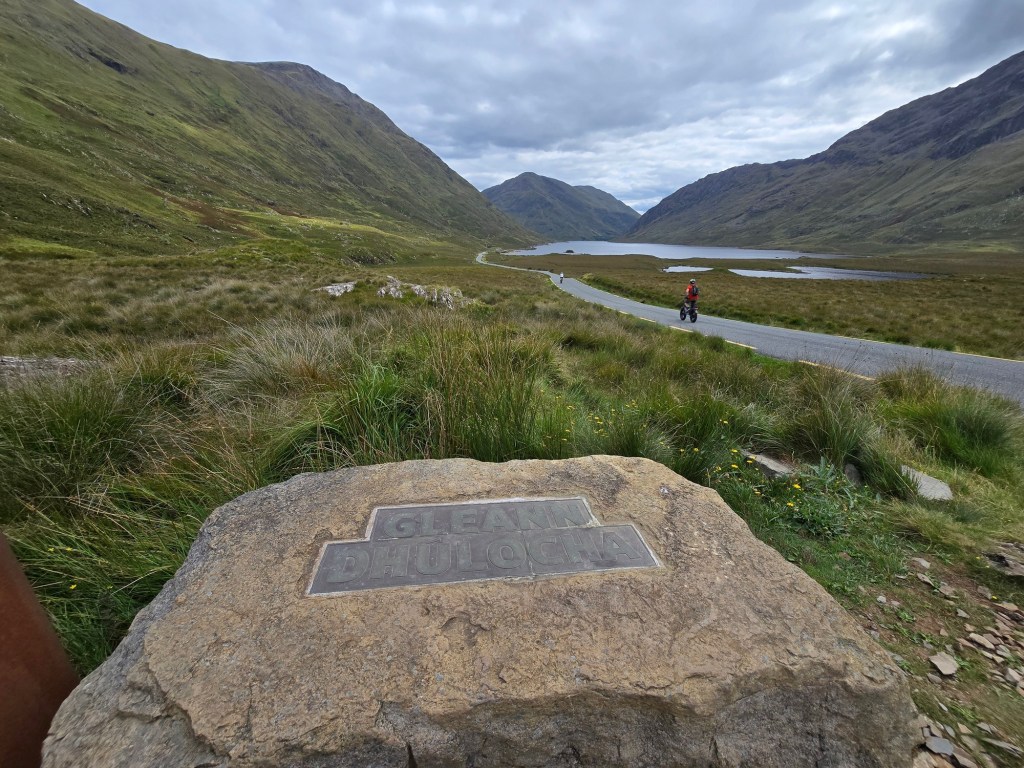
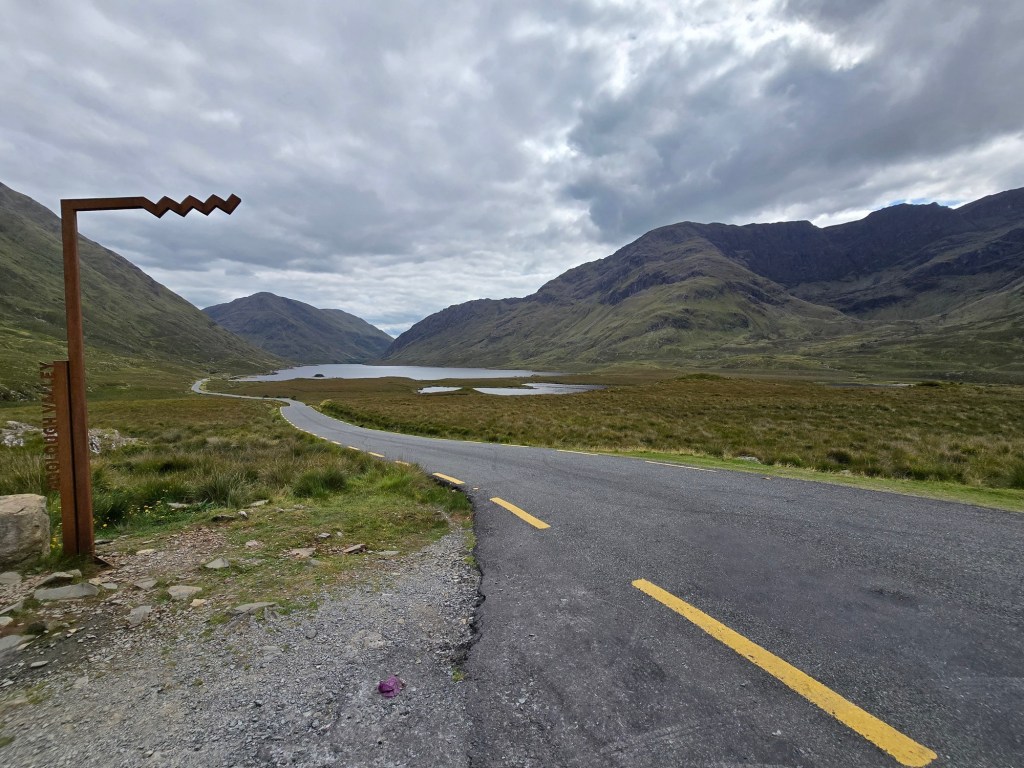
The beautiful lake had a somber history, one we kept in mind as we continued on towards Freeport and our accommodations in Castlebar. It was a lovely little detour on our journey, but a sad one nonetheless.
In the next post we move onward across the north, enjoying unique geological formations, castles and the grave of a famous poet on our way to Northern Ireland.

