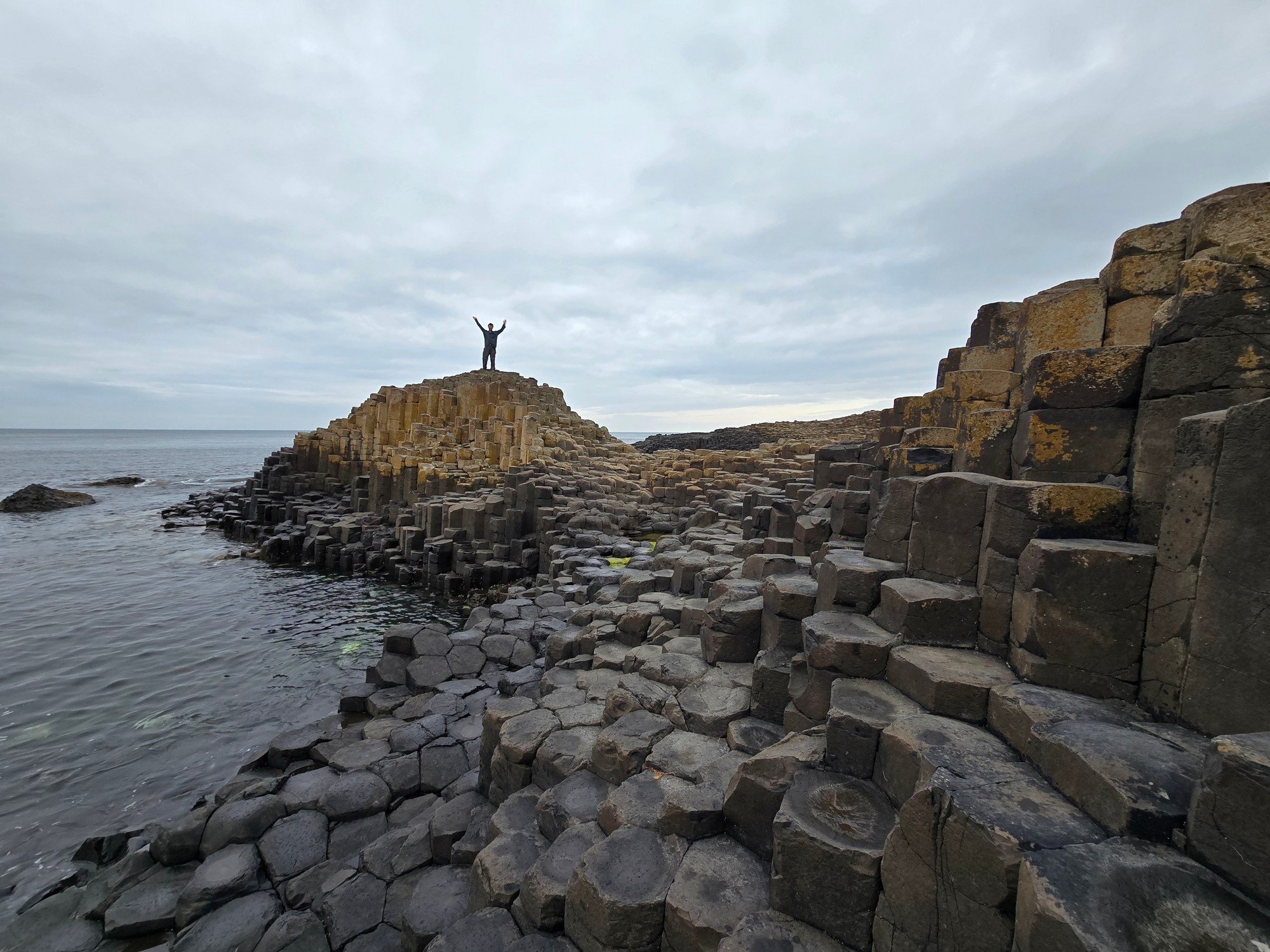
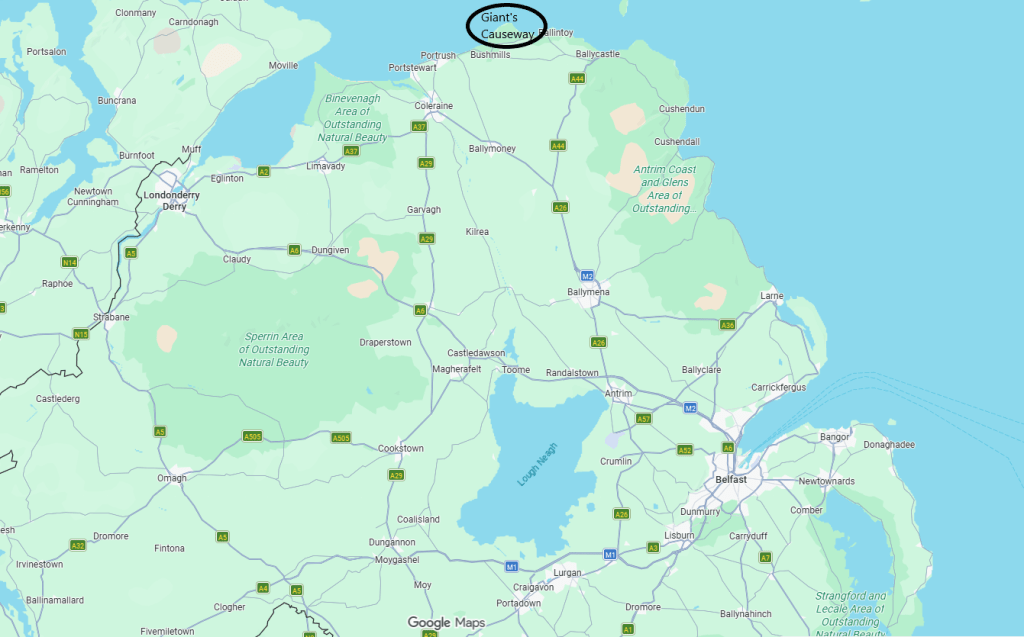
One of the highlights of our trip to Ireland was a stop at the Giant’s Causeway on the north coast of Northern Ireland.Our time in Northern Ireland was limited to five nights, so two of them were spent along the Causeway Coastal Route. We stayed in Portballintrae, a small town located close to Bushmills and just a 10 minute drive to the causeway.
Our plan was to experience the causeway before all the tourists and tour buses arrived, so we timed our arrival just before the visitor centre opened in the morning at 9 a.m.
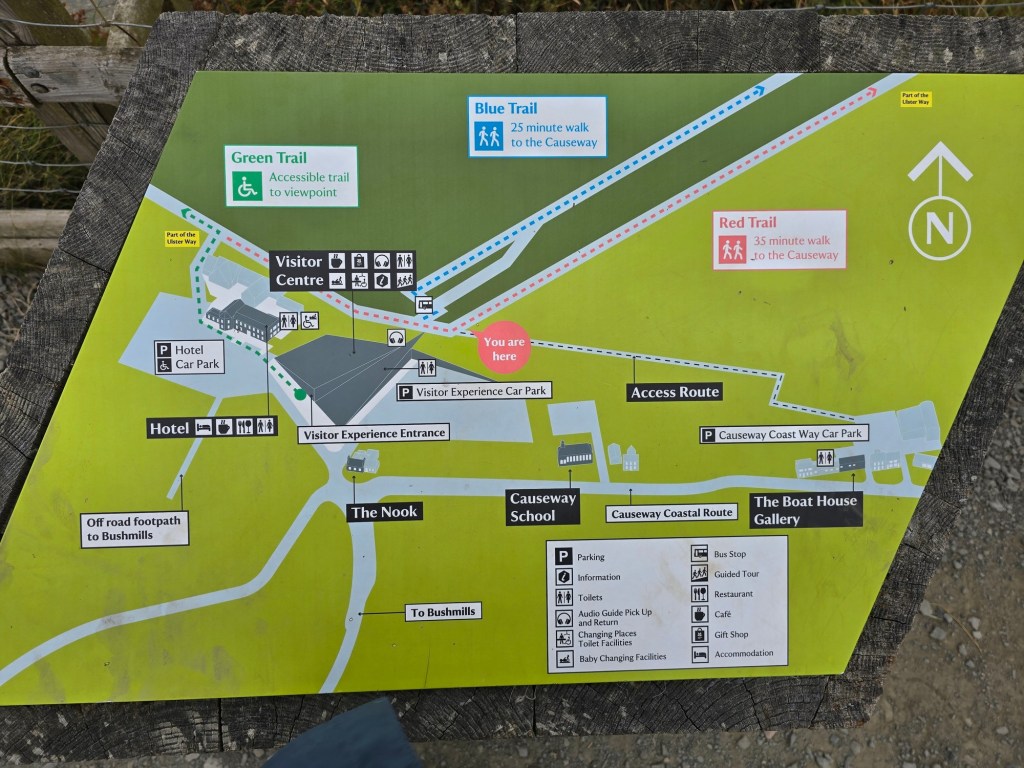
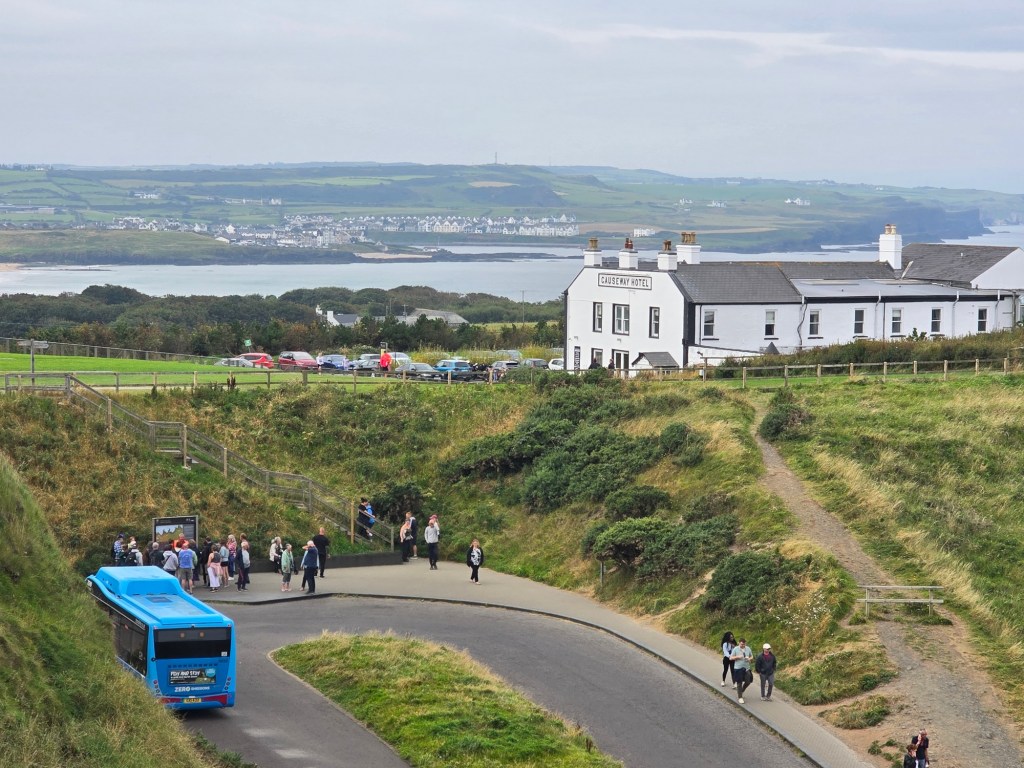
We originally considered walking from our Air BnB to the causeway, but it would take close to an hour. So instead, we drove over to the hotel located next to the visitor centre and parked there. At 10 pounds per car it’s much cheaper than the visitor centre parking (16 pounds per person). Furthermore, the causeway itself it free so that’s all you have to pay. If you do the hotel parking you’ll miss out on the exhibits inside the visitor centre, but we came for the causeway so we had no regrets there.
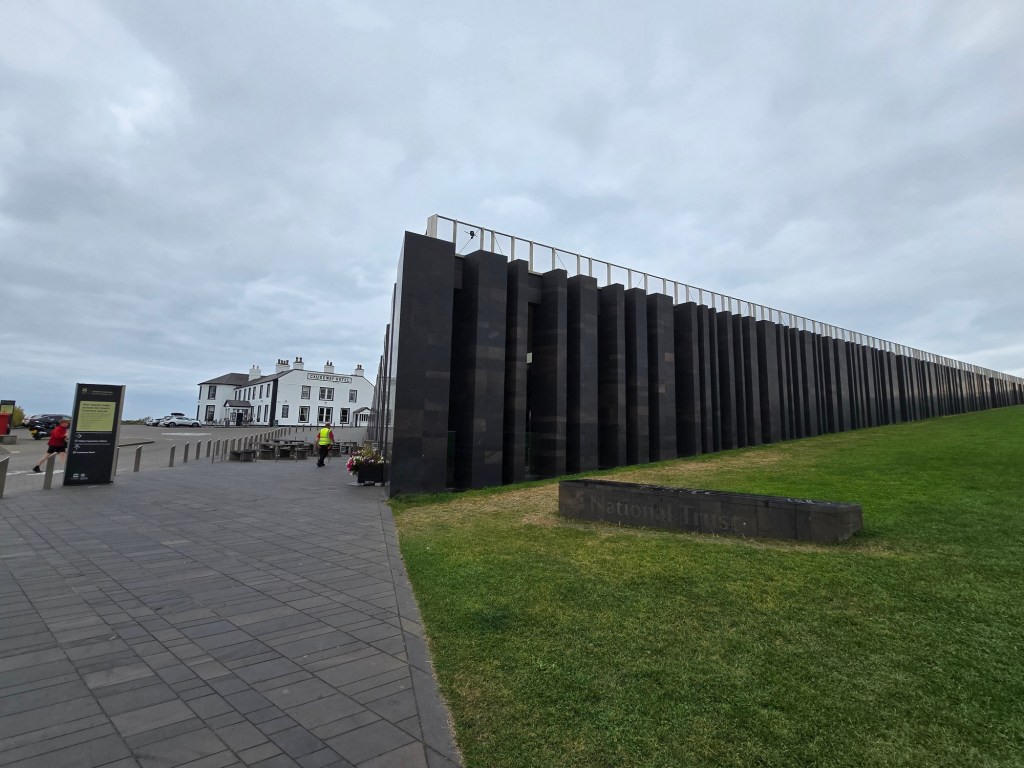
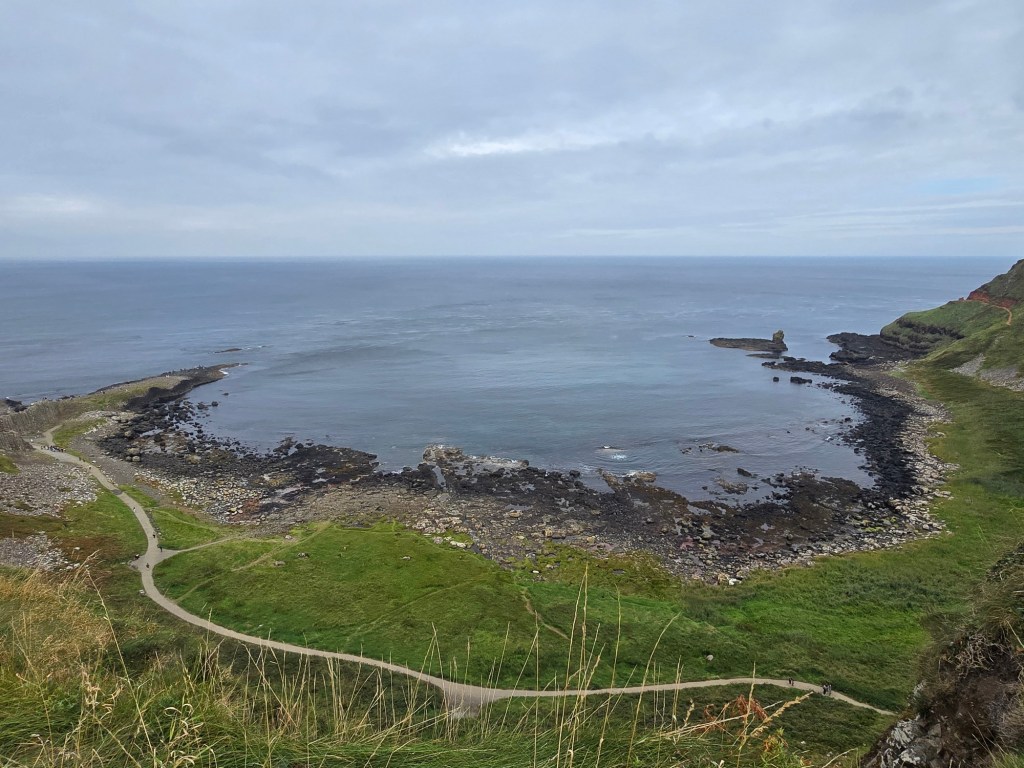
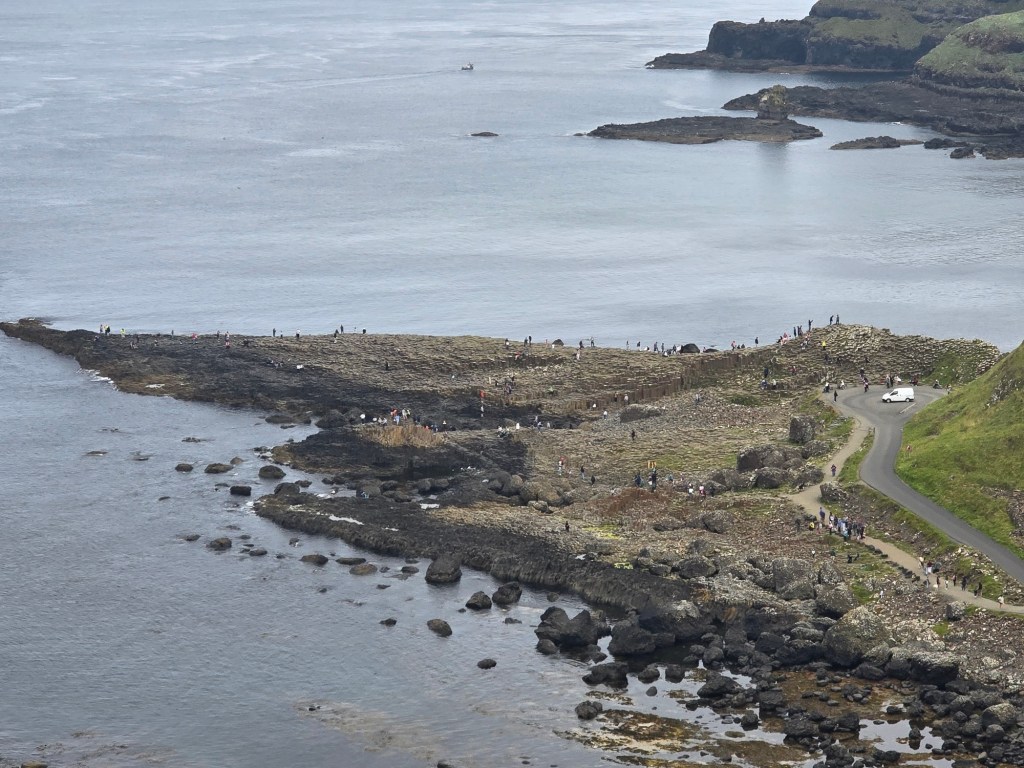
Once parked we walked around the visitor centre and headed down towards the walkway to the causeway. It was about a 20 minute walk to see the best sections of the interlocking basalt columns.
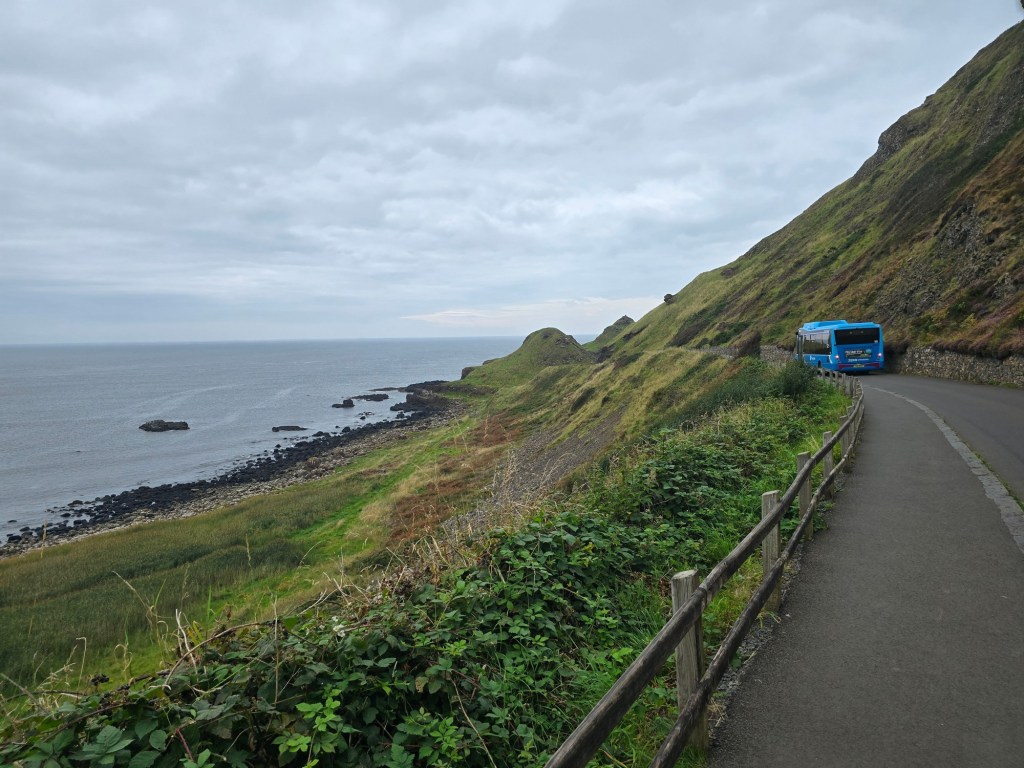
If you don’t come by car or tour bus, there is a bus called the Causeway Rambler (Bus 402/172) that does a hop on, hop off route from Coleraine to Ballycastle. It goes right down into the causeway and lets people off right in front of the main section. As far as we could tell, it’s also the only vehicle allowed on the coastal road that directly passes in front of the causeway.
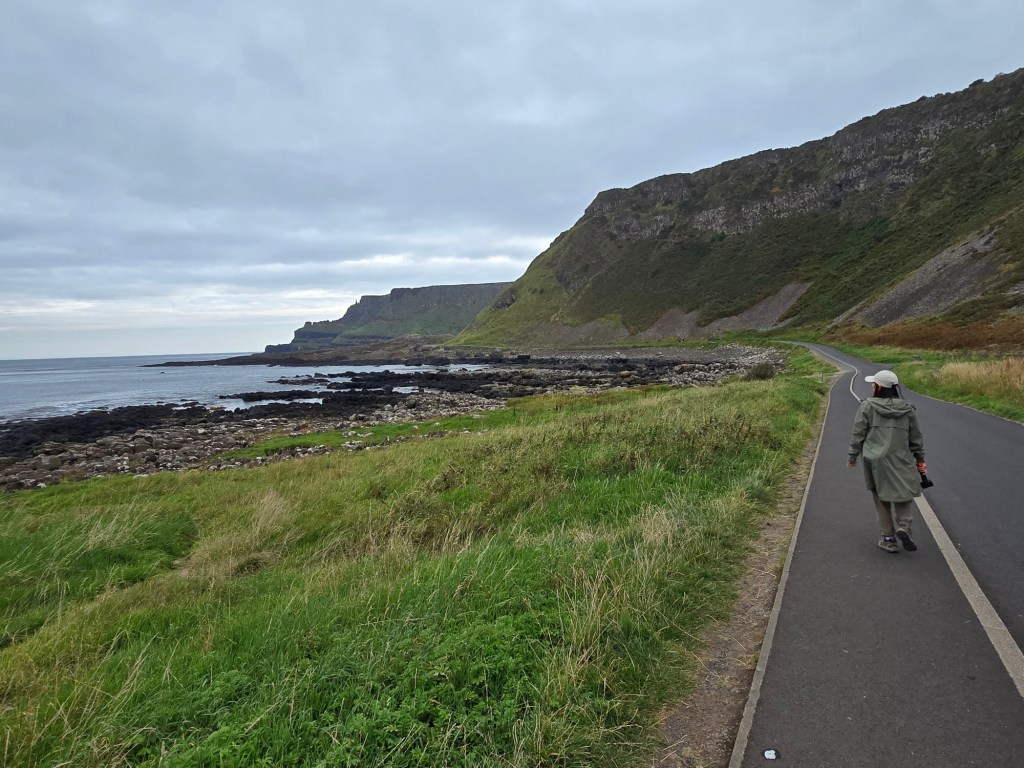
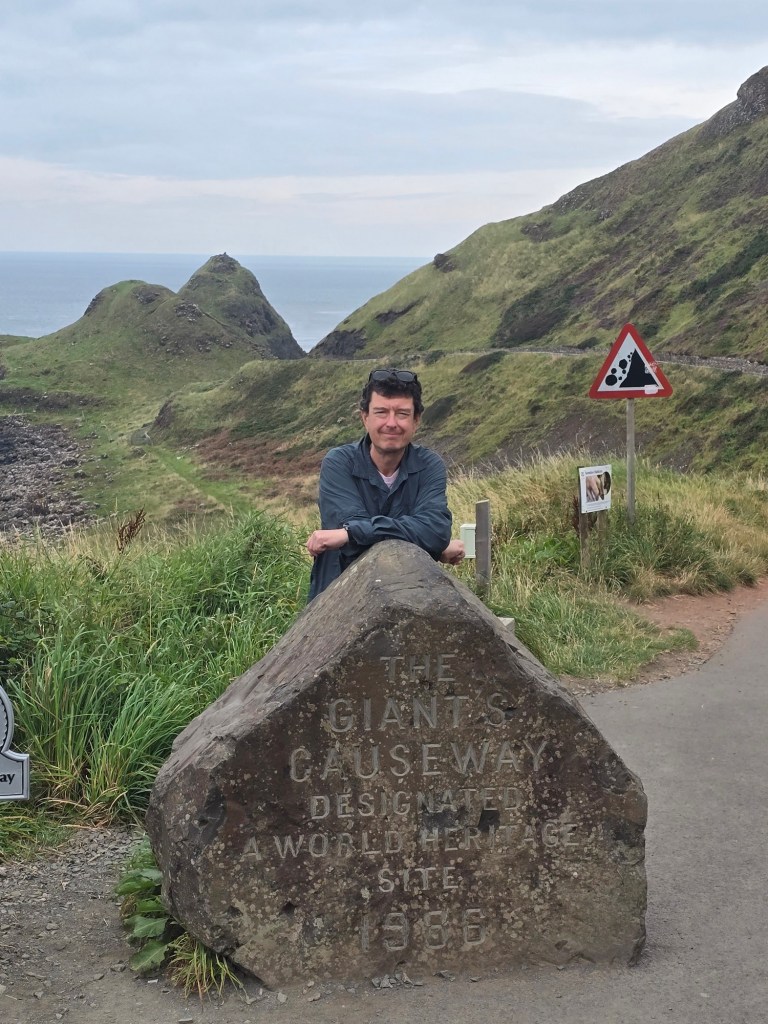
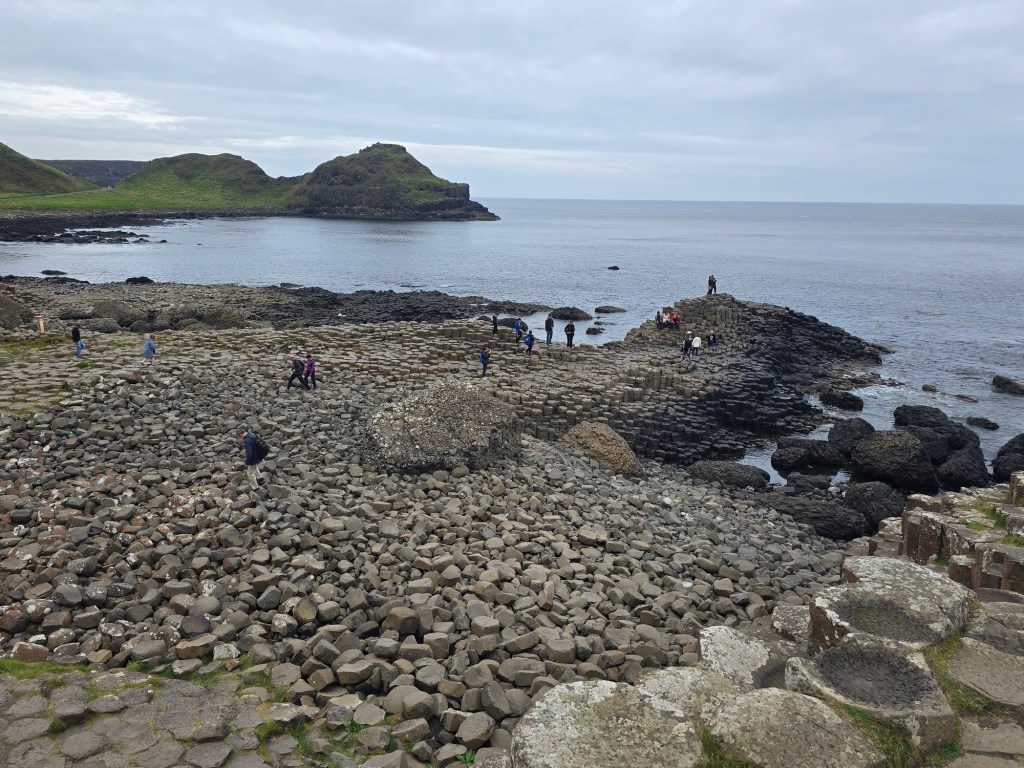
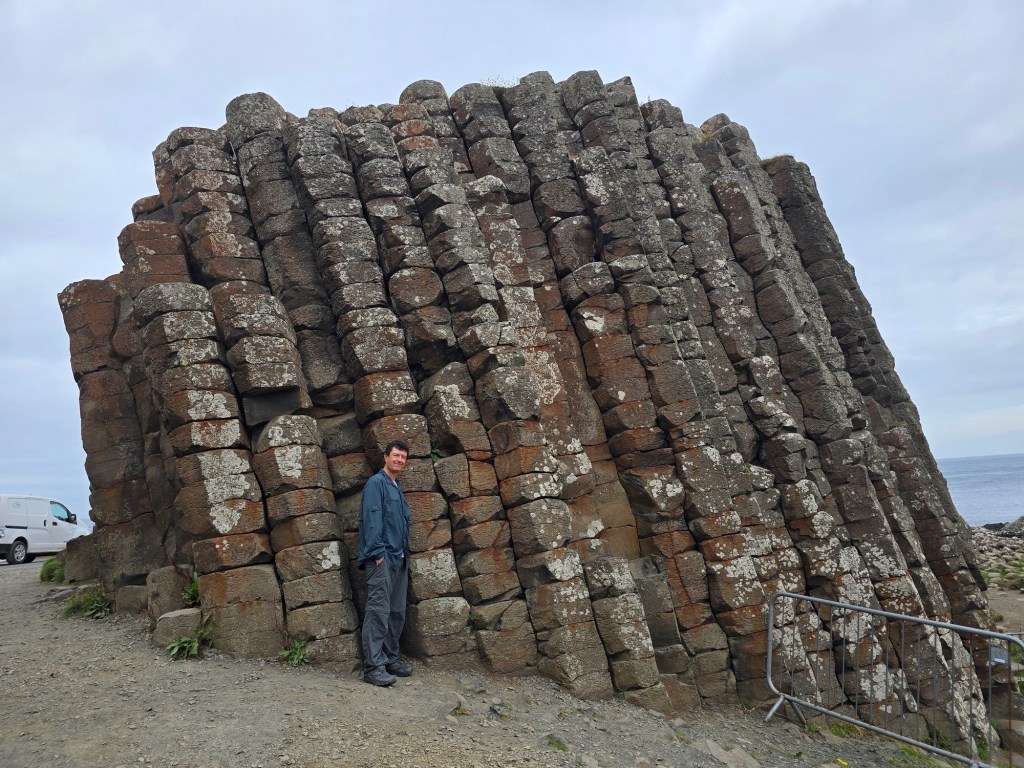
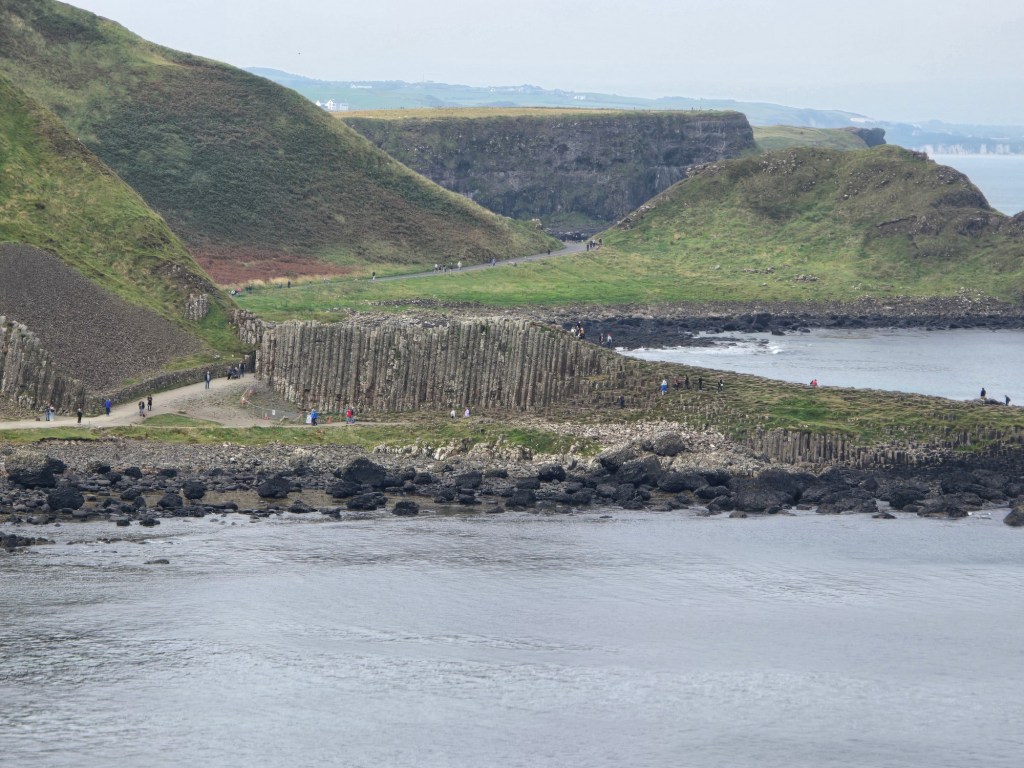
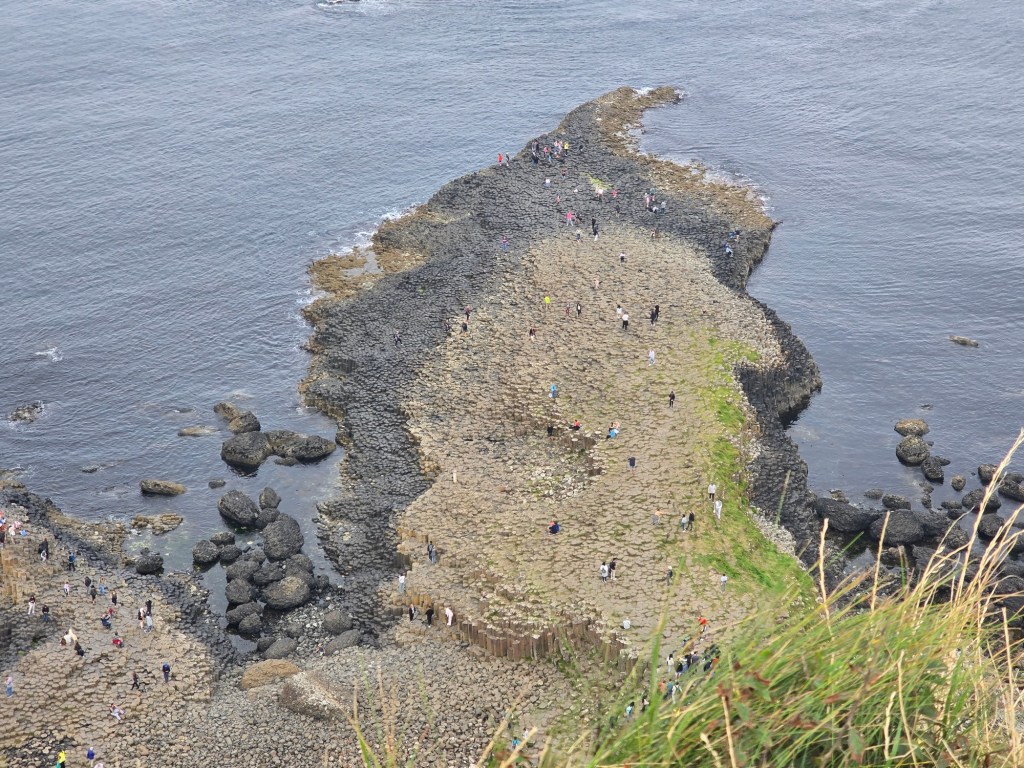
Eventually we made to the the best part of the Giant’s Causeway. As it was still early, there were very few people there. In this section you can see the majority of the roughly 40,000 interlocking basalt columns that appear like a giant stone road stretching into the sea.
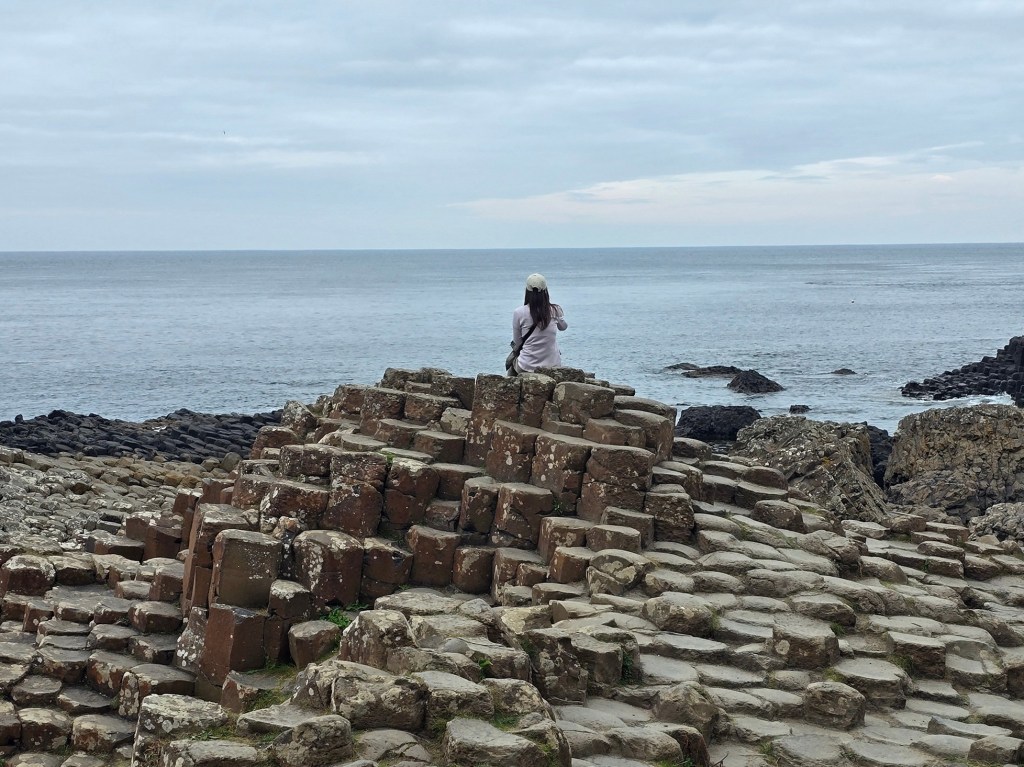
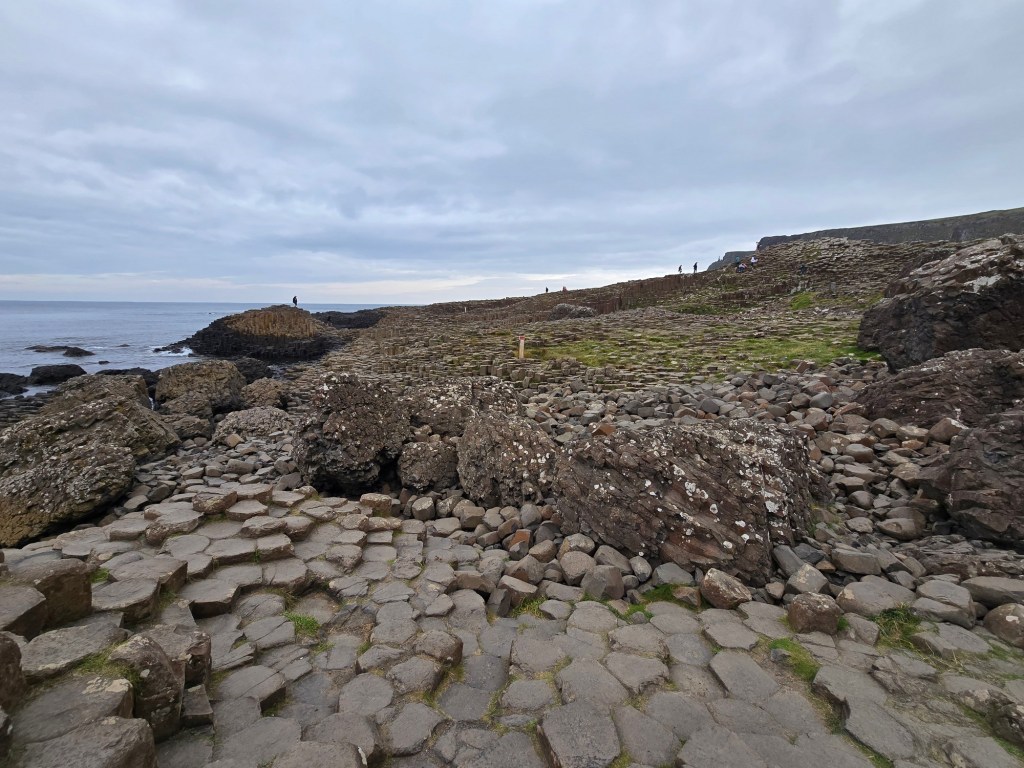
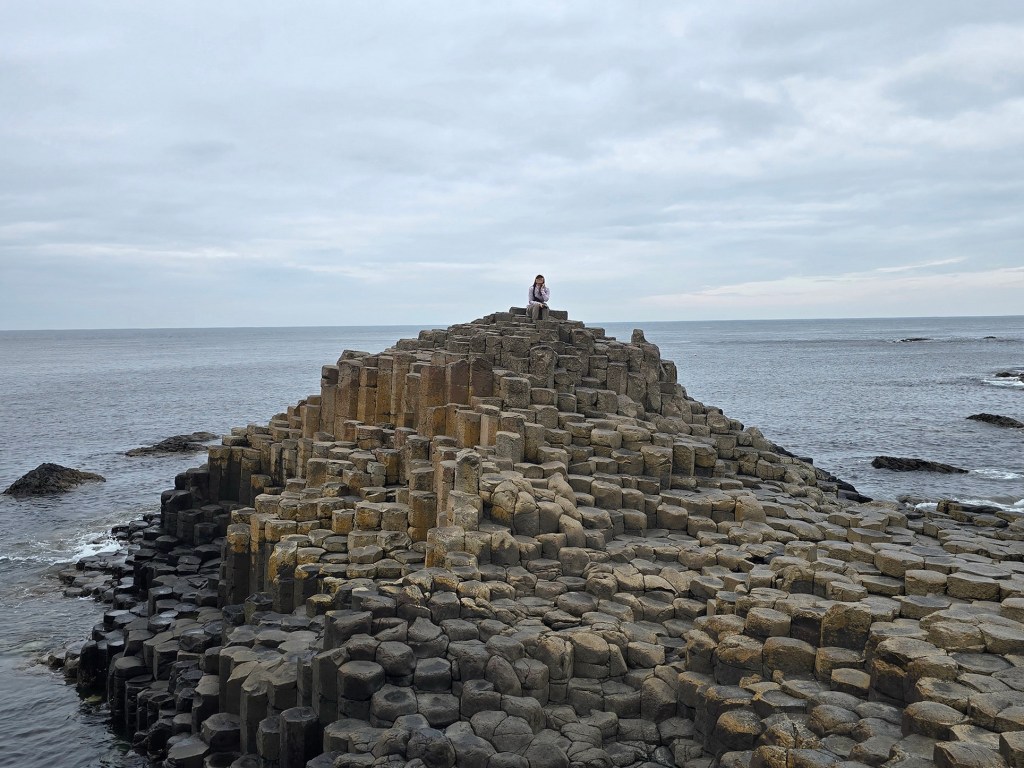
The site has a unique origin. About 50–60 million years ago, massive volcanic eruptions occurred as the continents that would become North America and Europe began to separate. Molten basalt lava poured across the landscape and collected in thick layers. As the lava cooled, it contracted and cracked in a remarkably regular pattern, creating the famous polygonal columns seen today. Most are hexagonal, although some have four, five, seven, or even eight sides.
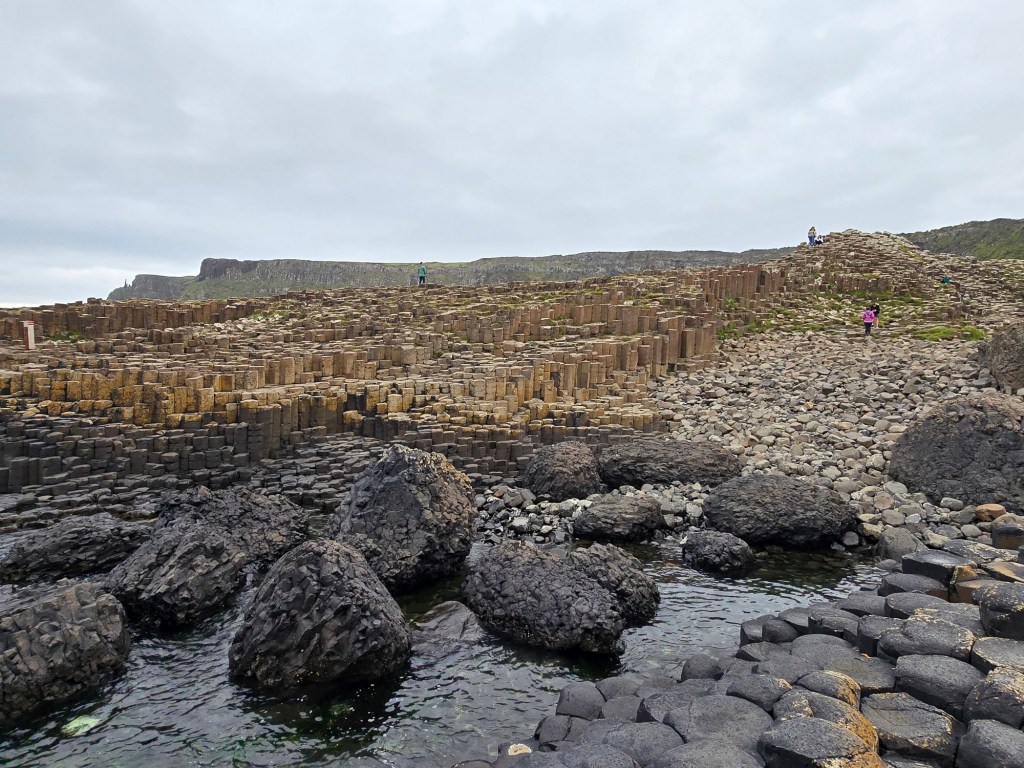
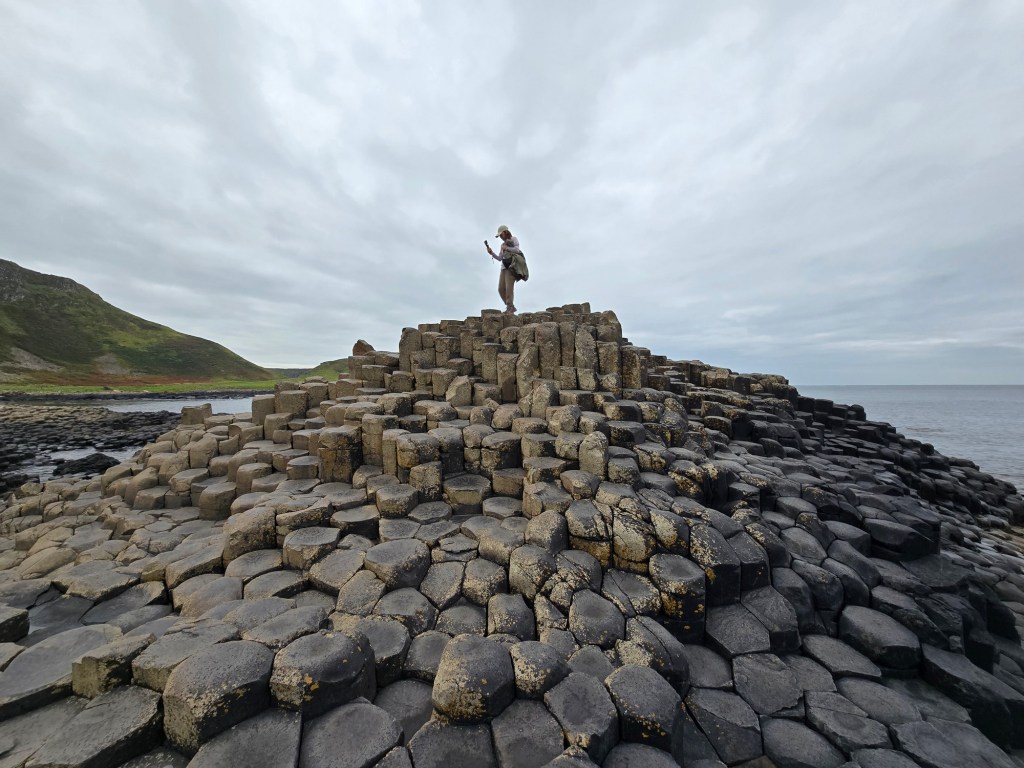
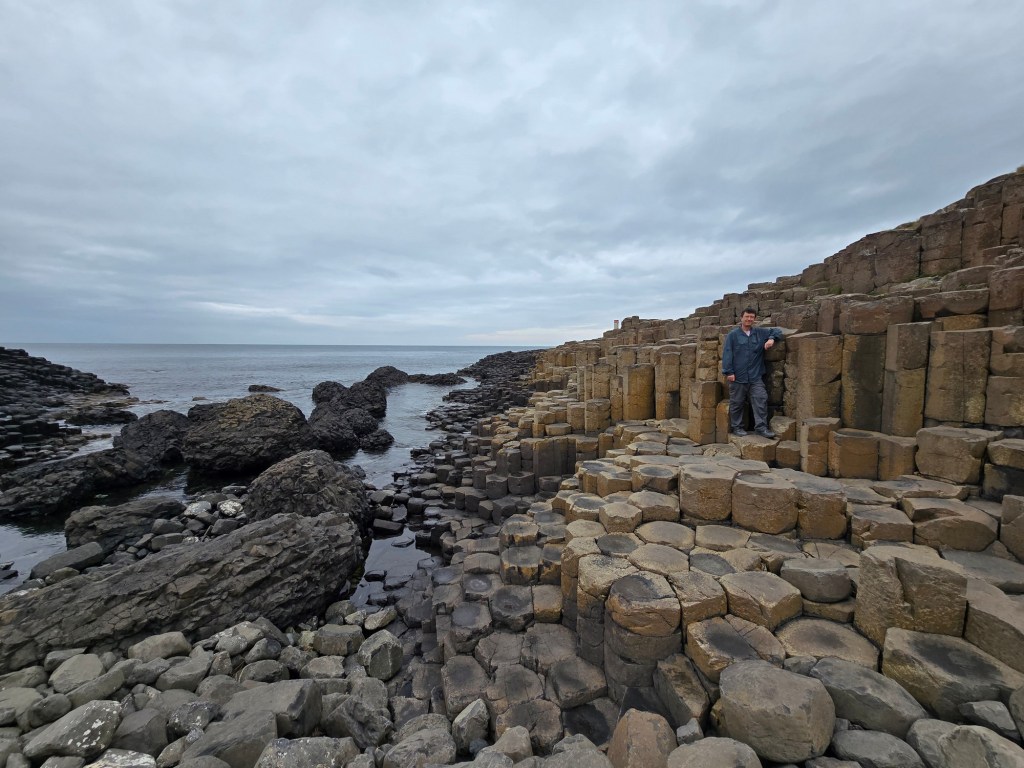
A major geological study published in 2026 linked the formation of the Giant’s Causeway to a massive volcanic event that affected regions across what are now Northern Ireland, Scotland, Greenland, and the Faroe Islands.
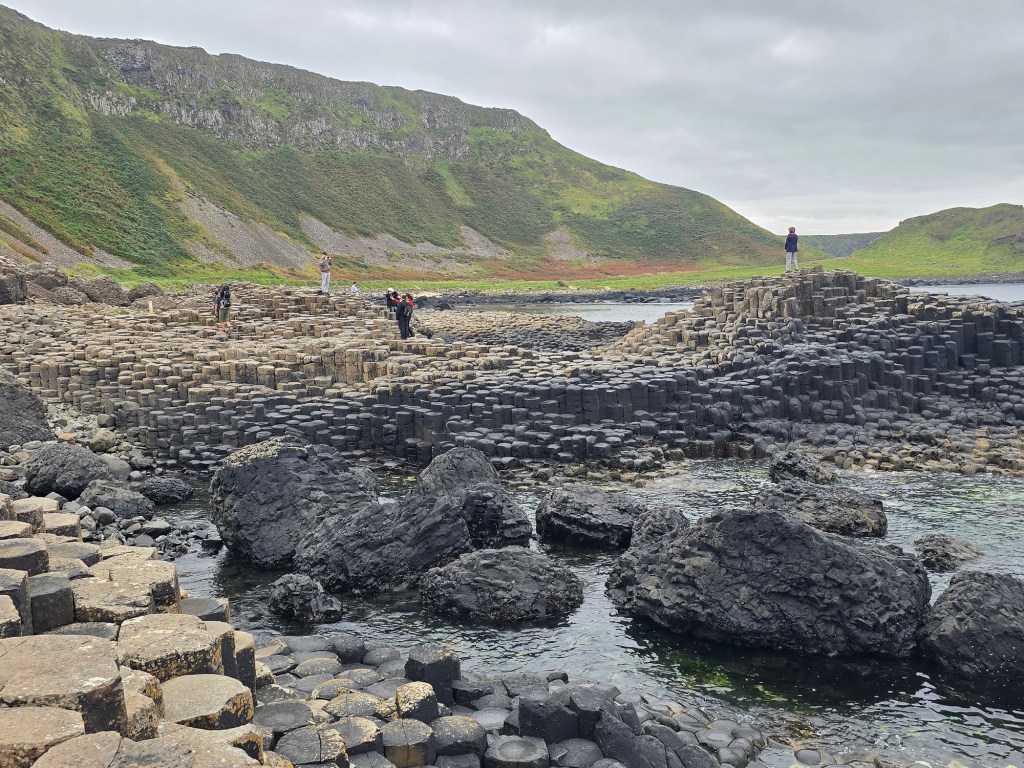
Of course, the legend of the Giant’s Causeway is much more colourful. According to legend, the giant Finn McCool built the causeway across the sea to challenge the Scottish giant Benandonner. When Finn finally saw how enormous his rival was, he fled home. Finn’s clever wife, Oonagh, disguised him as a baby. When Benandonner arrived and saw the “baby,” he reasoned that the father must be gigantic and terrifying. He ran back to Scotland, tearing up the causeway behind him as he went.
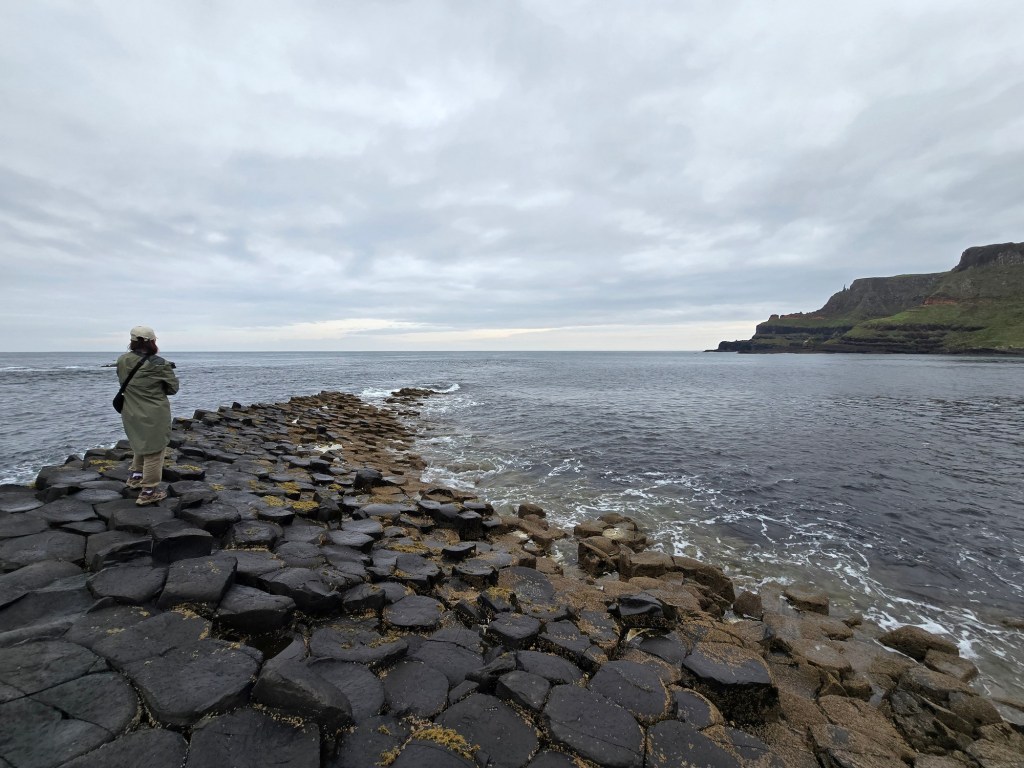
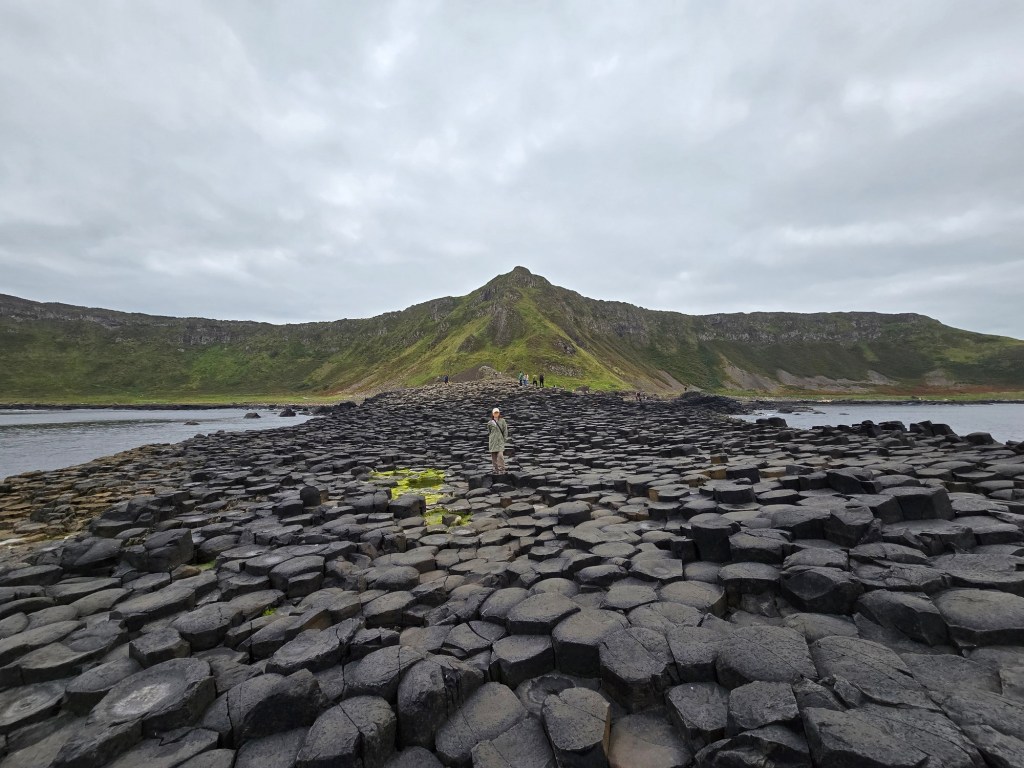
Having the place mostly to ourselves was worth getting up a bit earlier in the morning. It felt so different than any other natural formation we’d ever seen, and the cool but calm weather was perfect for the morning walk.
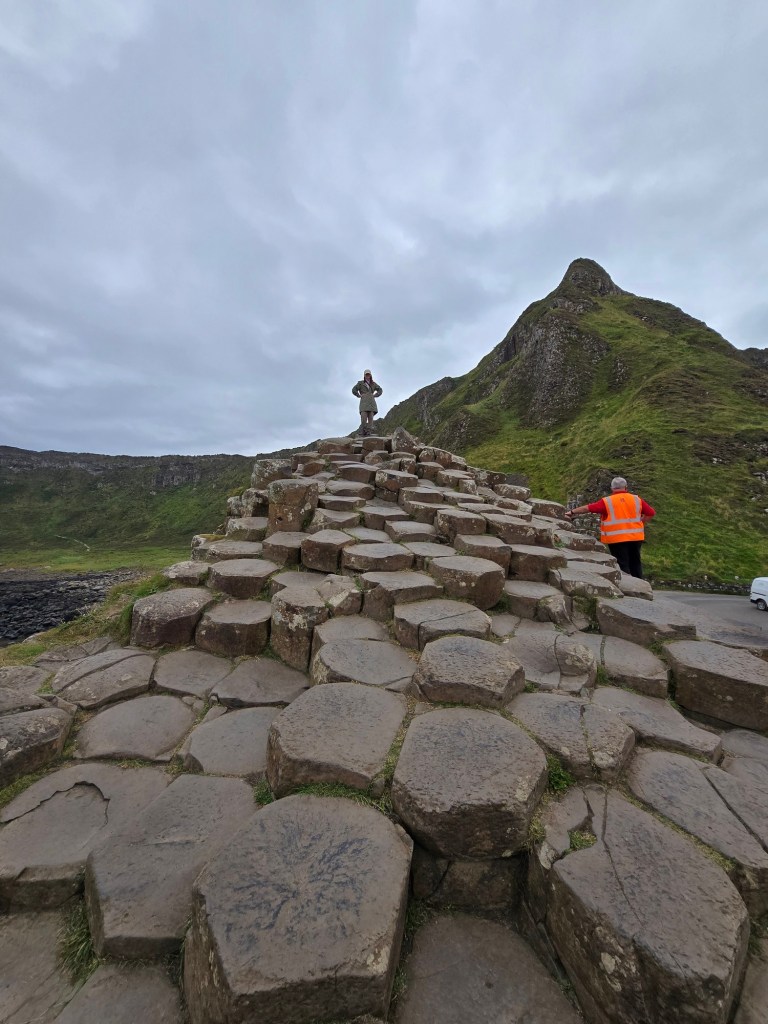
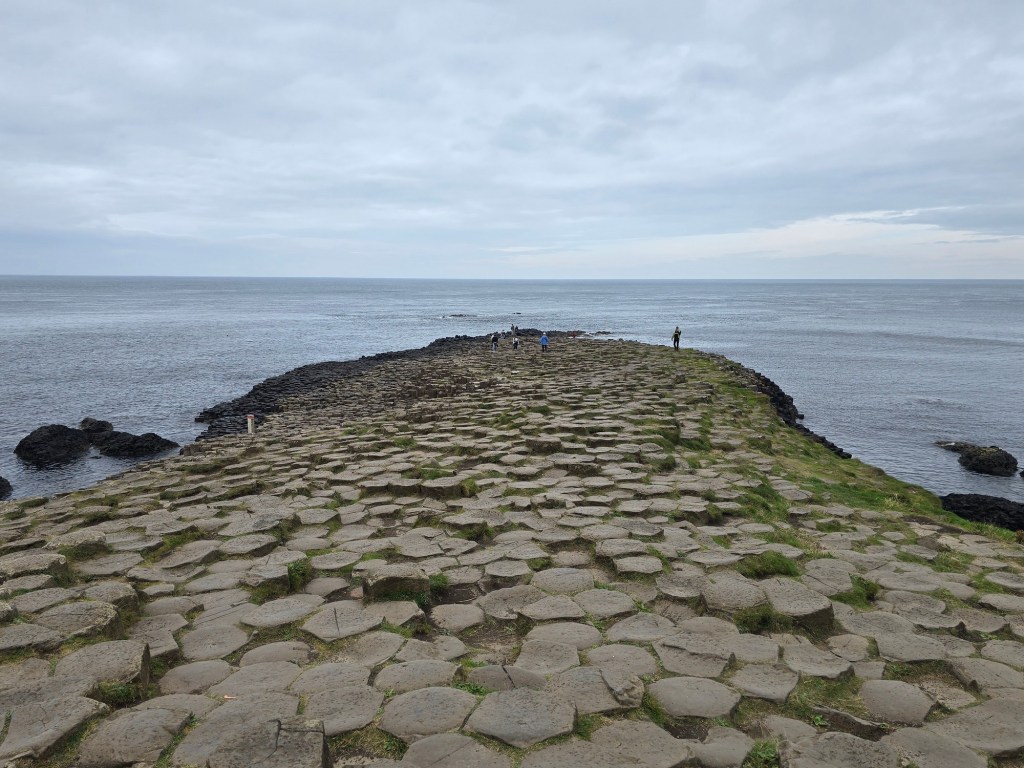
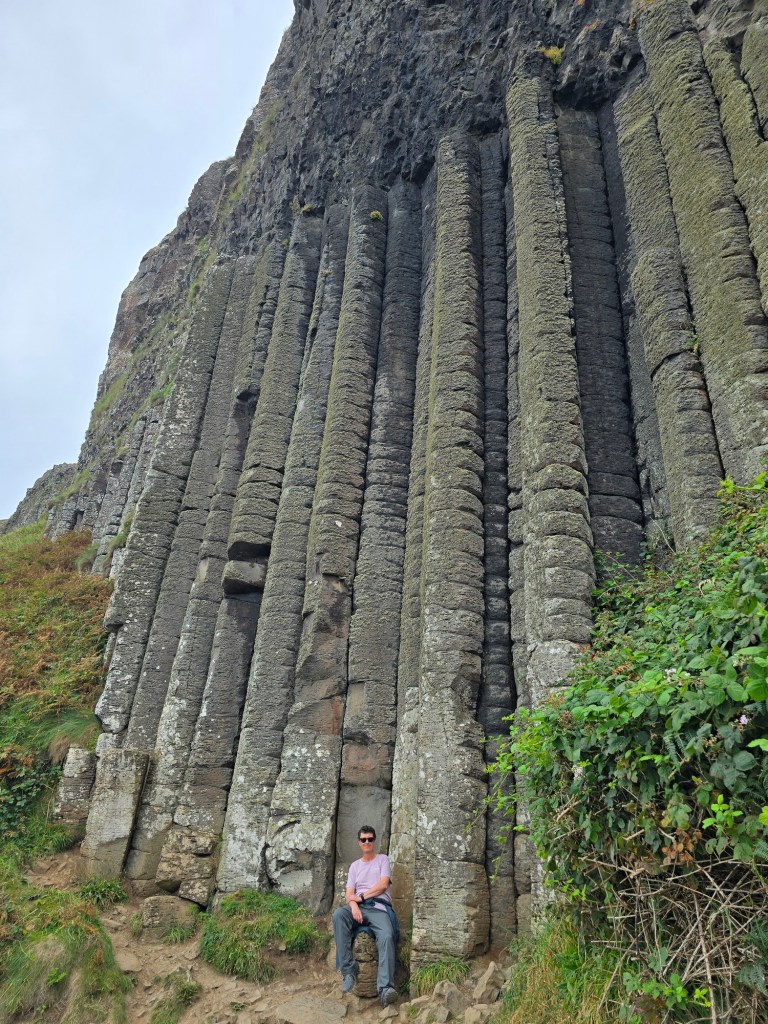
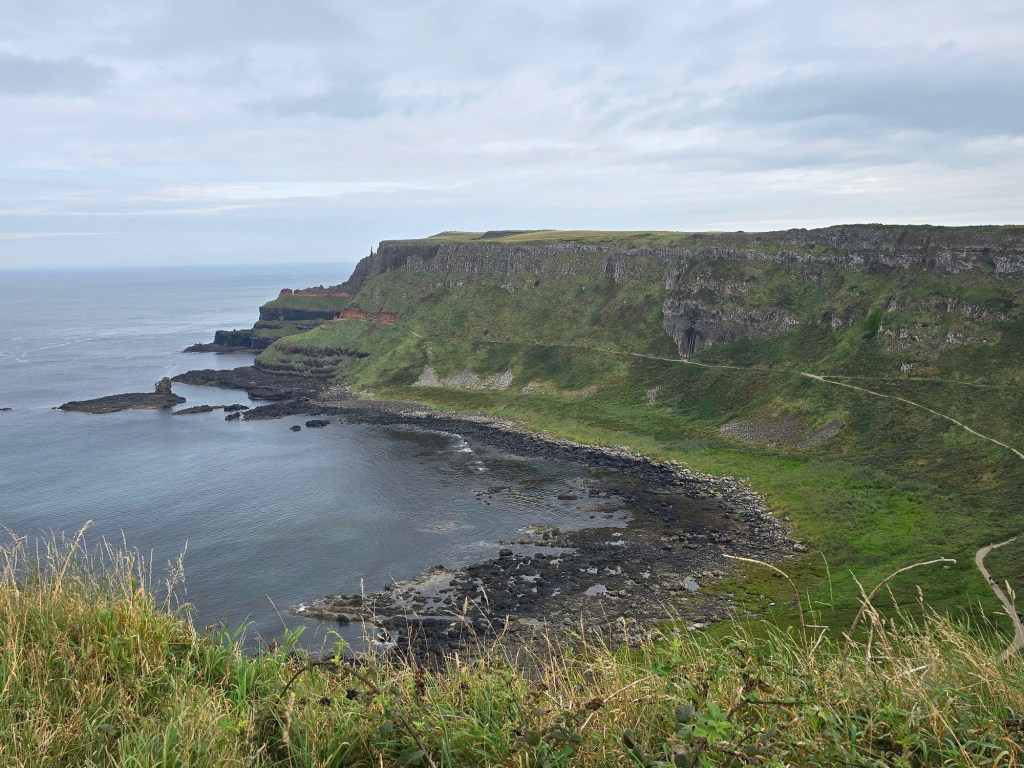
There are a number of other sights to see, including the Organ and the Devil’s Middle Finger. To get there, we passed through the Giant’s Gate and continued along the trail.
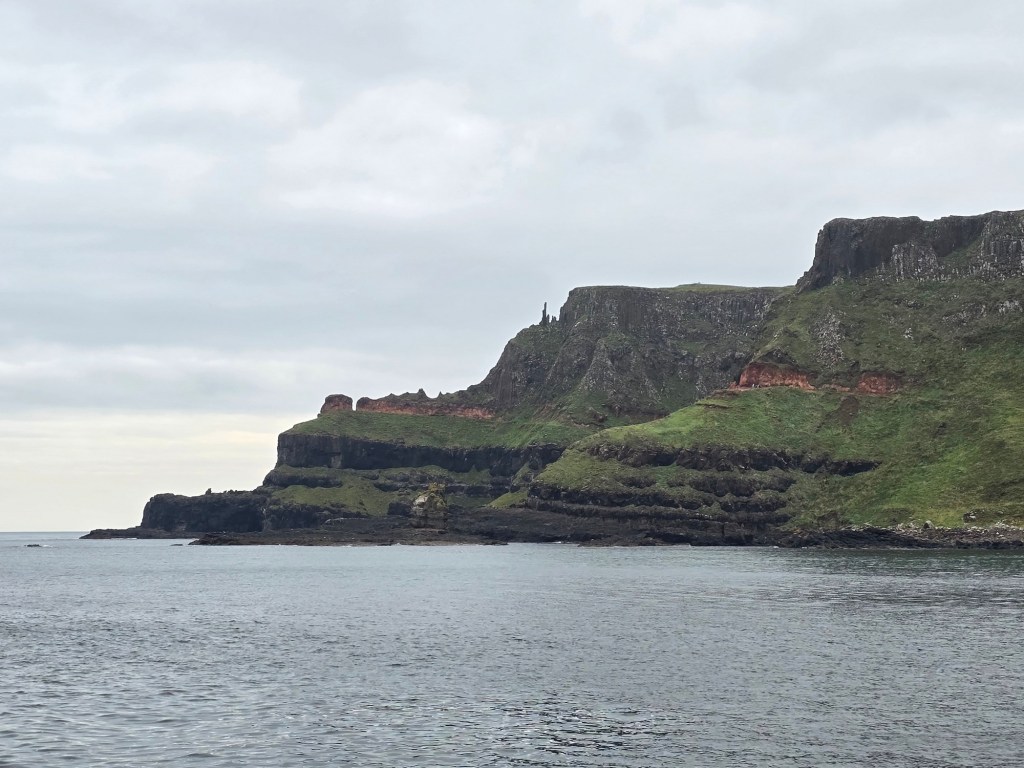
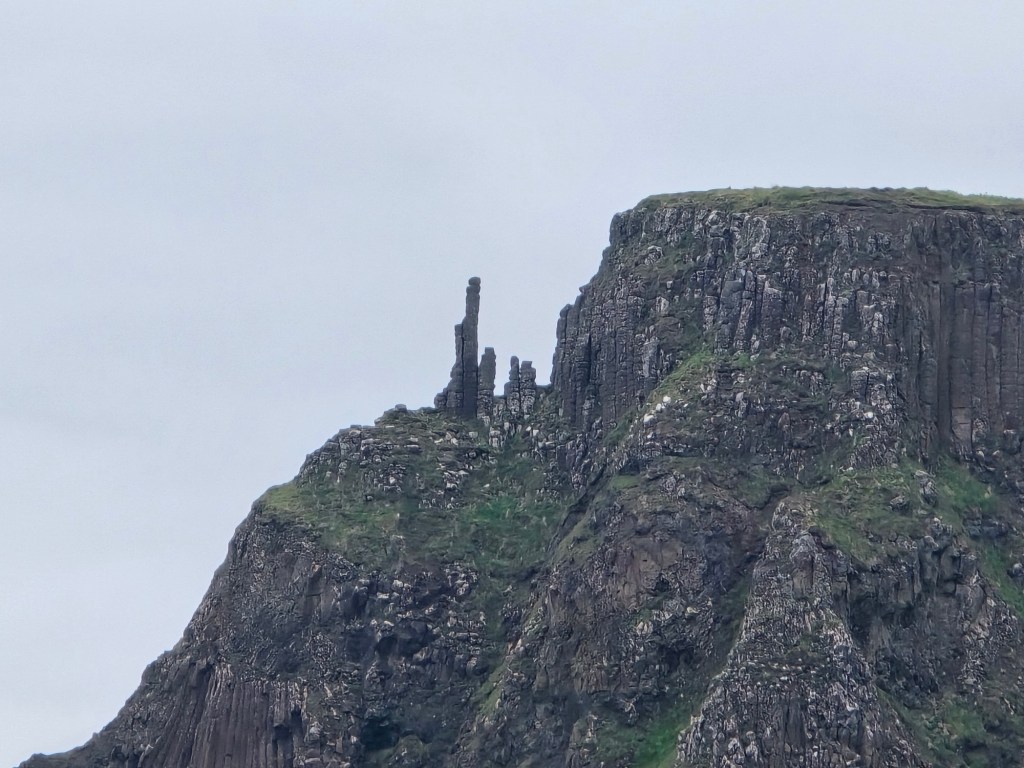
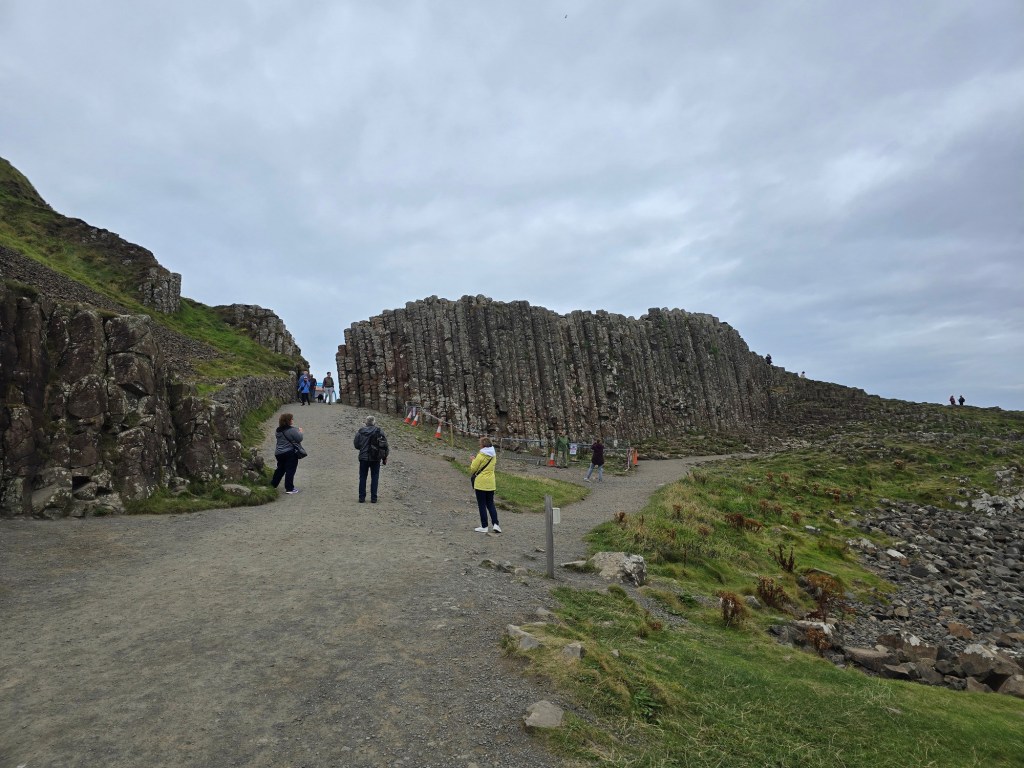
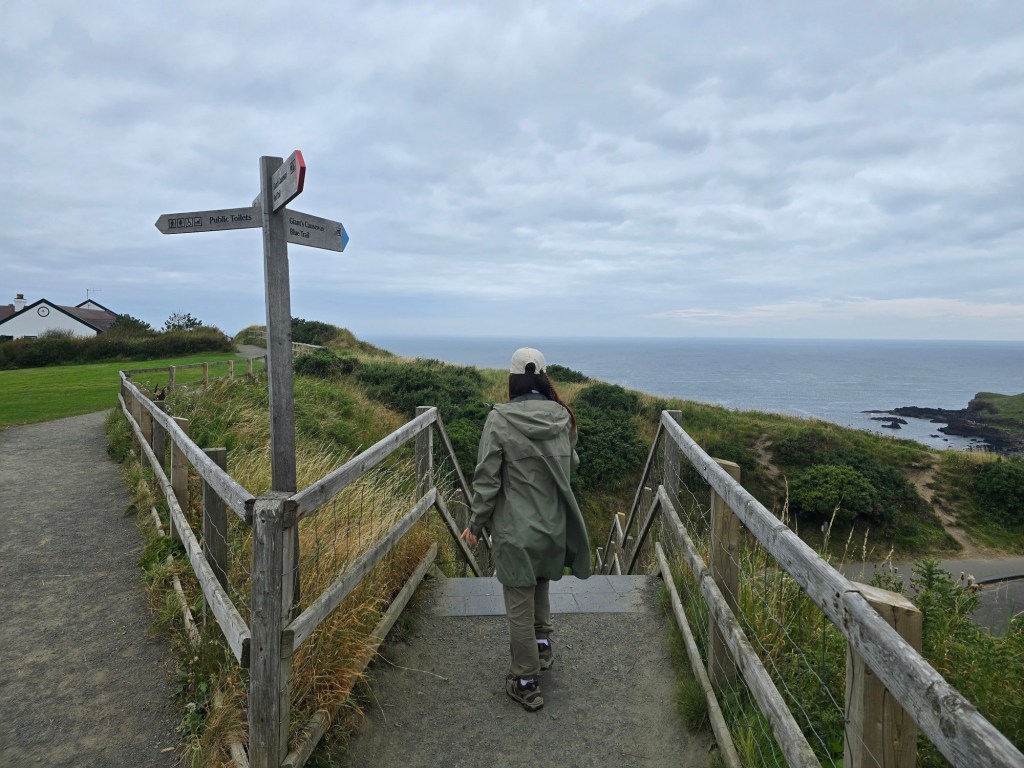
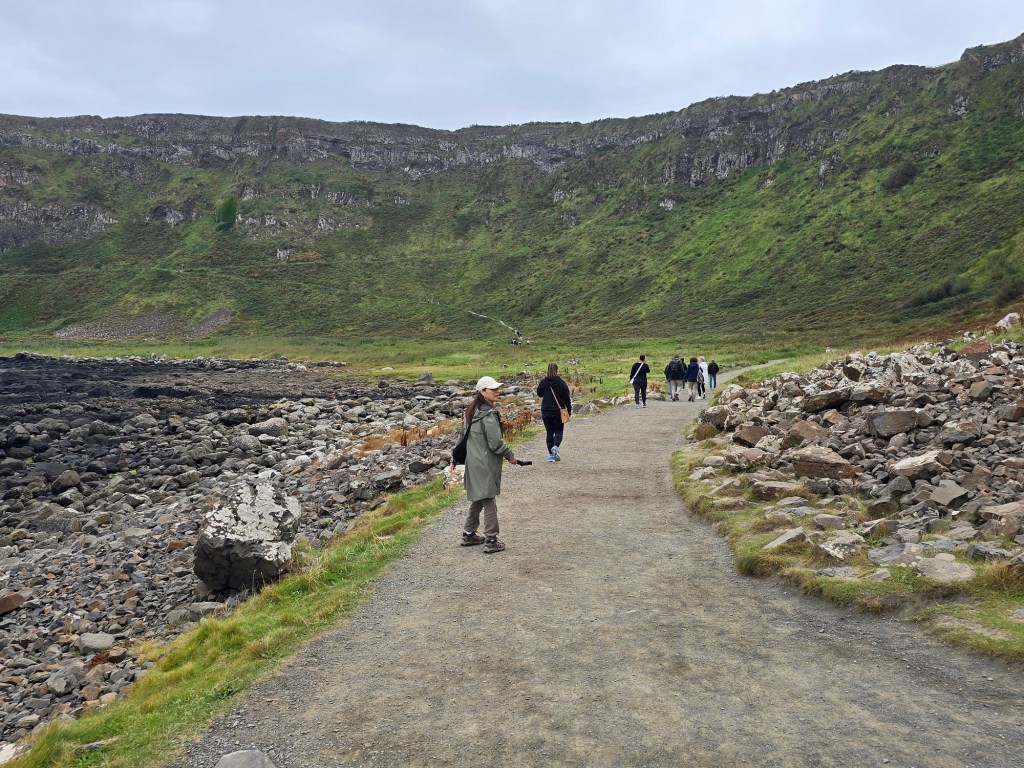
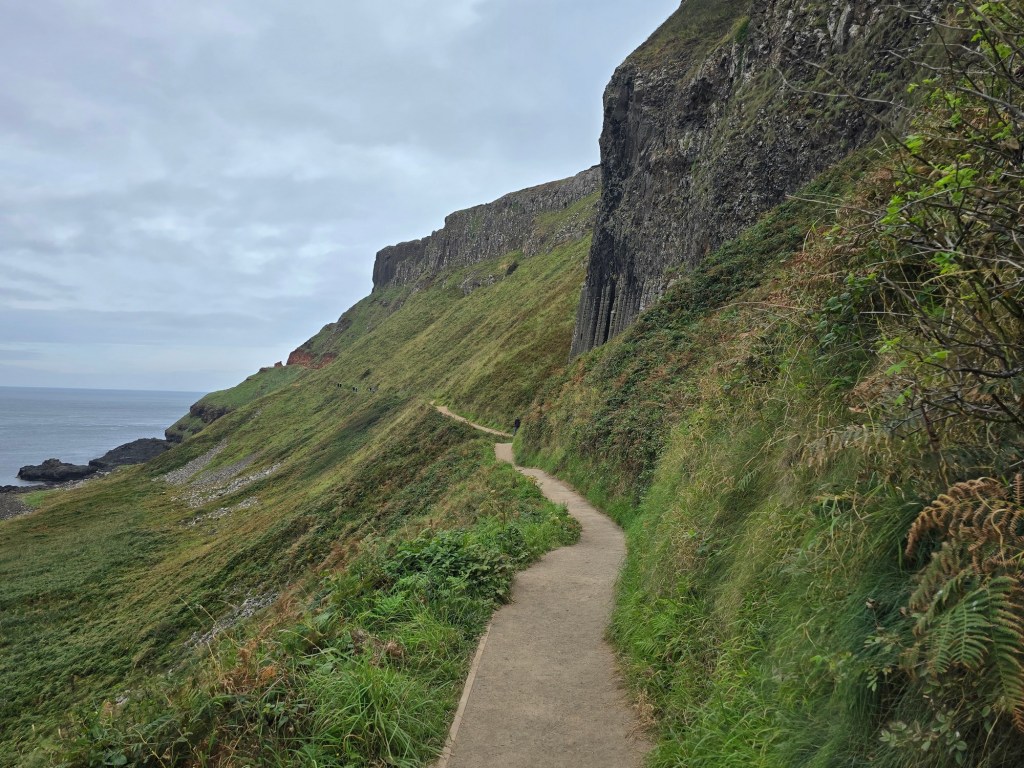
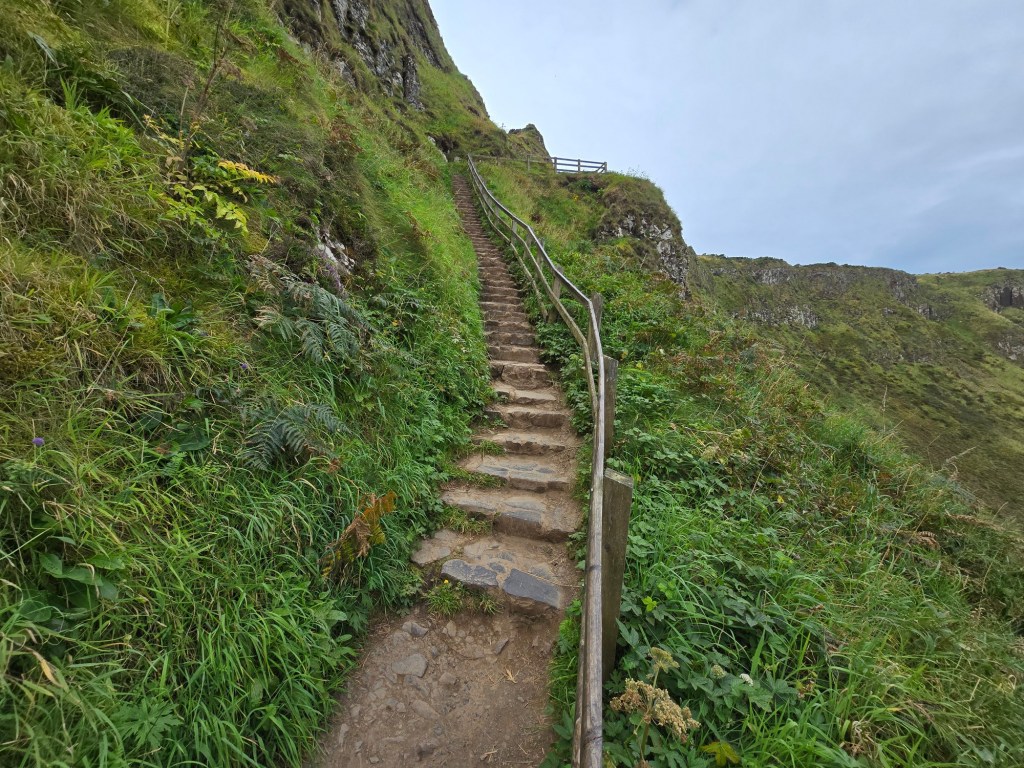
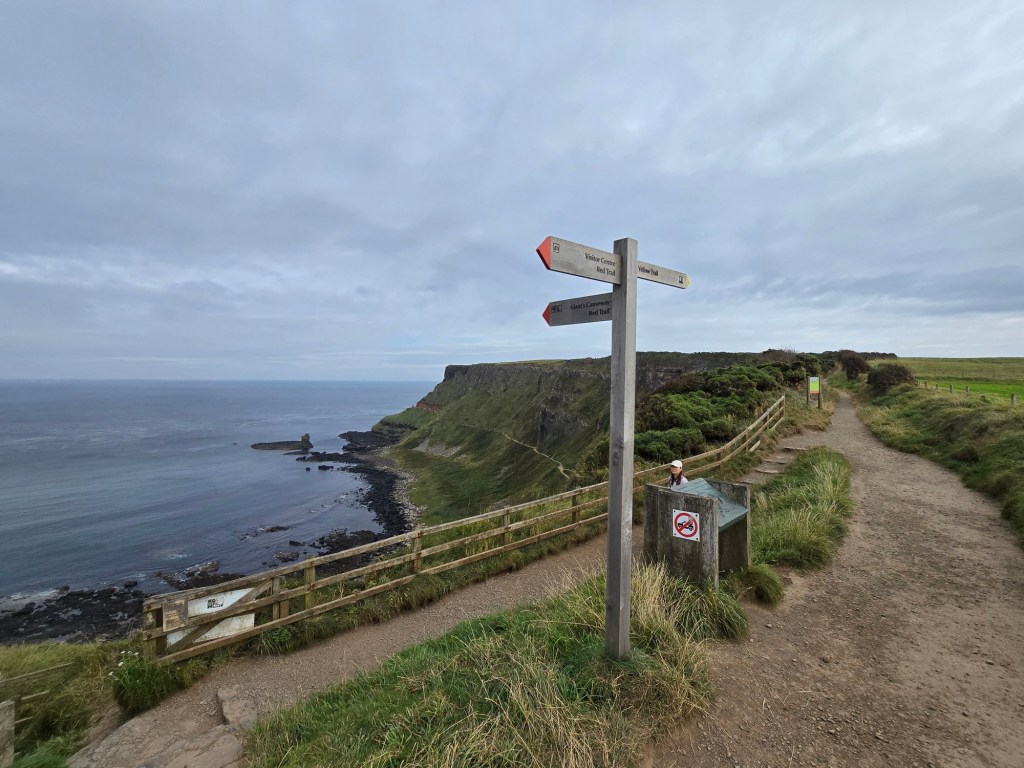
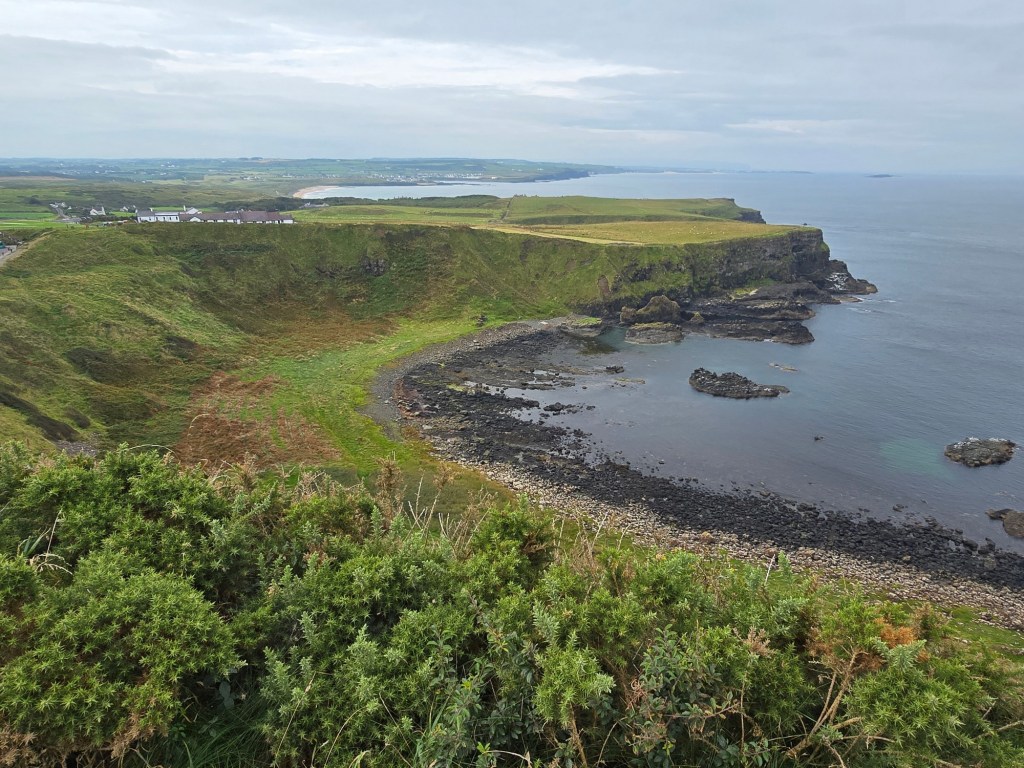
We slowly made our way upward along the trail.Everything was well maintained, and there was clear signage so you knew which colour trail you were on. People were scattered here and there but they were well spread out.
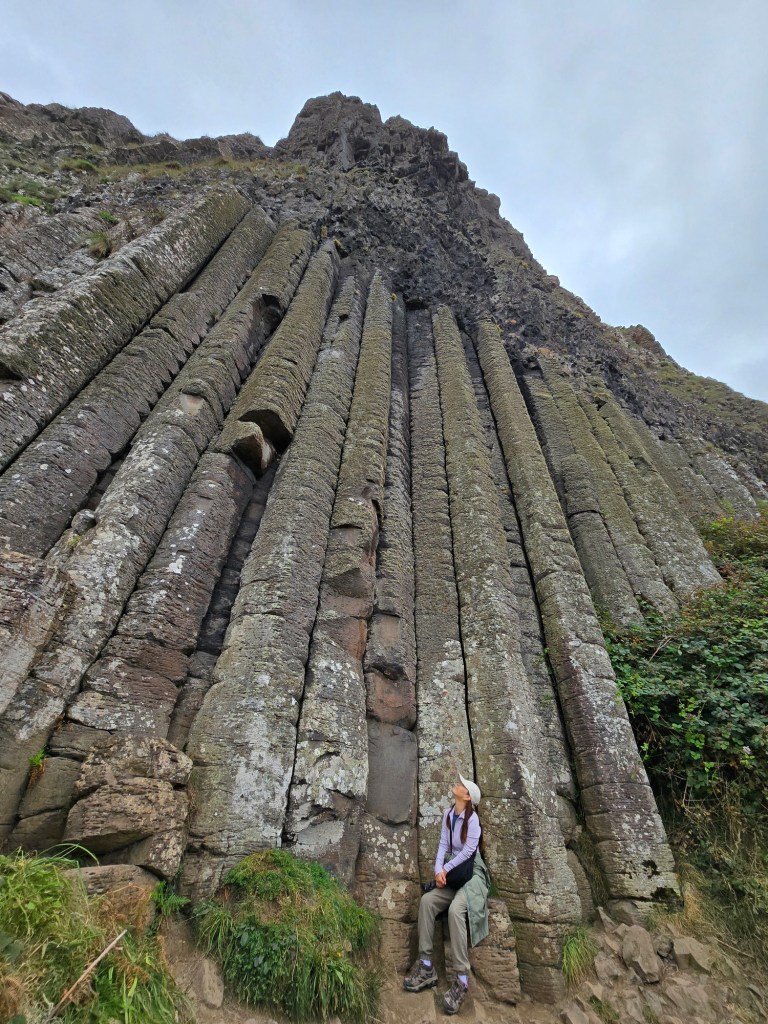
The “Pipe Organ“
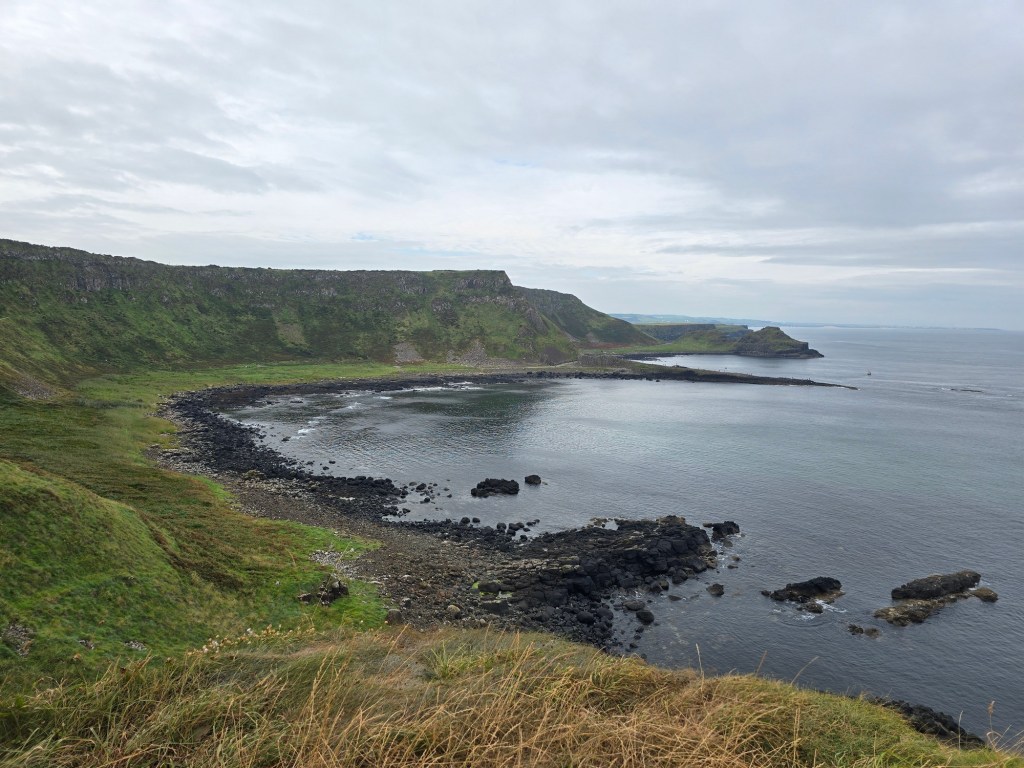
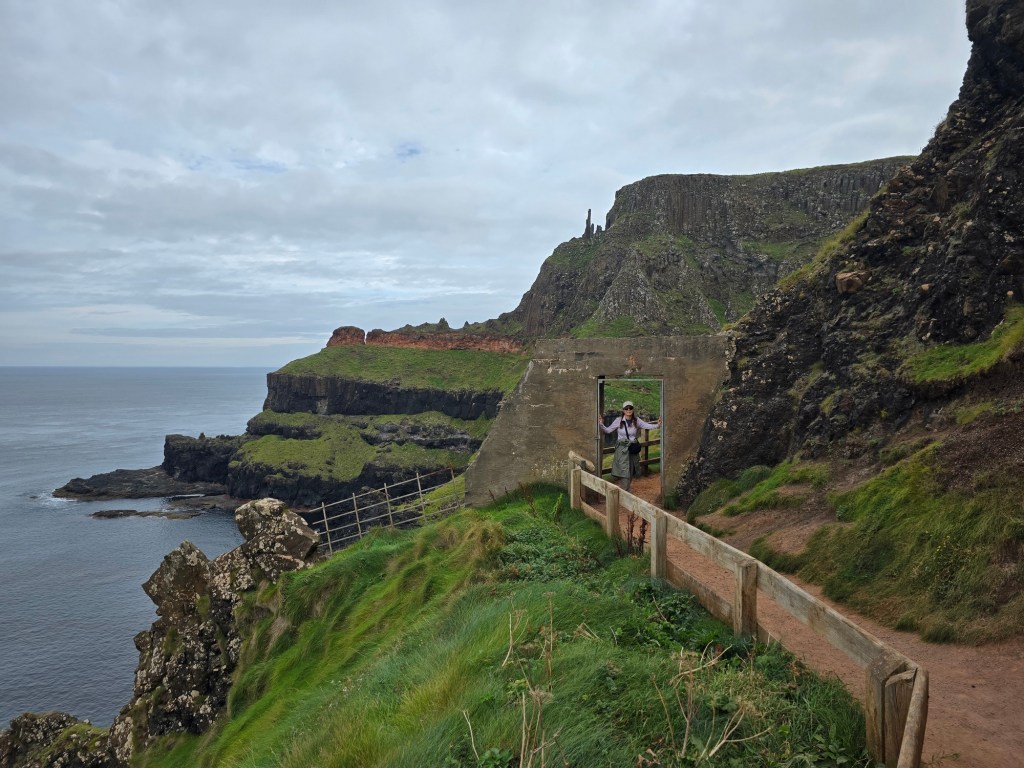
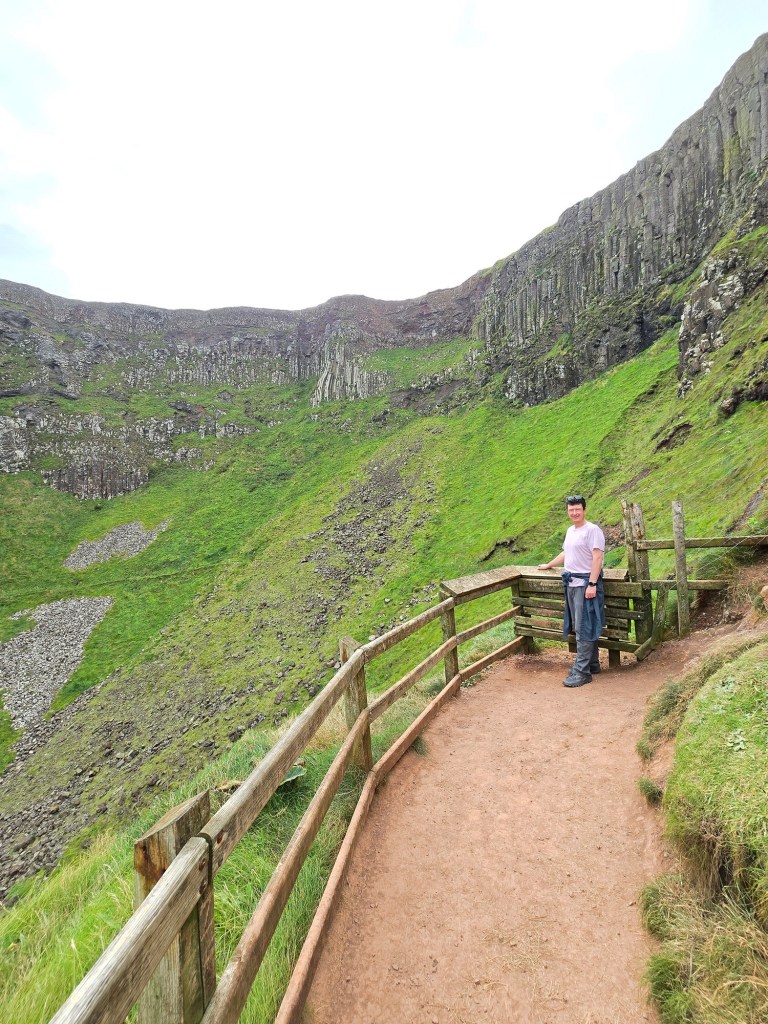
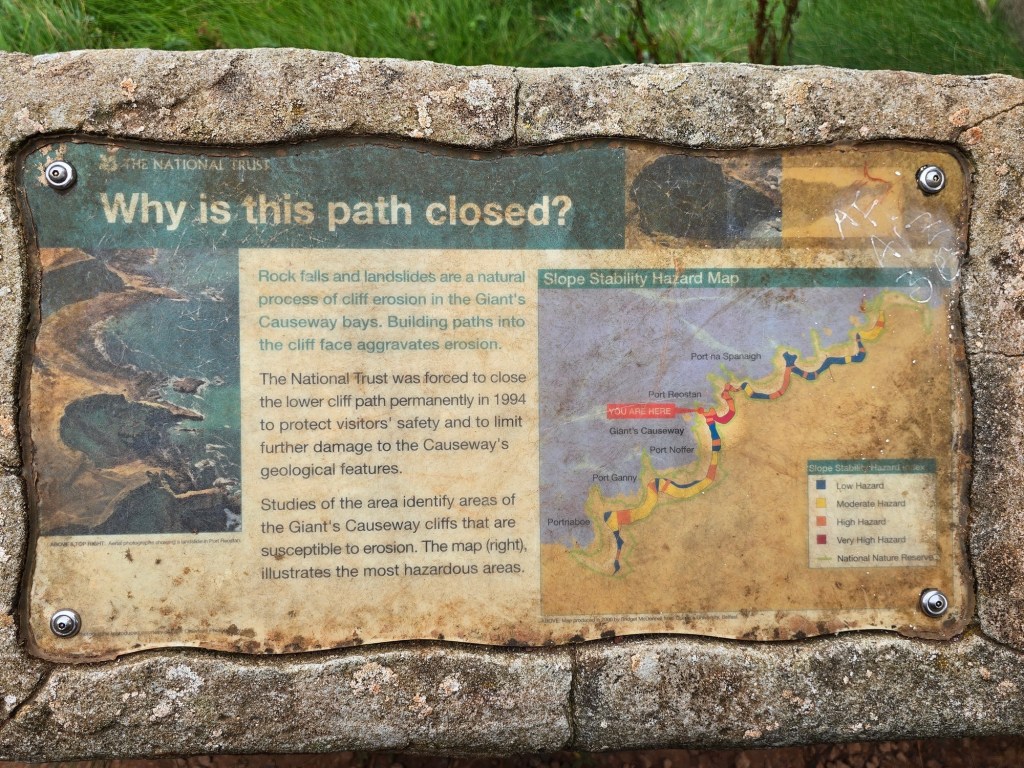
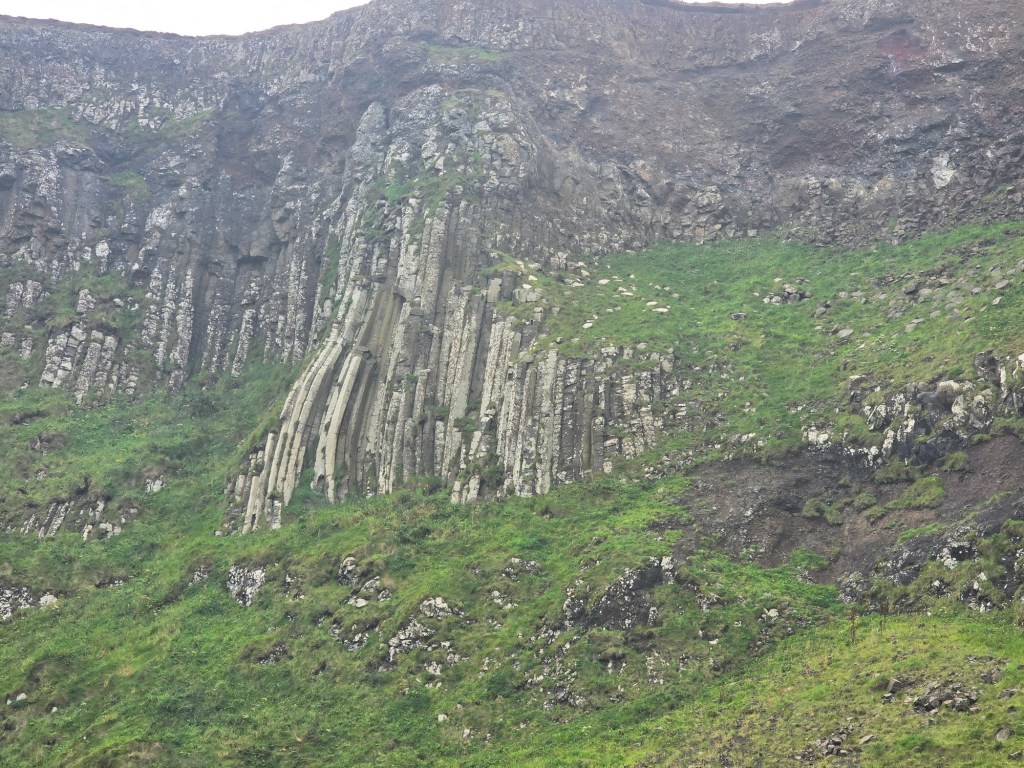
After reaching the end of the line, we turned around and reached a fork in the road where the blue and red trails met. After taking the blue trail, we began to ascend up the cliffs on the red trail.
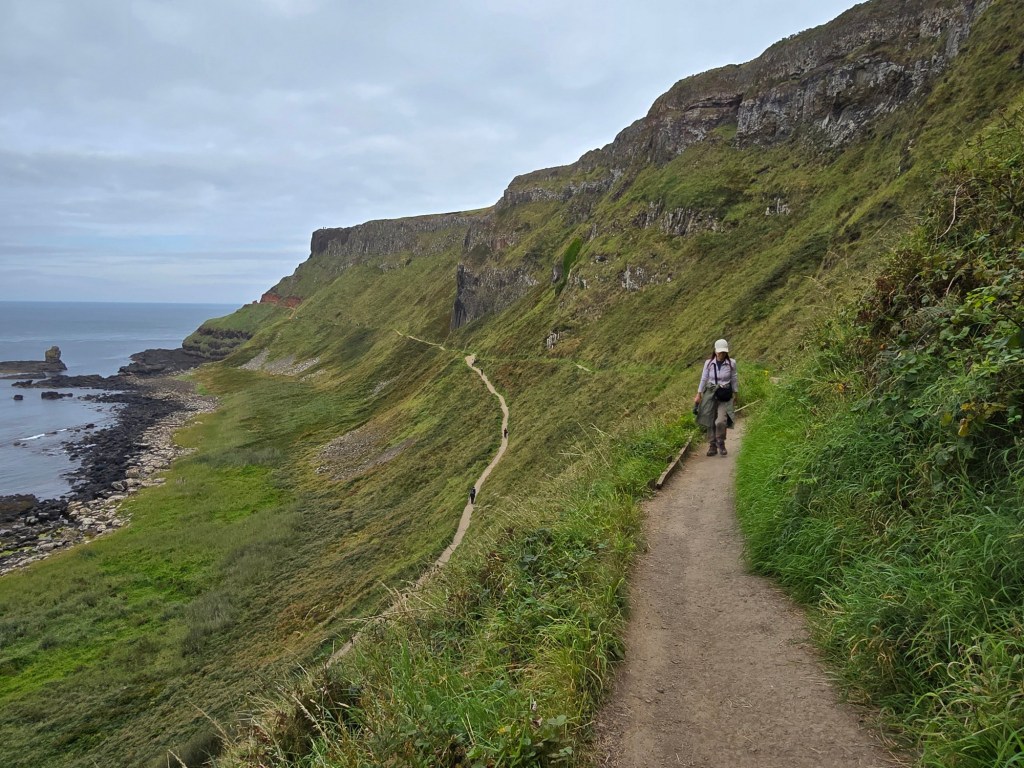
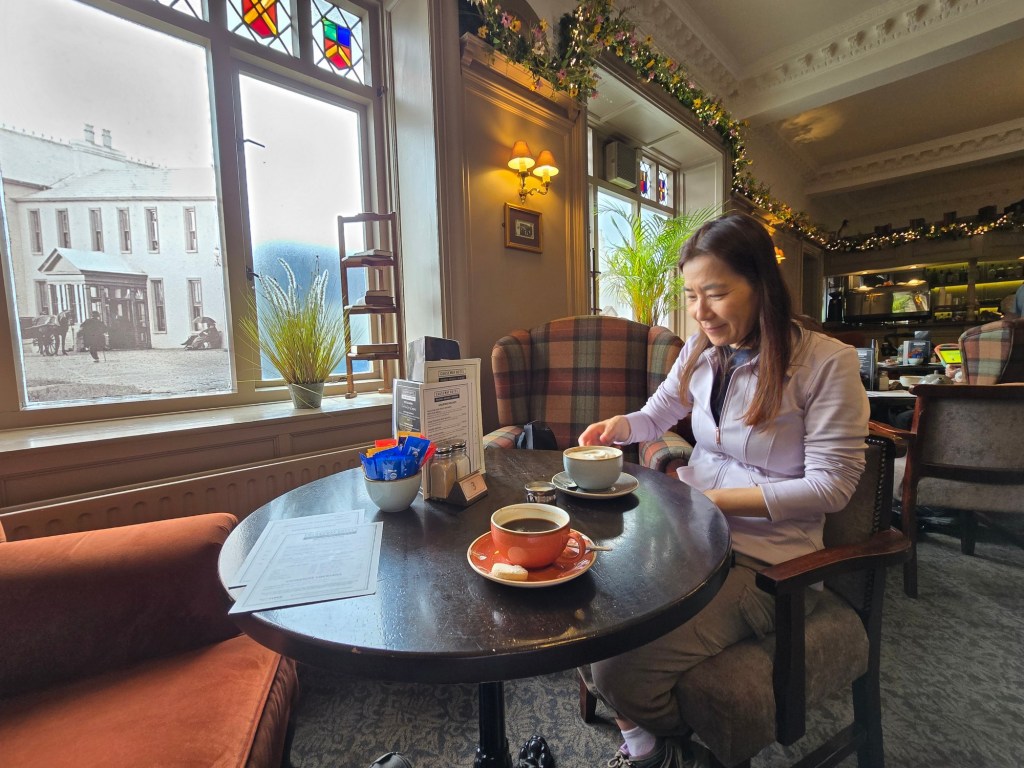
After spending the morning walking around the Giant’s Causeway, we returned to the hotel for coffee and breakfast. We used our voucher for 10 pounds off, which helped reduce the bill as the food wasn’t cheap! But we had no complaints, and it was a satisfying finish to the morning. But there was more sights to see on this day, as we continued after lunch and did a few more spots along the coast. They will be the subject of the next post.